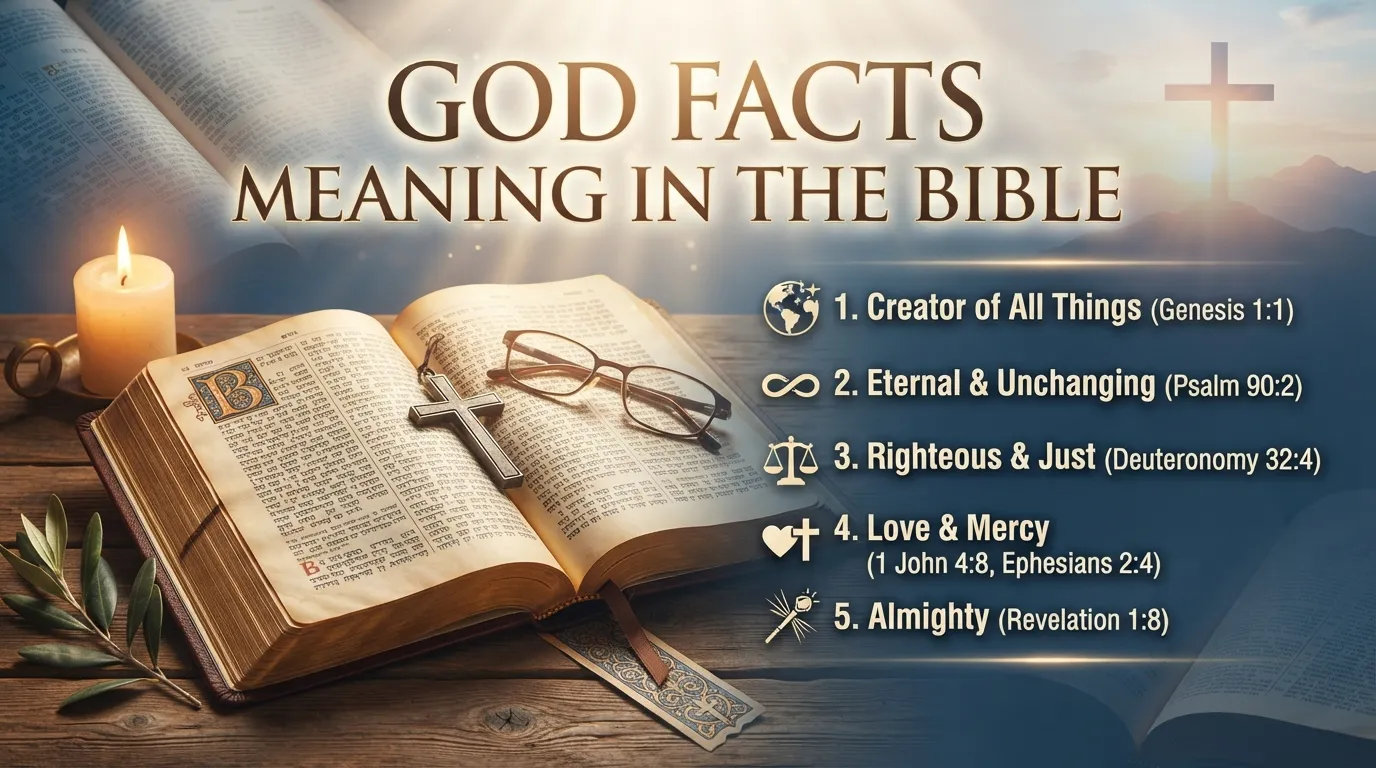
“God facts” is not a phrase you will find in the Bible. It is a modern shorthand for a very old question: what does Scripture actually teach about who God is? The answer is not a single sentence. It is a portrait, built up across sixty-six books, of a God who creates, loves, judges, forgives, guides, and stays. Here are ten of the most important facts that portrait contains — each one grounded in Scripture, each one with something to say about ordinary life.
1. God Is the Creator
“In the beginning God created the heavens and the earth” (Genesis 1:1). Genesis 1 shows God speaking light, sky, land, plants, animals, and humanity into being, exercising authority over all of it. Psalm 24:1 adds that the earth and everything in it belongs to the Lord. Creation is not independent of God — and neither are we. Your life belongs to God because He is its source. Romans 1:20 teaches that God’s invisible qualities can be understood through what He has made. A sunrise, a child’s laughter, or the complexity of the human body can remind believers of the Creator’s greatness. Christians should appreciate creation without worshiping it; creation points beyond itself to its Creator.
2. God Is Eternal
Human life has a beginning and an ending. God does not have the same limitations. Psalm 90:2 declares that God is God “from everlasting to everlasting.” James 1:17 describes Him as the One with whom there is no shifting or changing like shifting shadows. That steadiness is a powerful reason for hope. Jobs change. Relationships change. Plans change. Scripture presents God as unchanging in His being and faithful in His purposes, so His faithfulness is greater than today’s circumstances.
3. God Is Holy
In Isaiah 6, the prophet receives a vision of the Lord, and heavenly beings declare His holiness — completely pure, set apart from sin. Holiness means far more than being morally good; it points to God’s unique and perfect nature. Because God is holy, sin matters. Scripture never treats evil as insignificant. Yet God’s holiness does not mean sinful people have no hope. The Bible’s message is also about grace, forgiveness, and redemption. Through Jesus Christ, God makes a way for sinners to be reconciled to Him.
4. God Is Love
“God is love” (1 John 4:8). This does not mean God approves of everything people do. Biblical love is bound together with His holiness, truth, justice, mercy, and goodness. John 3:16 shows His love through the giving of His Son. Romans 5:8 explains that God demonstrated His love by Christ dying for sinners. At its heart, Christian faith is not about following rules. It is a relationship with God made possible through His grace. When someone feels unworthy or ashamed, the biblical message is not that sin does not matter — it is that God’s grace provides a path toward forgiveness and restoration.
5. God Is Just and Righteous
Deuteronomy 32:4 describes God’s works as perfect and His ways as just. Psalm 89:14 connects righteousness and justice with God’s throne. Christians should not think of God as unfair or morally careless. Evil and wrongdoing are not invisible to Him. Yet biblical justice exists alongside mercy. Scripture repeatedly shows God calling people to repentance while offering forgiveness. In the New Testament, the death and resurrection of Jesus stand at the center of how Christians understand God’s justice and grace together.
6. God Is Merciful and Forgiving
If holiness and justice were all we knew about God, the Bible’s message would be incomplete. Psalm 103 celebrates God as merciful and gracious, willing to forgive. The parable of the prodigal son in Luke 15 gives the picture: a son leaves his father, wastes his inheritance, and returns home — and the father receives him with compassion. The parable does not teach that rebellion is harmless. It shows the joy of repentance and restoration. God’s mercy means failure does not have to be the final chapter of your story.
7. God Is All-Powerful, and His Power Is Good
Jeremiah 32:17 praises God as the One who made the heavens and earth by His great power. Jesus taught that what is impossible with people is possible with God. But biblical faith does not mean believing God must give us everything we request. God’s power is always connected with His wisdom and character. Paul prayed for the removal of a difficult “thorn in the flesh” in 2 Corinthians 12. Instead of removing it, God answered by emphasizing His sufficient grace. Sometimes God’s guidance is not the removal of hardship but strength to endure, wisdom to act, or grace to continue.
8. God Guides His People Through His Word
Many Christians wonder how God guides them. The Bible’s strong answer: His written Word is central. Psalm 119:105 compares God’s Word to a lamp for the feet and a light for the path. That does not mean every decision comes with a direct verse naming the right choice. Scripture shapes wisdom, character, priorities, and moral judgment. The Bible may not tell you which job offer to accept, but it gives principles about honesty, responsibility, generosity, relationships, integrity, and stewardship. Prayer, wise counsel, Scripture, and careful judgment work together in Christian decision-making.
9. God Reveals Himself by Name
The Old Testament was written mainly in Hebrew, and its names for God carry meaning. Elohim appears from Genesis 1:1 onward, presenting God as the powerful Creator and sovereign Lord. The form of the word is grammatically plural, but when it refers to the God of Israel it commonly takes singular grammatical forms; Christians have sometimes connected this feature with the Trinity, but the word itself should not be treated as a stand-alone proof of it. Then there is YHWH, often rendered LORD in English Bibles, revealed to Moses at the burning bush in Exodus 3 in connection with God’s eternal existence and covenant relationship with His people. The lesson: God is not an idea or a force. Scripture presents Him as the living, personal God who reveals Himself and relates to His people.
10. God Calls His People to Love and Humility
What does God want from Christians? Jesus identified love for God and love for neighbor as the central commandments (Matthew 22:37–40). Micah 6:8 summarizes the call: act justly, love mercy, walk humbly with God. Romans 12 urges believers to offer themselves to God and let Him transform their thinking. Following God is not about collecting biblical facts. God wants His truth to transform how we think, speak, love, forgive, serve, and live. A Christian who learns about God’s kindness should become more kind. A person who understands God’s forgiveness should become more willing to forgive.
Three Misunderstandings to Avoid
As these facts settle in, three misunderstandings are worth clearing away. First, knowing facts about God is not the same as knowing God. Information can puff up; relationship transforms. The goal of every fact above is trust, worship, and obedience — not trivia. Second, God’s power does not obligate Him to grant every request. His power always works together with His wisdom and character, and sometimes His answer is sustaining grace rather than removal of the hardship, as Paul discovered. Third, God’s guidance is rarely a verse naming your exact decision. Scripture gives principles, and Christians weigh those principles with prayer, wise counsel, and careful judgment. Expecting a direct verse for every choice will lead to frustration; expecting wisdom from God’s Word will lead to steady growth. Facts are the map, not the destination — the destination is a life that trusts and follows the God the facts describe.
From Facts to a Life
Facts about God become faith when they meet real situations. When you are afraid, remember God’s faithfulness rather than letting fear control every decision; prayer helps place concerns before Him. When you have failed, confess and seek forgiveness instead of believing failure makes you worthless. When you are waiting, remember God’s timing may not match your plans — waiting can become practice in patience and trust. When someone hurts you, remember God’s call to forgiveness while still using wisdom and healthy boundaries. When you feel lost, return to Scripture, pray for wisdom, and seek mature Christian counsel. You do not have to see your entire future before taking the next faithful step.
Knowing facts about God is valuable, but Christianity calls people into a relationship with Him. Read Scripture consistently — the Gospels are especially helpful for learning about Jesus and His ministry. Pray honestly; you do not need complicated words. Tell God about your fears, questions, gratitude, failures, and hopes. Practice what you learn, grow through fellowship, worship, service, and wise biblical teaching. And remember that knowing God is not about becoming perfect before approaching Him. God’s grace invites people to come to Him through Christ. If you want to explore how the concept of God has been discussed across religions and philosophy, the Wikipedia article on God surveys the major views in one place.










