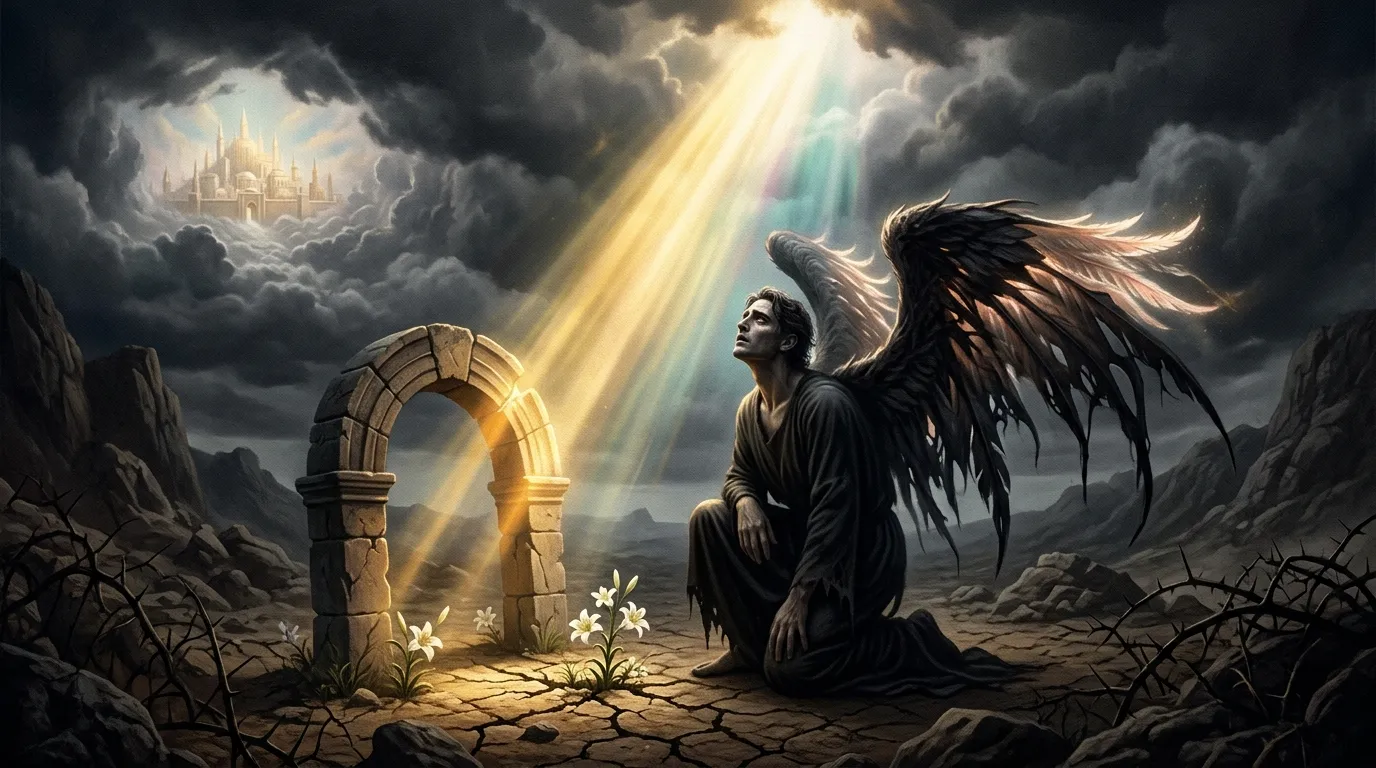
There is a rescue story at the center of the Bible, and it is bigger than most people think. It is not the story of good people being rewarded, or of religious people being approved. It is the story of prisoners being set free — people trapped in darkness, in sin, in fear, and in the grip of an enemy they could not defeat, rescued by a God they did not deserve. When the Bible speaks of being “saved,” this is what it means: not a narrow escape from danger, but a transfer from one kingdom to another.
That is the key to a phrase that confuses many readers: “the devil saved.” The Bible never uses that phrase as a formula, and it never teaches that the devil himself is saved. But it does teach something far more hopeful: that people who were under the devil’s power can be saved from him — rescued, delivered, and brought into the kingdom of Christ. The question is not whether the devil gets saved. It is whether you can be saved from the devil. Scripture’s answer is yes.
What “Saved” Means in Scripture
The biblical word for salvation is rich. In the Old Testament, it describes God rescuing Israel from Egypt, from enemies, from exile — physical deliverance by a powerful God. In the New Testament, it deepens: salvation is rescue from sin, from death, from judgment, and from the dominion of darkness. Paul puts it in one sentence: God “has delivered us from the domain of darkness and transferred us to the kingdom of his beloved Son” (Colossians 1:13).
Two images carry the meaning. The first is rescue: a person drowning, pulled from the water. The second is transfer: a person moved from one citizenship to another, from one king’s rule to another’s. Salvation is both. The believer is pulled out of danger and placed under a new King. That is why the New Testament can speak of salvation in three tenses: you have been saved (past — justification), you are being saved (present — sanctification), and you will be saved (future — glorification). The rescue begins at conversion and finishes at resurrection.
Salvation is also entirely God’s work. “By grace you have been saved through faith. And this is not your own doing; it is the gift of God” (Ephesians 2:8). The drowning person does not save himself. He grabs the rope. Faith is the hand that takes hold of what God has done in Christ.
What Are We Saved From?
Three enemies hold humanity captive, and salvation addresses all three. The first is sin: the rebellion in every human heart, the condition that makes us guilty before God and broken in our relationships. “All have sinned and fall short of the glory of God” (Romans 3:23). The second is death: the consequence of sin, the enemy that no one escapes, the final verdict on a fallen world. The third is the devil: the tempter, accuser, and deceiver who exploits sin and wields death as his weapon. Hebrews 2:14 says Jesus shared in flesh and blood “that through death he might destroy the one who has the power of death, that is, the devil.”
The devil’s power is real but derivative. He has no power that God has not permitted, and his chief weapon is accusation: convincing people that their sin is unforgivable, their case hopeless, their God absent. Salvation disarms him. When a person trusts in Christ, the accusation is answered, the debt is paid, and the accuser loses his standing. The devil can still tempt, harass, and deceive — but he cannot condemn. “Who shall bring any charge against God’s elect? It is God who justifies” (Romans 8:33).
This is why the Bible never teaches that the devil himself can be saved. Salvation is offered to human beings, made in God’s image, for whom Christ died. The devil is a fallen angel who rebelled, and Scripture describes his end as judgment, not redemption: “the devil who had deceived them was thrown into the lake of fire” (Revelation 20:10). The gospel is good news for people, not for the one who has opposed God from the beginning.
What Are We Saved For?
Salvation is not only rescue from something. It is rescue for something. The believer is saved for a new life: to know God, to love others, to do good works, to grow in holiness, and to spend eternity in God’s presence. Paul says we are “created in Christ Jesus for good works, which God prepared beforehand, that we should walk in them” (Ephesians 2:10). Salvation is not a ticket to heaven that leaves your life unchanged. It is a new citizenship that changes how you live in the old country.
That new life includes victory over the enemy — not the absence of spiritual opposition, but the ability to stand in it. The believer who is saved is given armor (Ephesians 6:10–18), a Spirit (Romans 8), a community (the church), and a promise: “He who is in you is greater than he who is in the world” (1 John 4:4). The Christian life is not a life without battles. It is a life in which the battles are fought from victory, not for it.
It also includes a new identity. The person who was a slave of darkness is now a child of God. The person who was an enemy is now a friend. The person who was condemned is now justified. The accuser’s favorite lie — “you are your worst moment” — is answered by the gospel’s declaration: you are who God says you are, and God says you are His.
How Do You Know You Are Saved?
Scripture gives three evidences, and they work together. The first is faith: trusting in Christ alone for salvation — His death for your sins, His resurrection for your life. “If you confess with your mouth that Jesus is Lord and believe in your heart that God raised him from the dead, you will be saved” (Romans 10:9). The second is repentance: a turning from sin toward God, not perfection, but a new direction. The third is fruit: a changed life — love where there was hatred, honesty where there was deceit, peace where there was turmoil. Fruit does not earn salvation. It proves it.
Feelings are not the measure. A believer can feel saved and not be, and can be saved and not feel it. Assurance rests on God’s promise, not on emotional weather. The person who has trusted Christ can say, with the hymn writer, “Blessed assurance, Jesus is mine” — not because of what he feels, but because of what God has said.
When Fear Returns
Many believers, especially after frightening dreams or seasons of intense temptation, wonder whether they are still saved — whether the devil has somehow reclaimed them. Scripture’s answer is firm: “I give them eternal life, and they will never perish, and no one will snatch them out of my hand” (John 10:28). Salvation is not a lease that the devil can void. It is a sealed adoption. The Holy Spirit is the seal and the guarantee (Ephesians 1:13–14).
That does not mean believers never stumble, never doubt, never fall into sin. They do. But the Shepherd does not abandon a sheep that stumbles. He picks it up. The Christian who has fallen is not told to save himself again. He is told to return — to confess, to be cleansed, to be restored. “If we confess our sins, he is faithful and just to forgive us our sins and to cleanse us from all unrighteousness” (1 John 1:9).
Saved From What the Devil Threatens
The devil’s threats are real but limited. He can threaten your body, your reputation, your comfort, and your peace of mind. He cannot threaten your salvation. The Bible draws a firm line: the devil has power over the flesh and over the world’s systems, but he has no power over the soul that belongs to Christ. Jesus said of His sheep, “No one will snatch them out of my hand” (John 10:28). The devil has tried. He has tempted, accused, and attacked believers for two thousand years. He has never once succeeded in snatching a single sheep from the Shepherd’s hand. The threats are noise. The grip is real.
That distinction brings enormous comfort to believers who live in fear of spiritual attack. You may feel attacked. You may face temptation, nightmares, accusations, and seasons of darkness. Feelings are real, but they are not facts. The fact is that you are sealed by the Spirit, justified by the blood, and held by the Father. The devil can roar, but he cannot bite what God holds. Stand in that truth, and the roar loses its terror.
The devil is not saved. But you can be — saved from his accusations, his dominion, and his doom, by the One who defeated him at the cross and will finish the victory at the end. That is the rescue story at the center of the Bible, and it is offered to everyone who will take it. For a broader survey of how salvation has been understood across Christian traditions, see the article on salvation in Christianity and its biblical foundations.










