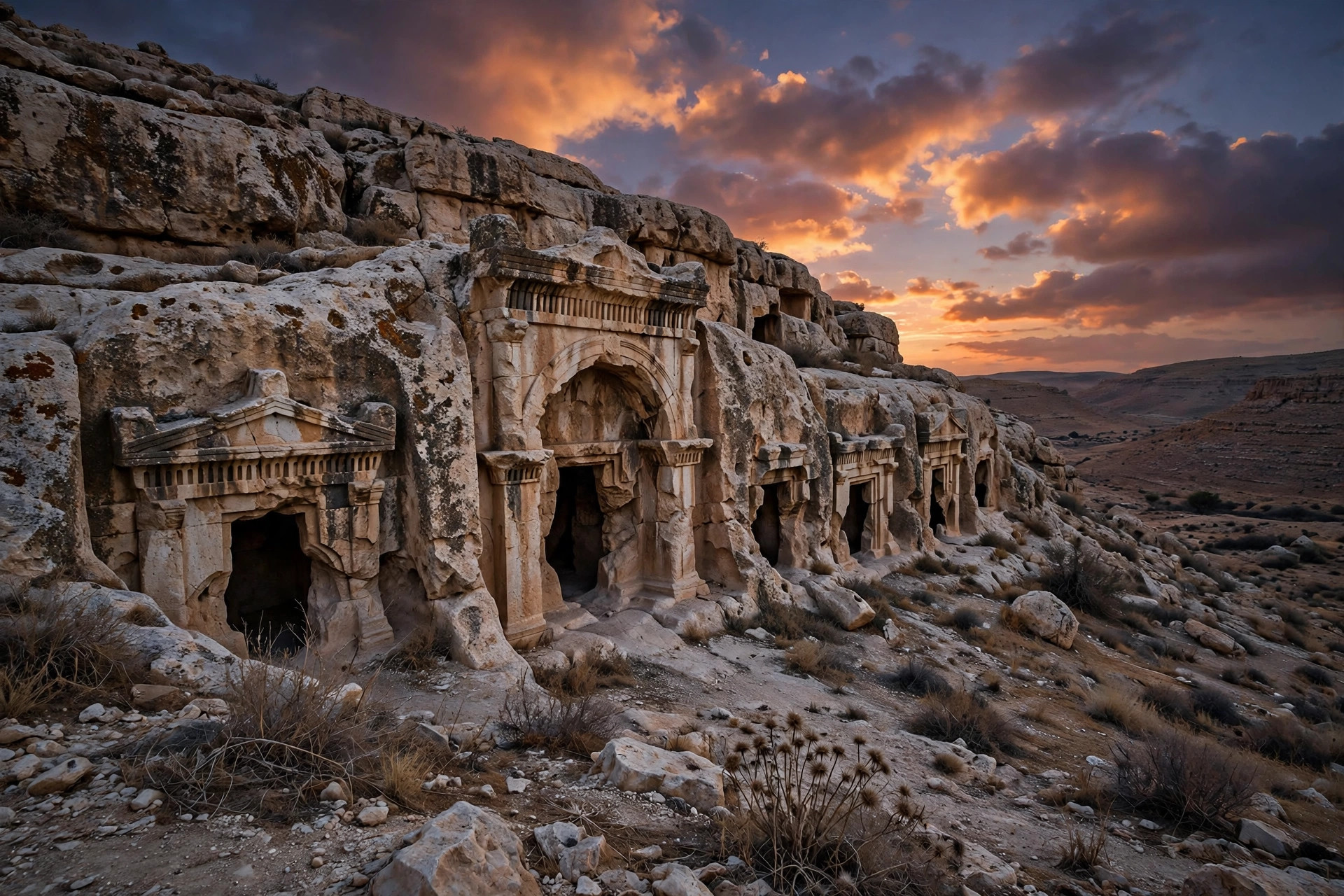
Stand in a quiet cemetery and read the names on old stones. Each one tells a story — some of faithfulness, some of failure, all of them finished. Now imagine those stones belonging to kings: David, Solomon, Hezekiah, Josiah. Their tombs still echo through Scripture, and thoughtful readers keep asking about the Jewish kings’ graves in the Bible. Why does the Bible record where kings were buried? What do these royal graves teach us?
More than you might think. In Scripture, a king’s burial was never just a funeral. It was a final verdict — a last sermon preached in stone.
Where the Jewish Kings Were Buried
Most of Judah’s kings were buried in Jerusalem, in the City of David — the ancient southern part of the city. The refrain runs through Kings and Chronicles like a drumbeat: “Then David rested with his ancestors and was buried in the City of David” (1 Kings 2:10). “Solomon rested with his ancestors and was buried in the city of David, his father” (1 Kings 11:43). King after king, the same sentence, with small variations that carry enormous meaning.
Some kings were buried “with their ancestors” — the formula of honor. Others were buried but pointedly not with their ancestors, or not in the royal tombs at all. Jehoram “was buried in the City of David, but not in the tombs of the kings” (2 Chronicles 21:20, in substance). Joash was buried in the City of David “but not in the tombs of the kings” (2 Chronicles 24:25, in substance). Ahaz “was buried in the city of Jerusalem, but he was not placed in the tombs of the kings of Israel” (2 Chronicles 28:27). The Chronicler is keeping score, and the burial notice is the final grade.
Other kings met even starker ends. Jehoiakim’s fate was prophesied in terrible terms: “He will have the burial of a donkey — dragged away and thrown outside the gates of Jerusalem” (Jeremiah 22:19). Josiah, the reformer king, was killed in battle at Megiddo and mourned by the whole nation: “Jeremiah composed laments for Josiah, and to this day all the male and female singers commemorate Josiah in the laments” (2 Chronicles 35:24-25, in substance). The graves of kings recorded not just where bodies lay, but how lives ended.
The Tomb of David: The Standard
David’s tomb was the anchor of the royal cemetery. Nehemiah, rebuilding Jerusalem’s walls centuries later, worked near “the tombs of David” (Nehemiah 3:16). David’s burial set the pattern: the shepherd-king, the man after God’s own heart, laid to rest among his people, in the city he had conquered.
But David’s tomb also carried a deeper message, one Peter preached at Pentecost: “Fellow Israelites, I can tell you confidently that the patriarch David died and was buried, and his tomb is here to this day” (Acts 2:29). David’s tomb was proof that David was still dead — that the promise to David had not been fulfilled in David himself. “David did not ascend to heaven,” Peter said (Acts 2:34, in substance). The tomb that honored David also proved that a greater Son of David was needed — one whose tomb would not hold him. “He was not abandoned to the realm of the dead, nor did his body see decay” (Acts 2:31, in substance). David’s grave points to an empty grave.
Hezekiah: Honored at the End
Hezekiah’s burial notice is one of the most beautiful in Scripture: “Hezekiah rested with his ancestors and was buried on the hill where the tombs of David’s descendants are. All Judah and the people of Jerusalem honored him when he died” (2 Chronicles 32:33). Hezekiah trusted God when Assyria’s armies surrounded Jerusalem, prayed, and watched an angel defeat the enemy. He reformed worship, restored the temple, and led the nation back to God. His tomb was a place of honor because his life was a life of faith.
Hezekiah’s grave teaches us that a life of faith ends in honor — not necessarily in wealth or fame, but in the respect of God’s people and the approval of God. “Precious in the sight of the Lord is the death of his faithful servants” (Psalm 116:15).
Manasseh: The Tomb of a Repentant King
Manasseh’s story is the most surprising of all the royal tombs. He reigned fifty-five years, filled Jerusalem with idols, and “shed so much innocent blood that he filled Jerusalem from end to end” (2 Kings 21:16). He was carried off to Babylon in chains — and there, in captivity, he humbled himself. “In his distress he sought the favor of the Lord his God and humbled himself greatly before the God of his ancestors. And when he prayed to him, the Lord was moved by his entreaty and listened to his plea” (2 Chronicles 33:12-13). Manasseh returned to Jerusalem, removed the idols, and restored worship.
Manasseh was buried in his own palace garden (2 Kings 21:18, in substance) — not in the royal tombs, but not in disgrace either. His grave is the monument to the truth that no one is beyond repentance. The worst king in Judah’s history became a trophy of grace. If Manasseh could be forgiven, anyone can.
Josiah: The Grave of the Reformer
Josiah became king at eight years old and led the greatest reform in Judah’s history. When the Book of the Law was discovered during temple repairs, he tore his robes, wept, and purged the land of idols. “Neither before nor after Josiah was there a king like him who turned to the Lord as he did — with all his heart and with all his soul and with all his strength, in accordance with all the Law of Moses” (2 Kings 23:25). He died in battle against Pharaoh Necho at Megiddo, and the whole nation mourned him (2 Kings 23:30, in substance).
Josiah’s grave teaches us that faithfulness is not measured by longevity or by happy endings. Josiah died young, in battle, with the reform unfinished and the exile still coming. But his epitaph is unmatched: no king like him. God does not measure a life by its length or its comfort. He measures it by its faithfulness.
What the Kings’ Graves Explicitly Teach
First, death is the great leveler. Kings and commoners end in the same ground. “Naked I came from my mother’s womb, and naked I will depart” (Job 1:21). The royal tombs, for all their grandeur, could not keep a single king alive. “The wise will die; the fool and the senseless alike will perish” (Psalm 49:10, in substance). Every grave — royal or common — preaches the same sermon: life is short, and eternity is long.
Second, the grave is not the end. The Old Testament saints believed in resurrection, even if dimly. Job declared, “I know that my Redeemer lives, and that in the end he will stand on the earth” (Job 19:25). Martha confessed it: “I know he will rise again in the resurrection at the last day” (John 11:24, in substance). And Jesus proved it: “I am the resurrection and the life. The one who believes in me will live, even though they die” (John 11:25).
Third, your epitaph is being written now. The Chronicler’s burial notices are verdicts: honored or not, with the kings or not, mourned or forgotten. The verdict is not about wealth or power. It is about faithfulness. “Well done, good and faithful servant” (Matthew 25:21) is the only epitaph that matters.
Fourth, one tomb changed every tomb. “The tombs broke open and the bodies of many holy people who had died were raised to life” at Jesus’ death (Matthew 27:52, in substance). And on the third day, his own tomb was found empty: “He is not here; he has risen, just as he said” (Matthew 28:6, in substance). The empty tomb of Jesus is the guarantee that every grave — including yours — is temporary. “Where, O death, is your victory? Where, O death, is your sting?” (1 Corinthians 15:55).
Practical Lessons from the Royal Tombs
Visit a cemetery — not to be morbid, but to be wise. “Teach us to number our days, that we may gain a heart of wisdom” (Psalm 90:12). The royal tombs teach us to live with the end in view.
Ask yourself: what will my epitaph be? Not the words on the stone — the verdict of God. Will it be “faithful”? Will it be “he repented”? Will it be “she trusted God”? The kings’ graves remind us that the time to decide is now, while the stone is still being carved.
And if you are grieving — if you have stood at a grave recently, royal or humble — hear this: the tomb that changed every tomb is empty. “Because I live, you also will live” (John 14:19). The grave is not the end of the story. It is the beginning of the resurrection.
The Tomb That Changed Every Tomb
The kings of Judah lie in their tombs to this day — David, Solomon, Hezekiah, Josiah, all of them. But one tomb in Jerusalem is empty, and it changes everything. The King who was buried there did not stay buried. He rose, and because he rose, every grave is now a doorway, not a destination. “I hold the keys of death and Hades” (Revelation 1:18). The royal tombs preach a final sermon: kings die, but the King lives forever. For the historical background of Jerusalem’s royal burial sites, the Wikipedia article on the Tombs of the Kings in Jerusalem offers a helpful overview.










