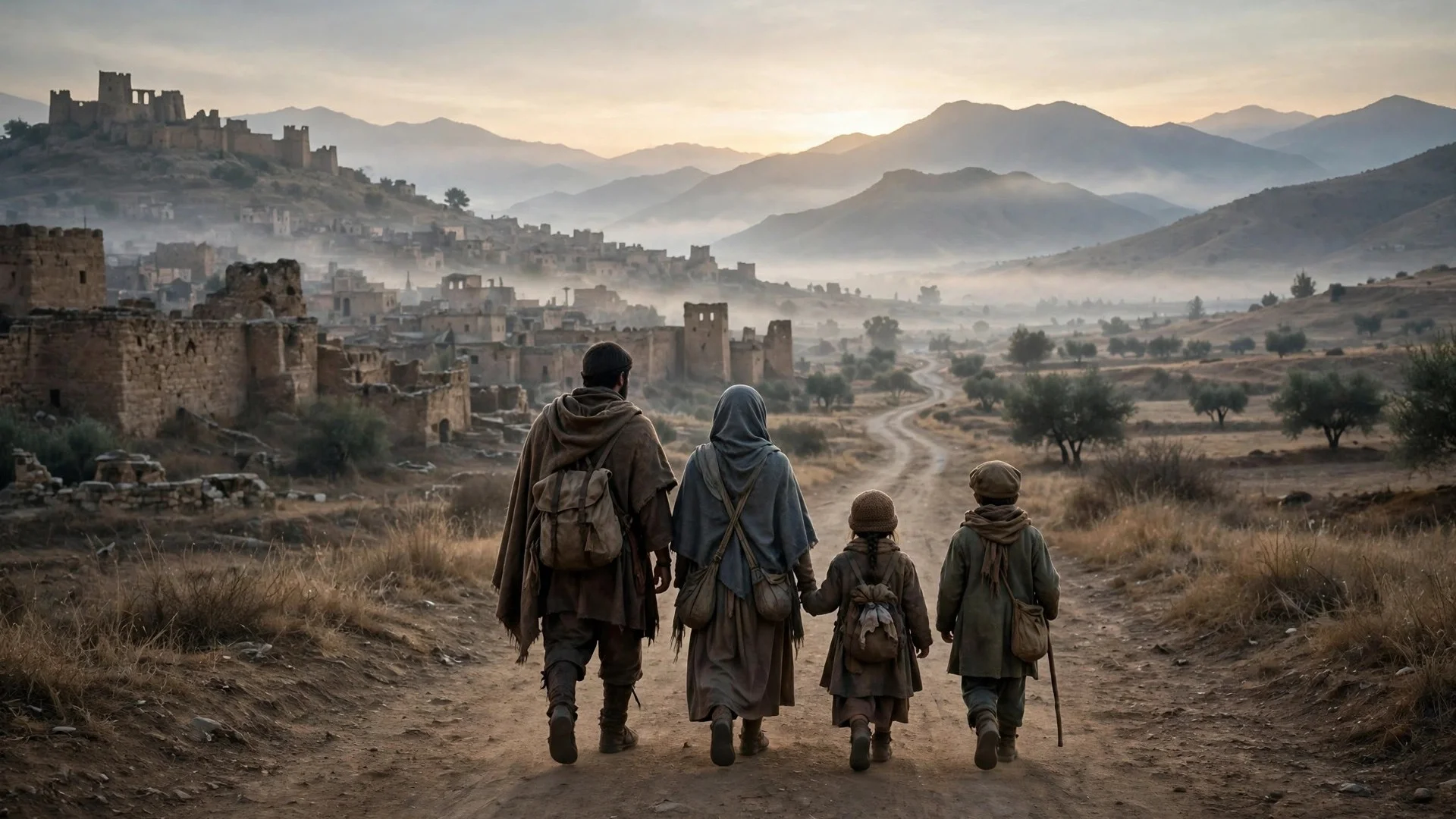
Lot’s story ends in a cave, but it begins in a tent beside his uncle Abraham, with flocks so large the land could not hold them both. Between those two places lies one of Scripture’s most sobering character studies: a righteous man, as Peter calls him, who kept making small compromises until they carried him somewhere he never intended to go. Lot is not a villain. He is a warning — and, remarkably, also a testimony to mercy.
The Choice That Shaped Everything
When Abraham offered Lot first pick of the land, Lot looked toward the well-watered plain of the Jordan and chose the region near Sodom. Genesis adds the detail that matters: “the men of Sodom were wicked.” Lot pitched his tents near Sodom, then moved into the city itself. Each step was reasonable on its own — better pasture, better markets, a better life for his family. Together, they were a slow drift toward a place whose values would eventually swallow his household.
Mercy Arrives Before Judgment
Before Sodom fell, two angels arrived at Lot’s door, and Lot, remembering Abraham’s hospitality, urged them inside. That night the men of the city surrounded the house, and the angels struck them with blindness and warned Lot to flee. The rescue is strikingly undeserved: Lot hesitated, and Genesis 19:16 says the angels “seized his hand” because “the Lord was merciful to him.” Lot did not save himself. He was dragged to safety by grace, and even then he bargained for a smaller city, Zoar, rather than fleeing to the mountains as instructed.
Peter later calls Lot “a righteous man” who was “distressed by the depraved conduct of the lawless.” That description reframes the whole story. Lot’s righteousness was real but exhausted — worn down by daily compromise until he could barely recognise the danger he was in.
What Lot Lost
Lot lost his home, his wealth, and his wife, who looked back toward Sodom and became a pillar of salt — a final image of a heart still attached to what God was judging. He escaped with his life and his two daughters, and the story’s last scene, in a cave, is bleak. Yet even here the narrative refuses to end on despair: Lot’s descendants, Moab and Ammon, become nations, and from Moab comes Ruth — and through Ruth, the line of David and of Christ. Mercy reaches further than Lot’s failures did.
Questions Readers Ask
Was Lot a good man? Scripture calls him righteous, but his story shows righteousness compromised by comfort and bad company. He is an example, not a hero.
Why did Lot’s wife look back? Jesus later used her as a warning: “Remember Lot’s wife.” Looking back meant clinging to a condemned life instead of trusting God’s rescue.
What does Lot teach us today? That small choices about where we live, what we tolerate, and what we value compound over a lifetime — and that God’s mercy can still seize our hand when we hesitate.
Is Lot mentioned in the New Testament? Yes — in Luke 17, 2 Peter 2, and indirectly through the genealogy of Ruth and David.
Conclusion
Lot’s life asks a question worth sitting with: are your daily choices carrying you toward God or merely toward comfort? If you find yourself hesitating at the door, remember that mercy can still take your hand. For further background, see the Wikipedia article on Lot.