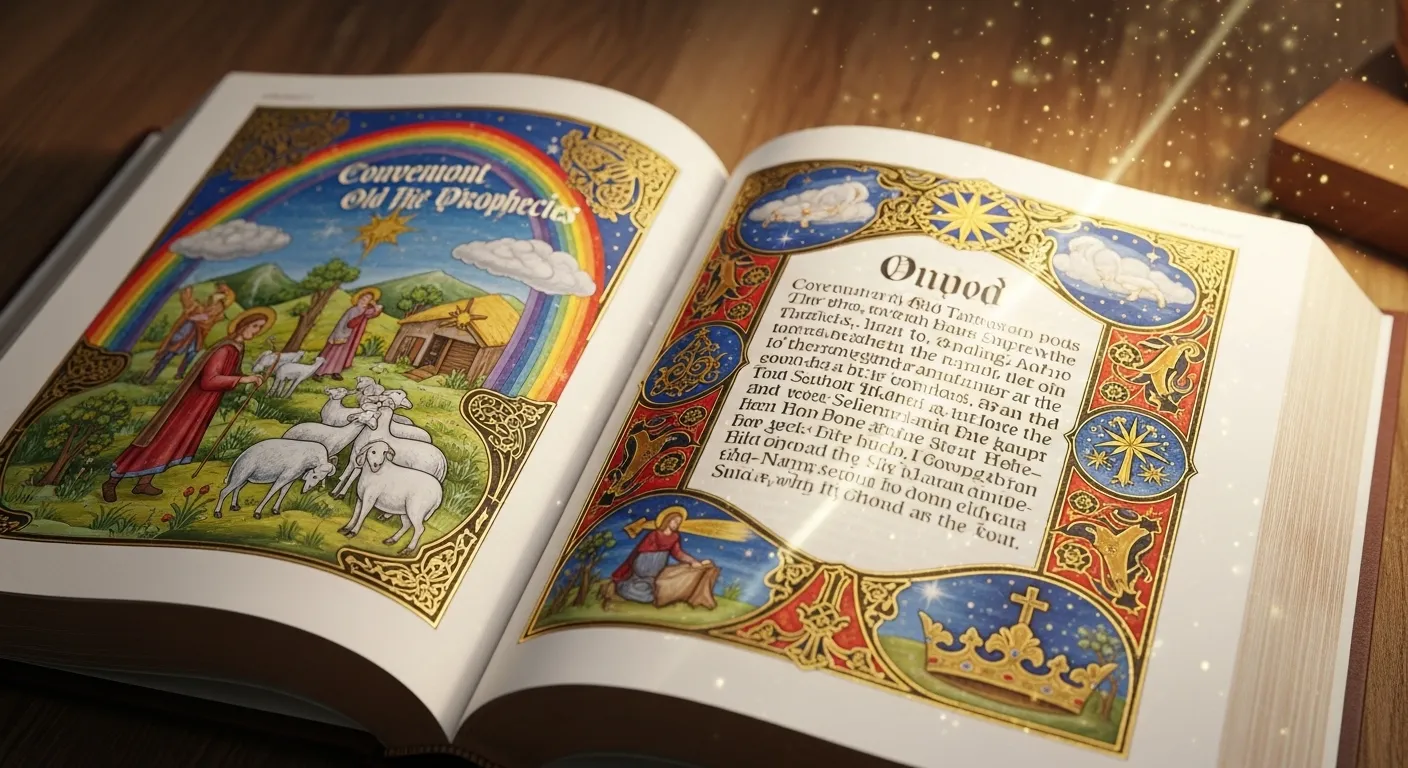
“The LORD has spoken” — that is the heartbeat of Old Testament prophecy. Not “I predict,” not “I feel,” but the LORD has spoken, the phrase that opens Amos (Amos 1:3) and echoes through every prophetic book. The prophets were not ancient fortune-tellers, not mystical predictors for hire. They were covenant messengers — men (and a few women, like Huldah and Deborah) drafted by God to say what He was saying to His people in their moment of history. To understand Old Testament prophecy is to understand how God talks to nations: directly, morally, urgently, and always with eternity in view.
The Lawsuit: What Prophets Actually Did
Forget the crystal ball. The prophets’ primary job was forthtelling — speaking God’s word into the present — far more than foretelling the future. And their favorite literary form was the lawsuit. “Hear, you mountains, the LORD’s accusation; listen, you everlasting foundations of the earth. For the LORD has a case against his people” (Micah 6:1–2). God summons the mountains as witnesses, lays out the charges — ingratitude, injustice, idolatry — and calls His people to answer. Isaiah opens the same way: “Hear me, you heavens! Listen, earth! For the LORD has spoken: ‘I reared children and brought them up, but they have rebelled against me'” (Isaiah 1:2).
This is why prophecy feels so confrontational: it is a courtroom. The prophets were prosecuting attorneys for the covenant, reminding Israel of the terms they had agreed to at Sinai — exclusive worship, just society, holy living — and presenting the evidence of breach. The future-telling element grew out of this: because the covenant promised blessings for obedience and curses for rebellion (Deuteronomy 28), the prophets could announce what was coming with legal certainty. Judgment wasn’t divine moodiness; it was covenant enforcement. And mercy wasn’t divine inconsistency; it was covenant love, the same document’s promise that God would never finally abandon His people.
The Pattern: Judgment, Then Hope
Read any major prophet — Isaiah, Jeremiah, Ezekiel — and the same architecture appears: long chapters of indictment and announced judgment, followed by a turn toward restoration that feels like sunrise. Isaiah spends thirty-nine chapters warning of exile, then thirty-seven proclaiming comfort. Jeremiah weeps over a doomed Jerusalem, then promises a new covenant written on hearts (Jeremiah 31:31–34). Ezekiel watches the glory depart the temple (Ezekiel 10), then sees a valley of dry bones breathe again (Ezekiel 37) and a river flowing from a new temple (Ezekiel 47).
The pattern is the gospel in Old Testament form: things are worse than you think, and grace is greater than you imagine. The judgment sections exist so the hope sections mean something — comfort without conviction is sentimentality. But the hope is always the last word, and it is always bigger than the judgment. “Though your sins are like scarlet, they shall be as white as snow” (Isaiah 1:18) sits inside a lawsuit chapter. God’s harshest speeches carry His tenderest offers. That is not contradiction; it is the character of a holy God who loves — He will not pretend the wound isn’t mortal, and He will not withhold the cure.
The Thread: A Coming One
Woven through the judgment-and-hope pattern runs a golden thread: the promise of a Coming One. It begins in Eden — the serpent-crusher of Genesis 3:15, the first prophecy in Scripture. It continues through the covenant with David: “Your house and your kingdom will endure forever” (2 Samuel 7:16). Then the prophets sharpen the portrait with details no one could have invented: born of a virgin (Isaiah 7:14), born in Bethlehem (Micah 5:2), called out of Egypt (Hosea 11:1), entering Jerusalem on a donkey (Zechariah 9:9), betrayed for thirty pieces of silver (Zechariah 11:12–13), pierced for our transgressions (Isaiah 53:5), silent before His accusers (Isaiah 53:7), buried with the rich (Isaiah 53:9).
The New Testament writers saw these threads converging and named the weaver. Matthew cites prophecy after prophecy as fulfilled in Jesus — his Gospel is structured as a demonstration that the Coming One has come. On the Emmaus road, the risen Christ Himself gave the masterclass: “beginning with Moses and all the Prophets, he explained to them what was said in all the Scriptures concerning himself” (Luke 24:27). Old Testament prophecy is not a puzzle book for the curious; it is a portrait gallery, and every portrait is of Christ. “The testimony of Jesus is the spirit of prophecy” (Revelation 19:10).
The Prophet’s Life as the Message
Sometimes God didn’t just give the prophets words — He made their lives the sermon. Isaiah walked “stripped and barefoot for three years” as a sign against Egypt and Cush (Isaiah 20:3) — imagine the prophet of the royal court, naked in the streets, embodying the humiliation coming to the nations Judah trusted. Ezekiel lay on his side for 390 days, then 40, bearing the iniquity of Israel and Judah in his own body (Ezekiel 4:4–6); he built a model of besieged Jerusalem and played out its fall in miniature. Jeremiah wore a wooden yoke on his neck to preach submission to Babylon (Jeremiah 27–28) — until the false prophet Hananiah broke it, and Jeremiah returned with an iron yoke instead.
Hosea’s marriage was the most intimate of these enacted parables, but the principle runs through the whole prophetic corpus: God preaches with lives, not just lips. The prophets’ sufferings were part of the message — Jeremiah’s celibacy (Jeremiah 16:2) preached the coming judgment on families; Ezekiel’s muteness (Ezekiel 3:26) preached God’s withdrawal; his wife’s death, which he was forbidden to mourn, preached the stunning of a nation (Ezekiel 24:15–18). This is why the prophets are so compelling and so costly to read: they didn’t just say hard things. They lived them.
There is a searching application here. The New Testament extends the principle to every believer: “You are our letter… written not with ink but with the Spirit of the living God” (2 Corinthians 3:2–3). Paul calls the church Christ’s letter, “known and read by everyone.” Your life is an enacted parable too — the question is only what it’s preaching. The prophets show that God is willing to write His message in human biographies, including the painful chapters. A life surrendered to God becomes, like Isaiah’s bare feet or Hosea’s marriage, a sermon the world cannot unsee.
The Counterfeits: Testing the Spirits
Because true prophecy carried such authority, counterfeits flourished — and Scripture gives clear tests. The fulfillment test: “If what a prophet proclaims in the name of the LORD does not take place or come true, that is a message the LORD has not spoken” (Deuteronomy 18:22). False prophets fail the track record. The theology test: even if a sign comes true, “if they say, ‘Let us follow other gods,’ you must not listen” (Deuteronomy 13:1–3). Accuracy without orthodoxy is still falsehood. The fruit test: Micah exposed prophets who “prophesy… for money” — who “declare war against those who fail to feed them” (Micah 3:5, 11). True prophets confronted the powerful; false ones flattered them. Jeremiah’s opponents preached “peace, peace” when there was no peace (Jeremiah 6:14); Jeremiah preached repentance and was thrown in a cistern. The true prophet’s life is usually the evidence.
The New Testament extends the tests to every age: “Do not believe every spirit, but test the spirits to see whether they are from God, because many false prophets have gone out into the world” (1 John 4:1). The standard remains Scripture itself — “to the law and to the testimony! If they do not speak according to this word, they have no light of dawn” (Isaiah 8:20). Any voice claiming divine authority — ancient or modern, pulpit or podcast — is measured against the written Word. That test has never been repealed.
Reading Prophecy Today: Without Fear and Without Fantasy
So how should believers read Old Testament prophecy now? Three guidelines keep it fruitful. First, read for Christ. He is the center the prophets were pointing to; every judgment illuminates the cross He bore, every promise illuminates the kingdom He brings. A reading of prophecy that doesn’t lead to Jesus has missed the Author’s intent. Second, read for the pattern, not just the predictions. The prophets’ great gift to us is not a timeline but a theology: God judges sin, keeps His promises, and restores the repentant. That pattern interprets your life more reliably than any chart interprets the news.
Third, resist both date-setting and dismissal. Date-setting ignores Jesus’ plain statement that the timing is the Father’s business (Matthew 24:36; Acts 1:7) and has embarrassed the church every time it’s been tried. Dismissal — treating prophecy as irrelevant ancient politics — ignores that “all Scripture is God-breathed and is useful” (2 Timothy 3:16), and that the prophets’ God is our God, still holy, still merciful, still speaking through His Word. Between the two errors lies the wise path: read prophecy with humility about details and confidence about the main point — God is in control, Christ is coming, and the holy, loving God of the prophets is worth trusting today.
Old Testament prophecy, rightly understood, is not a code to crack but a voice to heed — the voice of God in history, prosecuting, warning, promising, and finally pointing to a manger and a cross and an empty tomb. “Surely the Sovereign LORD does nothing without revealing his plan to his servants the prophets” (Amos 3:7) — and what He revealed, He has done. For a general overview of prophecy as a religious phenomenon across traditions, see the Wikipedia article on prophecy; for the prophets’ own voice — lawsuit, promise, and portrait of the Coming One — open the books that bear their names, and listen for the LORD who has spoken.










