Some journeys are about starting. Others are about finishing. Paul’s third missionary journey, recorded in Acts 18:23 through 21:16, was a journey of strengthening, deepening, and saying goodbye. It shows us what faithful, mature ministry looks like — not flashy beginnings, but steady perseverance through hardship toward a God-given finish line.
This journey led to Paul’s longest stay in any city, produced some of his most important letters, and ended with his determined march toward Jerusalem — and toward suffering he knew was coming.
Ephesus: Three Years of Deep Work
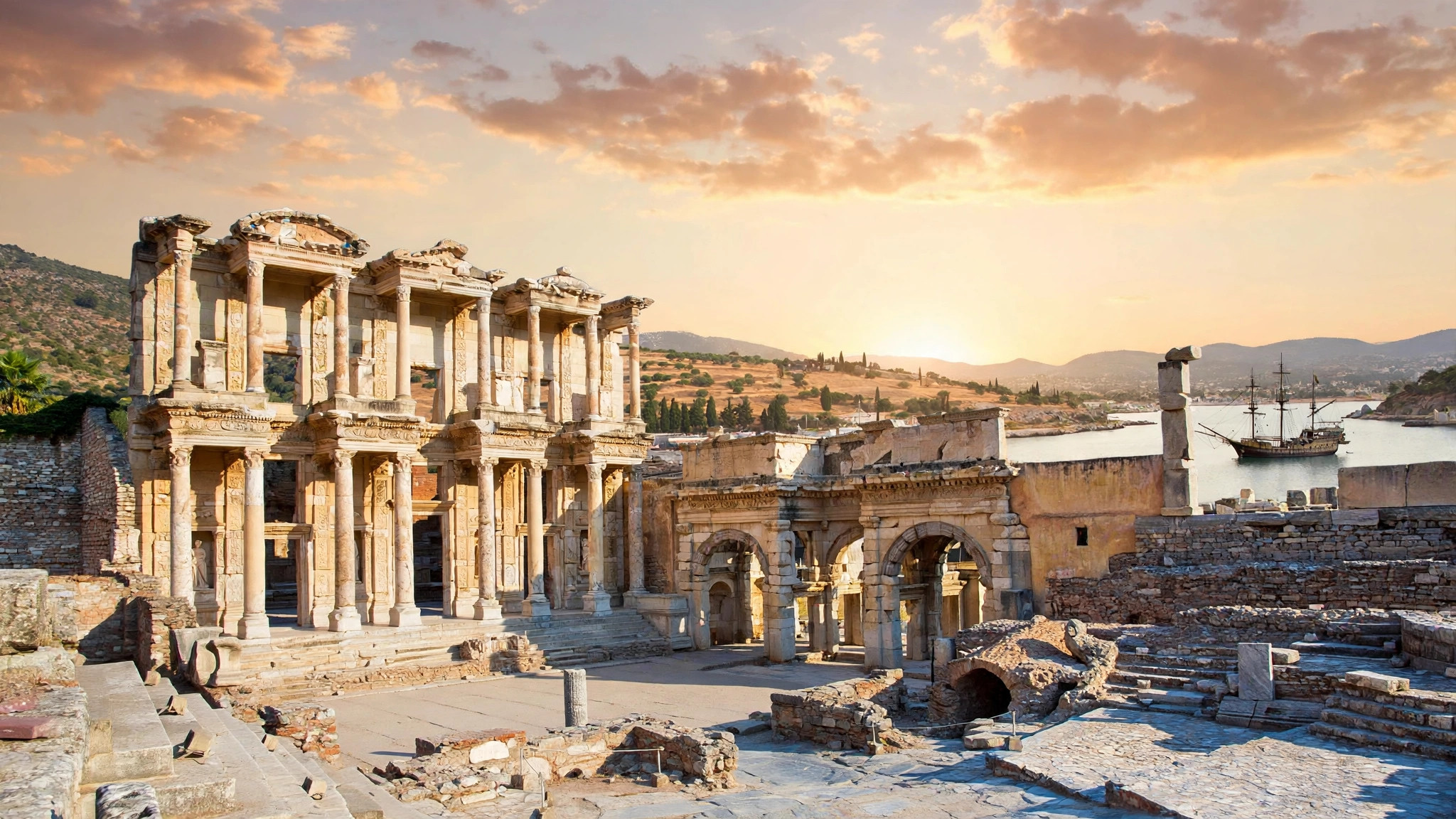
After traveling through Galatia and Phrygia “strengthening all the disciples” (Acts 18:23) — caring for established believers before breaking new ground — Paul arrived in Ephesus, the great coastal city of Asia Minor and one of the largest cities in the Roman Empire, a center of commerce, culture, and pagan worship. He would spend about three years there, longer than anywhere else in his ministry (Acts 20:31).
He began in the synagogue, reasoning with the Jews for three months (Acts 19:8). When opposition hardened, he moved to the lecture hall of Tyrannus and taught daily for two years — “so that all the Jews and Greeks who lived in the province of Asia heard the word of the Lord” (Acts 19:10).
God did “extraordinary miracles” through Paul in Ephesus (Acts 19:11): handkerchiefs and aprons that touched him were taken to the sick, and they were healed. The impact ran so deep that new believers publicly burned their magic books — worth fifty thousand drachmas, a fortune (Acts 19:19). Revival touched the economy, the culture, and the occult practices of the city.
The Riot Over Silver Shrines
Success brought opposition. Demetrius the silversmith, who made shrines of the goddess Artemis, stirred up a riot because the gospel was hurting his business (Acts 19:23-29). The whole city erupted in confusion, shouting “Great is Artemis of the Ephesians!” for two hours (Acts 19:34). Paul wanted to face the mob, but the disciples would not let him. God’s protection came through the city clerk, who dismissed the crowd.
Here is what the Bible explicitly teaches: faithful gospel ministry transforms lives deeply and provokes opposition naturally. Paul did not seek conflict, but the truth he preached disrupted idolatry and greed. When the gospel takes root, the world notices — sometimes with revival, sometimes with riots.
Goodbye at Miletus
One of the most moving passages in Acts comes near the end of the third journey. Paul called the Ephesian elders to meet him at Miletus and gave them a farewell speech (Acts 20:17-38).
Paul reminded them of his ministry: he served “with great humility and with tears” (Acts 20:19), had not hesitated to preach “anything that would be helpful” (Acts 20:20), and had declared “the whole counsel of God” (Acts 20:27) — not just the popular parts.
Then came the charge. Paul warned that after his departure, “savage wolves will come in among you and will not spare the flock” (Acts 20:29). He charged them to “keep watch over yourselves and all the flock” (Acts 20:28) — a charge that echoes the Hebrew shamar, to guard and keep, the word God gave Adam over the garden (Genesis 2:15). Paul was passing the shamar responsibility to the next generation of shepherds, committing them “to God and to the word of his grace” (Acts 20:32).
The farewell was heartbreaking. They knelt, prayed, wept, embraced Paul, and kissed him — “because of his saying that they would never see his face again” (Acts 20:37-38). This speech is a treasure for every Christian leader: humility, tears, courage, completeness, and love. Paul was not building his own kingdom; he was building Christ’s church and entrusting it to God.
Walking Toward Chains
As Paul traveled toward Jerusalem, believers along the way begged him not to go. At Tyre, disciples “through the Spirit urged Paul not to go on to Jerusalem” (Acts 21:4). At Caesarea, the prophet Agabus bound his own hands and feet with Paul’s belt, predicting Paul’s arrest (Acts 21:11). Everyone wept and pleaded.
Paul’s answer was firm: “Why are you weeping and breaking my heart? I am ready not only to be bound, but also to die in Jerusalem for the name of the Lord Jesus” (Acts 21:13).
Here is what the Bible explicitly teaches: Paul was not being reckless; he was being obedient. The Holy Spirit had warned him of suffering, not forbidden him from going. Paul understood the difference between a warning and a prohibition. His determination came from his calling: “I consider my life worth nothing to me; my only aim is to finish the race and complete the task the Lord Jesus has given me” (Acts 20:24). In Hebrew thought, that “task” is avodah — the work and worship of God. For Paul, ministry was worship, and the journey was an offering.
Some have suggested Paul was wrong to go and that his arrest was God’s punishment. Scripture never says this. His arrest in Jerusalem became the doorway to his ministry in Rome — exactly as God had planned (Acts 23:11).
The Letters Written on the Road
During this journey, Paul wrote some of his most important letters. Most scholars place 1 Corinthians during his time in Ephesus (1 Corinthians 16:8 mentions he would stay in Ephesus until Pentecost), 2 Corinthians from Macedonia shortly after (2 Corinthians 2:13; 7:5), and Romans — his theological masterpiece — from Corinth near the journey’s end (Romans 15:25-26).
Think about that. While traveling, facing riots, saying goodbyes, and walking toward suffering, Paul was writing the letters that would shape Christian theology for two thousand years. God’s greatest work often happens in our hardest seasons.
Three Questions About the Journey
How long was Paul’s third missionary journey? Approximately four to five years, roughly AD 53-57. The three years in Ephesus (Acts 20:31) formed the heart of it, with travel through Galatia, Macedonia, Greece, and the coastal journey to Jerusalem filling out the rest.
What is the main difference between Paul’s three journeys? The first journey (Acts 13-14) was about pioneering — breaking into new territory. The second (Acts 15-18) was about expanding — reaching Europe. The third was about deepening and finishing — strengthening churches, teaching thoroughly, and walking faithfully toward God’s appointed suffering.
Did Paul know he would be arrested? Yes. The Holy Spirit warned him “in every city” that prison and hardships awaited (Acts 20:23). Paul went to Jerusalem with open eyes, choosing obedience over safety.
Conclusion: Finish Your Race
The meaning of Paul’s third journey in the Bible is ultimately about faithfulness. Not flashy success. Not easy victories. But steady, tearful, determined obedience — strengthening churches, teaching truth, saying hard goodbyes, and walking toward God’s will even when it hurts.
Your journey may not take you to Ephesus or Jerusalem. But you have a race to run too. Some of your most important work will happen in hard seasons. Some of your deepest impact will come from simply staying faithful where God planted you.
Take a moment to pray. Ask God to show you your race — the task He has given you. Then, like Paul, set your face toward it. Do not shrink from the cost. Finish well. Because the God who carried Paul through his third journey will carry you through yours. To explore Paul’s life and travels further, the Wikipedia article on Paul the Apostle offers useful background.










