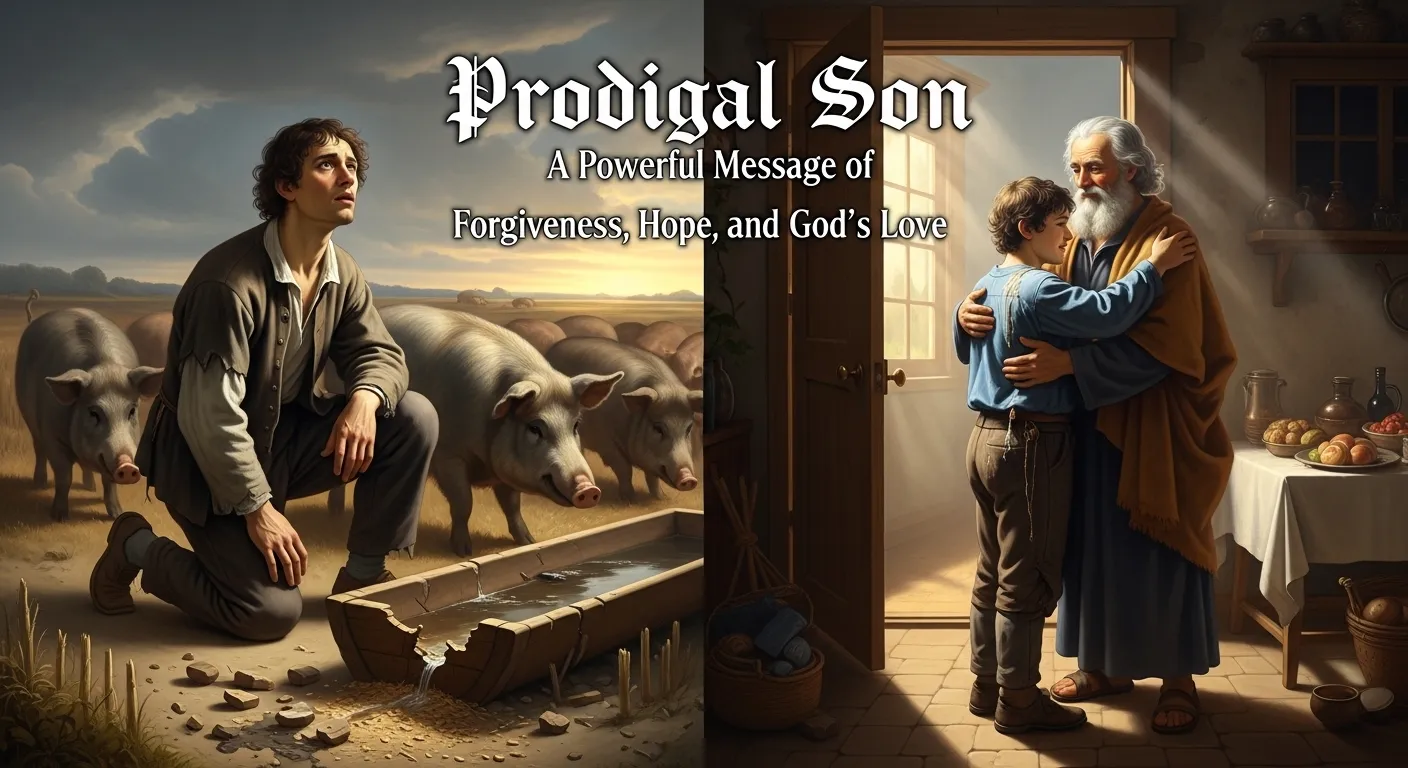
We call it the Parable of the Prodigal Son, but the story’s true scandal is not the son who ran away. It is the father who ran toward him. In the honor-bound world of first-century Palestine, patriarchs did not run. Running required hiking up the robes, baring the legs — a humiliation no dignified elder would inflict on himself. Yet Jesus says: “when he was yet a great way off, his father saw him, and had compassion, and ran, and fell on his neck, and kissed him” (Luke 15:20). The father absorbs the shame so the son doesn’t have to. That single undignified sprint contains the entire gospel — and it means this parable, rightly understood, is really about two lost sons and one extraordinary father.
The Insult of the Request
The story opens with a sentence that would have made Jesus’ audience gasp: “Father, give me the portion of goods that falleth to me” (Luke 15:12). In that culture, a son requested his inheritance exactly once — after his father’s death. To demand it while the father still lived was to say, in effect: I wish you were dead. Your wealth matters more to me than your life. It was not a financial transaction. It was a relational execution.
And the father’s response is the story’s first miracle of grace: “he divided unto them his living.” No lecture. No disinheritance. No conditions. The father lets the son go — absorbing the public insult, liquidating a third of the estate (the younger son’s share under Jewish law), and watching the boy walk away with the family’s wealth converted to cash. Love, in this parable, does not coerce. It grants the freedom to leave, even knowing the leaving will destroy the leaver.
The younger son’s trajectory is swift and total: “not many days after… took his journey into a far country, and there wasted his substance with riotous living” (Luke 15:13). The “far country” is both geography and spirituality — distance from the father’s house in every sense. When famine strikes, he hires himself to a Gentile pig farmer and finds himself envying the pigs’ food: “and no man gave unto him” (Luke 15:16). The son who demanded everything ends with nothing, in a pigpen, in a foreign land — the precise portrait of sin’s economics. It always promises freedom and delivers slavery.
The Journey Home
“And when he came to himself” (Luke 15:17) — four words that describe every genuine repentance. He rehearses a speech: “Father, I have sinned against heaven, and before thee, and am no more worthy to be called thy son: make me as one of thy hired servants” (Luke 15:18-19). Note the modesty of his hope. He does not expect restoration; he aims for employment. A servant in his father’s house eats better than a freeman in a pigpen. His theology of the father is still too small — he expects, at best, tolerance.
What he gets instead is the run. The father, who has evidently been watching the road — “when he was yet a great way off, his father saw him” — sprints to meet him. In that culture, the village would have shamed a returning wastrel; the father’s run is partly interception, getting to the son before the community’s scorn does. Grace outruns judgment. Then the robe (honor restored), the ring (authority restored), the shoes (a servant went barefoot; a son wears shoes), and the fatted calf — the celebration reserved for the most honored guests. The son’s rehearsed speech about being a servant is interrupted mid-sentence. The father will not even let him finish applying for the job he doesn’t need.
“For this my son was dead, and is alive again; he was lost, and is found” (Luke 15:24). The father’s verdict reframes everything: this was never about economics. It was about death and life.
The Trilogy: Three Lost Things
The prodigal son is the third movement in a trilogy, and the first two movements set up its meaning. Luke 15 opens with the Pharisees’ complaint — “This man receiveth sinners, and eateth with them” (Luke 15:2) — and Jesus answers with three parables of lostness. A shepherd loses one sheep out of a hundred and searches until he finds it. A woman loses one coin out of ten and sweeps the house until she finds it. A father loses one son out of two — and waits.
The proportions escalate deliberately: one percent, ten percent, fifty percent. The lost thing becomes more valuable each time — from livestock to life savings to a child. And the seeking intensifies: the shepherd goes, the woman sweeps, the father runs. Each parable ends the same way: “joy shall be in heaven over one sinner that repenteth” (Luke 15:7), “there is joy in the presence of the angels of God over one sinner that repenteth” (Luke 15:10), and finally the father’s feast — heaven’s joy acted out on earth.
But the third parable adds something the first two cannot: the lost one chooses to be lost, and the lost one can choose to return. Sheep wander; coins are dropped. Sons leave — and sons can come home. The father’s waiting, unlike the shepherd’s searching, honors the son’s freedom: he will not drag the boy back, but he will watch the road every day. Divine love, Jesus teaches, both pursues (the shepherd, the woman) and waits (the father) — searching for those who cannot return, waiting for those who can.
And only the third parable has an unresolved ending — because only the third parable is about people who hear the story and must decide. The sheep is found; the coin is found. The older brother’s decision is left open, hanging in the air where every listener stands. The trilogy moves from celebration to invitation: the party is happening — will you come in?
The Other Lost Son
But Jesus does not end the story at the party. He introduces the older brother — and the parable’s real target audience comes into focus. Luke tells us Jesus spoke these parables because “the Pharisees and scribes murmured, saying, This man receiveth sinners, and eateth with them” (Luke 15:2). The older brother is the Pharisee: dutiful, obedient, furious at grace.
His complaint is meticulously reasonable: “Lo, these many years do I serve thee, neither transgressed I at any time thy commandment: and thou never gavest me a kid, that I might make merry with my friends” (Luke 15:29). Every word is true — and every word reveals a heart as far from the father as the pigpen. He calls his relationship “service” (slavery language), keeps a ledger of his obedience, and views the father’s generosity as injustice. He is lost at home: physically present, spiritually in the far country.
The father’s response to him is the parable’s gentlest moment: “Son, thou art ever with me, and all that I have is thine. It was meet that we should make merry, and be glad: for this thy brother was dead, and is alive again; and was lost, and is found” (Luke 15:31-32). The father goes out to the older son too — he pursues both lost boys. But the story ends without telling us whether the older brother goes in. The door is left open, the question unanswered, hanging in the air for every Pharisee — and every respectable, obedient, grace-resenting believer — to answer.
The Father at the Center
Read the parable once more and notice: the father is the only character who never changes. The younger son changes (rebellion to repentance). The older son is exposed (obedience to bitterness). The father simply is — giving, waiting, running, pleading, celebrating. He is the story’s fixed point, the revelation of God’s heart toward both kinds of lostness: the wild kind and the respectable kind.
This is why the parable endures as Christianity’s greatest portrait of God. It answers the two questions every sinner asks: Can I come back? — the father’s run says yes, before you even arrive. And will there be joy? — the fatted calf, the music, the dancing say yes, heaven throws parties for returnees. “There is joy in the presence of the angels of God over one sinner that repenteth” (Luke 15:10).
Which son are you? The one in the pigpen, rehearsing a servant’s speech — hear the father’s footsteps on the road; He is already running. Or the one in the field, arms crossed at the music — hear the father’s voice at the door; the party is for your brother, and the invitation is for you too. For the parable’s place in art, music, and theology across the centuries, the Wikipedia article on the Parable of the Prodigal Son surveys its remarkable influence; the parable itself needs no commentary beyond its final image — a father on the road, running, arms open, while there is still time to come home.










