My dear friend,
You look tired. Not the kind of tired a good night’s sleep can fix — the kind that settles in when you’ve been waiting on a promise for a long, long time. You’ve prayed the prayer. You’ve stood on the verse. And somewhere along the way, the promise that once made your heart leap started to feel like a weight. Maybe you’ve wondered if you misunderstood God, or if God has moved on. This letter is for you — for anyone suffering from what I’d call “promise fatigue.” The Bible has something to say to you about the Promised Land, and it is far more than a place on a map.
It Was a Gift, Not a Paycheck
The story begins with a man who had nothing to show for his faith but his footsteps. In Genesis 12:1-3, God calls Abram: “Go from your country, your people and your father’s household to the land I will show you.” He doesn’t show him the land first and then ask. He asks first and promises to show. And the promise is staggering: “I will make you into a great nation, and I will bless you… and all peoples on earth will be blessed through you.”
Then, at Shechem, God narrows the promise: “To your offspring I will give this land” (Genesis 12:7). The Hebrew word hovering over this whole story is havtacha — not a contract negotiated between equals, but a declaration you can lean your whole weight on, built from the root batach, “to trust.” God wasn’t bargaining with Abram. The gift He offered was eretz — land, a place to plant your feet and call home.
In Genesis 15:18, God lays out the borders: “To your descendants I give this land, from the Wadi of Egypt to the great river, the Euphrates.” This was no vague blessing. It was geography. And then God seals it in a way that should take your breath away. Abram cuts animals in half and lays the pieces in a row — the ancient way of swearing a blood oath. Then, in Genesis 15:17-18, “a smoking firepot with a blazing torch appeared and passed between the pieces,” and on that day the LORD made a covenant with Abram. Do you see it? God passed between the pieces alone. Whoever walked between the dead animals was saying, “May this happen to me if I break my word.” God took the curse upon Himself. The covenant depended on God’s faithfulness, not Abram’s performance. It was a gift, not a paycheck.
And before Abram could celebrate, God told him the hard part: “Know for certain that for four hundred years your descendants will be strangers in a country not their own and that they will be enslaved and mistreated there” (Genesis 15:13). The promise came with a timeline Abram would never live to see. He died without owning a single acre except a burial plot. If you’ve ever wondered whether waiting means God forgot — Abram’s story says otherwise.
The Road Was Longer Than the Promise
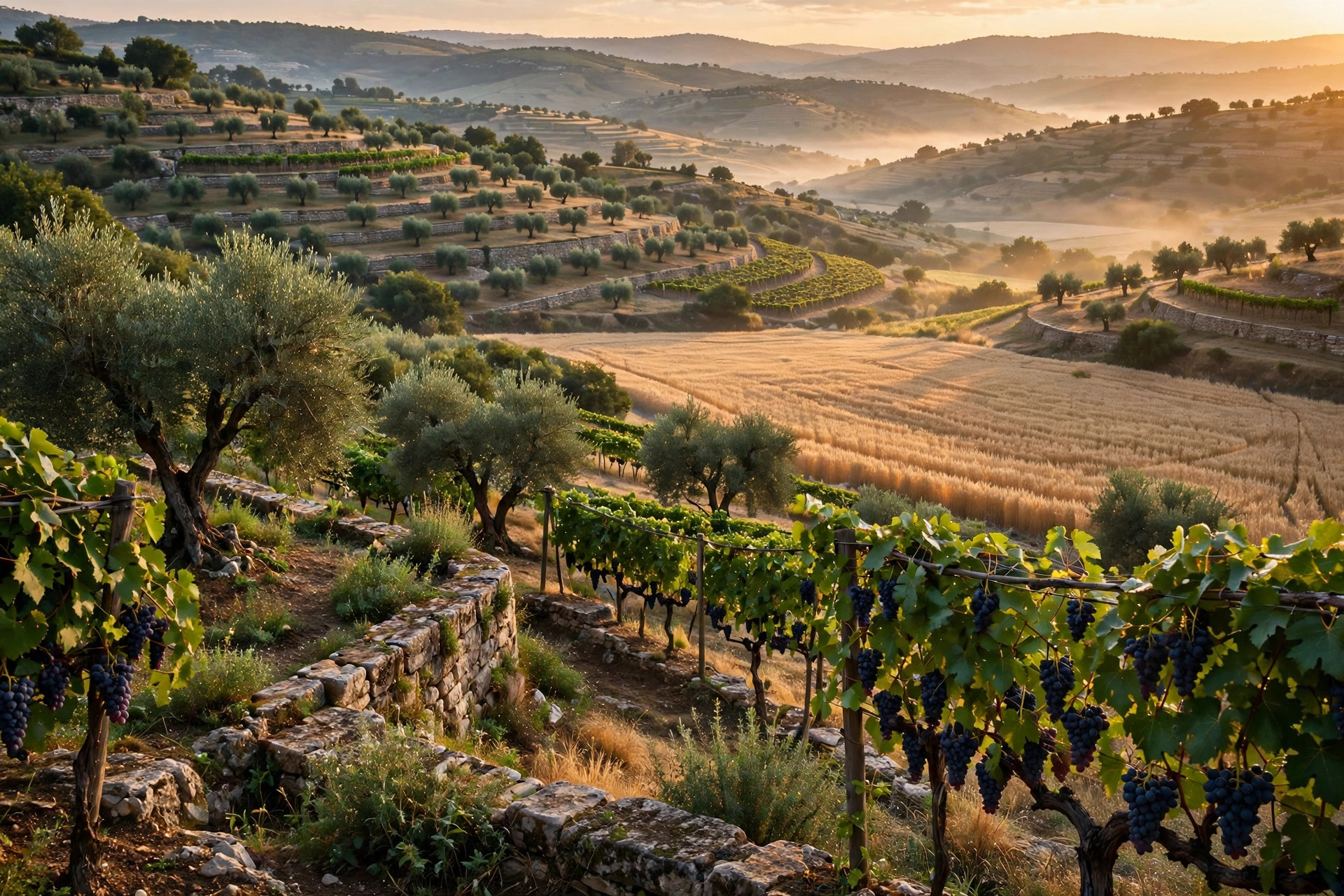
Four centuries later, God heard the groaning of Israel in Egypt and remembered His covenant. When He sent Moses, He described the destination with words that have echoed ever since: “a land flowing with milk and honey” (Exodus 3:8). After generations of brick-making under the whip, those words sounded like water in a dry throat.
But the road was longer than the promise. When Moses sent twelve spies to scout the land, ten came back trembling. Yes, the land was everything God said — but giants lived there, and “we seemed like grasshoppers in our own eyes, and we looked the same to them” (Numbers 13:33). Only Joshua and Caleb believed. The people wept and begged to go back to Egypt. God’s verdict was sober: that generation would not enter. Forty years of wandering until they all died — and then their children would go in.
Underline this in your heart: unbelief kept them out, but faith brought their children in. The promise never changed. What changed was who was willing to trust it. When the new generation stood at the flooded Jordan, God parted the waters and they crossed on dry ground, setting up twelve memorial stones so their children would never forget (Joshua 3-4).
The victories that followed were God’s, not theirs. At Jericho, the walls fell to marching feet and trumpet blasts, not siege engines (Joshua 6). At Gibeon, God Himself intervened — “The sun stood still, and the moon stopped, till the nation avenged itself on its enemies” (Joshua 10:13). Near the end of his life, Joshua summed it all up: “You know with all your heart and soul that not one of all the good promises the LORD your God gave you has failed. Every promise has been fulfilled; not one has failed” (Joshua 23:14, echoing Joshua 21:45). “The LORD your God fought for you” (Joshua 23:3) — that was the whole secret.
But the story didn’t end there. Israel’s later unfaithfulness cost them the land. In 722 BC, Assyria swept away the northern kingdom. In 586 BC, Babylon destroyed Jerusalem and carried Judah into exile. Yet even then, the promise breathed. After seventy years, God moved the heart of Cyrus, and a remnant returned under Zerubbabel, Ezra, and Nehemiah to rebuild. The gift could be lost through rebellion — but God’s covenant promise to restore kept pulling them home.
Rest Has a Name
By now you may be thinking: this is a wonderful history lesson, but I’m trying to survive Tuesday. Here’s where the story turns toward you. The book of Hebrews looks back at Israel’s journey and sees something deeper than geography: the word menuchah — settled, satisfied rest, not merely a pause from labor but arrival at the destination. In Psalm 95:11, God swore that the unbelieving generation “shall never enter my rest.” The writer of Hebrews opens that word up: “There remains, then, a Sabbath-rest for the people of God; for anyone who enters God’s rest also rests from their works, just as God did from his” (Hebrews 4:9-10).
The Promised Land, then, was always pointing beyond itself. The rest Israel found in Canaan was real, but it was a shadow of a deeper rest — the rest of a soul that has stopped striving and started trusting. When the road is long and you are weary, God isn’t only offering you a future destination. He’s offering you Himself, now. “Wait for the LORD; be strong and take heart and wait for the LORD” (Psalm 27:14).
What It’s Not
First: the Promised Land is not a promise of earthly wealth or acres for every Christian. Under the new covenant, God’s promised blessing is spiritual and sweeping — “every spiritual blessing in Christ” (Ephesians 1:3). Your inheritance is not a deed to farmland; it is forgiveness, adoption, and the Holy Spirit Himself. Anyone who tells you God owes you prosperity because Israel got Canaan is reading the wrong testament’s promises into your life.
Second: the Promised Land does not mean a life without wilderness seasons. Israel had enemies at the border even after they entered. The wilderness wasn’t a detour from the promise; it was part of the route. If you’re in a dry season right now, it doesn’t mean the promise is cancelled. It may mean you’re being taught to trust the Promiser more than the promise.
Third, a word about modern political questions: where Scripture is clear, be bold; where Scripture is silent, be humble. God’s promises to the people of Israel are real — the Bible doesn’t cancel them. But in Christ, Jew and Gentile now share one inheritance: “the Gentiles are heirs together with Israel, members together of one body, and sharers together in the promise in Christ Jesus” (Ephesians 3:6). The Christian hope isn’t a border on a map; it’s a kingdom that cannot be shaken.
Four Faces of the Land
So what does the Promised Land mean for you, with your tired heart? It wears four faces, and each one speaks to a different ache.
The first face is Christ. The land of Canaan was the shadow; Christ is the substance. All that talk of milk and honey — chalav u’dvash, a phrase that appears nearly twenty times across the Old Testament — was a picture of satisfaction, of sweet, abundant provision. Hebrews 3-4 makes the case: Israel’s rest under Joshua pointed forward to a greater rest, and “there remains a Sabbath-rest for the people of God” (Hebrews 4:9). The tired heart doesn’t need a new strategy; it needs a Person.
The second face is your inheritance. Scripture calls what awaits believers a nachalah — an allotted inheritance, a portion assigned by the Father, not earned by the child. Paul tells the Colossians that God “has qualified you to share in the inheritance of his saints in the kingdom of light” (Colossians 1:12). Peter describes it as “an inheritance that can never perish, spoil or fade. This inheritance is kept in heaven for you” (1 Peter 1:4). And Paul crowns it: “we are heirs of God and co-heirs with Christ” (Romans 8:17). If you’re God’s child, the land ahead of you isn’t measured in acres. It’s measured in glory.
The third face is heaven itself. The patriarchs understood this. Abraham lived in tents in the land of promise “like a stranger in a foreign country,” because “he was looking forward to the city with foundations, whose architect and builder is God” (Hebrews 11:10). They admitted they were “foreigners and strangers on earth,” longing “for a better country — a heavenly one” (Hebrews 11:16). Hold that line close: Canaan was the shadow; heaven is the substance. Everything beautiful about the Promised Land is a dim preview of the home God is preparing. Your citizenship is already there: “our citizenship is in heaven” (Philippians 3:20).
The fourth face is God’s faithfulness. Strip away the geography, and this is the beating heart of the whole story: “He who promised is faithful” (Hebrews 10:23). Every promise God made to Abraham, every battle He fought, every exile He reversed — all of it shouts one thing. God keeps His word. Not on our timeline, not always in the shape we imagined, but He keeps it. Remember the 400 years in Egypt, the 40 years in the wilderness, the 70 years in Babylon. God has never been in a hurry. He has simply never been unfaithful.
So what do you do with all this, practically, this week? You trust the promises when the road is long, the way Abraham did when he died still waiting (Psalm 27:14). You refuse to let unbelief keep you out the way the spies did — remember Caleb, of whom God said, “he has a different spirit and follows me wholeheartedly” (Numbers 14:24). You repent quickly when you stumble, because “if we confess our sins, he is faithful and just and will forgive us our sins” (1 John 1:9). And you claim your inheritance boldly, because in all these things “we are more than conquerors through him who loved us” (Romans 8:37).
Friend, you may not see the land yet. But the God who passed between the pieces, who parted the Jordan, who stopped the sun — that God has not changed. The promise is still leaning toward you. Lean back on it.
Beyond Scripture, you can trace how this idea has echoed through history in Wikipedia’s article on the Promised Land.










