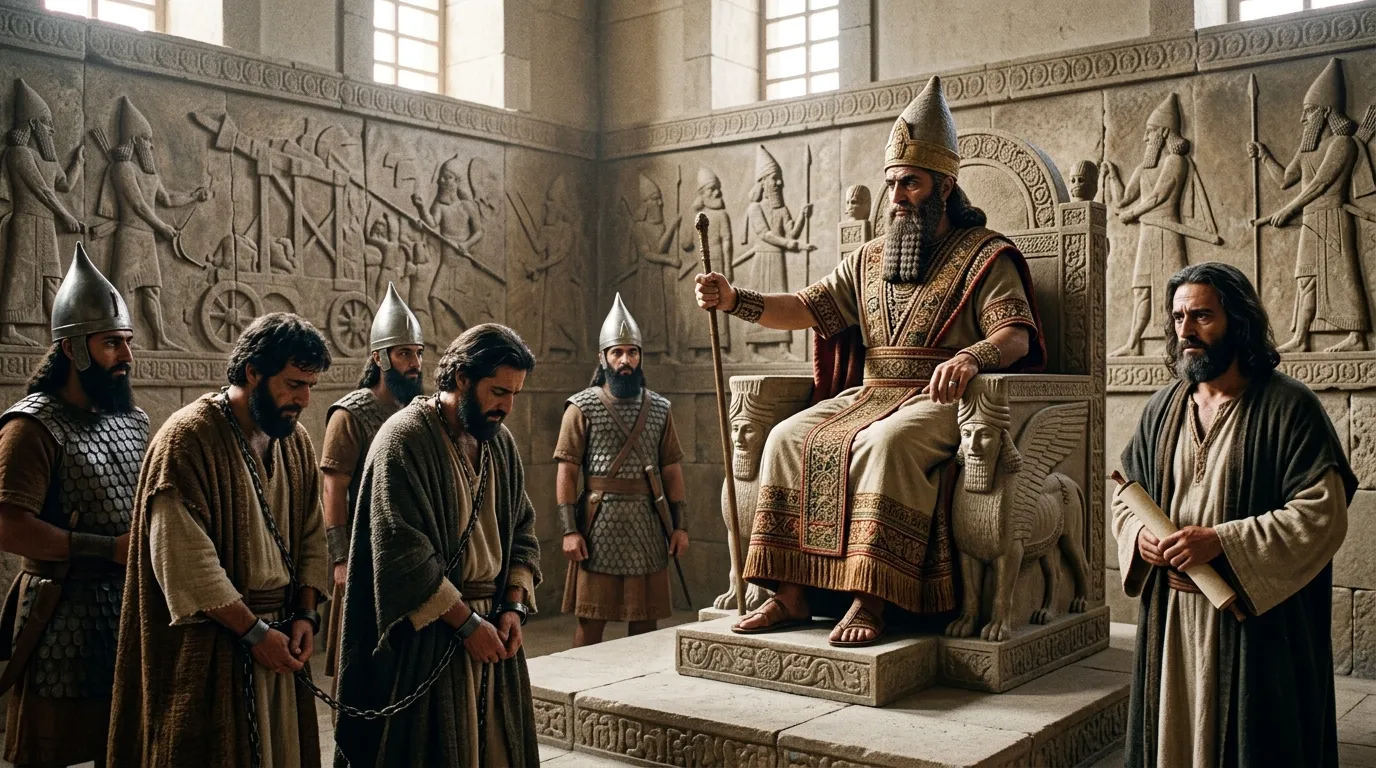
Assyrian Empire Meaning in the Bible

Imagine living in a small nation while a powerful empire is growing around you. You hear stories of armies, fallen cities, and kings who seem impossible to defeat. Fear would be natural. Yet, in the Bible, the rise of the Assyrian Empire meaning in the Bible is not only a story about war and political power. It is also a story about God’s justice, human pride, judgment, mercy, and sovereign rule.

Assyria was one of the great powers of the ancient Near East. Its armies threatened Israel and Judah, and the Bible records several major events connected with Assyria. The Assyrians conquered the northern kingdom of Israel, threatened Jerusalem, and became the subject of strong prophetic warnings.

At the same time, Scripture shows something important: God was never powerless before Assyria. Even when Assyria looked unstoppable, God remained Lord over nations and kings.

Understanding Assyria can help Christians read several parts of the Old Testament with greater clarity. It can also offer practical lessons about trusting God when frightening circumstances seem larger than our faith.

What Was the Assyrian Empire in the Bible?

The Assyrian Empire was an ancient kingdom centered in the region of northern Mesopotamia, near the upper Tigris River. Assyria became a major military power and eventually controlled a large area of the ancient Near East.

The Bible mentions Assyria many times, especially in the historical books and the writings of the prophets.

Assyria became especially important during the time of the divided kingdom. After Solomon’s reign, Israel divided into two kingdoms:

  • Israel, the northern kingdom
  • Judah, the southern kingdom

Assyria eventually attacked Israel. In 2 Kings 17, the northern kingdom falls to Assyria, and many Israelites are taken away into exile.

This event was not presented as random history. The biblical writer connects Israel’s fall with the nation’s long pattern of disobedience and idolatry.

So, at its most basic level, Assyria in the Bible represents a real historical empire that God allowed to become an instrument of judgment against Israel.

Assyrian Empire Meaning in the Bible: What Scripture Teaches

The Bible gives us several important truths about Assyria.

Assyria Was Used as an Instrument of God’s Judgment

One of the clearest passages is Isaiah 10.

God describes Assyria as the instrument He uses against a godless nation. However, this does not mean Assyria was righteous. The Assyrians had their own sinful motives.

Isaiah 10:5–7 presents Assyria as a tool in God’s hand, while also showing that Assyria intended to act according to its own proud desires.

This gives us a deep biblical truth:

God can use even powerful earthly events to accomplish His purposes without approving the sinful motives of those involved.

Assyria did not become holy because God used it. The empire remained accountable for its violence, arrogance, and pride.

Assyria Was Not Greater Than God

Assyria looked powerful, but Scripture repeatedly reminds readers that earthly kingdoms have limits.

The Assyrian king Sennacherib threatened Jerusalem during the reign of King Hezekiah. The situation appeared terrifying. The Assyrian army had already conquered many places.

Yet Hezekiah turned to God.

In 2 Kings 18–19, Hezekiah brings the Assyrian threat before the Lord. Isaiah also speaks God’s message to him.

The result is one of the Bible’s strongest pictures of God’s power over human strength. The Assyrian army does not conquer Jerusalem.

The lesson is clear:

A powerful enemy is never more powerful than God.

Assyria Was Judged for Its Pride

Isaiah 10 does not stop with God’s use of Assyria. It also describes God’s judgment against the empire.

Assyria became proud. Its king began to think that his victories were proof of his own greatness.

Isaiah 10:12 says that after God had finished His work against Zion, He would punish the proud heart of the king of Assyria.

This teaches an important difference between God’s sovereignty and human pride.

God may allow a nation or person to have great influence for a time. That does not mean that person’s heart is approved by God.

Assyrian Empire Meaning in the Bible + Hebrew Meaning

The Hebrew name commonly translated Assyria is אַשּׁוּר (Ashshur or Asshur). The word can refer to the land, people, or empire associated with Assyria.

The name is also connected with Ashur, which was the name of an important Assyrian city and the chief national deity of ancient Assyria.

See also  Parables of Jesus Meaning in the Bible

In the Bible, however, the meaning of Assyria is primarily understood from its historical and biblical context, not from hidden meanings in the letters of the Hebrew word.

This is important because Christians sometimes search for a secret spiritual meaning behind biblical names. Scripture does not teach that every name contains a hidden prophetic message.

When studying the Hebrew meaning of Assyria, it is safer to focus on what the biblical text actually shows:

  • Assyria was a real ancient nation.
  • Assyria became a powerful empire.
  • God used Assyria in His judgment.
  • Assyria was still accountable for its pride and evil.
  • God eventually judged Assyria.

Therefore, the Assyrian Empire meaning in the Bible + Hebrew meaning is best understood through its biblical setting rather than through numerology or speculative name meanings.

Why Did God Allow Assyria to Attack Israel?

This is one of the most important questions about Assyria.

According to 2 Kings 17:7–18, Israel had repeatedly turned away from God. The people worshiped other gods, followed sinful practices, and rejected God’s warnings through His prophets.

The passage explains that God had warned Israel again and again.

The fall of Israel was therefore connected to a long history of rebellion.

This does not mean every hardship in a Christian’s life is punishment for a specific sin. Scripture does not give us permission to make that conclusion.

Instead, the story of Israel teaches a broader truth:

God takes sin seriously, but He also gives people warnings and opportunities to turn back to Him.

The prophets were not simply announcing destruction. They repeatedly called God’s people to repentance.

Assyria and the Fall of the Northern Kingdom

The northern kingdom of Israel fell to Assyria during the reign of King Hoshea.

Second Kings 17:6 records that the king of Assyria captured Samaria, the capital of Israel, and carried the Israelites away.

This was a major turning point in biblical history.

The northern kingdom never returned as an independent kingdom in the same way. The event became a lasting warning about the consequences of persistent rebellion against God.

Yet even here, the Bible’s message is bigger than tragedy.

God had been patient with His people. He had sent prophets. He had warned them. He had called them to return.

The story shows that God’s patience should lead people toward repentance, not careless living.

Assyria and the Prophet Jonah

Assyria is also connected with the story of Jonah.

Jonah was sent by God to preach to Nineveh, a major Assyrian city. At first, Jonah did not want to go.

The reason becomes clearer in Jonah 4. Jonah knew that God was gracious and compassionate, and he feared that the people of Nineveh might repent.

That is exactly what happened.

The people of Nineveh responded to Jonah’s message with repentance, and God showed mercy.

This part of the Assyrian story is especially beautiful because it reveals another side of God’s relationship with nations.

Assyria was not only associated with judgment.

Assyria also became a place where God’s mercy was displayed.

This reminds Christians that God’s grace can reach people we might never expect.

Assyria and Nineveh: A Lesson About God’s Mercy

The story of Nineveh is important because it prevents us from seeing Assyria only as a symbol of destruction.

Jonah wanted judgment. God showed compassion.

God’s response to Nineveh teaches that repentance matters.

When people turn from evil, God is not reluctant to show mercy.

This does not erase the later sins of Assyria. The prophet Nahum eventually announces judgment against Nineveh.

That gives us a balanced biblical picture:

God is both just and merciful.

He does not ignore evil, but He also welcomes genuine repentance.

What Does Assyria Symbolize Spiritually?

The Bible does not say that Assyria always represents one single spiritual idea.

However, Christians often draw several spiritual lessons from the Assyrian story. These are applications based on biblical themes, not secret meanings directly stated by Scripture.

Human Pride

Assyria’s pride is one of the strongest spiritual themes.

Isaiah 10 shows an empire becoming proud because of its military success.

This warns us that success can become dangerous when we begin to believe we no longer need God.

A Christian may not command an army, but pride can appear in ordinary life.

See also  Strife Meaning in the Bible: Understanding Conflict Through God's Wisdom

For example, someone may receive a promotion and begin treating others as less important. Another person may become successful in business and stop praying because everything seems under control.

The lesson is simple:

Blessings should lead us toward gratitude, not self-worship.

Earthly Power Has Limits

Assyria looked unstoppable, but it was not.

The same principle applies today.

Money, political influence, technology, social status, and human strength can all change quickly.

God remains constant.

Psalm 20:7 says that some trust in chariots and horses, but God’s people trust in the name of the Lord.

The Christian’s confidence should ultimately rest in God rather than in earthly security.

God’s Judgment Is Real

Assyria reminds us that God does not ignore evil forever.

The prophets repeatedly show God’s moral authority over nations.

This should not make Christians live in constant fear. Instead, it should encourage holy living and remind us that God cares about justice.

God’s Mercy Can Reach Unexpected People

Nineveh gives us the other side of the story.

People who seem far from God can still respond to His call.

This is encouraging when we pray for a family member, friend, coworker, or community that seems spiritually distant.

Never assume that someone is beyond God’s reach.

What Does Assyria Mean in a Dream?

Some people search for the Assyrian Empire meaning in the Bible because they have dreamed about Assyria, ancient armies, Nineveh, or an Assyrian king.

The Bible does contain examples of God using dreams. However, Scripture does not give a universal dream dictionary in which every ancient nation has one fixed meaning.

Therefore, dreaming about Assyria does not automatically mean that God is giving you a prophecy.

If you have such a dream, consider it carefully and test it against Scripture.

You might ask:

  • Does the dream draw me toward God or away from Him?
  • Does it agree with biblical teaching?
  • Is fear controlling my interpretation?
  • Could the dream reflect something I recently read, watched, or worried about?
  • What biblical truth should I apply regardless of the dream?

Most importantly, do not build major life decisions on a dream alone.

God’s Word is the foundation for Christian faith.

Assyria in Dreams: A Balanced Christian View

Suppose someone dreams about an enormous army approaching a city.

It could remind them of the biblical story of Assyria. But that does not prove that the dream predicts an actual event.

The dream may simply reflect feelings of pressure, fear, uncertainty, or vulnerability.

For a Christian, the healthier response is to return to Scripture.

The story of Hezekiah and Jerusalem can remind us:

When something feels bigger than us, we can bring it to God in prayer.

The dream itself should not become the authority. Scripture remains the authority.

What Can Christians Learn From the Assyrian Empire?

The Assyrian story offers several practical lessons for daily Christian life.

Bring Fear to God

Hezekiah faced a frightening situation, but he brought the threat before the Lord.

When you face a difficult diagnosis, financial pressure, family conflict, work stress, or an uncertain future, you can also bring your fears to God.

Prayer does not mean pretending that problems are small.

It means recognizing that God is greater than the problem.

Do Not Confuse Success With God’s Approval

Assyria experienced enormous military success.

But success did not make its pride acceptable to God.

Christians should remember that achievement is not the same thing as spiritual maturity.

A person can have money, influence, education, or recognition and still need to grow deeply in humility and obedience.

Listen When God Warns You

Israel received repeated warnings before its downfall.

This encourages us to take God’s correction seriously.

When Scripture exposes something in our lives, we should not immediately defend ourselves.

Sometimes spiritual growth begins when we honestly say, “Lord, show me what needs to change.”

Leave Room for Mercy

Jonah struggled with God’s mercy toward Nineveh.

Christians can face the same struggle when someone who has hurt them receives grace.

The gospel reminds us that God’s mercy is bigger than our desire for revenge.

This does not mean ignoring injustice. It means trusting God’s justice while keeping our hearts free from hatred.

Assyria and God’s Sovereignty Over Nations

One of the greatest lessons from the Assyrian Empire is God’s sovereignty.

See also  Why God Has Not Destroyed Satan Meaning in the Bible: Understanding God’s Purpose and Timing

The Bible does not present history as a series of events outside God’s awareness.

Isaiah 10 shows God speaking about Assyria’s role, while also judging Assyria for its pride.

This is a profound biblical mystery: God is sovereign, yet people remain responsible for their actions.

Christians do not need to solve every part of that mystery before trusting God.

Instead, we can hold on to what Scripture clearly teaches:

  • God rules over nations.
  • God sees human pride.
  • God cares about justice.
  • God can use difficult circumstances for His purposes.
  • Human power is temporary.
  • God’s purposes cannot ultimately be defeated.

Assyria, Israel, and the Hope of Redemption

The story of Assyria can seem dark, but the Bible’s larger story is moving toward redemption.

Israel’s failures did not end God’s covenant purposes.

The Old Testament continues to point toward God’s saving work. The prophets speak not only about judgment but also about restoration, hope, a coming King, and God’s faithfulness.

For Christians, these promises find their fullest meaning in Jesus Christ.

The Assyrian Empire eventually disappeared. Other empires also rose and fell.

But God’s purposes continued.

This gives believers hope when the world feels unstable.

Kingdoms change. Circumstances change. God does not change.

Frequently Asked Questions

What does the Assyrian Empire represent in the Bible?

The Assyrian Empire was a real historical power. Biblically, it is strongly connected with God’s judgment, human pride, earthly power, and God’s sovereignty over nations. It is also connected with God’s mercy through the story of Nineveh.

Why did God use Assyria to punish Israel?

Second Kings 17 explains that Israel repeatedly rejected God and followed sinful practices despite repeated warnings. Assyria became an instrument of judgment, while Assyria itself remained accountable for its own pride and actions.

Is Assyria a symbol of evil in the Bible?

Not in every passage. Assyria was a real nation, not merely a symbol. Some Christians apply Assyria as a picture of pride, oppression, or threatening worldly power, but those spiritual applications should not replace the historical meaning of the biblical text.

What does Assyria mean spiritually?

A careful spiritual application may include the danger of pride, the limits of human power, the seriousness of sin, God’s sovereignty, and the need to trust Him. Scripture does not establish one secret spiritual meaning for Assyria in every situation.

What does it mean to dream about Assyria?

The Bible does not provide a fixed interpretation for dreaming about Assyria. A dream should not automatically be treated as a prophecy. Christians should test spiritual impressions against Scripture and seek wise, prayerful counsel rather than building major decisions on dreams alone.

What is the Hebrew meaning of Assyria?

The Hebrew name is commonly written אַשּׁוּר (Ashshur/Ashur). In Scripture, it refers to Assyria, its people, land, or empire depending on the context. The safest approach is to understand the name through its biblical and historical setting rather than assigning a hidden spiritual meaning to it.

What does the story of Assyria teach Christians today?

It teaches Christians to trust God instead of human strength, reject pride, listen to God’s correction, pray during frightening circumstances, and remember that God’s mercy can reach unexpected people.

Final Thoughts

The Assyrian Empire meaning in the Bible is much deeper than a story about an ancient army.

Assyria was a real empire that God allowed to play a major role in Israel’s history. Scripture shows its power, its pride, its violence, its judgment, and even its connection with God’s mercy toward Nineveh.

The story reminds us that God is never intimidated by earthly power.

When life feels overwhelming, remember Jerusalem. When pride begins to grow, remember Assyria’s downfall. When someone seems too far from God, remember Nineveh.

And when you do not understand what God is doing, you can still trust who God is.

Take your fears to Him. Test every spiritual impression by His Word. Pray before making important decisions. Ask God for wisdom, humility, and courage.

Above all, remember this biblical truth: God remains faithful even when the world around us feels uncertain.

May the story of Assyria lead you not into fear or speculation, but into deeper faith, wiser discernment, humble living, and greater trust in the God who remains Lord over every nation, every circumstance, and every season of life.

Leave a Comment