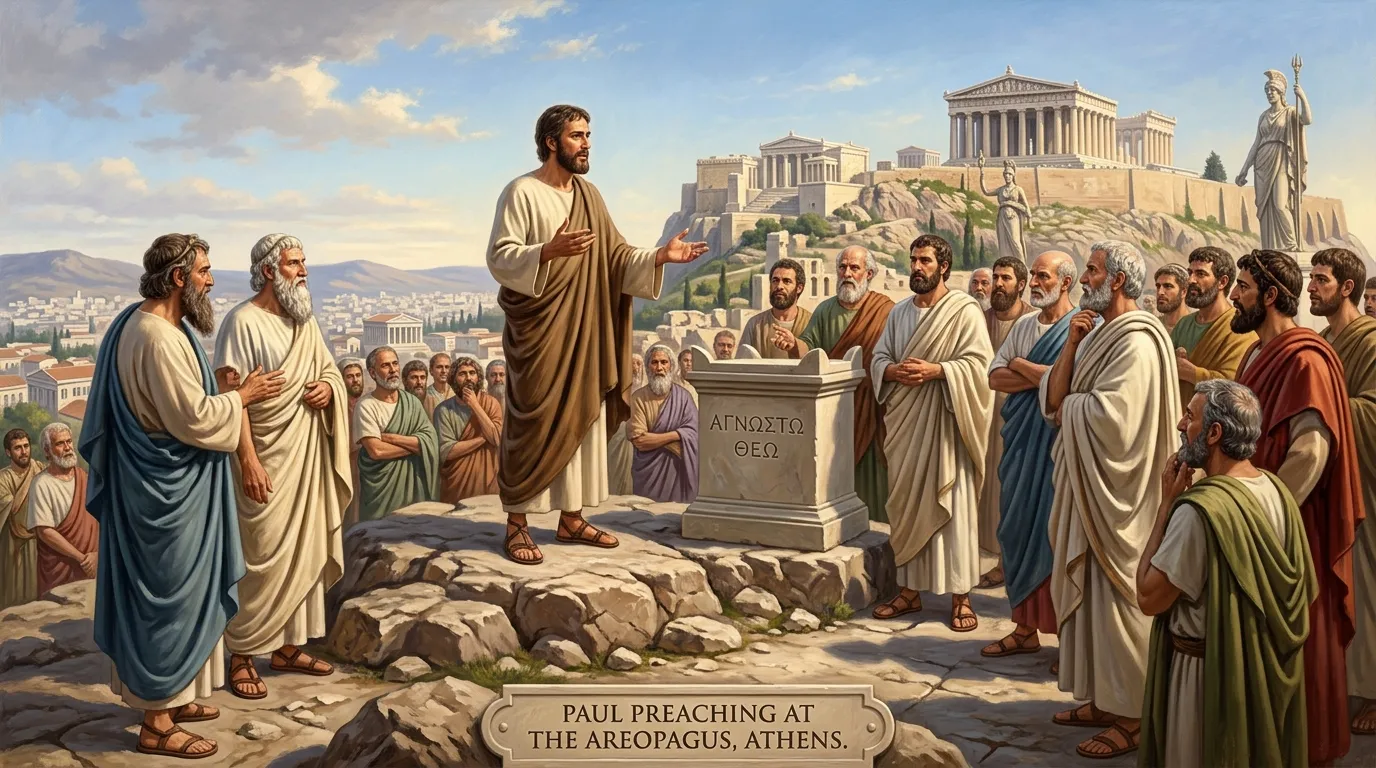
Imagine walking through a busy city filled with beautiful buildings, many voices, and ideas coming from every direction. You see people searching for answers about life, truth, and God. In the middle of that busy place, you feel a quiet pull in your heart toward faith.
This picture can help us understand why Athens meaning in the Bible is so interesting.
Athens was a famous city in ancient Greece. It was known for learning, philosophy, art, and many religious practices. The Bible gives special attention to Athens because the apostle Paul visited the city and spoke about the true God there.
The main biblical account is found in Acts 17:16–34. Paul saw that the city was full of idols. Instead of staying silent, he used the situation as an opportunity to explain who God is.
So, what does Athens mean in the Bible?
Athens does not have a special secret meaning or a direct biblical symbol. Rather, its story gives us important lessons about faith, wisdom, idolatry, spiritual searching, courage, and sharing the truth about God.
If Athens appears in your thoughts, dreams, studies, or personal journey, its biblical story can invite you to ask a deeper question: What am I trusting, and where am I looking for truth?
Biblical Meaning of Athens in the Bible
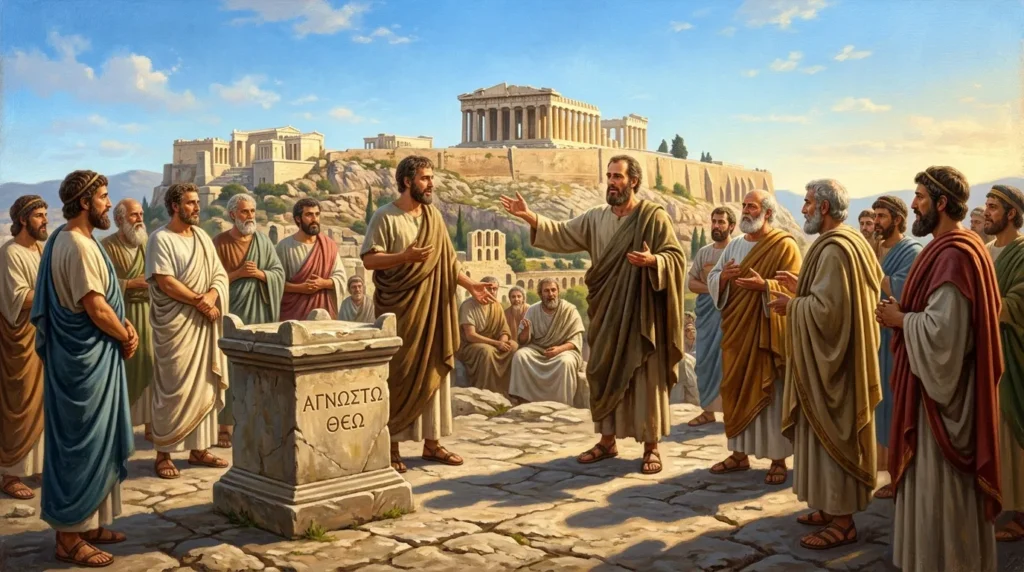
The biblical meaning of Athens is closely connected with Paul’s visit to the city in Acts 17.
Athens was an important center of Greek culture and thought. Paul arrived there while waiting for Silas and Timothy. As he looked around the city, he noticed many idols.
Acts 17:16 says that Paul’s spirit was deeply troubled because the city was full of idols.
This is one of the strongest lessons connected with Athens. A place can be full of knowledge and still need the truth of God.
Paul did not attack the people. He spoke to them about the God they did not yet fully know. He even used their altar dedicated to an “unknown god” as a starting point for his message.
Paul explained that the Creator of heaven and earth does not live in temples made by human hands. He also taught that God gives life and breath to everyone.
This message is important for Christians today.
Athens and the Search for Truth
Athens represents a setting where people were searching for answers through philosophy, religion, human wisdom, and debate.
Acts 17:21 describes the Athenians and foreigners who spent much of their time discussing new ideas.
Paul entered this world of discussion and pointed people toward Jesus and the resurrection.
The lesson is not that learning is bad. The Bible does not tell Christians to stop thinking or asking questions. Instead, Athens shows that human wisdom needs to be placed under God’s truth.
Knowledge can answer many questions. But only God can give ultimate meaning, hope, and salvation.
Athens and Idolatry
Another major theme is idolatry.
Paul saw statues and altars throughout Athens. His reaction teaches Christians to notice what can quietly take God’s place in human hearts.
An idol does not have to be a physical statue. Anything that becomes more important than God can become an idol in a person’s life.
Money, success, status, relationships, pleasure, power, or even personal wisdom can become objects of misplaced trust.
The story of Athens therefore encourages believers to ask:
- What has first place in my heart?
- Where do I go when I need hope?
- What do I trust more than God?
- Am I seeking truth through Scripture and prayer?
- Has anything taken God’s place in my life?
Paul at the Areopagus
Paul later spoke at the Areopagus, a place associated with public discussion and judgment in Athens.
His message was bold but respectful.
He explained that the true God is not an image created by human hands. He called people to turn toward God and spoke about the resurrection of Jesus.
Acts 17:30 gives a central part of Paul’s message: God calls people to repent.
Some people mocked Paul. Others wanted to hear more. Some believed.
This shows an important truth about Christian witness: faithfulness does not always produce the same response in everyone.
Our responsibility is to speak the truth with love and trust God with the result.
Athens as a Lesson in Spiritual Discernment
The story also teaches spiritual discernment.
Athens had impressive buildings, educated people, powerful ideas, and many religious beliefs. Yet Paul recognized that something was missing.
The city had many gods but did not know the one true God.
For Christians, this can be a warning. A person may have education, success, and many opinions while still feeling spiritually empty.
The biblical lesson is simple:
Human wisdom is valuable, but it cannot replace knowing God.
Athens Hebrew Meaning: Is There a Hebrew Word for Athens?
When studying the Athens Hebrew meaning, it is important not to create a Hebrew meaning that the Bible does not give.
Athens is a Greek city, and the New Testament name is written in Greek as Ἀθῆναι (Athēnai), the Greek name for Athens.
Therefore, Athens does not have a direct Hebrew word or Hebrew root that gives it a special spiritual meaning in Scripture.
The city belongs mainly to the New Testament Greek setting, especially the account in Acts.
The Hebrew Old Testament does not establish Athens as a symbolic Hebrew term. This means claims that Athens directly means a particular spiritual idea in Hebrew should be treated carefully.
The more important question is not, “What hidden Hebrew word does Athens represent?” but rather, “What does the Bible teach through what happened in Athens?”
The answer comes from the story itself.
Athens teaches about the difference between human ideas and God’s truth. It shows the danger of idolatry and the importance of knowing the Creator. It also shows Paul’s courage in sharing the gospel in a culture filled with competing beliefs.
This is a helpful reminder when studying biblical names and places. Not every biblical location has a secret spiritual meaning based on the Hebrew language.
Sometimes, the historical story is the meaning we need to understand.
Spiritual Significance and Symbolism of Athens
The spiritual meaning of Athens can be understood through the lessons found in Acts 17.
1. Athens Can Represent the Search for Truth
Athens was filled with people who loved ideas and discussion.
Spiritually, this can remind us that people naturally search for answers.
We may ask:
Why am I here?
What happens after death?
Who is God?
What gives life meaning?
The Bible points us toward God as the source of ultimate truth.
2. Athens Can Remind Us to Examine Our Hearts
Paul noticed the idols around him.
This can encourage Christians to examine their own hearts.
Sometimes an idol is obvious. Sometimes it is hidden.
A career can become an idol. So can money, approval, comfort, or even another person.
God calls us to put Him first.
3. Athens Shows Courage in Faith
Paul did not hide his faith because the culture around him was different.
He spoke clearly about God and Jesus.
This gives Christians a lesson in spiritual courage.
You do not need to argue with everyone. You do not need to force people to believe. But you can live with faith, speak with kindness, and remain faithful to Scripture.
4. Athens Shows God’s Presence in Difficult Places
Paul entered a city filled with beliefs that were different from his own.
Yet God was still working.
This can bring comfort when you feel surrounded by confusion.
God is not limited by your surroundings.
He can guide you in a workplace, school, family, community, or culture where your faith feels difficult to express.
Biblical Interpretations of Athens in Dreams or Real Life
The Bible does not give a specific rule saying that dreaming about Athens always means one particular thing.
So, dream interpretation should not be treated as a guaranteed divine message.
If Athens appears in a dream or repeatedly comes to mind, you can reflect on the biblical story without assuming that God has given you a secret prophecy.
For example, Athens might remind you to think about:
- Seeking truth instead of following every opinion.
- Examining your priorities and removing modern idols.
- Using wisdom carefully and keeping God at the center.
- Speaking about your faith with courage and kindness.
- Praying for discernment when facing confusing ideas.
The most important test is Scripture.
If a personal interpretation contradicts God’s Word, it should not be accepted simply because it feels spiritual.
Instead, pray, read the Bible, and seek wise Christian counsel.
The story of Paul in Athens points us back to God rather than toward hidden meanings.
Bible Verses Connected With Athens
Several passages help explain the Athens in the Bible story.
Acts 17:16
Paul was deeply troubled when he saw that Athens was full of idols.
This verse highlights the spiritual condition Paul observed in the city.
Acts 17:22–23
Paul began his message by referring to the religious nature of the Athenians and their altar dedicated to an unknown god.
He used something familiar to them to introduce them to the true God.
Acts 17:24–25
Paul taught that God made the world and does not depend on human beings for His existence.
This gives us a powerful picture of God as Creator and Sustainer.
Acts 17:27
Paul explained that people should seek God.
This connects strongly with the human desire for spiritual awakening, guidance, and purpose.
Acts 17:30
Paul called people to repentance.
This reminds Christians that knowing about God is not enough. We are called to turn toward Him.
Acts 17:31
Paul pointed to God’s appointed judgment and the resurrection of Jesus.
The resurrection was central to Paul’s message and remains central to Christian faith.
Acts 17:34
The chapter ends by showing that some people believed Paul’s message.
This gives hope. Even in a culture filled with competing ideas, God’s truth can reach searching hearts.
Practical Lessons and Faith Insights
The story of Athens gives us simple lessons for daily life.
Pray for wisdom. Ask God to help you recognize truth.
Check your priorities. Make sure nothing has taken God’s place.
Read Scripture. Let the Bible guide your beliefs.
Speak with grace. Like Paul, share your faith without hatred or unnecessary conflict.
Trust God’s timing. You may not see immediate results, but faithfulness still matters.
Most of all, remember that God wants your heart, not merely your knowledge.
What Does Athens Mean Spiritually for Christians Today?
Athens can speak to modern life in a powerful way.
We live in a world filled with information. Every day, we hear thousands of opinions through social media, television, books, podcasts, and conversations.
There is nothing wrong with learning.
But Athens reminds us that information is not the same as truth.
You can know many facts and still need God’s wisdom.
You can hear many voices and still need to hear God’s Word.
You can have many choices and still need God’s direction.
The story of Paul shows us how to live faithfully in such an environment. He listened, observed, understood the people around him, and then pointed them toward Christ.
That is a beautiful model for Christian living.
We can be thoughtful without losing our faith.
We can ask questions without abandoning God.
We can learn from others while testing everything against Scripture.
We can live peacefully in a complicated world while keeping Jesus at the center.
Conclusion
The Athens meaning in the Bible is not based on a secret Hebrew definition. Athens is a Greek city remembered especially through Paul’s powerful message in Acts 17.
Its biblical story teaches us about seeking truth, rejecting idolatry, using wisdom, showing courage, and turning toward God.
If Athens connects with your personal journey, let its story lead you back to Scripture rather than fear or speculation. Pray for wisdom, examine your heart, and trust God’s guidance.
Even in a world full of voices, God can lead a searching heart toward truth, hope, and peace.