The Bible never describes Paul’s birth. There is no stable, no angel, no star, no narrative of his first days. For a man who wrote nearly a third of the New Testament, the silence is striking. What Scripture gives instead is a portrait of his background, assembled from his own statements across his letters and the book of Acts: a Jew from Tarsus, a citizen of Rome from birth, a Pharisee trained in Jerusalem, a man of the tribe of Benjamin. The meaning of Paul’s birth is not found in a birth story. It is found in the long preparation that began with it, a preparation Paul himself only understood in hindsight.
What the Bible Actually Says
Paul’s clearest statement about his origins comes in his defense before a Jerusalem crowd: “I am a Jew, born in Tarsus in Cilicia, but brought up in this city, educated at the feet of Gamaliel according to the strict manner of the law of our fathers” (Acts 22:3). To the Philippians, he added the details of his heritage: “circumcised on the eighth day, of the people of Israel, of the tribe of Benjamin, a Hebrew of Hebrews; as to the law, a Pharisee” (Philippians 3:5). And to a Roman commander, he revealed the detail that would save his life: “I was born a citizen” (Acts 22:28).
These fragments are all we have, and they are enough to sketch a childhood. Paul was born as Saul, a Jewish child in a Greek-speaking city, into a family that held Roman citizenship. He was raised in the traditions of Israel, circumcised according to the law, and later sent to Jerusalem for advanced study. His birth placed him at the intersection of three worlds: Jewish, Greek, and Roman. His ministry would require all three.
The Tribe of Benjamin
Paul’s tribe is a detail that rewards attention. Benjamin was the smallest tribe, the tribe of Israel’s first king, Saul, whose name Paul bore before his conversion. Benjamin’s territory sat between Judah and Ephraim, and the tribe had a reputation for fierce loyalty and skilled warriors. In the days of the judges, Benjamin had nearly been wiped out in a civil war. By Paul’s day, the tribe’s identity was a matter of heritage rather than territory, but Paul still named it.
There may be a quiet irony in the tribal connection. The first Saul, king of Israel, was a Benjamite who began with promise and ended in disobedience. The second Saul, also a Benjamite, began as a persecutor and ended as an apostle. The same name, the same tribe, and a very different ending. God did not choose Paul despite his background. He wove the background into the story.
Roman Citizenship From Birth
Paul’s Roman citizenship is one of the most consequential accidents of his birth. In the ancient world, citizenship was a privilege, and most people in the empire did not have it. Citizens could not be flogged without trial, could appeal to the emperor, and were exempt from the most degrading forms of punishment. Paul’s family had it, and Paul was born into it.
How the family obtained citizenship is unknown. Perhaps an ancestor had been rewarded for service to Rome, or the family had received it when Tarsus was granted free-city status. Whatever the route, the result shaped Paul’s ministry decisively. His citizenship protected him in Philippi, where the magistrates apologized after beating a citizen without trial. It protected him in Jerusalem, where the threat of flogging stopped when his citizenship was revealed. And it carried him to Rome, where his appeal to Caesar placed him in the capital of the empire. The boy born a citizen in Tarsus would one day use that citizenship to bring the gospel to the emperor’s city.
Education Under Gamaliel
Paul’s education was the second great gift of his upbringing. He studied in Jerusalem under Gamaliel, one of the most respected teachers of the law, a man known for wisdom and moderation. Under Gamaliel, Paul became a Pharisee, zealous for the traditions of his fathers, and he advanced beyond many of his contemporaries in his knowledge of Judaism (Galatians 1:14).
That education, which Paul later described as “loss” and “rubbish” compared to knowing Christ (Philippians 3:8), was not wasted. When Paul argued in his letters that the law pointed to Christ, that Abraham was justified by faith, and that the promises to Israel were fulfilled in Jesus, he was arguing as a man who knew the Scriptures from the inside. His training made him the theologian of the early church. The education that had once made him a persecutor became the instrument of his apostleship.
Preparation Without Understanding
The deepest lesson of Paul’s birth is that God prepares people long before they understand their purpose. Paul’s languages, citizenship, education, and trade were all in place before he met Jesus. None of it looked like preparation at the time. A Jewish boy in a Greek city, studying in Jerusalem, learning to make tents, and waiting in obscurity did not look like a man being prepared to carry the gospel to the nations. But that is what he was.
Paul himself came to see his life this way. He wrote that God “had set me apart before I was born, and who called me by his grace” (Galatians 1:15). The language echoes the calling of Jeremiah, who was appointed a prophet before his birth (Jeremiah 1:5). Paul’s birth was not an accident. It was the beginning of a preparation that would take decades and would only make sense in hindsight.
The Years Nobody Noticed
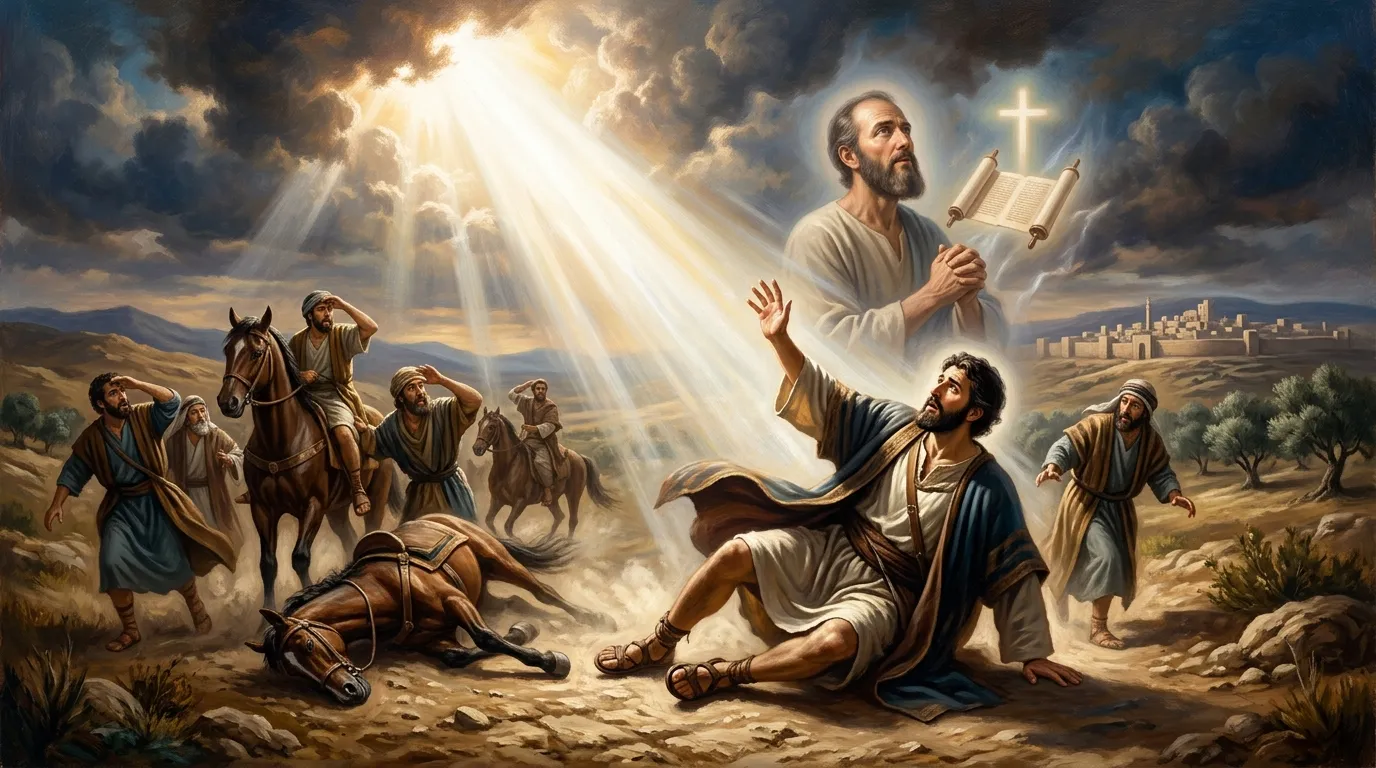
After Paul’s conversion, he spent years in obscurity: in Arabia, in Damascus, and back in Tarsus, his hometown. The church in Jerusalem sent him to Tarsus for his own safety, and he stayed there until Barnabas came to fetch him for the work in Antioch (Acts 11:25-26). Those years were not wasted. They were the season in which the persecutor became the preacher, in which the theology of grace took shape, and in which the man from Tarsus learned to wait.
Many Christians know what those years feel like: the season when the calling is clear but the opportunity has not arrived, when the preparation is done but the door has not opened. Paul’s life says that such seasons are part of the preparation, not a delay in it. The God who set him apart before birth was not in a hurry. He was thorough.
What Paul’s Birth Means for Us
The Name Change: Saul to Paul
One of the most asked questions about Paul’s birth is about his name. He was born Saul, and later he was called Paul. The Bible never describes a formal name change. The shift happens quietly in Acts 13, when Luke begins calling him Paul during the first missionary journey. The name Paul was a Roman name, and Saul’s use of it may have been a practical choice for his Gentile mission, the way a person with two names uses the one that fits the setting. Some have suggested the name change marked his conversion, but the text does not say so. Paul continued to call himself Saul in his own retellings of his conversion, and he used both names in different contexts.
What matters is not the moment of the change but the meaning of the two names. Saul was the Hebrew name, the name of his heritage, the name of Israel’s first king. Paul was the Roman name, the name of his citizenship, the name under which he would be known to the Gentile world. The man who carried both names was the man who could speak to both worlds. His birth gave him both identities, and his ministry required both.
Paul’s Own View of His Beginning
Paul’s most personal statement about his origins comes in Galatians, where he writes that God “had set me apart before I was born, and who called me by his grace” (Galatians 1:15). The statement is not a claim to special status. It is a claim about grace: Paul’s calling did not begin with his decision, his education, or his zeal. It began before he was born, in the purpose of God. The same is true, in a different measure, for every Christian. The life that looks like a series of accidents, a birth in a provincial city, a family, an education, a trade, is, in the Christian view, a life being prepared by a God who works before we know it.
Paul’s birth teaches that God uses the whole of a life, not only the dramatic moments. The languages learned in childhood, the citizenship inherited from parents, the education received in youth, the trade learned with the hands, all of it became material for the mission. Nothing in Paul’s background was wasted, including the years he spent opposing the gospel.
It also teaches that identity is received before it is achieved. Paul did not earn his citizenship, his tribe, or his calling. They were given. The Christian life begins the same way: with a birth, not an achievement. To be born again, as Jesus told Nicodemus (John 3:3-7), is to receive an identity that God gives, and then to spend a lifetime discovering what it means. Paul’s life is the proof that God can take a birth in an ordinary city and make it the beginning of an extraordinary story. For the life and background of the apostle, see the Wikipedia article on Paul the Apostle.