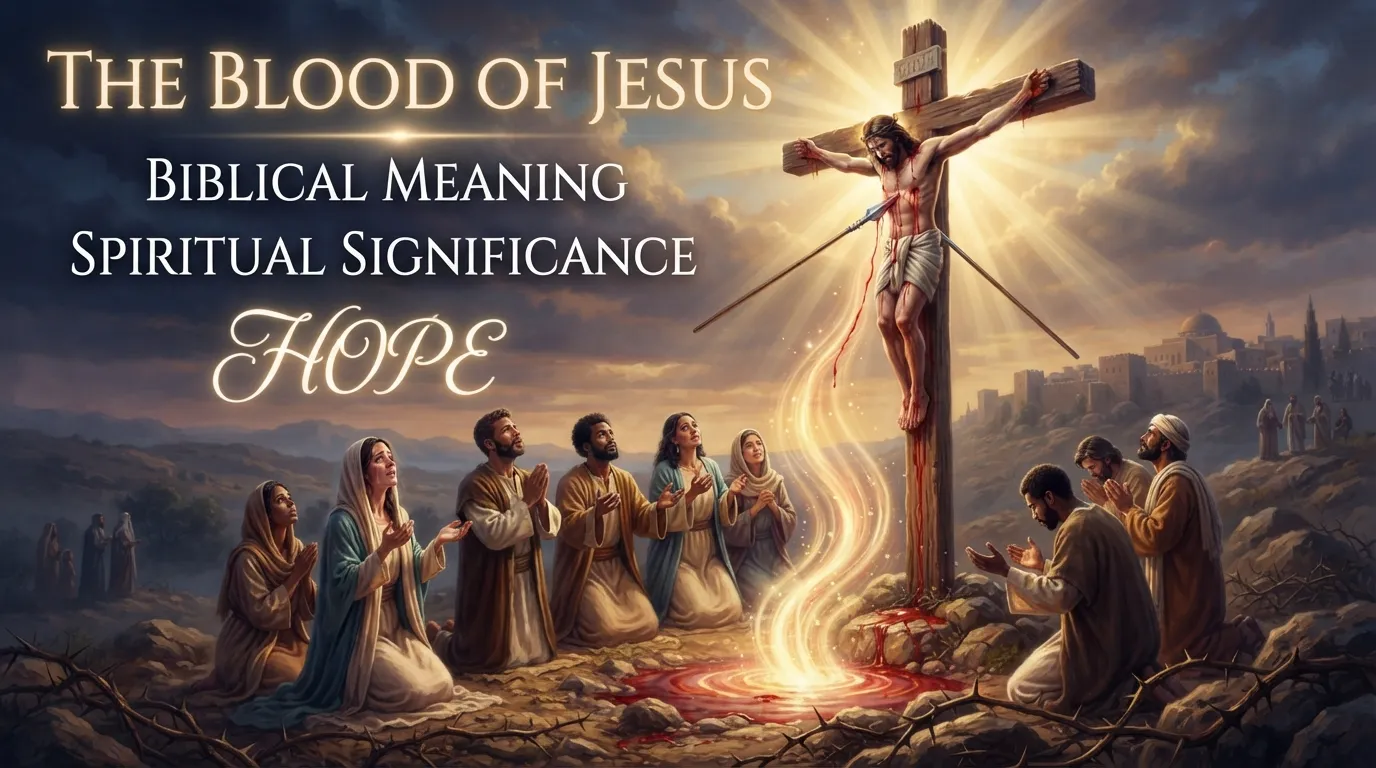
Imagine carrying guilt, fear, or regret that you cannot seem to put down. Then you remember the cross and the words of Jesus: “This is my blood of the covenant, which is poured out for many for the forgiveness of sins” (Matthew 26:28). For Christians, the blood of Jesus meaning in the Bible is deeply connected with forgiveness, sacrifice, salvation, the new covenant, and God’s amazing grace. The blood of Jesus is not presented in Scripture as a magical object or a mysterious formula. The Bible uses Christ’s blood to point to the life He willingly gave for sinners. His death on the cross became the center of God’s plan of redemption. From Genesis to Revelation, blood is connected with life, sacrifice, covenant, cleansing, and forgiveness. The New Testament brings these themes together in Jesus Christ. His sacrifice fulfills what the Old Testament sacrifices pointed toward.
Life in the Blood
The Bible was written in several languages, and the Old Testament was primarily written in Hebrew. The Hebrew word commonly translated “blood” is dam. Blood is closely connected with life throughout the Old Testament. Genesis 9:4 says, “You shall not eat flesh with its life, that is, its blood.” Leviticus 17:11 gives the connection even more clearly: “For the life of the flesh is in the blood.” This helps explain why blood played such an important role in biblical sacrifice. It represented life given.
The Hebrew sacrificial system also connected blood with atonement. Leviticus 17:11 says that God gave blood on the altar “to make atonement for your souls.” Christians understand Jesus’ death through this biblical background. The Old Testament sacrifices pointed forward to a greater and final sacrifice fulfilled in Christ. The New Testament was written primarily in Greek, and the Greek word for blood is haima, used repeatedly when explaining the significance of Jesus’ death. The meaning of the blood of Jesus is best understood within the larger biblical idea that blood represents life given in sacrifice and is associated with atonement. It is important, however, not to treat the Hebrew word itself as having a secret spiritual code. The meaning comes from the biblical context, not from hidden meanings assigned to individual letters or numbers.
The Lamb Who Gives His Life
The central meaning of the blood of Jesus is His sacrificial death for the forgiveness and redemption of sinners. Jesus did not die by accident. Scripture presents His death as a willing sacrifice. At the Last Supper, Jesus connected His blood with the new covenant: “This is my blood of the covenant, which is poured out for many for the forgiveness of sins” (Matthew 26:28). That statement connects several major biblical ideas. Jesus gave His life willingly — His blood represents the life He surrendered on behalf of others. His death provides forgiveness — sin separates people from God, but Christ’s sacrifice provides the basis for reconciliation. And His blood establishes the new covenant — God’s relationship with His people is no longer centered on the repeated animal sacrifices of the Old Testament. Jesus is the once-for-all sacrifice. Hebrews 9:12 explains that Christ entered the heavenly holy place “once for all” by His own blood, obtaining eternal redemption. When Christians speak about the blood of Jesus, they are speaking about the saving significance of Christ’s death, not merely about physical blood.
The importance of Jesus’ blood comes from who Jesus is and what He accomplished through His death. Jesus is described as the Lamb of God in John 1:29 — John the Baptist pointed to Him and declared that He takes away the sin of the world. Peter also connects Christ’s death with the language of sacrifice: in 1 Peter 1:18–19, believers are told they were redeemed not with temporary things such as silver or gold, but with “the precious blood of Christ.” Salvation cannot be purchased with money, good works, social status, or human achievement. Redemption comes through Christ. This does not mean good works are unimportant — Scripture teaches believers to live faithfully and love others. But Christian obedience is a response to God’s grace rather than a price paid to earn salvation.
Forgiveness, Salvation, Covenant, Cleansing
One of the clearest biblical meanings of Jesus’ blood is forgiveness of sins. Ephesians 1:7 says: “In him we have redemption through his blood, the forgiveness of our trespasses, according to the riches of his grace.” Notice the connection between blood, redemption, forgiveness, and grace. Redemption means being set free through a price being paid. In the Christian message, Jesus gave Himself for sinners. That is why a believer does not have to remain trapped forever in shame over confessed sin. First John 1:7 says that “the blood of Jesus his Son cleanses us from all sin.” The passage also calls believers to walk in the light and confess their sins. Biblical forgiveness is not permission to continue sinning carelessly. It is an invitation to turn toward God with honesty and faith. When a Christian fails, the answer is not to hide from God. The gospel calls us to confession, repentance, and renewed trust in Christ.
The blood of Jesus is also closely connected with salvation. Romans 5:9 says that believers are “justified by his blood” and saved from God’s wrath through Him. Justification means being declared righteous before God — not something people accomplish through their own moral record. Hebrews 10:10 teaches that believers have been sanctified through the offering of the body of Jesus Christ once for all. The “once for all” theme is important. The New Testament does not present Jesus’ crucifixion as something that must repeatedly happen. His sacrifice is sufficient. Christ’s work on the cross is the foundation of Christian hope.
Jesus’ blood also represents the new covenant between God and His people. At the Last Supper, Jesus took the cup and connected it with the new covenant in His blood (Luke 22:20). This language echoes Exodus 24, where Moses used blood in connection with the covenant between God and Israel. The difference is that Jesus establishes a new covenant through His own sacrificial death. Hebrews 9 explains that Christ is the mediator of this new covenant, and Hebrews 10 emphasizes the effectiveness of His sacrifice. The new covenant brings the promise of God’s forgiveness and a transformed relationship with Him. Jeremiah 31:31–34 had already looked forward to a new covenant in which God would write His law on the hearts of His people and remember their sins no more. The New Testament identifies Jesus’ sacrificial work with the fulfillment of this promise.
Another important biblical theme is cleansing. Hebrews 9:14 asks how much more the blood of Christ can cleanse the conscience from dead works so that people may serve the living God. This is more than an outward religious ritual. The biblical picture reaches into the inner life. A guilty conscience can weigh heavily on a person. Someone may believe that God forgives others but struggle to believe that God could forgive them. The message of Christ’s sacrifice speaks directly to that struggle. God’s grace is greater than the sin you bring to Him. This does not minimize sin. It magnifies the sufficiency of Christ’s sacrifice.
Victory — and What It Is Not
Christ’s blood is also connected with victory. Revelation 12:11 speaks of believers overcoming through “the blood of the Lamb” and their faithful testimony. The verse occurs within the symbolic and dramatic imagery of Revelation. It should not be turned into a formula or magical phrase. The broader biblical message is that Christ’s sacrificial victory gives believers a foundation for faithful endurance. Christians still face temptation, suffering, and spiritual struggles — yet they do so with confidence that Jesus has already accomplished the decisive work of redemption.
Christians often sing and pray about “the power of the blood of Jesus.” Biblically, this phrase points to the power and effectiveness of Christ’s sacrificial death: redemption, forgiveness, reconciliation, and cleansing. But the phrase should not be understood as though saying certain words about Jesus’ blood automatically creates protection or guarantees a particular outcome. The power belongs to Christ and His saving work, not to a magical use of religious language. Faith looks to Jesus Himself.
Scripture teaches that God protects His people, but it does not give believers a formula guaranteeing freedom from every danger or hardship. Psalm 23, Romans 8, and many other passages show God’s care for His people while also acknowledging suffering. The blood of Jesus is primarily presented in the New Testament in relation to atonement, redemption, forgiveness, cleansing, and covenant. Christians can pray for God’s protection while trusting His wisdom and sovereignty.
What It Means on an Ordinary Day
The meaning of Jesus’ blood is not only something to study. It changes how believers approach ordinary life. When you feel guilty: suppose you made a serious mistake and keep replaying it in your mind. Biblical faith does not tell you to pretend the mistake never happened. Bring it honestly before God. Confess your sin, seek forgiveness where needed, make things right when possible, and trust God’s grace. Your worst failure does not have to become your identity. When you feel unworthy: some people think they must become perfect before approaching God. The gospel points in the opposite direction. We come to God because we need grace. The sacrifice of Jesus reminds Christians that salvation is grounded in Christ rather than human worthiness. When you are afraid: fear can make the future seem uncertain. Remembering Christ’s sacrifice does not mean every problem will disappear. It means believers can face uncertainty while trusting God’s character. Romans 8:32 points believers toward the generosity of God, who did not spare His own Son but gave Him for us. When you need to forgive yourself: the Bible does not specifically use the modern phrase “forgive yourself” in the way people often do today. But Scripture clearly teaches believers to receive God’s forgiveness and no longer live under condemnation. Romans 8:1 says there is “no condemnation for those who are in Christ Jesus.” That truth can help a believer stop allowing past sin to control every present decision.
The Lord’s Supper gives Christians a regular way to remember Jesus’ sacrifice. During the Last Supper, Jesus gave His disciples bread and the cup and connected the cup with His blood and the new covenant (Matthew 26:26–29; Luke 22:14–20). Paul later taught about Communion in 1 Corinthians 11. Communion points believers back to Christ’s death and encourages them to remember what He has done. It also calls Christians to examine themselves and approach the Lord’s Supper with reverence. Remembering Jesus’ blood is therefore connected with gratitude, worship, remembrance, unity, and faith.
The biblical teaching about Christ’s blood offers several practical lessons. God’s grace is greater than our sin: sin is serious, but God’s grace is greater. The cross shows the depth of both the seriousness of sin and the greatness of God’s love. Salvation is not something we earn: Ephesians 2:8–9 teaches that salvation is by grace through faith and not something that comes from human boasting. That produces humility and gratitude. Christians should practice forgiveness: those who receive God’s forgiveness are called to extend forgiveness to others. Ephesians 4:32 encourages believers to forgive one another as God in Christ forgave them. Forgiveness does not always mean ignoring injustice or removing healthy boundaries. It means refusing to let hatred control the heart. Suffering does not mean God has abandoned you: Jesus Himself suffered, so Christians should not assume hardship automatically means God has rejected them. The cross reminds believers that God can work through suffering while bringing His purposes to completion. Hope is found in Christ: Christian hope is not based on positive thinking. It is grounded in the person and work of Jesus Christ. The cross points backward to Christ’s sacrifice and forward to the hope of resurrection and eternal life.
The blood of Jesus meaning in the Bible is ultimately a message of sacrifice, forgiveness, redemption, grace, and hope. Jesus willingly gave His life, and His death stands at the center of the Christian gospel. When you feel guilty, remember His grace. When you feel unworthy, remember His sacrifice. When you face uncertainty, remember that your hope rests in Christ rather than in your own strength. The blood of Jesus is not a superstition or a secret formula. It points believers to the cross, where God’s justice, mercy, love, and grace meet. Take time to pray, read the Gospel accounts of Jesus’ crucifixion, and reflect on what His sacrifice means for your life. You do not have to understand every mystery at once. Trust Christ, walk according to Scripture, and rest in the grace God has given through Him. For a broader survey of how Christians across history have understood Christ’s blood — in theology, liturgy, and devotion — the Wikipedia article on the Blood of Christ gathers those traditions in one place.










