“Go to the ant, O sluggard; consider her ways, and be wise.” It is one of Scripture’s most surprising commands: theology from an anthill. The ant has “no chief, officer, or ruler,” yet “she prepares her bread in summer and gathers her food in harvest” (Proverbs 6:6-8). No one supervises her. No one reminds her. She simply looks ahead — and acts now for a future she cannot yet see. That is the Bible’s portrait of prudence in miniature: the wisdom of foresight, the discipline of preparing today for tomorrow, the quiet art of thinking before acting. In a world addicted to impulse, Scripture commends the ant.
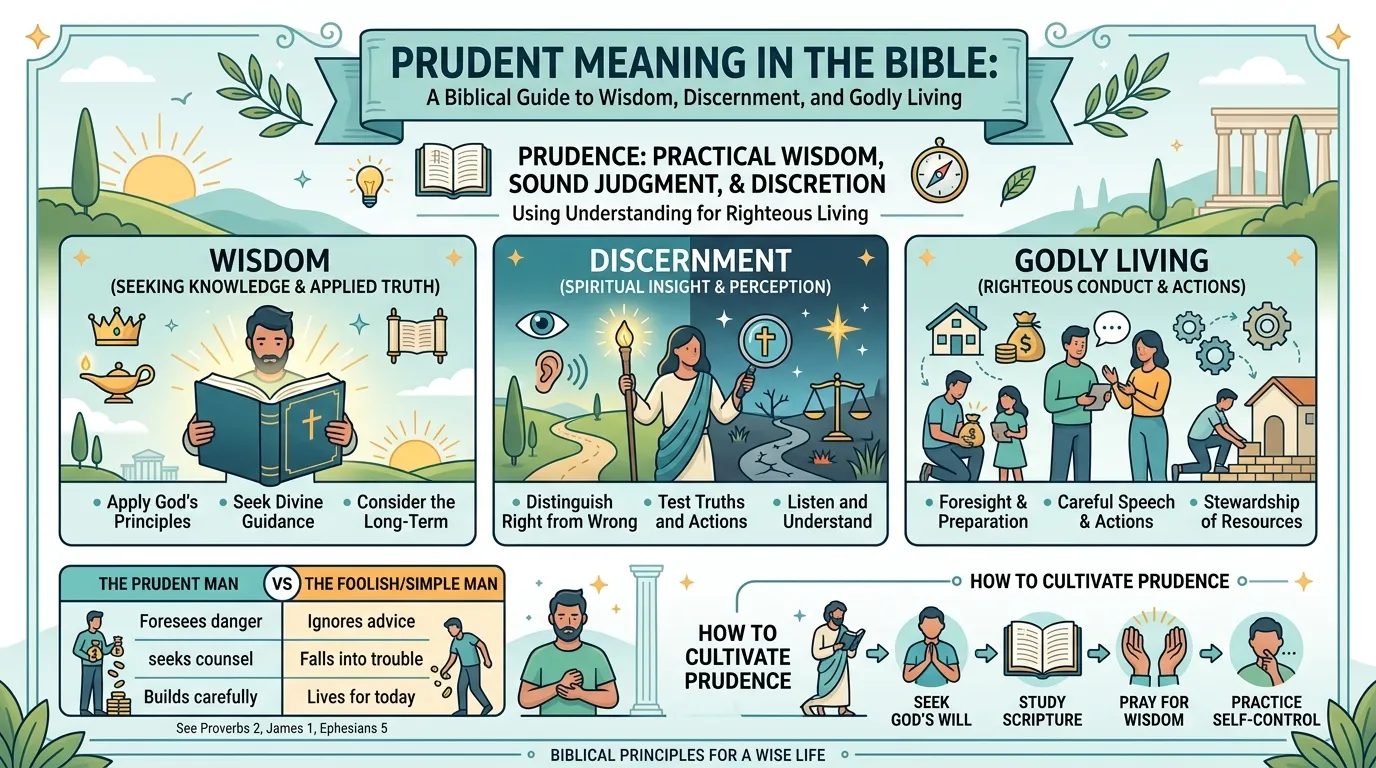
The English word “prudent” can sound cold — calculating, cautious, dull. The biblical concept is warmer and far more active. The Hebrew arum (crafty, shrewd, prudent) and the Greek phronimos (wise, sensible, thoughtful) describe a mind awake to reality: seeing consequences before they arrive, weighing choices before making them, stewarding resources before they run out. Prudence is not the opposite of faith; it is faith thinking clearly. The prudent believer trusts God and locks the door. She prays for daily bread and saves for winter. He believes God guides and counts the cost. As the old saying has it: trust God, but the Bible never says to leave your brain at the door.
“The Prudent Sees Danger”: Foresight as a Spiritual Discipline
Proverbs gives prudence its defining sentence — twice, for emphasis: “The prudent sees danger and hides himself, but the simple go on and suffer for it” (Proverbs 22:3; repeated at 27:12). Seeing danger before it arrives is the essence of the virtue. The simple — the naive, the impulsive, the willfully blind — walk straight into what the prudent sidestepped a mile back. The difference is not luck or intelligence; it is attention. The prudent person pays attention: to patterns, to warning signs, to the trajectory of small choices.
Apply this across life’s domains and it preaches everywhere. In relationships: the prudent sees the danger in the flirtation before it becomes the affair, in the compromising friendship before it reshapes the conscience, in the unequal yoking before the wedding. In money: the prudent sees the danger in the debt before it compounds, in the lifestyle inflation before it enslaves — “the borrower is the slave of the lender” (Proverbs 22:7) is a foresight text. In speech: the prudent sees where the angry word will land before it leaves the mouth — “a fool gives full vent to his spirit, but a wise man quietly holds it back” (Proverbs 29:11). In spiritual life: the prudent sees the drift before it becomes departure — the skipped prayer, the neglected fellowship, the small compromise — and hides himself in the means of grace while there is still time.
The hiding is as important as the seeing. Prudence is not merely diagnostic; it is active. The prudent “hides himself” — takes cover, changes course, acts on what he sees. Foresight without action is just anxiety with better information. True prudence always moves: it sets the boundary, makes the call, builds the reserve, ends the compromising arrangement. Seeing danger and strolling into it anyway is not faith; it is folly wearing faith’s clothes.
The Ant’s Sermon: Diligence Without Supervision
Return to the anthill, because Proverbs’ strangest detail is its most convicting: the ant works “without having any chief, officer, or ruler.” Prudence is self-starting. It does not wait to be told, monitored, or motivated. The prudent student studies before the exam is announced. The prudent worker saves before the layoff comes. The prudent believer prays before the crisis hits. This is diligence as character, not as compliance — the inner supervisor that the ant carries and the sluggard lacks.
The sluggard is Proverbs’ great foil to the prudent — and his portrait is uncomfortably recognizable: “A little sleep, a little slumber, a little folding of the hands to rest, and poverty will come upon you like a robber” (Proverbs 6:10-11). A little. The sluggard’s ruin never comes from one catastrophic decision; it comes from a thousand small surrenders to comfort. Prudence is the opposite habit: a thousand small acts of foresight — the lunch packed, the verse read, the apology made, the dollar saved — compounding into a life that is ready. Character is compound interest: small deposits, faithfully made, becoming wealth over time. The ant knows this. The sluggard learns it too late.
Prudence Is Not Anxiety: The Crucial Distinction
Here is where the teaching must be precise, because foresight has a counterfeit: anxiety. Both look at the future. But they look with different eyes and produce different fruit. Prudence sees the future and prepares; anxiety sees the future and panics. Prudence says: winter is coming; store food. Anxiety says: winter is coming; what if the storehouse burns down, and what if I get sick, and what if… — spiraling into paralysis. Prudence is faith thinking ahead. Anxiety is fear rehearsing disasters.
Jesus draws the line clearly. In the same Sermon on the Mount where He praises wise building, He commands: “do not be anxious about tomorrow” (Matthew 6:34). The same Lord who forbids anxiety commends foresight. The difference is trust: prudence prepares while trusting God; anxiety prepares instead of trusting God — or fails to prepare because it is too busy worrying to act. The test is simple: does your forward-thinking produce action and peace (prudence), or paralysis and dread (anxiety)? The ant stores food and sleeps soundly. Learn from her: prepare diligently, then rest in the God who holds tomorrow.
This also corrects the misuse of “trust God” as an excuse for imprudence. Refusing to save because “God will provide,” declining to plan because “the Spirit will lead,” ignoring warning signs because “I have faith” — this is not trust; it is testing God, the very thing Jesus refused to do in the wilderness (Matthew 4:7). Genuine faith uses the means God provides — planning, saving, preparing — as expressions of trust, not competitors with it. The farmer who prays for rain still plows the field. Prudence is prayer with its work boots on.
Prudence in Community: The Counsel-Seeker
Prudence has one more dimension the individualist misses: the prudent person seeks counsel. “Without counsel plans fail, but with many advisers they succeed” (Proverbs 15:22). “The way of a fool is right in his own eyes, but a wise man listens to advice” (Proverbs 12:15). Foresight is not only personal vision; it is borrowed vision — the humility to admit that your view of the future has blind spots, and the wisdom to let others check your map. The prudent builder does not only inspect his own foundation; he invites the inspection of others.
This is why Rehoboam’s story is so tragic. Crowned king, facing his first crisis, he asked the old counselors — who advised gentleness — and the young hotheads — who advised harshness. “He abandoned the counsel that the old men gave him” (1 Kings 12:8) and followed his peers; the kingdom split within days. One imprudent decision about whose advice to take cost him ten tribes. Contrast Moses, who listened to Jethro’s advice about delegating judgment and saved both himself and Israel from burnout (Exodus 18). Or the Jerusalem council, where the church’s sharpest dispute was settled by listening together (Acts 15). Prudence convenes counsel; folly convenes echoes. The wise person deliberately seeks voices that will disagree — the mentor who asks hard questions, the friend who tells the truth, the elder who has seen this road before.
And note the kind of counselors Proverbs commends: “many advisers,” not one guru; the tested and the truthful, not the flattering. “Faithful are the wounds of a friend” (Proverbs 27:6) — the prudent person would rather be wounded by truth than ruined by flattery. Build this into your decision-making as a habit: before the big choice — the move, the marriage, the investment, the ministry leap — lay it before two or three wise people and listen. The ant needs no supervisor; but the ant is not deciding a career. For the decisions that shape decades, prudence seeks counsel, weighs it, prays over it, and then acts. The foresight of many sees farther than the foresight of one.
The Prudent Builder: Hearing and Doing
Jesus closed the Sermon on the Mount with prudence’s ultimate parable: “Everyone then who hears these words of mine and does them will be like a wise [prudent, phronimos] man who built his house on the rock” (Matthew 7:24). The same Greek word. The prudent builder is the one who hears and does — foresight applied to the soul’s foundation. He digs deep before the storm, not during it. He builds on the rock of Christ’s words while the sky is clear, so that when “the rain fell, and the floods came, and the winds blew” — when, not if — the house stands.
The foolish builder is not irreligious; he heard the same words. His folly was hearing without doing — the spiritual equivalent of seeing danger and strolling on. Every sermon heard and ignored is sand under the foundation. Every conviction felt and shelved is another shovelful. The storm does not create the difference between the houses; it reveals it. Prudence builds before the weather changes. Today, in the calm, is the time: hear, do, dig deep, build on rock. The ant is still preaching. The wise are still listening. For the broader history of this virtue in moral thought, see the article on prudence.










