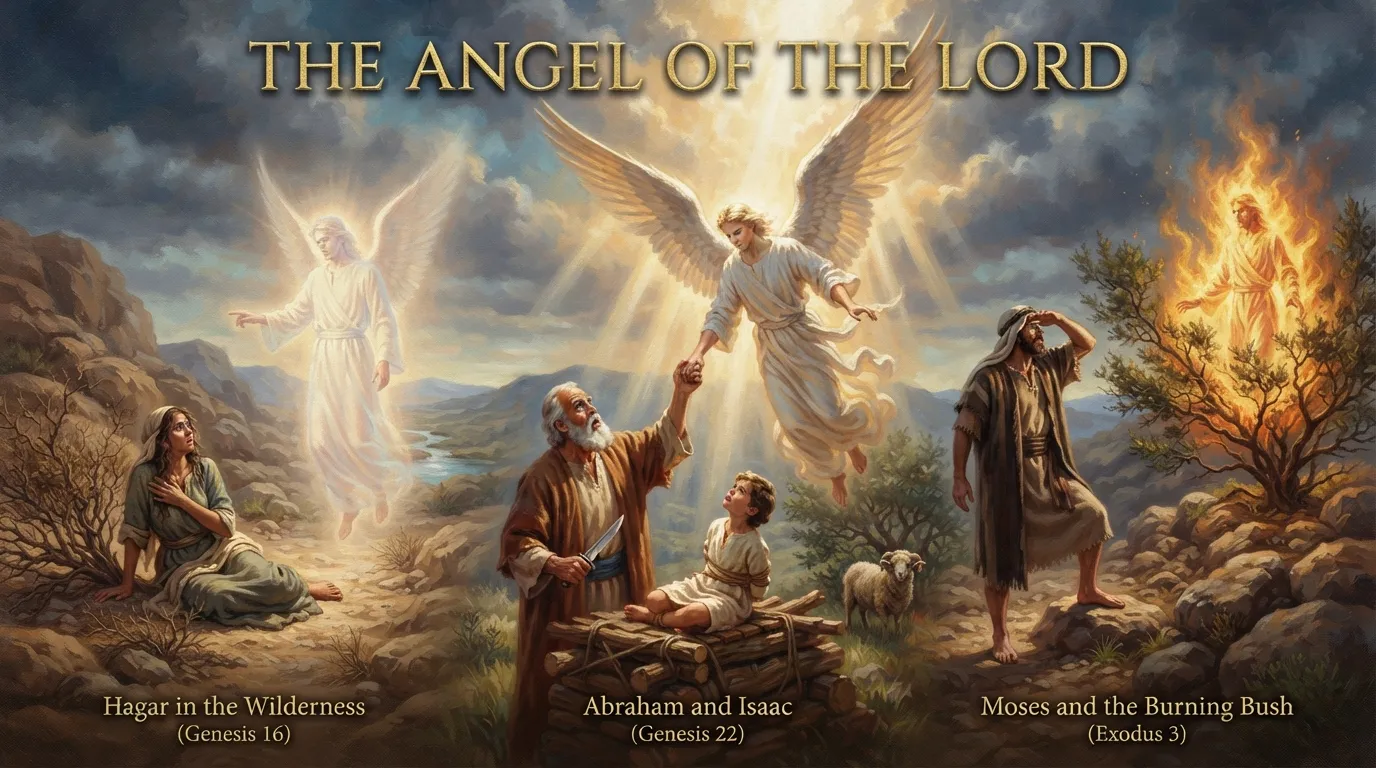
Have you ever wondered what it means when the Bible says that “the Angel of the Lord” appeared to someone? The phrase can sound mysterious, especially because some passages describe this Angel as speaking with God’s authority, while others seem to distinguish the Angel from God. Understanding the Angel of the Lord meaning in the Bible can help us see important truths about God’s presence, protection, guidance, and saving work. The figure appears to Hagar, Abraham, Moses, Gideon, and others — stories reminding us that God sees people in difficult places, speaks into moments of fear, and works according to His purposes.
Christians have understood these passages in different ways. Some believe the Angel of the Lord is a special appearance of God Himself, and some Christian teachers have connected these appearances with Christ before His incarnation. Others understand the Angel as a heavenly messenger who represents God with His authority. The safest approach is to begin with what Scripture actually says and then distinguish biblical teaching from theological interpretation.
The Messenger of the LORD
The Hebrew word commonly translated “angel” is malakh. It means “messenger” or “one who is sent.” The word itself does not always mean a supernatural being — in the Old Testament, malakh can refer to a human messenger as well as a heavenly one. The meaning depends on context. The phrase “Angel of the LORD” is commonly represented by the Hebrew expression malakh YHWH. YHWH is the personal name of God revealed in the Old Testament, often represented in English Bibles by LORD in capital letters. So at its basic level, the phrase means “the messenger of the LORD.”
But the biblical passages raise a deeper question: who exactly is this messenger? In Exodus 3, “the Angel of the LORD” appears to Moses in a flame of fire from within a bush. Yet the passage soon says that God called to Moses from the bush (Exodus 3:2–4). This close connection between the Angel and God is one reason Christians have discussed whether some appearances are manifestations of God’s presence. Still, it is important not to claim more than Scripture clearly states.
The Bible clearly teaches that God uses angels as His servants and messengers. Hebrews 1:14 describes angels as “ministering spirits sent to serve those who will inherit salvation.” Psalm 103:20 describes angels as mighty beings who obey God’s commands. But the particular identity of the Angel of the Lord is more complex. Scripture does not give one simple explanation that settles every passage.
Five Encounters
Hagar in the wilderness. In Genesis 16, Hagar is alone in the wilderness after being mistreated and sent away. The Angel of the LORD finds her near a spring. The Angel tells Hagar to return and promises that her descendants will become numerous. Hagar responds by calling the LORD “the God who sees me” (Genesis 16:13). The lesson is powerful: God sees people who feel unseen. Hagar was not in a palace or a place of comfort. She was in the wilderness. Yet God met her there.
Abraham on the mountain. In Genesis 22, Abraham is tested when God tells him to offer Isaac. At the critical moment, the Angel of the LORD calls to Abraham from heaven and stops him. The Angel tells Abraham not to harm the boy and points him toward a ram caught in a thicket. This passage emphasizes God’s provision and Abraham’s faith. It also introduces a theme that appears throughout Scripture: God provides what is needed according to His purpose.
Moses at the burning bush. One of the most famous appearances occurs in Exodus 3. Moses is tending sheep when he sees a bush burning without being consumed. “The angel of the LORD appeared to him in flames of fire from within a bush” (Exodus 3:2). But the story then identifies the speaker as God. God tells Moses that He has seen the suffering of the Israelites in Egypt and has heard their cries. He then calls Moses to lead them out of slavery. This passage connects the Angel of the Lord with God’s holy presence, His compassion, and His call. It also reminds us that God can meet people during ordinary moments and give their lives a new direction.
Gideon in hiding. Judges 6 describes another important appearance. Gideon is hiding while Israel suffers under oppression. The Angel of the LORD appears to him and says, “The LORD is with you, mighty warrior.” Gideon does not feel like a mighty warrior. He is afraid and uncertain. Yet God sees what Gideon can become through obedience and faith. This story offers encouragement to Christians who feel inadequate. God’s calling is not always based on how strong we feel today.
Elijah under the tree. In 1 Kings 19, Elijah is exhausted and afraid after a difficult period of ministry. He travels into the wilderness and eventually rests under a tree. An angel touches him and tells him to eat. Food and water are provided, and Elijah receives strength for the journey ahead. This account shows that God’s care can include very practical needs. Sometimes spiritual encouragement looks like a dramatic revelation. At other times, it looks like food, rest, strength, and another step forward.
Is the Angel of the Lord God?
This is one of the most common questions about the Angel of the Lord, and the answer requires care. Some Old Testament passages present the Angel in such close connection with God that Christian theologians have understood the figure as a visible manifestation of God. Other passages clearly distinguish the Angel from the LORD who sends him. Genesis 16 identifies the Angel of the LORD as appearing to Hagar, yet Hagar responds by recognizing God’s involvement in the encounter. Exodus 3 begins with the Angel appearing in the burning bush, but then says that God called to Moses.
Because of passages like these, many Christians have historically believed that some appearances of the Angel of the Lord may be theophanies — manifestations of God. Some Christian traditions go further and understand certain appearances as Christophanies, or appearances of Christ before His incarnation. However, the term “Christophany” is a theological interpretation rather than a statement explicitly made by the Old Testament passages themselves. It is wise to say that some Christians interpret the Angel of the Lord as a pre-incarnate appearance of Christ, while others understand Him as a unique heavenly messenger representing God.
The Angel of the Lord also differs from other angels in the Bible. Ordinary angels are consistently presented as God’s servants and messengers. The Angel of the Lord, however, sometimes speaks with God’s own authority and appears in passages where God’s presence is especially close. That does not mean every reference to “an angel of the LORD” should automatically be treated as God Himself. Context matters. A helpful principle: angels serve God; God sends angels with messages and assignments; the Angel of the Lord appears in several unique Old Testament encounters; some passages closely identify the Angel’s words and actions with God; and Christians differ about the precise identity of the Angel in every passage. This approach respects Scripture without forcing every passage into one interpretation.
What the Encounters Teach
The Bible’s stories about the Angel of the Lord contain several spiritual themes. God’s presence: the Angel often appears at moments when people need God’s direction — Moses needed direction, Gideon needed courage, Hagar needed reassurance, Elijah needed strength. These stories remind us that God is not distant from the struggles of His people. God’s protection: Psalm 34:7 says, “The angel of the LORD encamps around those who fear him, and he delivers them.” The verse presents God’s protection as a source of comfort — not a promise that Christians will never experience danger or suffering, but a pointer to God’s faithfulness even in difficult circumstances. God’s guidance: the Angel sometimes brings a message that changes someone’s direction, teaching that God’s guidance should lead toward obedience, truth, and faithfulness. When Christians pray for guidance today, they should not assume every unusual feeling, dream, or event is a supernatural message. Guidance should be tested against Scripture, wise counsel, prayer, and the character of God revealed in the Bible. God’s compassion: Hagar’s story is especially comforting. She was vulnerable, displaced, and afraid. Yet God saw her. God notices people who feel forgotten.
Several practical lessons stand out. God sees you: Hagar’s story reminds us that loneliness does not mean God has forgotten us. Your circumstances may change slowly, but God’s character remains faithful. God can meet you in ordinary places: Moses was caring for sheep when his life changed. You do not have to be in a church building to seek God — pray while driving, working, walking, cooking, or resting. God can use ordinary moments to teach important truths. Fear does not have to control your next step: Gideon was afraid, Elijah was exhausted, Hagar was distressed, yet God met each person in their weakness. Faith does not always mean feeling fearless. Sometimes faith means obeying God while you are still afraid. God’s provision may look different than expected: Abraham discovered a ram when he needed a sacrifice; Elijah received food and water when he needed strength. God’s provision does not always arrive in the form we expect. Scripture should remain our foundation: spiritual experiences can feel powerful, but Scripture remains the standard for Christian faith. If an interpretation contradicts God’s revealed Word, Christians should reject the interpretation rather than change Scripture to fit the experience. God’s guidance will never require us to believe what contradicts God’s truth.
A Word About Chasing Signs
Some people look for a dramatic sign — an angel sighting, a vision, an unmistakable supernatural moment — and wonder whether they have missed God if none comes. The Bible does contain examples of God communicating through extraordinary means, but Scripture never teaches Christians to chase experiences or to treat every unusual event as a divine message. A wise response to any striking spiritual impression is to test it: does the message agree with Scripture? Does it encourage faithfulness to God? Does it point toward truth rather than fear or superstition? Is there a clear biblical principle involved? Would wise, mature Christians recognize the interpretation as consistent with Scripture? If an impression encourages you to trust God, pray, forgive, seek wisdom, or turn away from sin, those biblical actions remain valuable whether or not the experience itself was supernatural.
Similarly, in the biblical accounts, encounters involving the Angel of the Lord often occur in connection with God’s purposes, protection, instruction, judgment, calling, or provision. From a biblical perspective, the important question is not simply whether seeing an angel is a “good sign.” Ask what the passage teaches about God. Does it reveal His holiness? His mercy? His authority? His protection? His call to obedience? That keeps the focus where Scripture places it: on God rather than on the supernatural experience itself.
You may never experience an appearance like Moses or Gideon did. Yet the biblical lessons can still shape everyday Christian life. Imagine a Christian facing a difficult job situation, praying for direction but receiving no dramatic sign. Instead, they remember biblical wisdom, seek counsel, act honestly, and trust God with the outcome. That is also an expression of faith. Or consider someone who feels forgotten during a difficult season — Hagar’s story can remind them that God sees them even when other people do not. A parent praying for a child, a person grieving a loved one, or someone beginning a new chapter of life can all find encouragement in these biblical accounts. The central message is not to chase supernatural experiences. It is to trust the God who sees, speaks, provides, protects, and guides His people.
If you feel forgotten, remember Hagar. If you feel unqualified, remember Gideon. If you feel exhausted, remember Elijah. If you need direction, remember Moses. The same God who saw, guided, strengthened, and provided for His people remains faithful. Take time to pray about the questions you are facing. Open Scripture and seek wisdom. If you have experienced a dream or unusual spiritual moment, test it carefully against God’s Word rather than allowing fear or speculation to control you. Above all, remember this hopeful truth: God sees you, God knows your needs, and God is worthy of your trust. You do not need to understand every mystery before you can have faith. Sometimes the most faithful response is simply to pray, follow God’s Word, and take the next step with confidence in His grace. For a broader survey of this figure’s appearances across Scripture and the debates about the figure’s identity, the Wikipedia article on the Angel of the Lord collects the key passages and interpretations.










