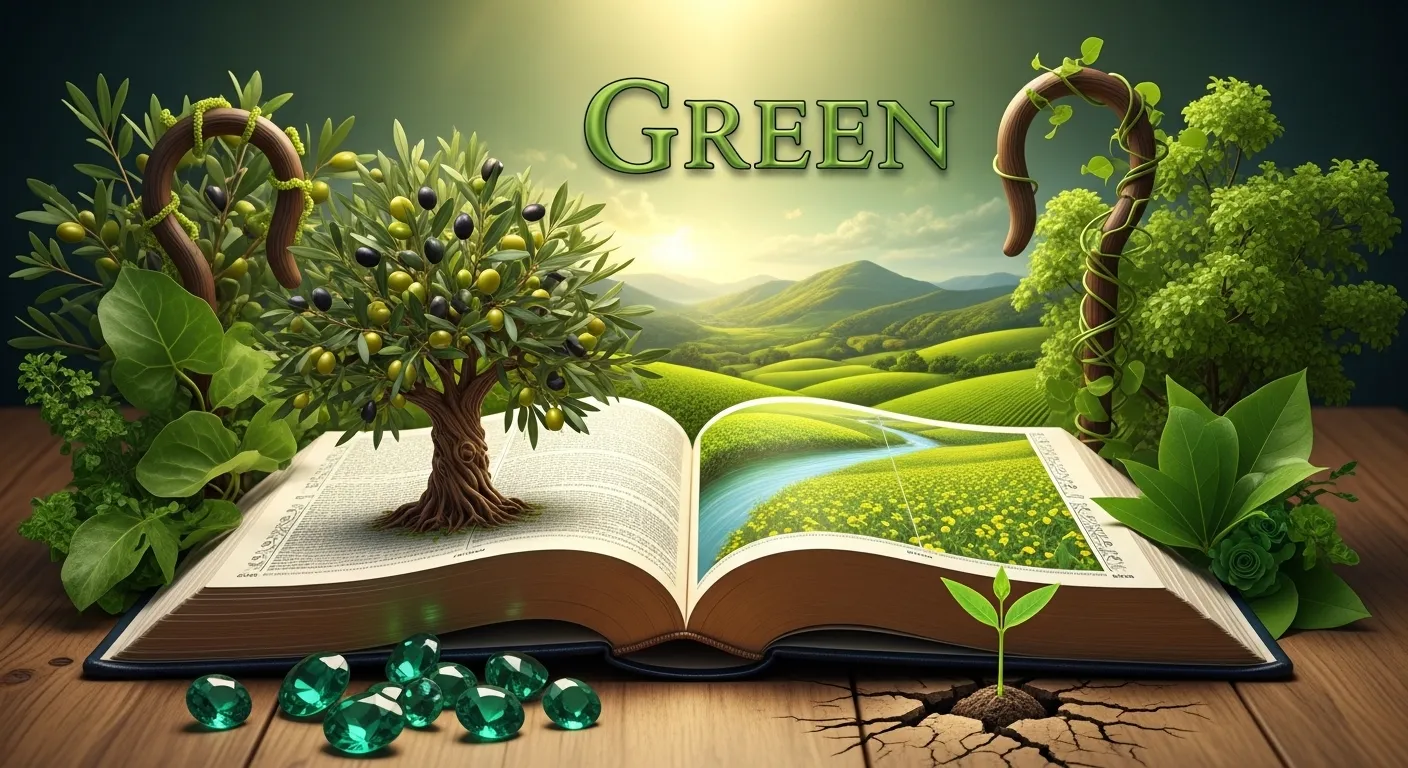
Before Jesus fed the five thousand, He did something oddly specific: “he commanded them all to sit down in groups on the green grass” (Mark 6:39). Of all the details Mark could have recorded about that hillside — the size of the crowd, the late hour, the disciples’ panic — he notes the grass, and its color. It is the only time in the Gospels that a color of nature is mentioned in a miracle setting, and John, telling the same story, adds that “there was much grass in the place” (John 6:10). Why does the green matter? Because in Scripture, green is never just scenery. It is the color of a Shepherd who feeds His flock.
Follow green through the Bible and it keeps showing up where God provides, restores, and makes things grow. It is the color of pasture, of flourishing, of life returning after drought. Green is what grace looks like when it puts down roots.
The Shepherd’s Pastures
The most beloved green in Scripture belongs to David’s psalm: “He makes me lie down in green pastures, he leads me beside still waters” (Psalm 23:2). The picture is specific and Middle Eastern. In the Judean hills, green pasture is seasonal and precious — it appears after the rains and vanishes in the summer heat. A shepherd who finds green pasture for his flock has found life: food, rest, safety. The sheep do not find it themselves. They are made to lie down in it — the Hebrew suggests being settled, caused to rest. Green pasture is not a reward the sheep earn. It is a provision the Shepherd locates.
That is green’s first sermon: God’s people do not manufacture their own flourishing. They are led into it. The green is always His doing — “he makes me,” “he leads me.” When your spiritual life feels green — rested, fed, growing — the credit belongs to the Shepherd who found the pasture, not the sheep who grazed it.
The Tree by the Water
Green’s second great image is the tree. “He is like a tree planted by streams of water that yields its fruit in its season, and its leaf does not wither” (Psalm 1:3). The blessed person’s defining feature is not achievement but placement: planted, rooted, watered. The green leaf is the visible evidence of an invisible root system reaching an invisible water source.
Jeremiah sharpens the image into a promise and a test: “Blessed is the man who trusts in the Lord… He is like a tree planted by water, that sends out its roots by the stream, and does not fear when heat comes, for its leaves remain green” (Jeremiah 17:7–8). The heat comes — the text does not exempt the rooted tree from drought. But the leaves stay green, because greenness was never about the weather. It was about the roots. This is one of Scripture’s most searching diagnostics: your leaves reveal your roots. Persistent spiritual greenness in a dry season testifies to a water source the drought cannot touch. And the counter-warning stands: “the wicked… will wither like a green herb” is the psalmist’s confidence about those planted in themselves rather than in God (Psalm 37:2) — green without roots is temporary by nature.
Proverbs adds the economic version: “Whoever trusts in his riches will fall, but the righteous will flourish like a green leaf” (Proverbs 11:28). Two kinds of green: the green of money, which falls, and the green of righteousness, which flourishes. The color is the same. The root is everything.
Green as Provision
Go back to the beginning and green is literally God’s first gift of food: “I have given every green plant for food” (Genesis 1:30). Before there were fields or farmers, there was green — provision preceding labor, grace preceding work. The psalmist traces the same generosity through creation: God causes “grass to grow for the livestock and plants for man to cultivate” (Psalm 104:14). Every green thing is a small, silent testimony that the world was made by a Provider.
That is why the feeding of the five thousand happens on green grass. The crowd sits on the color of provision and then receives provision — the setting preaches the sermon. Jesus the Shepherd (John 10:11) leads His flock into green pasture (the hillside) beside still waters (the Sea of Galilee is minutes away) and feeds them there. Mark’s green grass is not decoration. It is Psalm 23 acted out with five thousand extras.
When Green Withers
Scripture is honest about green’s fragility, and the honesty is part of the meaning. “The grass withers, the flower fades” (Isaiah 40:7) — set in deliberate contrast to “the word of our God will stand forever” (Isaiah 40:8). Created green is temporary; only the Word is permanent. Revelation’s judgments strike the green directly: “a third of the earth was burned up, and a third of the trees were burned up, and all green grass was burned up” (Revelation 8:7). The color of life, removed, is the color of judgment.
The warning inside the comfort is this: never confuse the pasture with the Shepherd. Green seasons end — droughts come, grass withers, pastures brown. If your faith is in the greenness rather than the God of the greenness, the first dry season will undo you. But if your roots are in the stream, the withering around you cannot reach the water within you. “Its leaves remain green” — even when heat comes. Especially when heat comes.
The Green Olive Tree
David gives green its most personal confession: “But I am like a green olive tree in the house of God. I trust in the steadfast love of God forever and ever” (Psalm 52:8). The context makes it electric — Psalm 52 is aimed at Doeg the Edomite, a powerful man who used his influence for evil. David contrasts the wicked man’s temporary might with his own rootedness: Doeg will be uprooted; David, planted in God’s house, stays green. The olive tree is the perfect image — slow-growing, deep-rooted, productive for centuries, nearly impossible to kill. Green as defiance: the wicked flourish briefly like grass and wither; the righteous endure like the olive.
Hosea picks up the same tree for the restored Israel: “I am like an evergreen cypress; from me comes your fruit” (Hosea 14:8) — God Himself speaking as the source of the greenness. The evergreen does not brown in winter; its green is not seasonal but constitutional. That is the promise to the believer rooted in God: a greenness that does not depend on the climate. Droughts come — Jeremiah is honest about the heat (Jeremiah 17:8) — but the evergreen’s color holds because its life comes from a source the seasons cannot touch. Green, at its deepest, is not the color of good circumstances. It is the color of a good root — and the root, Scripture insists, is a Person: the One who called Himself the true vine, in whom every lasting green has its life.
Jesus Himself used green’s fragility as an argument against anxiety. “Consider the lilies of the field, how they grow… But if God so clothes the grass of the field, which today is alive and tomorrow is thrown into the oven, will he not much more clothe you, O you of little faith?” (Matthew 6:28, 30). The grass is green today, fuel tomorrow — and God still bothers to clothe it beautifully today. The logic is from the lesser to the greater: if God lavishes care on the temporary green, how much more on the eternal soul? Green becomes an anti-worry sermon. Every lawn, every field, every roadside weed is evidence in Jesus’ argument that the Father provides. Worry, in this light, is practical atheism about grass — doubting, despite all the green evidence, that God will do for you what He so obviously does for the field.
Green, gathered up, is the color of life given and life sustained: the pasture the Shepherd finds, the tree the stream feeds, the grass the multitude sits on, the provision that precedes the worker. It promises growth without promising ease, and flourishing without promising permanence — the permanence belongs to the Word, the growth belongs to the rooted. The symbolism of green in human culture — nature, growth, renewal, “go” — runs parallel to Scripture’s own use; the Bible simply names the Gardener behind the garden, the Shepherd behind the pasture, and the stream behind the green.










