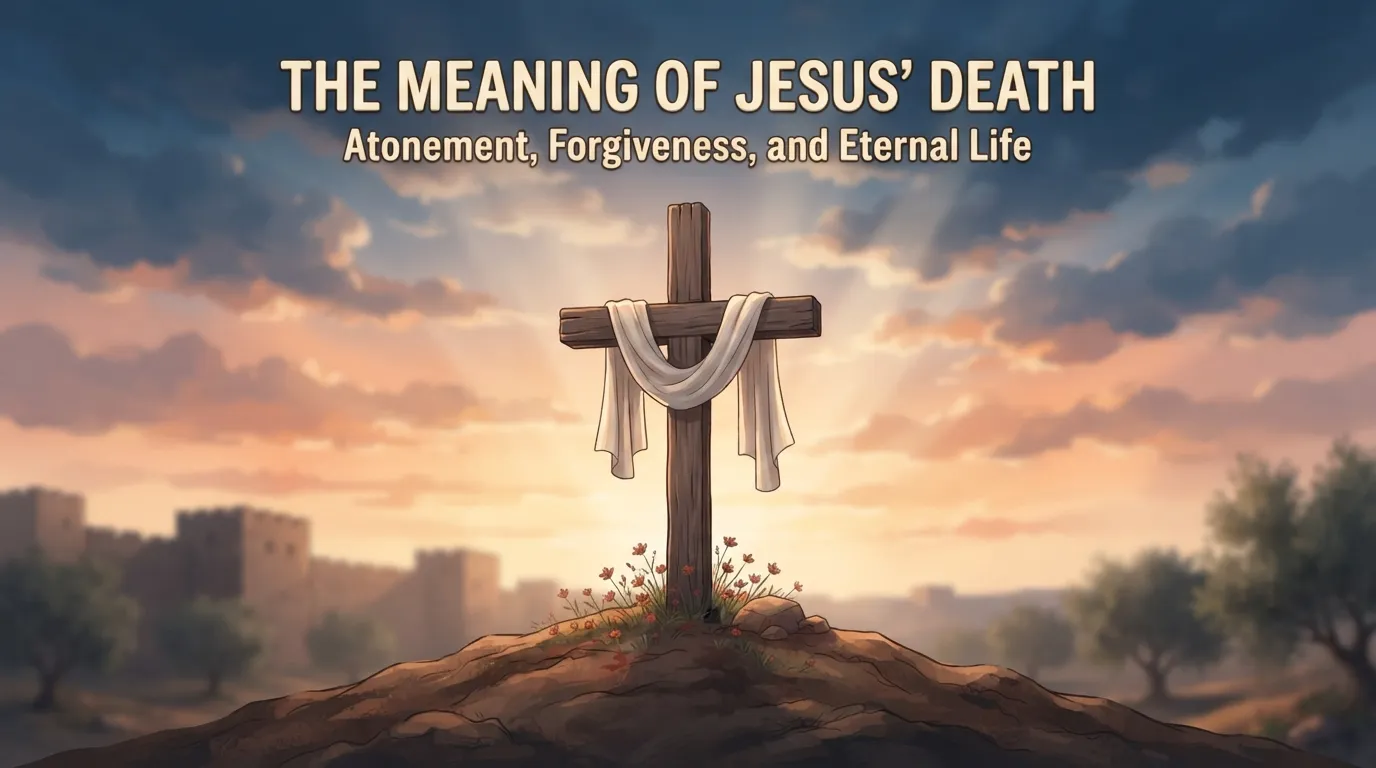
Imagine standing at the foot of a cross and hearing the final words of Jesus: “It is finished.” The scene is painful, yet it is also filled with hope. What looked like defeat became the center of God’s plan to bring sinners back to Himself. The death of Jesus meaning in the Bible is much deeper than the story of a good man dying. Scripture presents Jesus’ death as a sacrifice for sin, an expression of God’s love, the fulfillment of Scripture, and the path to reconciliation with God. His death points toward forgiveness, redemption, grace, and new life. For Christians, the cross is not simply a symbol of suffering. It is a reminder that God did not abandon humanity in its brokenness. Through Christ, God made a way for people to receive forgiveness and return to Him.
Not an Accident: A Willing Sacrifice
The Bible teaches that Jesus willingly gave His life for sinners. Jesus Himself said that He came to “give his life as a ransom for many” (Mark 10:45). His death was not an accident or a meaningless tragedy. He understood His mission and willingly accepted suffering. Paul explains the heart of the gospel in 1 Corinthians 15:3: Christ died for our sins according to the Scriptures. That gives us several central meanings of Jesus’ death: He died for our sins. His death fulfilled God’s redemptive plan. He gave Himself willingly. His death demonstrates God’s love. His sacrifice makes forgiveness possible. His death brings reconciliation between God and humanity. And His resurrection shows that death did not have the final word. The cross stands at the heart of Christian faith.
The Bible connects Jesus’ death with the problem of sin. Romans 3:23 teaches that all people have sinned and fall short of God’s glory. Sin separates humanity from God and creates a need for forgiveness and restoration. Throughout the Old Testament, sacrifices were connected with sin, forgiveness, and approaching God. These sacrifices pointed forward to something greater. John the Baptist described Jesus as “the Lamb of God, who takes away the sin of the world” (John 1:29). But Christianity does not teach that Jesus was simply another animal sacrifice. Hebrews presents His sacrifice as unique and complete: Jesus gave Himself once for sins, rather than repeatedly offering sacrifices. His death reveals both the seriousness of sin and the greatness of God’s grace.
One of the clearest biblical meanings of Jesus’ death is sacrifice. Isaiah 53 describes the suffering servant who would bear the sins of others, and Christians understand this passage as pointing to the suffering and death of Christ. First Peter 2:24 says that Jesus “bore our sins in his body on the tree.” The image is powerful: Jesus carried the burden of sin so that those who trust Him could live differently. This does not mean God enjoys human suffering. Rather, the cross shows the seriousness of sin and the extraordinary extent of God’s saving love. Jesus’ death was an act of self-giving love.
Love, Forgiveness, Reconciliation
Perhaps one of the most comforting meanings of the cross is that it reveals God’s love. John 3:16 connects God’s love for the world with His giving of His Son. Romans 5:8 goes even further: God demonstrated His love for us while we were still sinners. Think about what that means. God’s love is not presented as something we earn after becoming perfect. The gospel says that Christ died for sinners. A Christian who feels ashamed, unworthy, or far from God can look to the cross and remember that God’s grace reaches people in their brokenness. The cross says: you are not beyond God’s grace.
Another major biblical meaning of Jesus’ death is forgiveness. Ephesians 1:7 connects redemption through Christ with the forgiveness of sins. Colossians 1:13–14 similarly describes redemption and forgiveness through Christ. Forgiveness does not mean pretending sin never happened. Biblical forgiveness takes sin seriously while offering restoration through God’s grace. Imagine someone carrying guilt for years after making a serious mistake, repeatedly thinking, “God could never forgive me.” The message of the cross gives a different answer. When a person turns to Christ in repentance and faith, the Bible points to God’s forgiveness rather than endless condemnation.
Sin creates separation, but the gospel speaks about reconciliation. Romans 5:10 says that while people were enemies, they were reconciled to God through the death of His Son. Reconciliation means restored relationship — more than receiving a clean record. Christianity teaches that salvation brings people into a restored relationship with God. The cross therefore has a relational meaning: Jesus died so that sinners could be brought back to God. That truth can change how a Christian approaches prayer. Instead of approaching God only with fear and shame, believers can come to Him through Christ with confidence, humility, and trust.
The Words Beneath the Cross
The New Testament was written primarily in Greek, so the biblical phrase describing Jesus’ death is not originally a Hebrew phrase. But Hebrew words connected with death, sacrifice, sin, and life help explain the biblical background. One important Hebrew word is mawet, commonly translated as “death,” used throughout the Old Testament for physical death and the reality of mortality. Another important Hebrew concept is kipper, connected with making atonement or covering sin. The Old Testament sacrificial system used this language when describing how sin was dealt with in worship. Jesus’ death is understood by Christians against this larger biblical background. The Hebrew Scriptures also contain passages about a suffering servant, especially Isaiah 53, which speaks about someone who suffers and bears the wrongdoing of others. The New Testament connects Jesus’ suffering and death with this biblical story. It is important, however, not to force a Hebrew meaning onto every detail of Jesus’ death. The safest approach is to begin with what Scripture explicitly says and then understand its spiritual meaning from the wider biblical context.
What Happened When He Died — and Three Days Later
The Gospel accounts describe several important events surrounding Jesus’ death. Jesus was crucified outside Jerusalem. Darkness came over the land, and Jesus cried out before giving up His spirit. Matthew 27:50 says that Jesus “gave up his spirit.” At the moment of His death, the curtain of the temple was torn in two (Matthew 27:51). Christians have commonly understood this event as a powerful sign connected with access to God. Hebrews later explains that Christ opened the way into God’s presence through His sacrifice. Jesus’ death was followed by His burial. But the story did not end at the tomb. The resurrection is essential to understanding the meaning of the cross.
If Jesus had simply died and remained in the grave, Christianity would not proclaim the same message. The New Testament repeatedly connects Jesus’ death with His resurrection. Paul writes in 1 Corinthians 15 that Christ died, was buried, and was raised on the third day. The resurrection shows that death did not defeat Jesus. Christian hope is not centered on suffering alone. It is centered on the crucified and risen Christ. The cross shows the cost of redemption. The empty tomb shows the hope of victory and new life.
The Cross in Daily Life
Christians often see several spiritual truths represented by the cross. The cross represents sacrificial love: Jesus did not respond to human sin with revenge; He willingly gave Himself, teaching Christians to value sacrificial love rather than selfishness. The cross represents grace: salvation is God’s gift, not something earned through personal perfection. The cross represents forgiveness: it points Christians toward God’s willingness to forgive repentant sinners. The cross represents reconciliation: Jesus’ death points toward restored fellowship with God. The cross represents new life: because the cross is followed by resurrection, it also points toward transformation and hope. These spiritual interpretations are rooted in the New Testament’s teaching about Christ rather than in superstition or hidden numerical meanings.
The cross gives Christians a serious view of sin. Sin is not merely breaking a few rules. Scripture presents sin as something that damages our relationship with God and others. Yet the cross also prevents Christians from becoming hopeless about sin. The message is not: “You have sinned, so there is no hope.” The gospel is: “Your sin is serious, but God’s grace is greater.” That creates a healthy balance between repentance and hope. Christians should neither excuse sin nor allow guilt to become their entire identity.
The meaning of the cross should affect everyday choices. If Jesus gave Himself in love, Christians are called to practice sacrificial love. If Christ forgives, Christians are called to learn forgiveness. If Jesus humbled Himself, believers are called to walk in humility. Philippians 2:5–8 points Christians toward the humility of Christ, describing His willingness to humble Himself and become obedient to the point of death. This becomes very practical: a Christian may choose to forgive a family member, serve someone without expecting praise, admit a mistake, help someone in need, or put another person’s needs ahead of personal comfort. The cross is not only something Christians remember on Easter. It shapes how Christians live.
The cross can become especially meaningful during suffering. Maybe you are grieving someone you love. Maybe you are facing rejection, financial pressure, loneliness, or uncertainty about the future. The cross reminds Christians that God understands suffering. Jesus experienced betrayal, rejection, physical pain, injustice, and death. Hebrews 4:15 describes Jesus as one who can sympathize with human weakness because He experienced temptation and suffering. This does not mean every painful event has a secret divine meaning. Instead, Christians can hold onto a simpler truth: God is present, and suffering does not mean He has stopped loving you. The resurrection also reminds believers that suffering and death are not the final chapter for those who belong to Christ.
When all the biblical themes are brought together, the central message is clear. Jesus died for sinners and rose again so that people could be reconciled to God. His death reveals the seriousness of sin. It reveals the depth of God’s love. It provides the foundation for Christian forgiveness and redemption. And because Jesus rose again, His death points toward resurrection and eternal hope. The cross holds together truths that Christians sometimes separate: justice and mercy, sin and grace, suffering and hope, death and life. The death of Jesus can be difficult to think about because it shows the terrible reality of suffering and sin. Yet the Bible does not leave us at the cross. It leads us from the cross to the empty tomb. When you feel guilty, remember grace. When you feel far from God, remember reconciliation. When you feel broken, remember redemption. When you face suffering, remember that Jesus understands suffering. And when death seems like the end, remember the resurrection. The cross tells us that God’s love is deeper than our failure. The empty tomb tells us that death does not have the final word. Take time to pray, read the Gospel accounts, and bring your questions honestly before God. You do not need to understand every mystery at once. Jesus’ death calls you to trust God’s grace, receive His forgiveness, walk in faith, and hope in the life He promises. For readers who want the historical and theological context of the crucifixion itself — Roman practice, Gospel accounts, and centuries of interpretation — the Wikipedia article on the crucifixion of Jesus brings those threads together.










