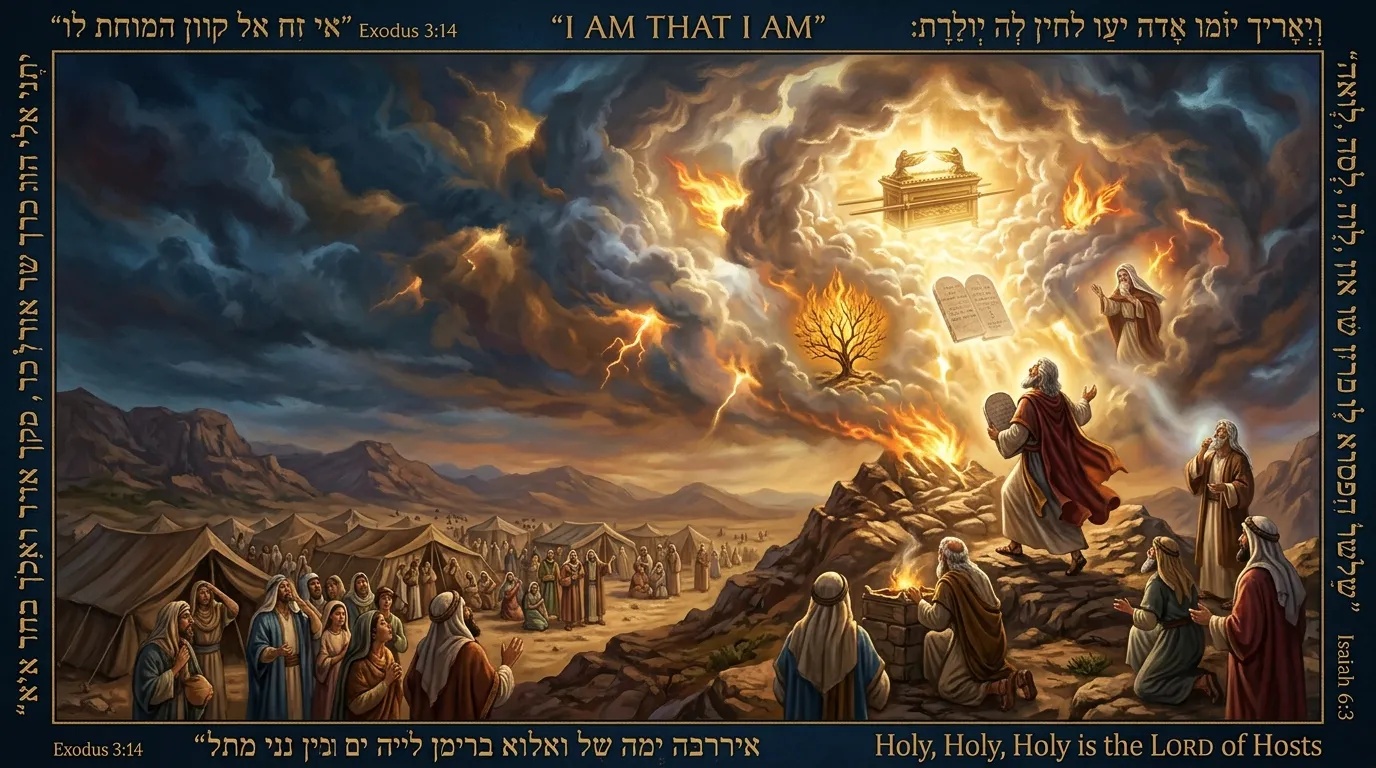
“The God of the Old Testament is angry. The God of the New Testament is loving.” You have probably heard that claim — from a skeptic, from a confused believer, or from your own doubts on a hard day. It is one of the most persistent misunderstandings of the Bible. The Old Testament does contain judgments, wars, and wrath. But it also contains some of the most tender portraits of God’s love ever written. And the New Testament contains its own warnings of judgment, including the most sobering words of Jesus Himself. The God of the Old Testament is not a different God from the God of the New Testament. He is the same God, revealed in the same character, across the whole story.
This article confronts the misconception directly, traces the character of God through the Old Testament, and shows how the Old Testament God prepares the way for Jesus — not as a contrast, but as a foundation.
Where the Misconception Comes From
The misconception has an ancient pedigree. In the second century, a teacher named Marcion argued that the Old Testament God — a God of law and wrath — could not be the Father of Jesus, and he tried to discard the Old Testament entirely. The church rejected Marcion’s teaching as heresy. But Marcion’s instinct survives in every generation: when readers encounter the conquest of Canaan, the flood, or the exile, they wonder whether the God of those stories can be the God who says, “God is love.”
Part of the problem is selective reading. Readers who compare the worst moments of the Old Testament with the best moments of the New Testament will always find a contrast — but it is a rigged comparison. A fair reading compares the whole with the whole: the wrath of the Old Testament with the wrath of the New, and the love of the Old Testament with the love of the New. When we do that, the picture changes dramatically.
The God of Wrath in the New Testament
The New Testament is not free of wrath. John the Baptist warned of “the coming wrath” (Matthew 3:7). Jesus spoke of hell, judgment, and outer darkness more than anyone else in Scripture. He told the story of the rich man in torment, warned that it would be more bearable for Sodom than for towns that rejected Him, and described a final judgment where the sheep and goats would be separated forever. Paul wrote that “the wrath of God is being revealed from heaven against all the godlessness and wickedness of people” (Romans 1:18). The book of Revelation describes the wrath of the Lamb. The New Testament’s God is not a God who has stopped judging. He is a God whose judgment is revealed in full.
Conversely, the Old Testament is full of love. That is the side of the comparison most people miss.
The God of Love in the Old Testament
The Old Testament’s central declaration of God’s character comes in Exodus 34:6–7, when God proclaims His own name to Moses: “The LORD, the LORD, the compassionate and gracious God, slow to anger, abounding in love and faithfulness.” Compassion, grace, patience, love, faithfulness — these are the first words God uses to describe Himself, and they echo through the rest of Scripture. The Psalms repeat them like a refrain. Jonah quotes them when he complains that God is too merciful to Nineveh. Joel quotes them when he calls Israel to repentance. The character of God is not wrath with a little love. It is love with a holy response to evil.
Consider the evidence. God’s love for Israel is described as the love of a husband for a wife (Hosea), a father for a child (Hosea 11), a shepherd for sheep (Psalm 23), a mother for her nursing child (Isaiah 49:15). God’s patience with Israel — centuries of rebellion met with warnings, prophets, and second chances — is staggering. The exile was not God’s first response. It was His last resort after generations of pleading. And even in judgment, the prophets promised restoration: “I will heal their waywardness and love them freely, for my anger has turned away from them” (Hosea 14:4).
Why Judgment Exists in the Old Testament
The judgments of the Old Testament are real, and they should not be minimized. But they must be understood in context. The flood came after generations of violence that had filled the earth. The conquest of Canaan came after centuries of Canaanite practices that included child sacrifice and ritual cruelty — practices God had warned about for four hundred years (Genesis 15:16). The exile came after centuries of idolatry, injustice, and the oppression of the poor. In every case, judgment followed prolonged patience, repeated warnings, and clear moral reasons.
More importantly, the judgments of the Old Testament are not the final word. They are penultimate. God’s judgment is always aimed at restoration. The flood leads to a covenant. The exile leads to return. The discipline of Israel leads to the promise of a new covenant written on hearts. Wrath in the Old Testament is the surgery, not the goal. The goal is healing.
The Old Testament God in Jesus
Jesus did not come to correct the Old Testament’s picture of God. He came to fulfill it. When Jesus said, “Anyone who has seen me has seen the Father” (John 14:9), He was claiming that His life — His compassion for sinners, His anger at hypocrisy, His tears over Jerusalem, His death on the cross — is the fullest revelation of the God of Abraham, Isaac, and Jacob. The cross is not the moment when the New Testament God overruled the Old Testament God. It is the moment when the Old Testament God’s justice and love met in perfect harmony. The God who judged sin in the Old Testament judged it at the cross. The God who loved sinners in the Old Testament loved them at the cross.
Every attribute of God in the Old Testament finds its fullest expression in Jesus. His holiness — “Holy, holy, holy is the LORD Almighty” (Isaiah 6:3) — is the holiness of the Lamb without blemish. His mercy — “slow to anger, abounding in love” — is the mercy of the Good Shepherd who lays down His life for the sheep. His faithfulness — the God who kept His covenant through exile and return — is the faithfulness of the risen Lord who promises never to leave us.
Reading the Old Testament as a Christian
How, then, should believers read the Old Testament’s difficult passages? First, read them in context — historically, literarily, and canonically. A single verse of judgment, read alone, will mislead. Second, read them through Christ. Jesus is the lens that brings the whole Bible into focus. Third, read them with humility. Some passages remain difficult, and honest faith admits that. Fourth, read them as the story of the God who is love — a love that is holy, patient, just, and relentless. The God of the Old Testament is not a God to be embarrassed by. He is the God who so loved the world that He gave His only Son — and the Old Testament is the long story of that love preparing the way.
The Old Testament God and the Nations
A common version of the misconception is that the Old Testament God cared only about Israel, while the New Testament God cares about the world. The Old Testament itself contradicts that claim. From the beginning, God’s purpose included the nations. He promised Abraham that “all peoples on earth will be blessed through you.” He spared Nineveh, the capital of Assyria, when it repented at Jonah’s preaching — and Jonah was angry precisely because he knew God was “gracious and compassionate, slow to anger and abounding in love.” He sent prophets to Moab, Edom, Philistia, and Babylon, holding them accountable because He cared about them. He declared through Isaiah that His house would be “a house of prayer for all nations.”
The Old Testament’s God is a universal God. Israel was chosen not as an exclusive club but as a channel — a priesthood for the nations, a light to the Gentiles. When Israel forgot that calling and treated election as privilege rather than mission, the prophets rebuked them. Election was never about favoritism. It was about service. The God who chose Israel chose them for the sake of the world.
The New Testament does not expand God’s love. It reveals its fullness. The God who loved Nineveh loves the world. The God who welcomed Ruth the Moabite and Rahab the Canaanite welcomes every nation. The Old Testament’s God and the New Testament’s God are the same God, with the same heart for the same world.
The God Who Relents
One of the most striking features of the Old Testament God is His willingness to relent. When Moses interceded for Israel after the golden calf, “the LORD relented and did not bring on his people the disaster he had threatened” (Exodus 32:14). When Nineveh repented, God relented. When Hezekiah prayed, God added fifteen years to his life. The God of the Old Testament is not an unfeeling machine. He responds to prayer, to repentance, to intercession. His judgments are real, but they are not mechanical. They are the responses of a living, personal God who listens and who loves to show mercy.
For a survey of how God is portrayed across the biblical canon, the Wikipedia article on God in Christianity gathers the main themes.










