Imagine opening your Bible during a hard season and finding words that seem to speak directly to your heart. You may feel worried, confused, weak, or unsure about what God wants you to do. Then you read Paul’s words about grace, faith, hope, love, suffering, forgiveness, and new life in Christ. Suddenly, the message feels personal.
This is one reason many Christians want to understand Paul’s epistles meaning in the Bible. Paul’s letters were written to real churches and believers facing real struggles. Yet their message still speaks to Christians today.
Paul’s epistles teach that salvation is through Jesus Christ, God’s grace is freely given, faith should shape how we live, and believers are called to love and serve others. They also help us understand Christian identity, spiritual growth, suffering, prayer, forgiveness, and hope.
What Are Paul’s Epistles in the Bible?
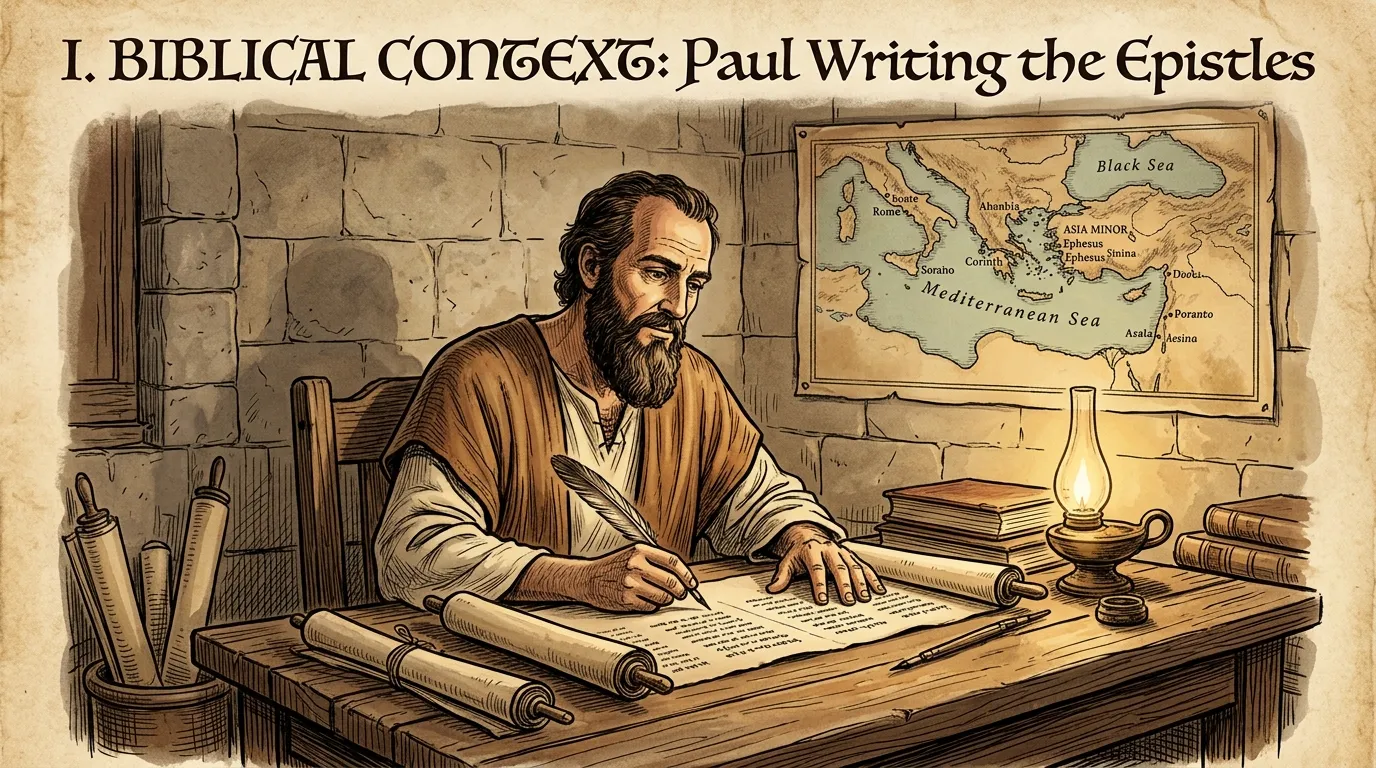
Paul’s epistles are letters written by Paul and included in the New Testament. The word epistle simply means a letter.
Paul wrote to churches and individual Christians. His letters answered questions, corrected wrong teaching, encouraged believers, explained the gospel, and gave practical guidance for Christian living.
The New Testament contains these letters traditionally associated with Paul:
- Romans
- 1 Corinthians
- 2 Corinthians
- Galatians
- Ephesians
- Philippians
- Colossians
- 1 Thessalonians
- 2 Thessalonians
- 1 Timothy
- 2 Timothy
- Titus
- Philemon
Some Christian traditions also discuss Hebrews in connection with Paul, but the Bible does not name its author, so it is best not to state that Paul definitely wrote Hebrews.
Paul’s letters are different in purpose and setting, but they point believers toward the same central truth: Jesus Christ is Lord, salvation comes from God, and faith in Christ should transform the way we live.
Paul’s Epistles Meaning in the Bible
The biblical meaning of Paul’s epistles is best understood through their central message about Christ, grace, faith, salvation, and Christian living.
Paul did not write simply to give people interesting religious ideas. His letters were meant to help believers understand the gospel and live faithfully.
For example, Romans explains humanity’s need for salvation and God’s righteousness through faith. Romans 3:23–24 teaches that all have sinned but can be justified freely by God’s grace through Christ Jesus.
Galatians strongly emphasizes that people are not saved by keeping religious rules. Instead, believers receive justification through faith in Jesus Christ. Galatians 2:16 points readers toward faith in Christ rather than reliance on works of the law.
Ephesians 2:8–10 brings these truths together beautifully. Salvation is God’s gift received through faith, yet believers are also created in Christ for good works.
So, when Christians ask what do Paul’s epistles mean in the Bible, one clear answer is this:
Paul’s letters reveal God’s grace in Christ and teach believers how that grace should shape their faith, character, relationships, and daily lives.
Paul’s Epistles + Hebrew Meaning
Although Paul’s epistles are part of the New Testament, which was written primarily in Koine Greek, Hebrew background can help us understand some of the biblical ideas Paul uses.
The word epistle itself does not come from Hebrew. It comes through Greek and means a letter or written message. Paul’s letters were originally written in Greek.
However, Paul was deeply connected to the Jewish Scriptures and often explained Jesus in light of the Old Testament. His writings therefore contain many ideas that have Hebrew and Jewish biblical backgrounds.
For example, the Hebrew concept of shalom is often associated with peace, wholeness, and well-being. Paul’s teaching about peace in Christ connects with this broad biblical theme. Ephesians 2:14 says that Christ “is our peace,” especially in the context of bringing divided people together.
Another important Hebrew biblical idea is hesed, often associated with steadfast love, mercy, or covenant faithfulness. While Paul usually writes in Greek, the Old Testament’s understanding of God’s faithful love provides important background for the New Testament message of God’s grace and faithfulness.
It is important, however, not to claim that every Greek word in Paul’s letters has a hidden Hebrew meaning. The safest approach is to read Paul’s words in their biblical and historical context.
The Central Message of Paul’s Letters
Paul’s epistles contain many subjects, but several major themes appear again and again.
Salvation Through Jesus Christ
Paul consistently points people to Jesus as the center of salvation.
In Romans 5:8, Paul explains that God demonstrates His love for us because Christ died for sinners. This shows that God’s love is not based on human perfection.
A Christian does not have to become perfect before coming to God.
The gospel begins with what God has done through Christ.
Grace
Grace is one of the strongest themes in Paul’s writings.
Ephesians 2:8 says that believers are saved by grace through faith. This means salvation is not something we can earn as if God were paying us for good behavior.
Grace produces humility and gratitude.
When a Christian fails, grace does not mean sin is unimportant. Instead, it reminds us that our relationship with God rests on His mercy rather than our ability to perform perfectly.
Faith
Paul teaches that faith in Christ is central to Christian life.
Romans 10:9–10 connects faith in the heart with confessing Jesus as Lord. Faith is not merely agreeing that God exists. Biblical faith involves trusting God and responding to Him.
For example, someone may pray during a difficult financial season and still take wise steps to manage their money. Faith does not remove responsibility. It gives us a foundation for trusting God while we act wisely.
New Life
Paul teaches that believers are called to live differently because they belong to Christ.
In 2 Corinthians 5:17, Paul says that anyone who is in Christ is a new creation.
This does not mean a Christian will never struggle again. It means Christ changes the believer’s identity and direction.
The person who once lived mainly for selfish desires can gradually learn to forgive, serve, pray, love, and obey God.
What Do Paul’s Epistles Teach About Christian Life?
Paul’s letters move from doctrine to daily life.
He does not simply say, “Believe these truths.” He also asks, in effect, “How should these truths change the way you live?”
Love Others
1 Corinthians 13 is one of Paul’s best-known passages. In the middle of his teaching about spiritual gifts, Paul explains that love is essential.
Love is patient and kind. It does not boast or seek its own way.
This is important because Christian maturity is not measured only by Bible knowledge. A growing Christian should also become more loving.
Forgive Others
Paul also teaches forgiveness.
Ephesians 4:32 calls believers to be kind, tenderhearted, and forgiving, following God’s forgiveness toward them.
This can be difficult in everyday life.
If a family member hurts you, forgiveness may take time. Forgiveness does not mean pretending the hurt never happened or allowing abuse to continue. It means choosing not to live under the control of bitterness and placing justice in God’s hands.
Walk in Wisdom
Paul encourages Christians to live wisely.
Ephesians 5:15–16 tells believers to walk carefully and make good use of their time.
This can apply to simple choices:
- How we speak to our family
- What we watch
- How we use money
- How we treat coworkers
- How we respond when angry
- How we spend our free time
- How we care for people in need
Biblical faith should reach ordinary parts of life.
Paul’s Epistles and Spiritual Symbolism
Some Christians wonder whether Paul’s letters have a deeper spiritual symbolism.
There are certainly rich spiritual themes throughout them. However, we should distinguish between biblical teaching and personal symbolism.
For example, Paul uses the image of putting on the “armor of God” in Ephesians 6:10–18. The armor represents spiritual readiness, including truth, righteousness, faith, salvation, and God’s Word.
This is clear biblical symbolism because Paul himself uses the picture.
Other interpretations may be personal applications rather than direct biblical meanings.
For example, if someone repeatedly notices a particular phrase from Paul’s letters during a difficult season, they may feel encouraged by it. That can be meaningful. But we should not automatically claim that God has given a secret message unless Scripture supports that conclusion.
The Bible should guide interpretation rather than personal symbolism controlling the meaning of Scripture.
Paul’s Epistles in Dreams: What Could They Mean?
Some people dream about reading the Bible, seeing Paul, receiving a letter, or hearing a verse from one of Paul’s epistles.
The Bible does contain examples of God using dreams in certain situations. Joseph received dreams in Genesis 37, and Daniel received visions and dreams in Daniel 7. In the New Testament, Joseph received guidance through dreams in Matthew 1–2.
However, Scripture does not teach that every dream is a divine message.
Therefore, if you dream about Paul’s epistles, a careful Christian response is to reflect on the biblical message rather than immediately assuming the dream predicts something.
For example, a dream about Romans might remind you to think about grace and salvation. A dream about Philippians might encourage you to consider joy and contentment. A dream about Ephesians 6 might remind you to stand firm in faith.
These can be useful reflections, but they should always be tested against Scripture.
Never build a major doctrine, life decision, or prediction solely on a dream.
Paul’s Epistles and Real-Life Experiences
Paul’s letters can also become especially meaningful during difficult life experiences.
When You Feel Guilty
Romans can remind you that God’s grace is greater than your sin.
Romans 8:1 gives believers a powerful message about no condemnation for those who are in Christ Jesus.
This does not encourage careless living. Instead, it offers hope to people who sincerely turn toward God.
When You Feel Weak
Paul understood weakness personally.
In 2 Corinthians 12:7–10, Paul describes a painful struggle and explains that Christ’s grace is sufficient. God’s power is shown through human weakness.
This is deeply encouraging.
You may feel unable to handle a difficult season, yet you do not have to pretend to be strong before God.
You can bring your weakness to Him.
When You Feel Anxious
Philippians 4:6–7 encourages believers to bring their concerns to God through prayer and thanksgiving.
Paul does not say that Christians will never experience anxiety or trouble. Instead, he points them toward prayer and God’s peace.
A simple prayer might be:
“Lord, I do not know what will happen next, but I trust You with today. Give me wisdom for the next step.”
When You Feel Discouraged
Paul’s letters repeatedly point believers toward hope.
In Romans 15:13, Paul prays that the God of hope will fill believers with joy and peace as they trust Him.
That is an important distinction. Christian hope is rooted in God, not in perfect circumstances.
Important Verses From Paul’s Epistles
Here are several passages that help summarize the message of Paul’s letters.
Romans 5:8
Paul teaches that God showed His love by Christ dying for sinners.
Meaning: God’s love reaches us even when we are undeserving.
Romans 8:1
Paul teaches that there is no condemnation for those who are in Christ Jesus.
Meaning: Believers can find freedom from the guilt of condemnation through Christ.
1 Corinthians 13:4–7
Paul describes the character of love.
Meaning: Christian love should be patient, kind, humble, and faithful.
2 Corinthians 5:17
Paul teaches that those who are in Christ are new creations.
Meaning: Faith in Christ brings a new identity and a new direction.
Galatians 2:20
Paul describes his life as being centered on Christ.
Meaning: Christian identity is no longer centered only on self but on Christ.
Ephesians 2:8–10
Paul explains salvation by grace through faith and then points toward good works.
Meaning: Good works do not earn salvation, but God’s grace leads believers toward a life of service.
Philippians 4:6–7
Paul encourages believers to pray rather than be consumed by worry.
Meaning: Bring your concerns to God and trust Him with them.
Philippians 4:13
Paul says he can do all things through Christ who strengthens him.
Meaning: In context, Paul is speaking about learning contentment in both abundance and need. The verse is not a promise that a Christian can accomplish every personal goal.
Colossians 3:12–14
Paul tells believers to put on compassion, kindness, humility, patience, forgiveness, and love.
Meaning: A life changed by Christ should show Christlike character.
2 Timothy 3:16–17
Paul teaches that Scripture is inspired by God and useful for teaching, correction, and training in righteousness.
Meaning: God’s Word equips believers for faithful living.
What Can Christians Learn From Paul’s Epistles?
Paul’s letters offer practical lessons for almost every season of life.
Trust God’s grace. You do not have to earn God’s love.
Keep Christ at the center. Christian life is about following Jesus, not simply following religious habits.
Pray about your worries. Take your concerns honestly to God.
Grow in love. Knowledge without love does not reflect Christian maturity.
Forgive wisely. Let God’s grace shape how you respond to those who hurt you.
Serve others. Faith should produce good works.
Stand firm during suffering. Difficult seasons do not mean God has abandoned you.
Use Scripture carefully. Read verses in their context instead of using isolated words to support whatever you already want to believe.
How Should You Study Paul’s Epistles?
You do not need advanced theological training to begin.
Start with one short letter, such as Philippians.
Read a small section slowly. Then ask:
- What does this passage say about God?
- What does it teach about Jesus?
- What does it teach about salvation?
- What does it reveal about Christian character?
- Is there a command to follow?
- Is there a promise to trust?
- Is there a warning to take seriously?
- How can I apply this truth today?
It can also help to read the verses before and after a passage.
For example, Philippians 4:13 becomes much clearer when read alongside Paul’s discussion of contentment in Philippians 4:10–12.
Context protects us from misunderstanding God’s Word.
Are Paul’s Epistles Still Relevant Today?
Yes.
Paul wrote to people who lived in a very different world from ours, but many human struggles remain familiar.
People still experience fear, conflict, temptation, loneliness, pride, grief, financial pressure, family problems, and questions about faith.
Paul addressed many of these issues while continually pointing believers toward Christ.
A Christian struggling with forgiveness may find help in Ephesians. Someone learning about grace may begin with Romans. Someone facing division in a church may learn from 1 Corinthians. Someone experiencing hardship may find encouragement in Philippians or 2 Corinthians.
The circumstances change, but God’s truth remains deeply relevant.
What Is the Main Spiritual Meaning of Paul’s Epistles?
The deepest spiritual message of Paul’s letters is not a hidden code.
It is the gospel.
Paul points people toward Jesus Christ, God’s grace, faith, redemption, new life, holiness, love, and hope.
His letters remind believers that Christianity is not simply about knowing religious information. It is about being reconciled to God through Christ and allowing that relationship to shape everyday life.
Paul’s writings also give a balanced picture of Christian faith.
There is grace, but also obedience.
There is freedom, but also responsibility.
There is suffering, but also hope.
There is correction, but also restoration.
There is spiritual growth, but also patience with the process.
Frequently Asked Questions
What does Paul’s epistles mean in the Bible?
Paul’s epistles are letters that teach about the gospel of Jesus Christ, salvation by grace through faith, Christian identity, spiritual growth, love, holiness, church life, suffering, and hope.
Why are Paul’s letters important?
They explain many important Christian beliefs and show how those beliefs should affect everyday life. They also address real problems faced by early churches and believers.
What is the main message of Paul’s epistles?
The central message is that Jesus Christ is the source of salvation and new life, and God’s grace should transform how believers live.
Did Paul write all the New Testament letters?
No. Paul is traditionally associated with thirteen New Testament letters. Hebrews has no named author in the biblical text, so its authorship should not be presented as certain.
What does an epistle mean?
An epistle is simply a letter, especially a formal letter. In the Bible, Paul’s epistles are letters addressed to churches or individuals.
Can Paul’s epistles have a meaning in dreams?
A dream may cause you to reflect on themes found in Paul’s letters, but Scripture does not teach that every dream has a divine message. Any spiritual interpretation should be tested against Scripture.
Which Pauline letter should a beginner read first?
Philippians is often approachable because it contains clear teaching about joy, humility, prayer, contentment, and life in Christ. Romans is especially helpful for understanding salvation, grace, faith, and God’s righteousness, although it is more detailed.
Conclusion
Paul’s epistles remind us that God meets people in real life.
He meets the guilty with grace. He strengthens the weak. He teaches the confused. He comforts the suffering. He calls believers to love. He gives hope to those who feel lost.
You may be walking through a season where you do not know what comes next. Paul’s letters remind you that your circumstances do not have the final word. Christ does.
Take time to read Scripture slowly. Pray before you read. Ask God for wisdom rather than searching for secret signs. Test spiritual impressions against the truth of God’s Word.
Most of all, remember the heart of Paul’s message: God’s grace is found in Jesus Christ, faith can rest in Him, and a life surrendered to Christ can grow in love, wisdom, holiness, and hope.
As you study Paul’s epistles, may their words move beyond the page and shape the way you pray, forgive, serve, worship, and trust God each day. When you do not know the whole path, you can still trust the One who does.