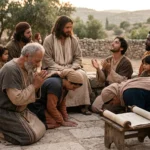
Imagine walking into a church where people come from different backgrounds, with different struggles, gifts, and stories. Some are strong in faith. Others are still learning. Some need comfort, while others need correction. Yet they gather because they want to know God and follow Jesus.
This picture helps us understand the Churches of Paul meaning in the Bible. Paul planted and helped strengthen many Christian communities across the ancient world. These churches were not perfect. They faced division, persecution, false teaching, fear, and moral struggles. Still, God used them to spread the gospel and build His people.
The churches connected with Paul show us something important: God can build a faithful community through ordinary people who trust Him. Their stories teach us about grace, unity, spiritual growth, courage, prayer, and obedience.
The Bible does not give one special symbolic meaning to all the churches Paul visited. Instead, Scripture gives us real accounts of their faith, problems, victories, and growth. From these accounts, Christians can learn powerful spiritual lessons for life today.
What Does Churches of Paul Mean in the Bible?
The phrase Churches of Paul usually refers to the Christian communities Paul helped establish, teach, encourage, or strengthen during his missionary journeys.
Paul was first known as Saul and strongly opposed the early Christians. But Jesus changed his life. In Acts 9, Paul encountered the risen Christ while traveling to Damascus. After this encounter, he became a powerful messenger of the gospel.
God gave Paul a special mission to preach Christ among the Gentiles.
Acts 9:15 says:
“He is a chosen vessel unto me, to bear my name before the Gentiles, and kings, and the children of Israel.”
Paul traveled to many cities and preached that salvation comes through faith in Jesus Christ. New believers gathered together, forming local churches.
Some churches strongly received Paul’s teaching. Others struggled with serious problems. His letters in the New Testament were often written to teach, correct, encourage, and guide these communities.
Therefore, the biblical meaning of Paul’s churches is not simply about buildings. The church in the New Testament is a community of people who belong to Christ.
Which Churches Did Paul Establish or Minister To?
Paul’s missionary work touched many regions. Some churches were directly connected with his missionary journeys, while others were churches he later taught through letters or personal ministry.
Important churches connected with Paul include:
- The church at Philippi
- The church at Thessalonica
- The church at Corinth
- The churches of Galatia
- The church at Ephesus
- The church at Colossae
- The church at Rome
- The churches connected with Antioch
- The churches in the regions of Macedonia and Asia Minor
Paul did not work alone. People such as Barnabas, Silas, Timothy, Titus, Priscilla, Aquila, and many other believers served alongside him.
Acts 14:23 describes Paul and Barnabas appointing elders in the churches they had visited. This shows that Christian communities were organized to continue in faith after missionary workers moved on.
The Main Biblical Meaning of Paul’s Churches
They Show the Power of the Gospel
One of the clearest lessons from Paul’s churches is the transforming power of the gospel.
Paul preached Jesus Christ to people who came from different cultures and religious backgrounds. Many believed, and their lives changed.
In 1 Corinthians 6:9–11, Paul reminds the believers at Corinth that some of them had lived sinful lives before becoming followers of Christ. Then he says:
“But ye are washed, but ye are sanctified, but ye are justified in the name of the Lord Jesus.”
This is a beautiful picture of grace.
The church is not a gathering of people who have never failed. It is a community of people who need God’s grace.
They Show That Christians Need One Another
Paul strongly taught Christian unity.
The Corinthian church had divisions. Some believers identified themselves with different teachers. Paul corrected this attitude in 1 Corinthians 3:5–9 and reminded them that Christian workers are servants, while God gives the growth.
Later, Paul describes the church as one body with many members.
1 Corinthians 12:12 says:
“For as the body is one, and hath many members, and all the members of that one body, being many, are one body.”
This teaches that Christians may have different gifts, personalities, and roles, but they belong to one body in Christ.
They Show That Church Growth Takes Time
Paul’s churches were not instantly perfect.
The Corinthian church struggled with division, lawsuits, sexual immorality, spiritual gifts, and confusion about the resurrection. Paul addressed these problems directly.
Yet he did not abandon them.
He corrected them because he wanted them to mature.
This gives Christians an important lesson today: spiritual growth is a process.
A new believer may need time to learn God’s Word. A mature Christian may still need correction. A church can have faithful people and still face difficult problems.
Growth requires truth, patience, prayer, and grace.
Churches of Paul Meaning in the Bible + Hebrew Meaning
The phrase Churches of Paul is not a Hebrew phrase found in the Bible. Paul wrote most of his New Testament letters in Greek, and the early churches he served were part of a Greek- and Jewish-speaking world.
However, the biblical idea of church has important Hebrew and Greek background.
Hebrew Meaning Behind the Idea of God’s Assembly
A helpful Hebrew word is qahal (קָהָל), meaning an assembly, congregation, or gathered community.
This word is used in the Old Testament for God’s people gathered together.
For example, Deuteronomy 31:30 describes Moses speaking to the assembly of Israel.
This background helps us see that God’s people gathering together is not a new idea created by Paul. The Old Testament already presents God’s people as a gathered community.
Greek Meaning of Church
The New Testament commonly uses the Greek word ekklesia (ἐκκλησία) for church.
It can refer to an assembly or congregation. In the New Testament, it came to describe the community of believers in Christ.
Jesus said in Matthew 16:18:
“I will build my church; and the gates of hell shall not prevail against it.”
Notice the important truth: Jesus said He would build His church.
Paul served the church, taught the church, and helped establish churches, but Christ is the foundation and Lord of the church.
Paul’s Churches in the Book of Acts
The book of Acts gives us the historical story behind many of Paul’s churches.
Antioch: A Church That Sent Missionaries
Antioch became an important center for the early Christian mission.
Acts 13:2–3 describes the believers worshiping and fasting when the Holy Spirit directed them to set apart Barnabas and Saul for missionary work.
This teaches an important principle:
Christian ministry should be guided by God, prayer, and the work of the Holy Spirit.
The church did not simply send Paul because of human ambition. They prayed, listened, and obeyed.
Philippi: A Church of Generosity
Paul visited Philippi during his second missionary journey. Acts 16 records the conversion of Lydia, a woman who listened to Paul’s message and opened her home to the missionaries.
The Philippian believers later became strong supporters of Paul’s ministry.
Paul wrote:
“I thank my God upon every remembrance of you.”
— Philippians 1:3
The church at Philippi reminds us that generosity and partnership are forms of Christian service.
Thessalonica: Faith During Opposition
Paul preached in Thessalonica, but opposition arose.
The believers continued following Christ even under pressure.
Paul later praised their:
“work of faith, and labour of love, and patience of hope in our Lord Jesus Christ.”
— 1 Thessalonians 1:3
Their story shows that faith can remain alive even when circumstances are difficult.
Corinth: Grace in the Middle of Problems
Corinth was one of Paul’s most challenging churches.
The believers had many spiritual gifts, but they also had serious conflicts.
Paul reminded them that spiritual gifts were meant to serve others, not create pride.
One of the most famous passages in the Bible comes from this setting: 1 Corinthians 13.
Paul explains that even great spiritual gifts are empty without love.
1 Corinthians 13:4 says:
“Charity suffereth long, and is kind.”
The lesson is simple: Christian maturity is not measured only by what we know or what gifts we have. Love matters deeply.
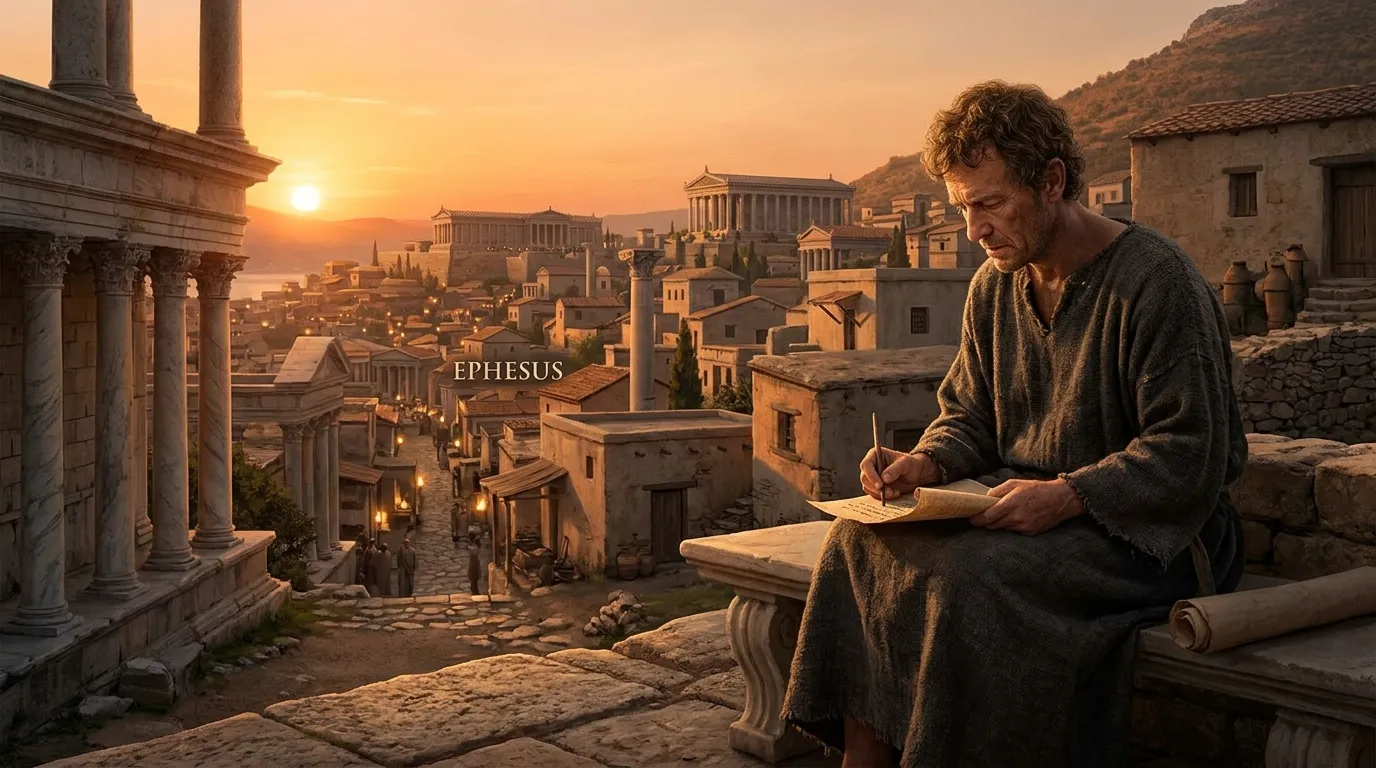
Ephesus: Standing Firm in Truth
Paul spent significant time teaching in Ephesus. Acts 19 describes an extensive ministry there.
Paul later warned the Ephesian elders about false teaching and encouraged them to care for God’s people.
Acts 20:28 says:
“Take heed therefore unto yourselves, and to all the flock, over the which the Holy Ghost hath made you overseers.”
This teaches church leaders and believers to watch over their spiritual lives and remain faithful to biblical truth.
What Do Paul’s Churches Symbolize Spiritually?
The Bible does not say that each church Paul visited has one secret spiritual symbol.
Still, their stories can provide meaningful spiritual lessons.
Philippi Can Remind Us of Joy
The letter to the Philippians repeatedly encourages believers to rejoice in the Lord.
Paul wrote Philippians while facing imprisonment, yet he continued to speak about joy.
Philippians 4:4 says:
“Rejoice in the Lord alway: and again I say, Rejoice.”
The spiritual lesson is not that Christians must pretend everything is fine.
Instead, it shows that joy in Christ can exist even during hardship.
Corinth Can Remind Us of the Need for Correction
Corinth reminds us that spiritual gifts do not remove the need for character.
A person may know Scripture and still need to grow in patience, humility, purity, and love.
This is encouraging because God does not require us to become perfect overnight.
Thessalonica Can Remind Us of Hope
The Thessalonian believers were taught to live with hope in Christ’s return.
Paul wanted them to encourage one another with this hope.
1 Thessalonians 4:18 says:
“Wherefore comfort one another with these words.”
Their story can remind Christians that God’s promises give hope when life feels uncertain.
What Can Paul’s Churches Teach Christians Today?
The churches connected with Paul have many practical lessons.
Stay Grounded in Scripture
Paul constantly taught believers to remain faithful to the truth.
Acts 17:11 praises the Bereans because they examined the Scriptures to see whether Paul’s teaching was true.
This gives Christians an important principle:
Do not accept every spiritual message simply because someone sounds confident. Test it against God’s Word.
Choose Unity Over Competition
Church members may have different gifts and opinions.
Paul’s teaching in 1 Corinthians 12 reminds us that different gifts can work together.
A church becomes healthier when believers stop competing for attention and start serving one another.
Practice Love
Christian faith should affect how we treat people.
Paul’s teaching on love in 1 Corinthians 13 remains one of the clearest biblical pictures of Christian character.
Love is patient. Love is kind. Love does not seek selfish glory.
These truths matter at home, at work, online, and inside the church.
Keep Going When Life Is Hard
Paul and the churches he served experienced persecution, rejection, imprisonment, disagreement, and hardship.
Yet they continued following Christ.
Romans 5:3–5 explains that suffering can produce perseverance, character, and hope.
This does not mean suffering is good in itself. Rather, God can work through painful seasons and strengthen His people in them.
What Does It Mean to Dream About Paul’s Churches?
Some Christians may dream about a church, a group of churches, Paul, a missionary journey, or a biblical congregation and wonder whether the dream has spiritual meaning.
The Bible contains examples of God communicating through dreams, but it does not teach that every dream is a message from God.
Ecclesiastes 5:3 even connects dreams with the many concerns of life.
Therefore, a dream about Paul’s churches should not automatically be treated as prophecy.
Instead, prayerfully ask:
- Does the dream draw me toward Christ?
- Does its message agree with Scripture?
- Is it encouraging me toward obedience?
- Could it reflect something I am already thinking about?
- Am I giving the dream more authority than God’s Word?
Scripture must remain the standard for testing spiritual impressions.
If a dream encourages forgiveness, prayer, humility, service, or deeper trust in Christ, those biblical themes can be reflected upon without claiming that the dream contains a secret message.
What If You Keep Seeing Churches in Real Life?
Seeing a church repeatedly in daily life can also make a person wonder about spiritual meaning.
There is no biblical rule saying that repeatedly seeing church buildings is a guaranteed sign from God.
However, it may give you a helpful opportunity to pause and reflect.
You might ask:
Am I growing in my relationship with Christ?
Do I need Christian fellowship?
Is God calling me to serve someone?
Have I been neglecting prayer or Scripture?
These questions are biblically useful even when we cannot know whether an ordinary event carries a special divine message.
Paul’s Churches and the Meaning of Christian Fellowship
Paul’s ministry shows that Christianity was never meant to be lived entirely alone.
Believers gathered to worship, learn, pray, share resources, and encourage one another.
Hebrews 10:24–25 teaches Christians not to neglect gathering together but to encourage one another.
This matters in modern life.
A Christian may attend church every week and still feel lonely. Another believer may be going through grief and need someone to pray with them.
Sometimes spiritual encouragement looks very simple:
- Calling a struggling friend
- Praying with someone
- Sharing a meal
- Helping a family in need
- Studying Scripture together
- Encouraging a new believer
- Serving quietly without seeking praise
These are practical expressions of being part of Christ’s body.
Did Paul Build the Church?
Paul helped establish and strengthen many local churches, but the Bible makes clear that Christ is the true foundation of the church.
Paul himself emphasized this truth.
In 1 Corinthians 3:6, he wrote:
“I have planted, Apollos watered; but God gave the increase.”
This is one of the most important verses for understanding Paul’s ministry.
Paul planted.
Others watered.
God gave the growth.
This protects Christians from putting too much attention on human leaders.
Pastors, missionaries, teachers, and evangelists are valuable servants. But the church ultimately belongs to Jesus.
Why Were Paul’s Letters Written to Churches?
Many of Paul’s New Testament letters were written to help local Christian communities understand how to live out their faith.
His letters address subjects such as:
- Salvation by grace through faith
- Christian unity
- Spiritual gifts
- Marriage and family
- Sexual purity
- Forgiveness
- Church leadership
- Christian freedom
- Giving
- Suffering
- The resurrection
- The return of Christ
- Love and humility
Paul did not simply teach abstract theology.
He connected faith with everyday life.
For example, Ephesians 4:32 tells believers:
“Be ye kind one to another, tenderhearted, forgiving one another, even as God for Christ’s sake hath forgiven you.”
That is faith made practical.
What Is the Biggest Lesson From the Churches of Paul?
Perhaps the greatest lesson is that God works through imperfect people and imperfect communities.
The early churches had problems. Some believers misunderstood important teachings. Some argued. Some struggled with sin. Others faced persecution.
Yet God continued His work.
This should give today’s Christians hope.
If your church has problems, that does not automatically mean God has abandoned it.
If you are struggling spiritually, it does not mean your story is over.
If you have made mistakes, God’s grace is still available.
Paul himself was proof of God’s transforming grace.
1 Timothy 1:15 describes Christ Jesus as coming into the world to save sinners, and Paul openly recognized himself as a sinner who had received mercy.
The gospel is about what Christ can do with surrendered lives.
Frequently Asked Questions
What are the churches of Paul?
The churches of Paul are local Christian communities connected with Paul’s missionary work and teaching. Important examples include churches in Philippi, Thessalonica, Corinth, Ephesus, Galatia, and Rome.
What is the main meaning of Paul’s churches?
They show the spread of the gospel and the formation of Christian communities. They also teach lessons about faith, grace, unity, spiritual maturity, perseverance, love, and obedience.
Did Paul create Christianity?
No. Christianity is centered on Jesus Christ, not Paul. Paul was an apostle and missionary who preached Christ and helped establish and strengthen Christian churches.
What does the word church mean in the Bible?
The New Testament commonly uses the Greek word ekklesia, referring to an assembly or congregation. In Christian use, it refers to the community of believers in Christ.
Is there a Hebrew meaning for Churches of Paul?
There is no specific Hebrew phrase called Churches of Paul in Scripture. However, the Hebrew word qahal refers to an assembly or congregation and helps explain the Old Testament background of God’s gathered people.
What does dreaming about a church mean spiritually?
A church dream may cause someone to reflect on faith, fellowship, worship, or spiritual growth. However, Scripture does not give a universal meaning for every church dream. Dreams should always be tested against Scripture rather than treated automatically as divine revelation.
Why did Paul write so many letters to churches?
Paul wrote to teach, encourage, correct, and strengthen believers. His letters addressed real spiritual and practical problems within early Christian communities.
What does Paul’s ministry teach Christians today?
Paul’s ministry teaches believers to preach Christ, remain faithful to Scripture, serve others, pursue unity, endure hardship, and depend on God’s grace rather than human strength.
Final Thoughts
The Churches of Paul meaning in the Bible is best understood through the real stories Scripture gives us. These churches were communities of ordinary people learning to follow an extraordinary Savior.
They were not perfect.
They faced conflict, weakness, persecution, temptation, and confusion. Yet God worked through them.
Their stories remind us that Christian faith is not about being perfect before coming to God. It is about growing in Christ through grace, truth, fellowship, and obedience.
If you are struggling with your faith today, remember Paul’s words:
“Being confident of this very thing, that he which hath begun a good work in you will perform it until the day of Jesus Christ.”
— Philippians 1:6
God began the work.
God sustains the work.
And God is able to finish what He starts.
Take time to pray, read Scripture, and ask God for wisdom. If a dream, church experience, or difficult season has made you search for meaning, bring it honestly before Him. Let Scripture guide your understanding, let Christ remain your foundation, and trust God with what you cannot yet understand.