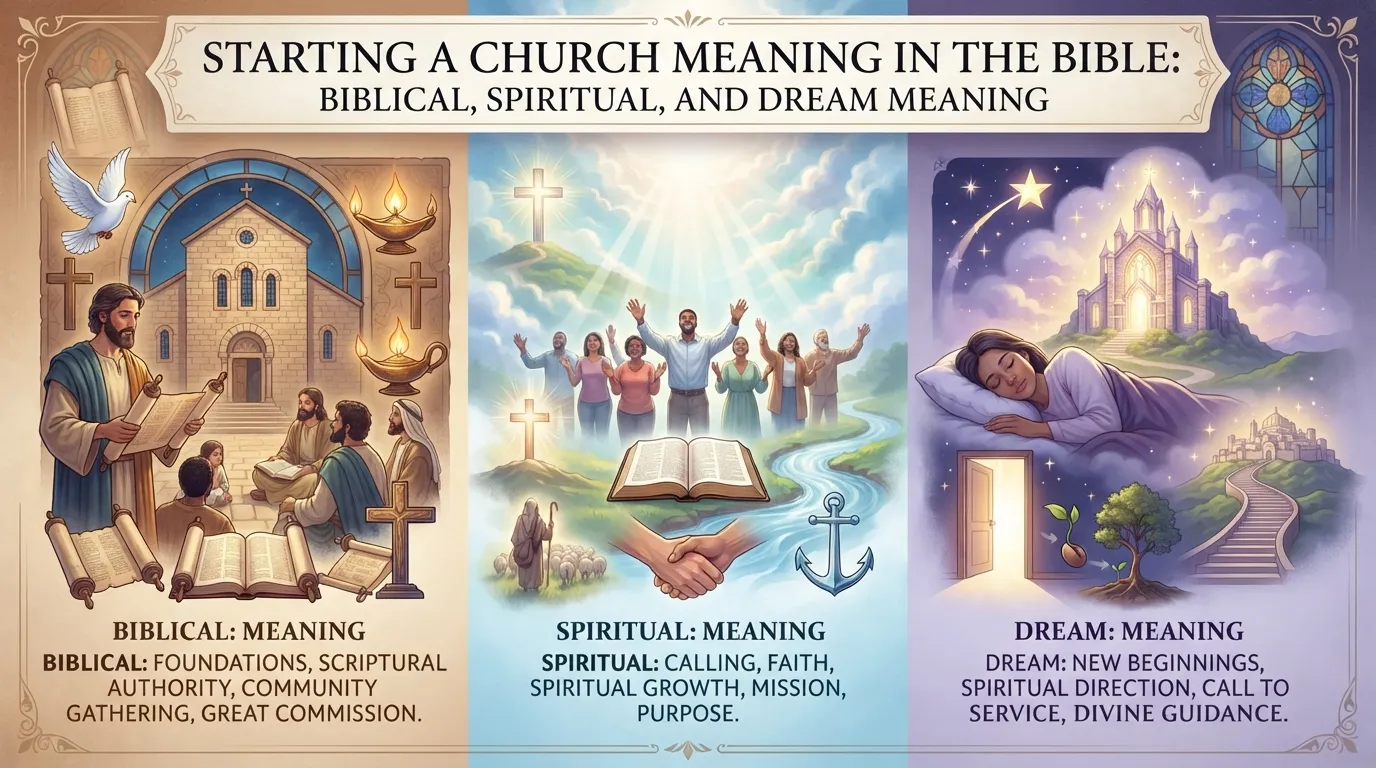
Antioch was not a promising place to start a church. It was the third-largest city in the Roman Empire, famous for its commerce, its entertainment, and its moral looseness. No apostle planned a church there. Instead, ordinary believers scattered by persecution arrived and “began speaking to the Hellenists also, preaching the Lord Jesus” (Acts 11:20). A church was born — not from a strategy document, but from displaced people who could not stop talking about Jesus. That is the first thing to know about starting a church: God is usually the one who starts it, and people are the ones who notice.
The second thing to know is that the Bible never treats church planting as a franchise. There is no five-step formula, no guaranteed growth curve, and no promise that every sincere desire to plant is a divine command. What Scripture does give is a pattern: a people gathered around Christ, formed by the Word, led by qualified servants, and sent back out on mission. Everything else is scaffolding.
It Is His Church Before It Is Yours
Jesus said, “I will build my church” (Matthew 16:18). The pronoun is the whole doctrine. The church belongs to Christ — its foundation, its head, its owner. A planter is a steward, not a founder in the Silicon Valley sense. He does not own the vision, the brand, or the people. This is liberating and terrifying in equal measure: liberating, because the outcome does not finally depend on you; terrifying, because you will answer to Someone else for how you handled what was His.
Paul captured the division of labor: “I planted, Apollos watered, but God gave the growth” (1 Corinthians 3:6). The planter’s job is faithfulness — preach, pray, gather, serve. The growth is God’s department. Churches built on a planter’s personality grow fast and collapse fast, because the foundation is a person. Churches built on Christ grow at the speed of discipleship, which is slower and far more durable.
This also reframes success. A church of forty people who love God, love one another, and reach their neighborhood is not a failed church of four hundred. It is a faithful church of forty. The New Testament measures churches by faithfulness and fruit, not by attendance graphs. The church in Smyrna was small and persecuted, and Jesus had nothing against it (Revelation 2:8–11). The church in Laodicea was wealthy and comfortable, and Jesus threatened to spit it out (Revelation 3:14–22).
The Gathering: Word, Fellowship, Prayer, Table
Acts 2:42 gives the earliest description of what a gathered church actually did: “They devoted themselves to the apostles’ teaching and the fellowship, to the breaking of bread and the prayers.” Four practices. No building, no budget, no brand. Teaching, fellowship, table, prayer. Where those four are present, a church exists, even if it meets in a living room. Where they are absent, a church does not exist, even if it owns a cathedral.
Teaching means the Word is central — not anecdotes, not self-help, not the planter’s opinions, but Scripture opened, explained, and applied. Fellowship in the New Testament is not coffee and small talk; the Greek word koinonia means shared life, shared goods, shared burdens. The breaking of bread is both the Lord’s Supper and the ordinary hospitality of eating together. And prayer is not the decoration on the ministry; it is the engine. The church in Acts prayed before it planned, and its plans were usually interrupted by answered prayer.
The early church also met in varied places. Paul taught “publicly and from house to house” (Acts 20:20). Some gatherings were large; some were in homes like those of Priscilla and Aquila or Philemon. The building has never been the church. A planter who waits for a building before starting has the order backwards: gather the people first, and let the building follow the people.
The Forming: From Crowd to Disciples
The Great Commission defines the goal: “Go therefore and make disciples of all nations, baptizing them in the name of the Father and of the Son and of the Holy Spirit, teaching them to observe all that I have commanded you” (Matthew 28:19–20). Notice the verbs. The church does not merely attract a crowd; it makes disciples. It does not merely count decisions; it teaches obedience. A crowd is easy to gather. A disciple takes years.
Acts 14:21–23 shows the rhythm Paul and Barnabas followed: they preached the gospel, made disciples, strengthened the believers, and “appointed elders for them in every church.” Evangelism, formation, leadership. Many modern plants reverse the order — appoint leaders, attract a crowd, and hope discipleship happens later. The biblical order is slower because it is structural: you cannot build a church out of spectators. You build it out of disciples who become disciple-makers.
Formation also means preparing people for hardship. Paul and Barnabas told new believers “that through many tribulations we must enter the kingdom of God” (Acts 14:22). A church planted on the promise of comfort will collapse at the first hardship. A church planted on the promise of Christ will endure, because its people were told the truth from the beginning.
The Leading: Elders Before Expansion
One of the most neglected steps in church planting is the appointment of qualified elders. Paul left Titus in Crete specifically “to put what remained into order, and appoint elders in every town” (Titus 1:5). A church without recognized, qualified leadership is not a finished plant; it is a plant still in the pot.
The qualifications in 1 Timothy 3 and Titus 1 are almost entirely about character: above reproach, self-controlled, hospitable, gentle, not greedy, managing his household well. The planter’s hardest discipline is resisting the urge to appoint the willing instead of the qualified — the charismatic newcomer, the generous donor, the loyal friend. A church led by unqualified leaders will eventually need to be rescued from its own leadership, and rescues are always messier than patience.
Timing matters too. Paul warned Timothy not to lay hands on anyone hastily (1 Timothy 5:22). A planter should watch people over time: how they handle money, conflict, correction, and anonymity. The person who serves faithfully when no one notices is the person to trust when everyone is watching.
The Sending: A Church That Reproduces
The church in Antioch, the accidental church, became the sending church. In Acts 13, while the congregation worshiped and fasted, the Holy Spirit said, “Set apart for me Barnabas and Saul for the work to which I have called them.” The church prayed, laid hands on them, and sent them out. A healthy church does not merely grow; it sends. It raises up workers, releases them, and rejoices when they go.
This is the final test of a plant: does it exist for itself, or for the mission? Churches that exist for themselves eventually turn inward, and inward-turned churches die slowly of self-absorption. Churches that exist for the mission reproduce — planting daughter churches, sending missionaries, serving their cities, and blessing their neighborhoods whether or not anyone joins.
Counting the Cost Honestly
Starting a church will cost the planter’s comfort, privacy, and often his finances. It will cost his family’s stability. It will test his marriage, his motives, and his theology. Anyone considering it should ask hard questions before the first gathering: Am I called, or merely restless? Have mature believers confirmed this? Is there a team, or only an audience? Am I willing to pastor ten people for ten years? Can I submit to accountability? If the answer to any of these is no, waiting is not failure. It is wisdom. Some of the most fruitful plants in history began years after the first impulse, because the planter spent the interval becoming the kind of person who could carry the weight.
And there are times not to plant: when you are running from conflict in your current church, when you want a platform more than a flock, when your character is not yet ready for the scrutiny that leadership brings, or when the neighborhood already has faithful churches you could join and strengthen. Planting is not the only form of faithfulness. Sometimes the most missional thing a person can do is stay, serve, and strengthen what already exists.
A Word on Buildings and Money
New church plants often obsess over two things Scripture treats as secondary: the building and the budget. A building is a tool. It can serve the mission, and it can swallow it. Churches that pour their first years of energy into a facility often find they have a mortgage and no mission. The New Testament church met in homes, in rented halls, and in the temple courts — wherever people could gather. The building followed the people, not the other way around. As for money, a plant should be transparent from the first offering: published accounts, more than one person handling funds, and a budget that reflects the mission rather than the planter’s comfort. A church that is generous from the beginning — giving to missions, to the poor, to other churches — will never struggle to justify its own existence.
The story of Antioch ends with an encouragement for every would-be planter. The church there began with nobodies, grew through persecution, and became the base of the mission to the world. God does not need your polish, your funding, or your five-year plan. He needs your faithfulness to the pattern: gather around Christ, teach the Word, form disciples, appoint proven leaders, and send them out. Do that, and whatever you build will be His — which is the only kind of church worth starting. For background on how Christians have approached this work across history, see the overview of church planting movements and methods.










