Acts 15 opens with a fight. Some teachers arrived in Antioch insisting that Gentile believers had to be circumcised to be saved. Paul and Barnabas “had no small dissension and debate with them” (Acts 15:2). The argument was sharp enough that the church sent a delegation to Jerusalem. This is the first portrait of church leadership in action — not a coronation, not a ceremony, but a group of leaders wrestling with a question that could split the church, and refusing to settle it by volume or politics.
What happened next is the model. The apostles and elders gathered, listened to testimony, weighed Scripture, and issued a decision that protected both the gospel and the unity of the church. Leadership, in the Bible, is that kind of work: guarding truth, serving people, and making decisions that help God’s people follow Christ. Titles matter less than the task.
Three Pictures of the Same Job
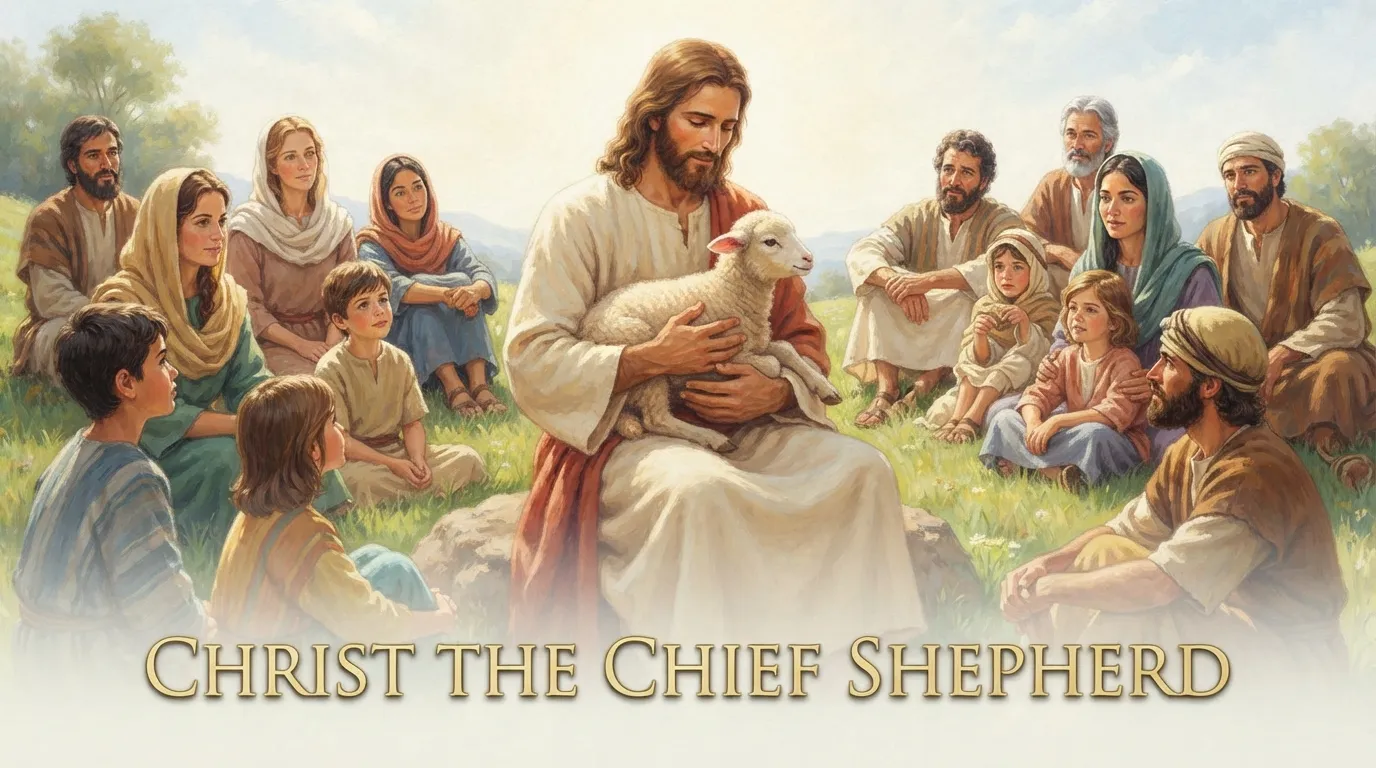
The New Testament uses three overlapping words for church leaders, and each one corrects a misunderstanding of the others. The first is elder (presbyteros): a mature, proven believer who carries spiritual authority in the congregation. The second is overseer (episkopos): someone who watches over the flock, the way a watchman watches a city. The third is shepherd or pastor (poimēn): someone who feeds, guides, and protects sheep. Acts 20:28 uses all three ideas in one breath: Paul tells the Ephesian elders that the Holy Spirit has made them overseers “to care for the church of God,” shepherding it.
The overlap is deliberate. A leader who is only an elder can become a board member — dignified, distant, and detached from the sheep. A leader who is only an overseer can become a manager — efficient, controlling, and more interested in systems than souls. A leader who is only a shepherd can become a chaplain — warm, present, and unwilling to make hard decisions. Biblical leadership holds all three together: maturity, oversight, and personal care.
Shepherds Who Feed, Not Fleece
Peter’s charge to elders is the most searching passage on the subject: “Shepherd the flock of God that is among you, exercising oversight, not under compulsion, but willingly, as God would have you; not for shameful gain, but eagerly; not domineering over those in your charge, but being examples to the flock” (1 Peter 5:2–3). Every clause rules out a counterfeit. Compulsion, greed, and domination are named as the three great corruptions of leadership, and they remain the three great corruptions today.
Shepherding means feeding people with the Word. Paul told the Ephesian elders that he had taught them “the whole counsel of God” (Acts 20:27) — not only the popular parts, not only the comforting parts. A leader who only ever preaches encouragement is not feeding the flock; he is fattening it for a fall. Sheep need correction as well as comfort, doctrine as well as devotion, warnings as well as promises.
Shepherding also means protection. In the same speech, Paul warned that “fierce wolves will come in among you, not sparing the flock” (Acts 20:29), and that some would arise “from among your own selves.” False teaching rarely arrives wearing a villain’s costume. It arrives with charisma, confidence, and a partial truth. The leader’s job is to know the truth well enough to spot the distortion — and to love the flock enough to name it, even when naming it is unpopular.
Overseers Who Watch the Whole Field
Oversight is the part of leadership nobody applauds. It is budgets, policies, safeguarding, staffing, buildings, and the thousand administrative decisions that determine whether a church is safe and sustainable. Some leaders treat administration as unspiritual; Scripture treats it as stewardship. The deacons of Acts 6 were appointed precisely because practical service — the daily distribution of food — was too important to be handled carelessly, and too important to distract the apostles from prayer and the Word.
Oversight also means watching the leaders themselves. A healthy church has accountability: elders who answer to one another, finances that are transparent, decisions that are documented, and a real path for raising concerns. The absence of accountability is not a sign of trust; it is a sign of danger. Every church scandal in living memory involved a leader who answered to no one.
Paul’s qualifications in 1 Timothy 3 and Titus 1 are mostly about character, not gifting: “above reproach, sober-minded, self-controlled, respectable, hospitable, able to teach, not a drunkard, not violent but gentle, not quarrelsome, not a lover of money.” Notice what is missing. There is no requirement to be famous, wealthy, highly educated, or charismatic. God’s leadership standard is not impressive; it is trustworthy.
Servants Who Equip Everyone Else
Ephesians 4:11–13 gives leadership its purpose: Christ gave apostles, prophets, evangelists, shepherds, and teachers “to equip the saints for the work of ministry, for building up the body of Christ.” Leaders are not the ministry; they equip the ministry. A church where everything depends on one person is not a healthy church, however large it grows. It is a bottleneck with a steeple.
This is why the best leaders are talent scouts. Barnabas saw potential in Saul when everyone else saw a persecutor. Paul saw it in Timothy, Titus, and a dozen others whose names fill the ends of his letters. The leader who equips others is doing the one thing that outlasts him: multiplying servants. The leader who hoards ministry is building a monument to himself that will crumble the day he leaves.
Equipping also means releasing people to fail and learn. Timothy was young, timid by temperament, and prone to stomach trouble — hardly the résumé of a church planter. Paul sent him to Ephesus anyway, with instruction, encouragement, and authority. The church’s future depended on leaders willing to trust imperfect people with real responsibility, because there are no other kind.
How Authority Actually Works
Biblical authority is real, but it is delegated, limited, and accountable. Leaders speak with authority when they speak God’s Word; when they go beyond it, their authority ends. That is why the Bereans were commended for examining “the Scriptures daily to see if these things were so” (Acts 17:11) — even when the preacher was Paul. A congregation that tests teaching is not rebellious; it is biblical.
Authority is also exercised by example more than by command. Peter says leaders should be “examples to the flock,” not drivers of it. The leader who cannot say “follow me as I follow Christ” has lost the right to ask anyone to follow him anywhere. And authority is bounded by love: even legitimate correction must aim at restoration. Paul’s instruction in Galatians 6:1 is that those who are spiritual should restore the one caught in sin “in a spirit of gentleness.” Discipline without gentleness is punishment. Gentleness without discipline is indulgence.
Choosing Leaders Well
Churches usually choose leaders the way the world does: by availability, popularity, or desperation. Scripture’s method is slower. Leaders are recognized, not merely recruited. The congregation of Acts 6 chose people “of good repute, full of the Spirit and of wisdom.” Paul told Timothy not to lay hands on anyone hastily (1 Timothy 5:22). Time is the test that cannot be faked: watch a person’s marriage, their temper, their money, their speech, their handling of disagreement, and their life when no one is watching.
The Congregation’s Part in Leadership
Leadership in the Bible is never a one-way street. The congregation has responsibilities too, and Scripture states them plainly. Hebrews 13:17 says, “Obey your leaders and submit to them, for they are keeping watch over your souls, as those who will have to give an account.” That verse is often quoted to demand submission. It is less often read to the end: leaders will give an account. The weight runs both ways. The congregation submits, and the leaders answer to God for how they led. A church that forgets either half has lost the balance.
The congregation’s first job is to make leadership a joy rather than a burden. That means praying for leaders by name, speaking to them directly when there is a concern instead of about them to others, and refusing to treat them as either celebrities or servants. Leaders are sheep too, and sheep bite. The second job is to hold leaders accountable with grace: to test teaching, to ask honest questions, to insist on transparency in money and decisions, and to do all of it in love rather than in a spirit of suspicion. A congregation that never questions its leaders is not loyal. It is asleep. A congregation that only questions its leaders is not discerning. It is rebellious. The healthy church does both: it trusts and it verifies, because it loves its leaders enough to want them to finish well.
The third job is to follow worthy examples. Paul’s repeated command is “imitate me, as I imitate Christ.” The congregation that watches its leaders’ marriages, their tempers, their generosity, and their private lives — and imitates what is worthy of imitation — becomes a church where leadership reproduces itself. In the end, the church’s leaders will only ever be as healthy as the congregation that shaped them.
The church in Jerusalem survived its crisis because it had leaders formed this way — men who could disagree fiercely, listen carefully, and submit to Scripture together. That is still the standard. The question for any church is not whether it has leaders with titles, but whether it has leaders with the character to shepherd, the wisdom to oversee, and the humility to equip. Where those three meet, the flock is fed, guarded, and released — and the church, like the one in Acts 15, can walk through a storm without splitting apart. Readers interested in how different churches have organized this leadership over the centuries can explore the history of church polity and its various forms.










