Imagine standing in a quiet church and seeing the words “Jesus of Nazareth, King of the Jews” written above a cross. At first, they may seem like a simple historical label. But when you read the Gospel accounts, those words carry a much deeper meaning.
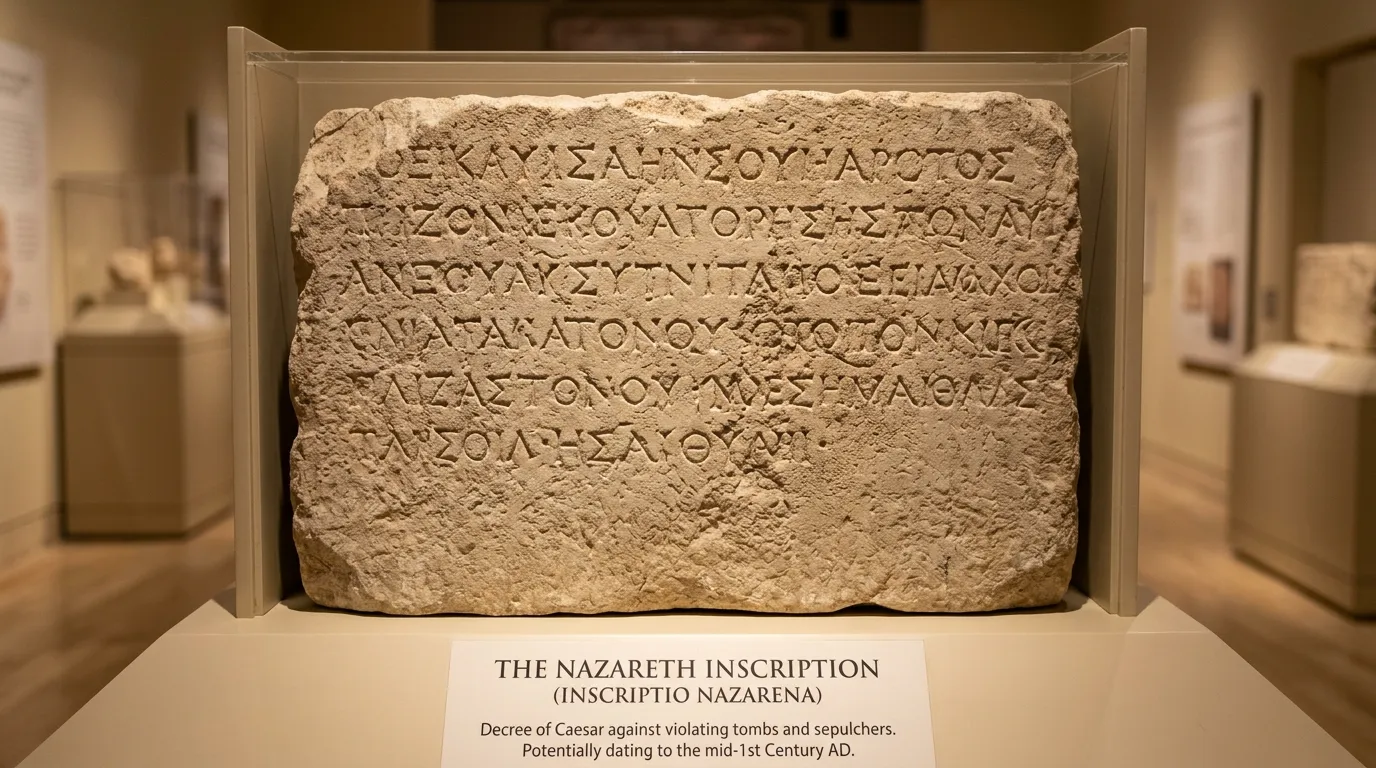
The Nazareth inscription meaning in the Bible points us to Jesus’ identity, His earthly home, His kingship, and the fulfillment of God’s plan. The inscription was placed above Jesus during His crucifixion, and each Gospel gives important details about what happened.
The Bible does not present the inscription as a secret code or mystical message. Instead, it directs our attention to a clear truth: Jesus of Nazareth is the promised King and Savior who gave His life for sinners.
What Is the Nazareth Inscription in the Bible?
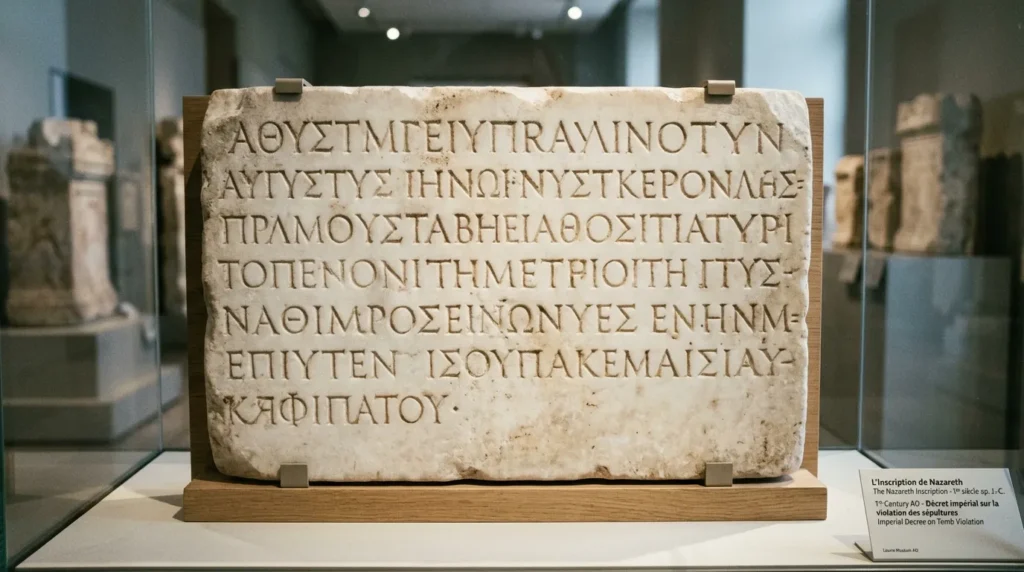
The phrase connected with the Nazareth inscription comes from the sign placed above Jesus on the cross.
According to the Gospels, Pontius Pilate ordered a notice to be placed over Jesus. It identified Him as:
“Jesus of Nazareth, the King of the Jews.”
This appears in all four Gospel accounts, with slightly different wording:
- Matthew 27:37 — “This is Jesus, the King of the Jews.”
- Mark 15:26 — “The King of the Jews.”
- Luke 23:38 — “This is the King of the Jews.”
- John 19:19 — “Jesus of Nazareth, the King of the Jews.”
John gives the fullest wording and says Pilate wrote the title in Hebrew, Latin, and Greek.
The religious leaders objected to the wording. They wanted Pilate to say that Jesus merely claimed to be the King of the Jews. Pilate refused and answered, “What I have written I have written” (John 19:21–22).
This makes the inscription an important part of the crucifixion story.
Nazareth Inscription Meaning in the Bible
The central biblical meaning is connected to Jesus’ identity and kingship.
The inscription identified Jesus as someone from Nazareth while also calling Him King of the Jews. This was deeply significant because Jesus’ life, death, and resurrection were connected to God’s promises concerning the Messiah.
The inscription can therefore remind Christians of several biblical truths:
- Jesus truly came from Nazareth.
- Jesus is the Messiah promised in Scripture.
- Jesus is King even while suffering on the cross.
- His crucifixion was part of God’s redemptive plan.
- Human rejection could not cancel God’s purpose.
The cross looked like defeat to those watching it. Yet God was accomplishing salvation through Jesus’ death.
As Paul later wrote, “Christ died for our sins in accordance with the Scriptures” (1 Corinthians 15:3).
Nazareth Inscription + Hebrew Meaning
The Nazareth inscription Hebrew meaning deserves special attention because John 19:20 says the title was written in Hebrew, Latin, and Greek.
The Hebrew or Aramaic form is commonly represented as something like:
“Jesus the Nazarene, King of the Jews.”
The exact ancient wording is debated because the Gospel text has been transmitted in Greek, and scholars discuss whether the original wording was Hebrew or Aramaic.
The important biblical point is not a hidden meaning in individual letters. Scripture gives the title to identify Jesus of Nazareth as King of the Jews.
The Hebrew word often associated with “king” is melech (מֶלֶךְ). “Jews” can be represented by Yehudim (יְהוּדִים). The name Jesus is related to the Hebrew name Yeshua, meaning “the LORD saves.”
Therefore, the message points naturally toward Jesus’ saving mission.
However, Christians should be careful not to turn the inscription into a numerological code. The Bible does not teach that the letters or initials of the inscription contain a secret prophecy.
Why Was Jesus Called Jesus of Nazareth?
Nazareth was the town where Jesus grew up.
Matthew 2:23 explains that Jesus settled in Nazareth after His family returned from Egypt. Luke 2:39–40 also describes Jesus’ family life and His growth in Nazareth.
Because of this, Jesus became known as Jesus of Nazareth.
This geographical description became closely connected with His identity. People in the New Testament often recognized Him by this name.
For example, in Acts 2:22, Peter speaks about “Jesus of Nazareth” and identifies Him as a man publicly confirmed by God through mighty works and wonders.
The name reminds us that Jesus entered ordinary human life. He lived in a real place, among real people, and experienced hunger, tiredness, rejection, friendship, sorrow, and suffering.
God’s saving work entered human history through a real person in a real place.
What Does Nazareth Mean Spiritually?
The Bible does not give a single symbolic definition of Nazareth that every Christian must accept.
Still, Christians often find meaningful spiritual lessons in Jesus’ connection with Nazareth.
God Can Work Through What People Overlook
Nazareth was not viewed as an important place by many people.
In John 1:46, Nathanael asked, “Can anything good come out of Nazareth?”
His question shows that Nazareth carried little prestige in the eyes of some people.
Yet Jesus came from there.
This gives an encouraging lesson: God does not measure people by worldly status, location, wealth, or reputation.
Someone may feel overlooked at work, school, church, or even within their family. Jesus’ story reminds us that God can bring great purpose through places and people the world may underestimate.
Jesus’ Humble Beginning Does Not Reduce His Glory
Jesus was associated with an ordinary town, yet Scripture teaches that He is the Son of God.
Philippians 2:6–8 describes Christ’s humility and His willingness to take the form of a servant and become obedient to death on a cross.
His humble earthly life was not evidence of spiritual weakness.
Instead, it shows the depth of His love.
Why Is the Inscription Important at the Crucifixion?
The inscription is important because it appeared at the very moment Jesus was being publicly rejected and crucified.
The title “King of the Jews” was intended in part as a charge against Jesus. Yet the Gospel of John presents an extraordinary irony.
The leaders rejected Jesus’ kingship, but the title declared a truth that went beyond their intentions.
Jesus was not sitting on an earthly throne. He was hanging on a cross.
Still, the New Testament teaches that His death was connected to His saving mission.
Isaiah 53 had already spoken of the suffering servant who would bear the sins of many. The New Testament repeatedly connects Jesus’ suffering with this redemptive purpose.
So the inscription can remind believers that God’s victory does not always look like victory at first.
The cross looked like humiliation. Through it, God brought redemption.
What Does “King of the Jews” Mean?
The title King of the Jews connects Jesus to the biblical hope for God’s promised King.
The Old Testament contains promises concerning a coming ruler from David’s line.
For example, God promised David that his throne and kingdom would have enduring significance (2 Samuel 7:12–16).
Jesus is presented in the New Testament as the fulfillment of God’s promises concerning the Messiah.
Gabriel’s message to Mary in Luke 1:32–33 says that Jesus would receive “the throne of his father David” and reign over God’s people.
Therefore, the inscription is more than a political accusation.
It points toward a major biblical theme: Jesus is God’s promised King.
Why Was the Inscription Written in Three Languages?
John 19:20 says the inscription was written in Hebrew, Latin, and Greek.
These languages were important in the setting of first-century Judea.
- Hebrew connected with the Jewish religious and cultural world.
- Latin was associated with Roman authority.
- Greek was widely used across the eastern Roman world.
The Gospel does not say that these three languages contain three separate spiritual messages.
Rather, the wording made the charge understandable to different people who could read the sign.
This detail also shows how public Jesus’ crucifixion was. His death was not a hidden event occurring away from human history.
What Does the Nazareth Inscription Teach Christians Today?
The inscription can offer several practical lessons for everyday faith.
Jesus Is Still King When Life Looks Broken
Sometimes life feels completely out of control.
A Christian may lose a job, face family trouble, experience disappointment, or pray for something that does not happen as expected.
The cross reminds us that God can be working even when we cannot yet see the outcome.
Jesus’ darkest hour was not the end of God’s plan.
Do Not Judge God’s Work by Appearances
The people standing near the cross saw suffering.
They did not see the resurrection that was coming.
Likewise, we often see only one chapter of our lives.
James 1:2–4 encourages believers to view trials through the lens of spiritual growth. This does not mean that suffering is easy or that Christians should pretend pain does not hurt.
It means we can trust God while we wait for understanding.
Remember Who Jesus Is
The inscription directs attention back to Jesus.
Christian faith is not built on signs, secret meanings, or mystical formulas.
It is built on Christ—His life, death, resurrection, grace, and lordship.
When faith feels weak, returning to who Jesus is can bring stability.
What Does the Nazareth Inscription Mean in a Dream?
Some people may dream about an inscription saying “Jesus of Nazareth,” “King of the Jews,” or see the word Nazareth in a dream.
The Bible does contain examples of God communicating through dreams. Joseph, Daniel, and others received significant dreams in Scripture.
However, Christians should not assume that every modern dream is a direct message from God.
Every spiritual impression or dream should be tested against Scripture.
If you dream about Nazareth or an inscription, you might prayerfully reflect on questions such as:
- Am I being reminded of Jesus’ identity?
- Do I need to trust Christ more deeply?
- Am I looking for God’s guidance during a difficult season?
- Have I been focusing too much on outward appearances?
- Does the dream lead me toward biblical truth, prayer, humility, and obedience?
A dream should never be used to create a doctrine that Scripture does not teach.
Is the Nazareth Inscription a Secret Biblical Code?
No. The Bible does not teach that the Nazareth inscription is a secret numerical or mystical code.
Some discussions online connect the inscription with letter patterns, numbers, or hidden meanings. Such ideas may be interesting to study historically, but they should not be presented as established biblical teaching without strong evidence.
A sound Christian approach is to begin with what Scripture clearly says.
Jesus of Nazareth was crucified, and the inscription identified Him as King of the Jews.
That truth is already powerful enough.
The Gospel does not need a secret code to make the cross meaningful.
Nazareth and the Christian Hope of Redemption
There is something deeply moving about the way Nazareth appears in the Gospel story.
Jesus was known as the man from Nazareth. Some people looked down on that place. Yet from that humble setting came the One whom Christians confess as Lord and Savior.
Then, at the cross, the inscription identified Him as King.
The story moves from Nazareth to the cross, and from the cross to the resurrection.
Matthew 28:5–6 records the angel’s announcement that Jesus had risen.
This changes everything.
The inscription that appeared during Jesus’ apparent defeat becomes part of a story that ends in resurrection victory.
Frequently Asked Questions
What is the Nazareth inscription?
The Nazareth inscription generally refers to the title placed above Jesus at His crucifixion: “Jesus of Nazareth, King of the Jews.” John 19:19–20 gives the fullest account and says it was written in Hebrew, Latin, and Greek.
What does Nazareth symbolize in Christianity?
The Bible does not assign one universal symbolic meaning to Nazareth. Christians may see it as a reminder of Jesus’ humble earthly life and of God’s ability to work through what the world considers ordinary or insignificant.
Why is Jesus called the King of the Jews?
The title connects Jesus with the biblical expectation of the Messiah and God’s promises concerning David’s royal line. The New Testament presents Jesus as the promised King and Savior.
What does the Hebrew inscription mean?
Its basic message was that Jesus the Nazarene was King of the Jews. The exact ancient wording is discussed by scholars, but the Gospel’s central meaning is clear.
Was the inscription written in Hebrew?
John 19:20 says the inscription was written in Hebrew, Latin, and Greek. Scholars discuss the precise linguistic form behind the Gospel’s wording, but John clearly emphasizes the three languages.
Does Nazareth have a hidden spiritual meaning?
Scripture does not teach a secret mystical meaning of Nazareth. Any spiritual application should remain consistent with the Bible and should not replace what Scripture clearly teaches.
What if I dream about Nazareth?
You can prayerfully reflect on what the dream brings to mind, especially Jesus, faith, humility, and God’s guidance. However, do not treat a dream as authoritative Scripture. Test every spiritual impression against God’s Word.
Final Thoughts
The Nazareth inscription meaning in the Bible ultimately points us toward Jesus.
He was known as Jesus of Nazareth. He was rejected, mocked, and crucified. Above His cross was written that He was the King of the Jews. Yet what appeared to be defeat became the setting for God’s great work of redemption.
For Christians today, this is a message of hope.
You may be in a season where God’s work is difficult to understand. You may feel overlooked like Nathanael’s view of Nazareth, or you may be standing in a painful season that feels more like a cross than a victory.
Remember Jesus.
God is faithful even when you cannot see the whole story.
Take your questions to Him in prayer. Open Scripture. Test spiritual impressions carefully. And trust the Savior who came from Nazareth, went to the cross, and rose again.
Your circumstances may change, but Christ remains King.