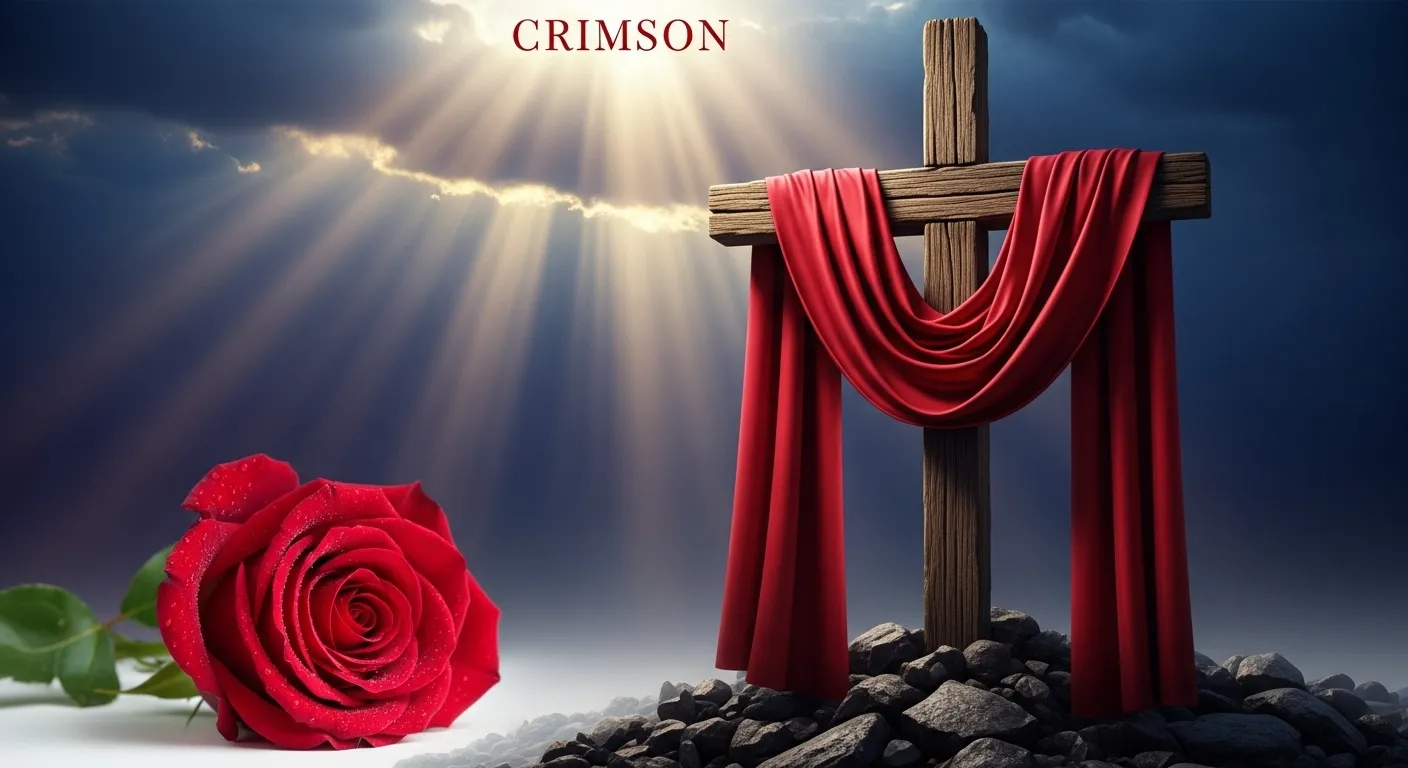
It begins with a worm. The Hebrew phrase tola’at shani — “worm scarlet” — names the source of one of the Bible’s most vivid colors: a tiny scale insect, crushed by the thousand, yielding a dye so deep and permanent that no washing could remove it. The ancients knew crimson as the color that stains. Once it touched cloth, the cloth was changed forever. Isaiah knew this, and he built one of Scripture’s most stunning promises on it: “though your sins be as scarlet, they shall be as white as snow; though they be red like crimson, they shall be as wool” (Isaiah 1:18). Crimson in the Bible is the color of the indelible — first of guilt, then of grace. To follow it through Scripture is to watch God take the very shade of human stain and dye it into the color of redemption.
A Stain That Will Not Wash Out
Isaiah’s image works because everyone in his audience knew the chemistry. Crimson dye bonded with fabric at the molecular level; no amount of scrubbing, bleaching, or time could lift it. That is precisely why the prophet chose it as his metaphor for sin. Guilt, Isaiah says, is not surface dirt. It is a deep dye. Human beings cannot launder their own souls — the stain goes all the way through.
This is the Bible’s honest diagnosis, and crimson is its visual aid. Sin is not a smudge to be wiped but a color to be reckoned with. The conscience knows this: the things we most wish we could undo are the things that feel most permanently dyed into us. Isaiah names the feeling before offering the cure, because the cure only makes sense once the stain is admitted.
Then the miracle of the verse: the same God who says “they shall be as white as snow” is claiming to do what no dyer could — to un-dye the dyed. Only divine action can reverse crimson. Forgiveness, in Isaiah’s palette, is not a cover-up. It is a re-creation, a bleaching that goes as deep as the stain went. The worse the crimson, the greater the wonder of the white.
Crimson in the Sanctuary
Here is the paradox that makes crimson unique among biblical colors: the shade of guilt is woven into the holiest places. The tabernacle curtains were blue, purple, and scarlet (Exodus 26:1). The veil guarding the Most Holy Place included scarlet (Exodus 26:31). The high priest’s ephod and breastpiece were woven with it (Exodus 28:6, 15). The very color that pictures sin hangs in the house of God.
Why? Because scarlet is also the color of blood — and blood, in God’s economy, is the color of atonement. “Without shedding of blood is no remission” (Hebrews 9:22). The scarlet thread in the sanctuary whispers what the torn veil would one day shout: the stain and the remedy share a color. Sin is crimson, but so is sacrifice. The dye of guilt becomes, in God’s hands, the dye of grace.
Consider the scarlet cord in Rahab’s window (Joshua 2:18). A prostitute in a doomed city hangs a crimson rope where all can see it, and that cord — the color of her past, the color of judgment — becomes the sign of her salvation. The spies’ promise holds: everyone inside the house marked by scarlet lives. It is Isaiah 1:18 acted out in narrative: the stain-color becomes the rescue-color.
Scarlet in the Rituals: Cedar, Hyssop, and the Red Thread
Crimson weaves through the Old Testament’s purification rituals in ways most readers miss. When a leper was cleansed, the priest took “two birds alive and clean, and cedar wood, and scarlet, and hyssop” (Leviticus 14:4) — the scarlet wool dipped in blood, then used to sprinkle the cleansed person seven times. When the red heifer was sacrificed, its ashes — mixed with cedar, hyssop, and scarlet — became the water of purification for corpse-impurity (Numbers 19:6). At the foot of Sinai, Moses sprinkled the people with blood, using the same scarlet-associated ritual kit (Hebrews 9:19).
The pattern is consistent: wherever impurity is removed, scarlet is present. The color of the stain participates in the cleansing from the stain. The worm-crushed dye — the emblem of guilt’s permanence — is dipped in sacrificial blood and becomes the instrument of purification. It is as if God insists on the visual sermon: the thing that pictures your defilement will picture your deliverance.
David knew this ritual language when he prayed, “Purge me with hyssop, and I shall be clean: wash me, and I shall be whiter than snow” (Psalm 51:7). Hyssop and scarlet belonged together in the cleansing rites; David reaches for the whole kit. His prayer is, in effect: perform the crimson ritual on me, Lord — take the color of my guilt and make it the instrument of my cleansing. And the answer, centuries later, is the cross — where hyssop itself reappears, lifting the sour wine to Jesus’ lips (John 19:29). The ritual kit of Leviticus finds its fulfillment at Calvary: scarlet, hyssop, blood, cleansing — the ancient symbols converging on the one sacrifice they always foreshadowed.
The Blood That Speaks
For the Christian reader, crimson finds its fullest meaning at the cross. The soldiers twist a crown of thorns and press it into Jesus’ brow; they drape Him in a scarlet robe in mockery (Matthew 27:28) — and the mockery tells the truth sideways. He is the King whose robe is red, not with earthly dye but with the blood He is about to shed for His people.
“This is my blood of the new testament, which is shed for many for the remission of sins” (Matthew 26:28). The crimson of Calvary is the answer to the crimson of Isaiah 1:18. The stain that humans could not wash out is washed out by a deeper red — the blood of the Lamb. Revelation’s saints “washed their robes, and made them white in the blood of the Lamb” (Revelation 7:14): the Bible’s impossible laundry, crimson cleansing crimson, the dye undone by a dyer no one expected.
This is why believers have always sung of the blood without embarrassment — “What can wash away my sin? Nothing but the blood of Jesus.” The crimson of the cross is not gore for shock value. It is the visible cost of the invisible transaction: guilt, deep-dyed, met by grace, deeper still. And the New Testament insists this cleansing is ongoing, not a one-time event: “the blood of Jesus Christ his Son cleanseth us from all sin” (1 John 1:7) — present tense, continuous action. The crimson that washed the past keeps washing the present. Every confession is another trip to the fountain; every return is met by the same deep red, still effective, still sufficient. The stain does not outlast the remedy.
Royalty Dyed Red
Crimson had one more meaning in the ancient world: it was the color of power. The dye was ruinously expensive, so crimson garments marked kings, generals, and the wealthy. When the Bible dresses authority in red, it is speaking the visual language of the throne room.
Scripture holds this meaning in tension with the others. The prostitute’s scarlet (Revelation 17:4, the great harlot “arrayed in purple and scarlet colour”) shows crimson corrupted — power and luxury in rebellion against God. But the same color, redeemed, belongs to the true King: “And he was clothed with a vesture dipped in blood: and his name is called The Word of God” (Revelation 19:13). The rider on the white horse wears crimson — not the red of guilt now, nor of mere earthly pomp, but of judgment accomplished and victory won.
Crimson’s journey through the Bible is thus a complete gospel in miniature: the worm crushed for dye (sin’s deep stain), the sanctuary curtains (guilt brought into God’s presence), the scarlet cord (rescue through the red sign), the cross (the blood that cleanses), the returning King (victory in red). From insect to eternity, the color never stops preaching. It says: what stained you can save you — when the stain is met by the blood. For the natural history of the dyes behind this symbolism, the Wikipedia article on crimson traces the color from ancient dyers’ vats to the modern palette; the Bible’s use of it remains unmatched — the shade of the deepest guilt, and of the deepest grace.










