Imagine waking up one morning and realizing that God may be calling you to do something you never expected. Maybe it is serving in your church, sharing your faith, helping someone in need, or stepping into a new season of ministry. You may wonder, “Why would God choose me?”
Paul faced a much greater version of that question. Once known as Saul, he strongly opposed the followers of Jesus. Yet God changed his life and gave him a special mission. Understanding the Commission of Paul meaning in the Bible helps us see how God can turn a person’s past into a testimony and use a changed life for His purposes.
Paul’s commission was not based on human achievement. It came through God’s grace, the risen Christ, and the work of the Holy Spirit.
What Is the Commission of Paul in the Bible?
Paul’s commission was God’s calling for him to become an apostle and messenger of Jesus Christ, especially to the Gentiles, or non-Jewish people.
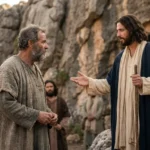
The clearest account appears in Acts 9:1–19. Saul was traveling to Damascus to arrest Christians when Jesus appeared to him. This encounter completely changed his direction.
Jesus told him that he would be shown what he must do. Later, God sent a disciple named Ananias to him. Ananias explained that Saul had been chosen to know God’s will, see the Righteous One, and hear His voice.
Paul later explained his calling in Acts 26:15–18. Jesus told him that He had appeared to him to appoint him as a servant and witness. Paul was also sent to open people’s eyes and bring them from darkness to light.
The main meaning of Paul’s commission is that God called a former persecutor to become a servant, witness, and preacher of the gospel.
How Did Paul Receive His Commission?
Paul’s calling began with his encounter with Jesus on the road to Damascus.
Before this event, Saul believed he was defending his Jewish faith by opposing Christians. Acts 9 shows that he was going to Damascus with authority to arrest followers of Jesus.
Then everything changed.
A light from heaven surrounded him, and Jesus spoke to him. Saul asked, “Lord, what do you want me to do?” This question shows the beginning of a completely new life.
God then used Ananias to help Saul. In Acts 9:15, the Lord called Saul a “chosen instrument” to carry His name before Gentiles, kings, and the people of Israel.
This teaches an important truth:
God’s calling can bring a person from opposition to obedience.
Paul did not earn this commission through his own goodness. His story points strongly to God’s grace.
What Was Paul’s Main Mission?
Paul’s mission was to proclaim Jesus Christ and bring the gospel to people who had not heard it.
God specifically appointed him to minister among the Gentiles. Paul described this calling in several places.
In Romans 11:13, he wrote that he was an apostle to the Gentiles. In Galatians 1:15–16, Paul said God had set him apart before birth and was pleased to reveal His Son to him so that he could preach among the Gentiles.
His ministry included:
- Preaching the gospel of Jesus Christ
- Teaching new believers
- Helping establish churches
- Defending the truth of the gospel
- Encouraging suffering Christians
- Training Christian leaders
- Taking the message of Christ to new places
Paul’s commission was therefore not simply about preaching words. It involved serving people, teaching truth, building churches, and pointing others to Christ.
Commission of Paul Meaning + Hebrew Meaning
The New Testament was written mainly in Greek, so there is no single Hebrew word that directly defines Paul’s New Testament commission. Still, Paul’s calling can be understood through important Hebrew concepts found in the Old Testament.
One useful Hebrew concept is shaliach, often associated with a person who is sent as a representative. Another important biblical idea is being sent by God for a purpose.
The Hebrew Bible often presents God’s servants as people who are called and sent to deliver His message.
For example, God told Jeremiah in Jeremiah 1:7 that he would go wherever God sent him and speak whatever God commanded him. Isaiah also responded to God’s call by saying, “Here am I! Send me” in Isaiah 6:8.
These ideas help us understand Paul’s commission.
Paul was not acting as an independent religious teacher. He understood himself as someone sent by Christ to proclaim the gospel.
The Greek word often connected with Paul’s role is apostolos, meaning someone who is sent as a messenger or representative. Paul repeatedly described himself as an apostle of Jesus Christ.
Therefore, when people search for the Commission of Paul meaning in the Bible and its Hebrew meaning, the central biblical idea is being called, sent, and entrusted with God’s message.
Key Bible Verses About Paul’s Commission
Several passages give a clear picture of Paul’s calling.
Acts 9:15–16
God told Ananias that Saul was a chosen instrument who would carry Christ’s name before Gentiles, kings, and Israel.
This passage shows that Paul’s ministry had a specific purpose. It also reminds us that God’s calling does not always look obvious at first.
Acts 26:16–18
Jesus told Paul that He had appeared to him to appoint him as a servant and witness.
Paul’s mission included turning people from darkness to light and from the power of Satan to God.
Galatians 1:15–16
Paul explained that God had set him apart and called him by grace. God revealed His Son to him so that Paul could preach among the Gentiles.
This passage strongly connects Paul’s commission with God’s grace.
Romans 1:1
Paul introduced himself as a servant of Christ Jesus, called to be an apostle and set apart for the gospel of God.
His identity was closely tied to serving Christ and proclaiming the gospel.
1 Corinthians 9:16
Paul said, “Woe to me if I do not preach the gospel!”
He viewed gospel preaching as a serious responsibility entrusted to him.
Why Did God Choose Paul?
The Bible does not suggest that Paul was chosen because he was naturally perfect.
In fact, his past makes his calling even more powerful.
Paul had persecuted Christians. He later described himself as the “chief” of sinners in 1 Timothy 1:15, while also explaining that Christ showed him mercy.
His story demonstrates the power of redemption.
God’s grace is greater than a person’s past.
Paul’s life does not mean that every Christian will receive the same calling. Instead, it shows that God can forgive, transform, and use people who surrender their lives to Him.
What Does Paul’s Commission Teach Christians Today?
Paul’s commission has several practical lessons for believers.
God Can Redeem Your Past
You may regret things you have done. You may feel disqualified because of your past.
Paul’s story offers hope. His past was real, but it did not have the final word.
Through Christ, Paul became a different person with a new purpose.
Calling Begins With Christ
Christian ministry should not be built around personal fame.
Paul’s commission centered on Jesus Christ, not Paul himself.
This is an important test for any sense of calling: Does it lead us closer to Christ and agree with Scripture?
Obedience Matters
Paul responded to his encounter with Jesus by asking what he should do.
A calling requires obedience.
Sometimes obedience means preaching publicly. At other times, it may mean quietly serving a family member, helping a neighbor, forgiving someone, or encouraging a struggling believer.
God’s Work May Involve Hardship
Paul’s calling did not give him an easy life.
In Acts 9:16, Jesus said Paul would suffer for His name. Paul’s later ministry included imprisonment, rejection, beatings, danger, and hardship.
This does not mean suffering automatically proves that someone is called. Rather, Paul’s life shows that following God can require courage and endurance.
What Is the Spiritual Symbolism of Paul’s Commission?
Paul’s commission can spiritually point to several biblical themes.
Transformation is one of the strongest. Saul became Paul, and his direction changed after meeting Christ.
Light is another major theme. In Acts 26:18, Paul’s mission involved bringing people from darkness to light.
Witness is also central. Paul was called to testify about what he had seen and experienced.
Grace runs through his testimony. Paul never treated his ministry as a reason for pride. He repeatedly pointed back to God’s grace.
These themes can encourage Christians who are searching for purpose.
What Does Paul’s Commission Mean in a Dream?
Some Christians may dream about Paul, apostles, preaching, being sent somewhere, or receiving a mission and wonder whether it has a spiritual meaning.
The Bible does contain examples where God used dreams and visions. However, Scripture does not teach that every dream is a direct message from God.
Therefore, a dream about Paul’s commission should not automatically be treated as a prophecy.
Instead, consider what the dream may cause you to reflect on:
- Am I listening to God’s Word?
- Am I avoiding something God has clearly commanded?
- Am I willing to serve others?
- Do I need to share my faith with greater love?
- Am I seeking God’s will or my own recognition?
Most importantly, test every spiritual impression against Scripture.
A dream should never be used to justify something that contradicts God’s Word.
What Does Paul’s Commission Mean in Real Life?
Paul’s story can speak to ordinary Christian life.
Imagine someone who has spent years feeling ashamed of past mistakes. After coming to Christ, that person begins helping others who are facing similar struggles.
That person may not be called to become a missionary or pastor. Yet God can still use that person’s testimony to encourage others.
Or consider a Christian who feels nervous about speaking about faith at work. Paul’s courage can encourage that person to speak with humility, wisdom, and love.
A Christian calling is not always a platform. Sometimes it is faithful service in an ordinary place.
Paul’s Commission and the Great Commission
Paul’s special apostolic calling should not be confused with the broader Great Commission given to Christ’s disciples.
In Matthew 28:19–20, Jesus commanded His followers to make disciples of all nations, baptize them, and teach them His commands.
Paul had a particular apostolic assignment, especially among the Gentiles. Yet the larger mission of making disciples belongs to Christ’s followers as a whole.
This distinction is important.
Not everyone is Paul. Not everyone has Paul’s ministry. But every Christian is called to follow Christ and live as His witness.
Bible Verses About Tile and Their Meaning
The Bible does mention tile, although these references are not directly connected to Paul’s commission.
One clear example appears in Ezekiel 4:1. God instructed Ezekiel to take a clay tablet or tile and draw Jerusalem on it as part of a prophetic sign.
The tile was used as a visual message. Ezekiel’s action helped communicate God’s warning concerning Jerusalem.
Another relevant passage is Ezekiel 9:2, where men are described as coming from the direction of the upper gate, with one man carrying a writing kit at his side. The passage is part of Ezekiel’s vision concerning judgment in Jerusalem.
These passages show how God sometimes used visible signs and symbolic actions through His prophets.
However, the Bible does not say that seeing a tile today has a fixed spiritual meaning.
That distinction matters. A biblical object can have meaning within its original Scripture passage without becoming a universal dream symbol.
What Is the Difference Between Paul’s Calling and Our Calling?
Paul received a unique apostolic commission directly connected with the foundation and spread of the early Christian church.
Most Christians should not expect a calling identical to Paul’s.
Still, Scripture teaches that believers have different gifts and forms of service.
Romans 12:4–8 explains that members of Christ’s body have different gifts. Some serve, teach, encourage, give, lead, or show mercy.
1 Peter 4:10 teaches believers to use their gifts to serve one another as faithful stewards of God’s grace.
Your calling may look very different from Paul’s.
It may be caring for children, serving your church, teaching God’s Word, supporting missionaries, helping the poverty, encouraging friends, or simply living faithfully where God has placed you.
How Can You Discern God’s Calling?
If you believe God may be leading you toward a particular ministry or responsibility, slow down and pray.
Do not base your decision on emotion alone.
Consider these questions:
- Does this direction agree with Scripture?
- Does it point people toward Christ?
- Have mature Christians recognized gifts in me?
- Is there an opportunity to serve?
- Am I willing to obey even without recognition?
- Can I move forward with humility and wisdom?
Proverbs 3:5–6 encourages believers to trust the Lord rather than depend only on their own understanding.
Prayer, Scripture, wise counsel, and faithful action can help bring clarity.
Frequently Asked Questions
What was Paul’s commission from Jesus?
Paul was commissioned to serve as a witness and proclaim Jesus Christ, especially among the Gentiles. Acts 26:16–18 gives one of the clearest descriptions of this assignment.
Why was Paul chosen to preach to the Gentiles?
According to Galatians 1:15–16, God called Paul by grace and revealed His Son to him so that Paul could preach among the Gentiles. Paul understood this as God’s purpose for his ministry.
What does Paul’s commission symbolize?
Biblically, Paul’s commission highlights grace, transformation, obedience, witness, service, and gospel mission. These themes are clearly connected to Paul’s own testimony.
Does Paul’s calling mean God has a special mission for every Christian?
Every Christian is called to follow Christ, but not everyone receives the same ministry assignment. Scripture teaches that believers have different gifts and roles.
Can dreaming about Paul mean God is calling me?
It may lead you to reflect on your faith and purpose, but Scripture does not teach that every dream is a divine message. Any spiritual impression should be tested against God’s Word.
What is the main lesson from Paul’s commission?
One major lesson is that God can transform a life and use it for His purposes. Paul’s story shows the depth of God’s grace and the importance of faithful obedience.
Final Thoughts
The Commission of Paul meaning in the Bible is ultimately a story of grace, transformation, calling, and faithful service.
Saul began as a persecutor of Christians. After encountering Jesus, he became Paul, a devoted servant and witness who carried the gospel across much of the ancient world.
His story reminds us that God sees more than our past.
At the same time, Paul’s commission was unique. We should not force every dream, feeling, or life event into a special prophecy. Instead, we can return to Scripture, pray for wisdom, seek godly counsel, and follow what God has clearly revealed.
Perhaps you are also wondering what God wants you to do next. You do not need to know every step today.
Trust God with the next faithful step.
Pray. Read His Word. Serve the people around you. Use the gifts He has given you. And remember Paul’s testimony: God’s grace can meet a broken past and lead a willing heart into a new purpose.
May your search for God’s guidance lead you not toward fear or confusion, but toward Jesus, Scripture, wisdom, grace, and faithful obedience.