Have you ever looked at someone else’s life and wished you had what they have?
Maybe it was a bigger house, a better job, more money, or even a happier-looking family. At first, it may seem harmless. We all compare ourselves to others from time to time. But sometimes that desire grows deeper. It becomes a longing that steals our peace and makes us unhappy with what God has already given us.
The Bible calls this coveting.
Many people wonder about the covet meaning in the Bible and why God speaks so strongly against it. Coveting is more than simply wanting something. It is a deep desire for what belongs to someone else. It can affect our hearts, our faith, and our relationship with God.
Throughout Scripture, God warns His people about covetousness because it can lead to jealousy, greed, and spiritual emptiness. Yet the Bible also offers hope. God teaches us how to find contentment, gratitude, and joy in His blessings.
Whether you are studying Scripture, seeking a deeper Christian meaning, or wondering about the spiritual message behind feelings of envy, understanding coveting can bring valuable insight.
So, what does covet mean in the Bible, and what lessons can it teach us about faith and trust in God?
Biblical Meaning of Covet in the Bible
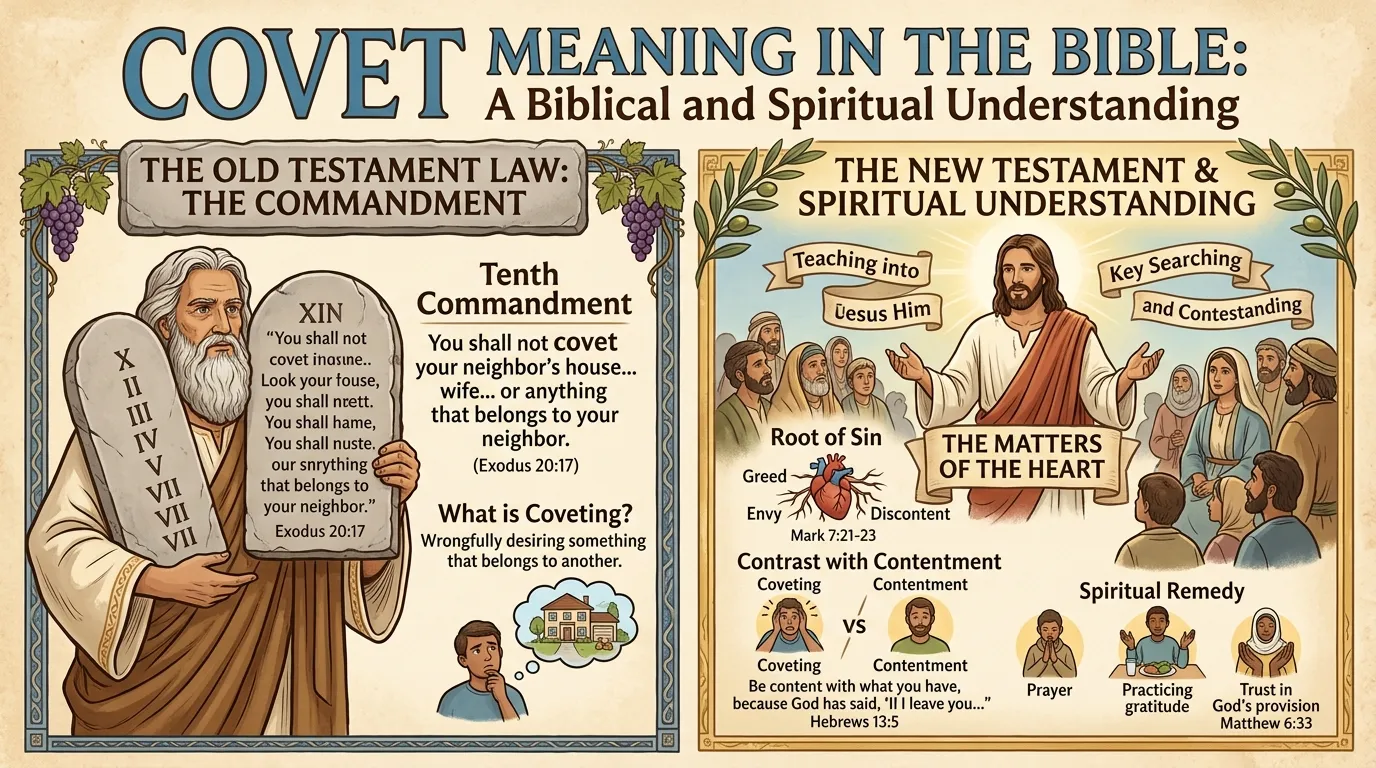
The covet meaning in the Bible centers on having a strong desire for something that belongs to another person.
One of the clearest references appears in the Ten Commandments:
“You shall not covet your neighbor’s house. You shall not covet your neighbor’s wife… or anything that belongs to your neighbor.” — Exodus 20:17
This command is unique because it focuses on the heart. Many sins begin with actions, but coveting begins with thoughts and desires. God cares not only about what people do but also about what they think and feel.
Coveting Reveals the Condition of the Heart
In biblical symbolism, coveting often points to a heart that is not satisfied.
When people constantly focus on what others have, they may forget the blessings God has already placed in their lives. Instead of gratitude, they develop frustration and disappointment.
The Bible teaches that true peace comes from trusting God rather than comparing ourselves to others.
Coveting Can Lead to Other Sins
Many stories in Scripture show how coveting can cause harm.
One example is King David. He desired something that belonged to another man and allowed that desire to grow into sinful actions. What started in the heart eventually affected many lives.
This shows an important biblical truth: unchecked desires can become dangerous.
James 1:14-15 explains:
“Each person is tempted when they are dragged away by their own evil desire and enticed. Then, after desire has conceived, it gives birth to sin.”
The Bible warns believers to guard their hearts because sinful desires often begin quietly.
The Opposite of Coveting Is Contentment
While Scripture warns against coveting, it also teaches the beauty of contentment.
The Apostle Paul wrote:
“I have learned to be content whatever the circumstances.” — Philippians 4:11
Contentment does not mean giving up goals or dreams. Instead, it means trusting God’s plan and being thankful for His provision.
When believers focus on God’s faithfulness, coveting loses its power.
Jesus Warned Against Greed
Jesus spoke directly about covetousness.
In Luke 12:15, He said:
“Watch out! Be on your guard against all kinds of greed; life does not consist in an abundance of possessions.”
This verse reminds Christians that true value is not found in wealth, status, or material things. Real fulfillment comes through a relationship with God.
A Message of Hope
The biblical message about coveting is not meant to condemn but to guide.
God understands human struggles. He knows people sometimes compare themselves to others. Through prayer, faith, and spiritual growth, believers can overcome envy and discover lasting peace.
This divine message encourages Christians to trust God’s timing and believe that He provides exactly what is needed.
Spiritual Significance and Symbolism
The spiritual symbolism of coveting goes beyond wanting possessions.
It often represents a deeper struggle with trust.
When people covet, they may unknowingly question whether God is providing enough. The desire for another person’s blessings can become stronger than appreciation for their own journey.
Spiritually, coveting can act like a warning light. It may reveal areas where faith needs to grow.
For example:
- Feeling jealous of someone’s success may point to fear about the future.
- Wanting another person’s lifestyle may reveal dissatisfaction with current circumstances.
- Constant comparison may indicate a need for deeper trust in God’s plan.
The Bible encourages believers to replace envy with gratitude.
Prayer plays an important role in this transformation. When people bring their desires to God, He helps reshape their hearts and perspectives.
This process often leads to spiritual awakening and personal growth.
Instead of asking, “Why do they have more than me?” believers begin asking, “How can I use what God has already given me?”
That shift creates peace.
It strengthens faith and helps people recognize the presence of God in everyday life.
Through this journey, coveting becomes an opportunity for growth, leading to greater trust, humility, and spiritual maturity.
Biblical Interpretations in Dreams or Real Life
In dream interpretation, feelings of coveting may symbolize unmet desires, personal struggles, or a longing for something missing in life.
If a dream involves wanting another person’s possessions, success, or relationships, it may encourage self-reflection. The dream could be highlighting areas where gratitude has been replaced by comparison.
A peaceful dream involving desire may simply point to goals, hopes, or ambitions that need prayerful guidance.
A troubling or fearful dream, however, may serve as a reminder to guard the heart against envy or greed.
In real life, coveting often appears through constant comparison.
Social media, workplace competition, and daily interactions can sometimes trigger feelings of jealousy. These moments can become opportunities to seek God’s wisdom and remember His promises.
The Christian meaning behind these experiences is often a call to trust God more deeply.
Instead of focusing on what others possess, believers can pray for contentment and confidence in God’s unique plan for their lives.
Practical Lessons & Faith Insights
The Bible teaches that contentment is stronger than comparison.
When feelings of envy arise:
- Pray and thank God for your blessings.
- Focus on His promises rather than other people’s possessions.
- Trust His timing and provision.
- Celebrate the success of others with a grateful heart.
God’s guidance helps believers find peace where envy once existed.
Conclusion
The covet meaning in the Bible is about more than wanting something. It is a lesson about the heart, faith, and trust in God.
Scripture warns that coveting can steal peace and lead people away from gratitude. Yet it also offers hope through contentment, prayer, and spiritual growth.
As you reflect on this biblical symbolism, remember that God knows your needs and cares deeply about your journey. Trust His plan, seek His guidance, and allow His love to fill your heart with lasting peace and hope.