Have you ever looked at a family tree and wondered why certain names were kept for generations? A family line can tell a story. It can show where people came from, what they carried forward, and how one generation connected to another.
The genealogy of Seth meaning in the Bible is much more than a list of names. It is part of the story of God’s work after the fall of humanity. Seth was born to Adam and Eve after the death of Abel. His family line later became an important part of the biblical story.
The genealogy of Seth is recorded especially in Genesis 5. It traces the line from Adam through Seth to Noah. Later, the New Testament continues this family line in Luke 3:38, where Seth is named in the genealogy leading to Jesus.
So, what does the genealogy of Seth mean in the Bible?
It points to continuity, God’s faithfulness, human mortality, and hope. It reminds us that God continued His purpose even through a broken world. It also shows that every generation matters to God.
The story of Seth invites us to look beyond names and dates. It encourages us to think about faith, family, spiritual heritage, and God’s promises.
Biblical Meaning of the Genealogy of Seth
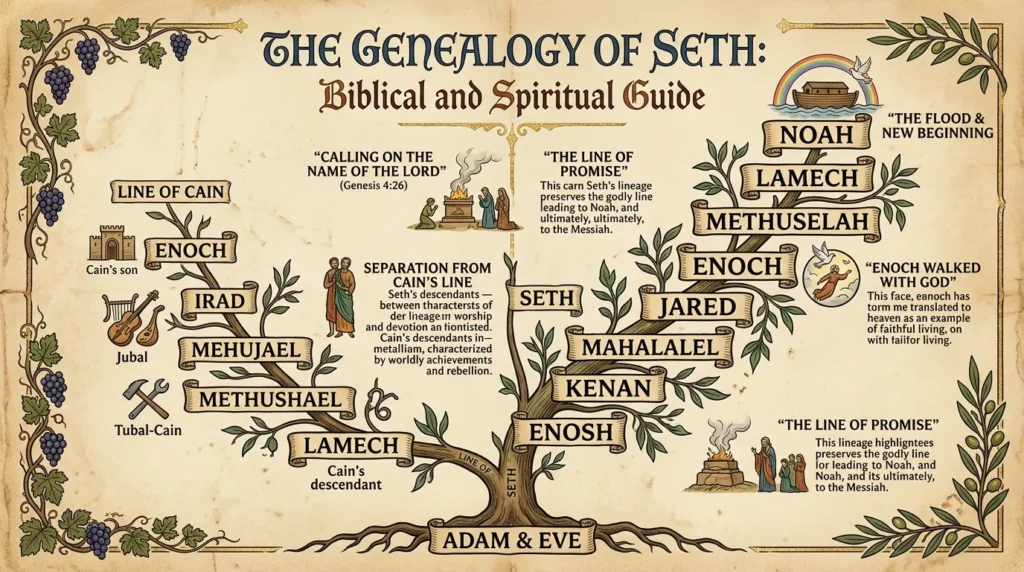
The genealogy of Seth in the Bible is found mainly in Genesis 5. The chapter begins with Adam and then follows the family line through Seth.
Genesis 5:3 says that Adam had a son in his likeness and named him Seth. Seth became the father of Enosh, and the family line continued through several generations.
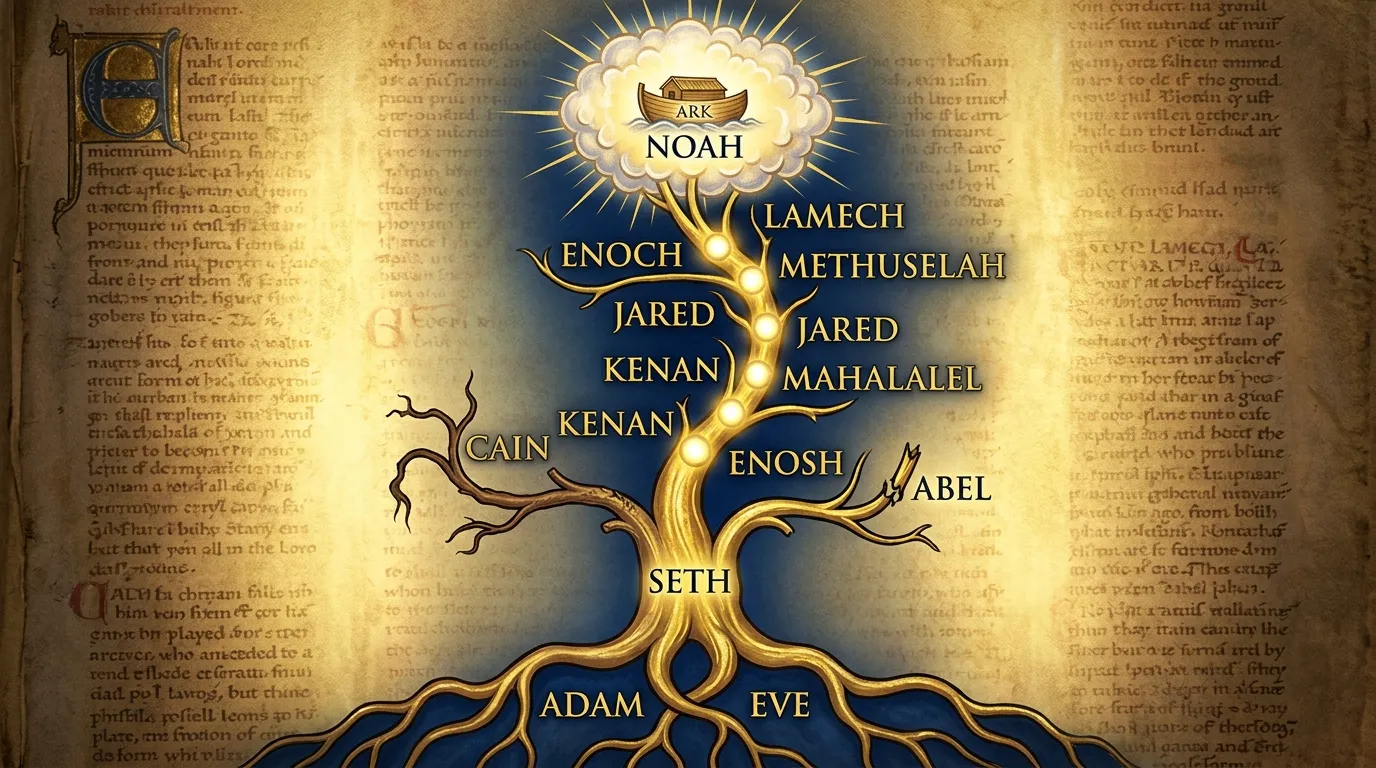
The basic line is:
Adam → Seth → Enosh → Kenan → Mahalalel → Jared → Enoch → Methuselah → Lamech → Noah
This genealogy is important because it connects the early history of humanity with the story of Noah.
Seth Was Given After Abel
Seth’s story begins in Genesis 4:25. Eve gave birth to Seth after Cain killed Abel.
Eve said that God had appointed another offspring for her in place of Abel.
This gives Seth a special place in the biblical story. His birth came during a painful time. Abel was dead, and Cain had gone away after his sin.
Yet God allowed life to continue.
This teaches a powerful lesson: loss does not mean God has stopped working.
Seth did not erase the pain of Abel’s death, but his birth showed that God’s purposes continued.
Seth’s Line Connects to Noah
Genesis 5 follows Seth’s descendants until it reaches Noah.
This matters because Noah later becomes a major figure in God’s story. Through Noah, humanity continues after the flood.
The genealogy therefore creates a bridge between Adam and Noah.
It shows that the Bible is not presenting random stories. These people belong to a connected history.
Their names help establish the movement of the biblical story from one generation to another.
Seth Represents Continuity
One important biblical theme in Seth’s genealogy is continuity.
Adam’s family experienced sin, violence, death, and loss. But God’s work did not end there.
Generation followed generation.
The genealogy reminds Christians that God can continue His work even when life looks broken.
Sometimes we may feel that our mistakes or losses have destroyed our future. The story of Seth offers another perspective.
God is able to bring new beginnings after painful endings.
The Genealogy Also Shows Human Mortality
Genesis 5 contains a repeated phrase: people lived for many years, and then they died.
The words are powerful because they remind us that human life is temporary.
Even people who lived for hundreds of years eventually died.
This is important in the biblical story because death entered human experience after the fall. The genealogy does not hide this reality.
Instead, it places death beside God’s continuing work.
The message is both serious and hopeful:
Human life is temporary, but God’s purposes continue.
Enoch Gives a Special Picture of Faith
One of the most striking people in Seth’s genealogy is Enoch.
Genesis 5:24 says:
“Enoch walked with God; and he was not; for God took him.”
Enoch stands out because his relationship with God is emphasized rather than simply his age and death.
The New Testament also speaks about him. Hebrews 11:5 connects Enoch with faith and says that he pleased God.
His place in the genealogy teaches that a person’s relationship with God matters deeply.
A long life is not the greatest measure of success.
Walking with God is.
The Genealogy Leads Toward Noah
The genealogy eventually reaches Noah.
Noah was born during a difficult period of human history. His father, Lamech, expressed hope that Noah would bring comfort from the hard labor caused by the curse of the ground (Genesis 5:28–29).
Noah later becomes central to the flood account.
This makes the genealogy of Seth part of a larger story of judgment, preservation, and God’s mercy.
The genealogy prepares the reader for what comes next.
Genealogy of Seth Hebrew Meaning
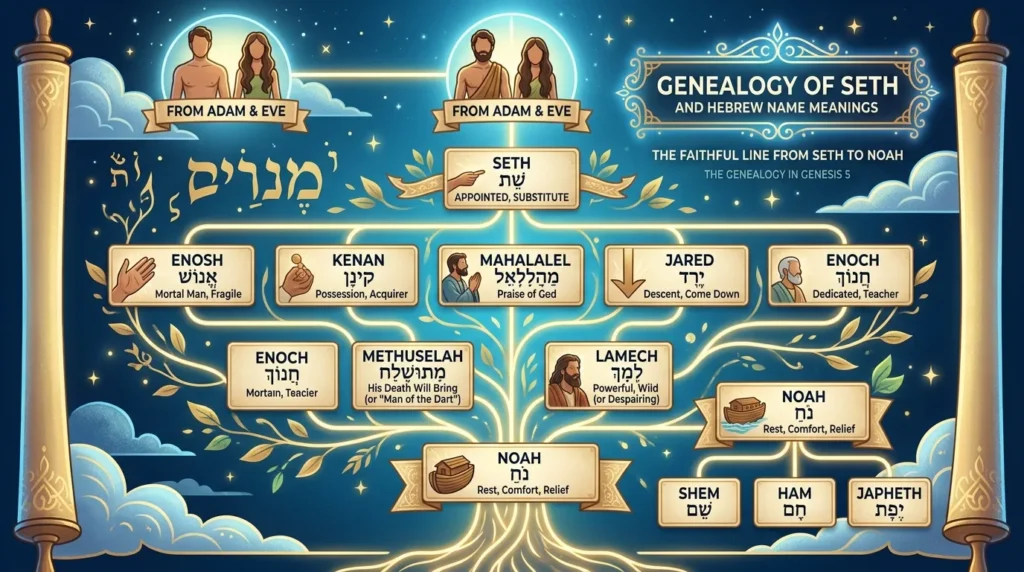
The Hebrew name Seth is written שֵׁת and is commonly transliterated as Šēt or Shet.
The name appears in Genesis 4:25, where Eve says:
“For God, said she, hath appointed me another seed instead of Abel.”
The Hebrew verb used in connection with Seth is related to the idea of appointing, setting, or placing.
This helps explain the meaning behind his name.
Seth’s name is therefore commonly understood in connection with appointed or placed.
This meaning fits the story. Eve viewed Seth as the child God had given or appointed after Abel’s death.
It is important, however, to make a distinction.
The phrase genealogy of Seth is not itself a special Hebrew phrase with one hidden spiritual definition. It refers to the family record descended from Seth.
The Hebrew meaning comes primarily from the name Seth (שֵׁת) and the way Genesis describes his birth.
Seth and Enosh
After Seth was born, Genesis 4:26 says that his son was named Enosh.
The name Enosh is related to the Hebrew word for human beings or humanity, often carrying a sense of human weakness or mortality.
This fits the theme that becomes very clear in Genesis 5.
The genealogy shows generations of people who lived, had children, and eventually died.
It quietly teaches a major biblical truth:
People are fragile, but God remains faithful.
Spiritual Meaning and Symbolism of the Genealogy of Seth
The spiritual meaning of the genealogy of Seth can be understood through several important biblical themes.
A New Beginning After Loss
Seth was born after Abel’s death.
His story can remind believers that God can bring new beginnings after seasons of grief.
This does not mean every loss will be replaced in the same way. Scripture does not promise that every painful event will simply disappear.
Instead, Seth shows that God can continue writing a person’s story even after deep disappointment.
Faith Can Continue Through Generations
Seth’s genealogy reminds us that faith can have a generational impact.
Genesis 4:26 says:
“Then began men to call upon the name of the LORD.”
This verse appears near the beginning of Seth’s family line.
The genealogy therefore sits near an important picture of people turning toward God.
Christian parents and grandparents can take encouragement from this. Your faithful example may influence people who come after you.
God Works Through Ordinary People
Most of the people in Genesis 5 are not described with long stories.
We know their names, ages, children, and place in the family line.
Yet their names were important enough to be preserved in Scripture.
This shows that ordinary lives matter to God.
You may not feel famous or important. But your faithfulness, kindness, prayers, and choices can still matter.
God’s Presence Matters More Than Achievement
Enoch is the great example.
The genealogy gives information about many people, but Enoch is remembered because he walked with God.
That is a beautiful reminder for Christian life.
God is not asking us to build a famous name.
He calls us to know Him, trust Him, and walk with Him.
Genealogy of Seth in the Bible and Biblical Interpretation
If you encounter the genealogy of Seth in a dream, Bible study, sermon, or personal reflection, it can lead to meaningful questions.
However, Christians should be careful about treating every dream as a direct divine message.
The Bible does contain dreams through which God spoke to certain people, but Scripture does not teach that every modern dream has a prophetic meaning.
If the genealogy of Seth appears in a dream or feels important during prayer, consider biblical themes such as:
- New beginnings after loss
- Family and spiritual heritage
- God’s faithfulness through generations
- Human mortality
- Walking with God
- Hope during difficult seasons
For example, someone going through family hardship might find the story of Seth comforting because it shows that one painful chapter does not have to be the end of the story.
Someone thinking about their children or grandchildren may see the genealogy as a reminder to leave a faithful spiritual example.
The safest approach is to test personal interpretations against Scripture, pray for wisdom, and avoid claiming that a private experience has the same authority as God’s written Word.
What Does the Genealogy of Seth Teach Christians Today?
The genealogy of Seth has several simple lessons for Christian life.
God can bring hope after loss. Seth’s birth followed Abel’s death.
Your family story matters. The Bible shows how one generation connects with another.
Life is short. Genesis 5 repeatedly reminds us that people eventually die.
Walking with God matters. Enoch’s example stands out in the genealogy.
God’s purposes continue. The story moves from Adam to Seth, from Seth to Noah, and later into the larger biblical story.
These lessons can help us slow down and think about our own lives.
Instead of asking only, “What have I achieved?” we can ask, “Am I walking with God?”
Instead of asking, “What did I lose?” we can also ask, “Where might God be leading me now?”
Instead of fearing the future, we can remember that God is faithful from generation to generation.
Bible Verses About Seth and His Genealogy
Several Scriptures are especially helpful when studying the genealogy of Seth in the Bible.
Genesis 4:25
Eve names Seth after Abel’s death and describes him as another offspring appointed by God.
This verse gives the background for Seth’s name and birth.
Genesis 4:26
The verse says that people began to call upon the name of the LORD.
It connects Seth’s family period with an important movement toward worship and dependence on God.
Genesis 5:3–8
These verses introduce Seth and describe his descendants through Enosh.
They form the beginning of the main genealogy.
Genesis 5:21–24
These verses describe Enoch and his close walk with God.
They provide one of the clearest spiritual examples within Seth’s genealogy.
Genesis 5:28–29
Lamech speaks about Noah and expresses hope for comfort.
This prepares the reader for Noah’s role in the chapters that follow.
Luke 3:38
Luke includes Seth in the genealogy leading backward from Jesus to Adam.
This is especially significant for Christians because it connects the early human story with the genealogy of Jesus Christ.
Why Is the Genealogy of Seth Important?
The genealogy of Seth is important because it preserves a key part of the Bible’s early history.
It connects Adam to Noah and later connects Seth’s line to the genealogy recorded by Luke.
It also teaches that Scripture values people who may seem ordinary.
A genealogy can look like a simple list of names, but in the Bible it can carry a deeper message.
It tells us that God works through time, families, generations, and ordinary human lives.
The genealogy also reminds us that sin and death are real. Yet they are not the end of the biblical story.
God continues His work.
For Christians, that larger story eventually leads to Jesus, whose life, death, and resurrection stand at the center of Christian faith.
Practical Faith Lessons From Seth’s Genealogy
When studying the Genealogy of Seth meaning in the Bible, take time to pray and read Genesis 4–5 slowly.
Ask God to help you understand what Scripture teaches.
Think about the kind of spiritual example you are leaving for others.
Remember people in your family who helped you grow in faith.
And if you are walking through grief or uncertainty, remember Seth’s story: a painful chapter does not mean God has finished your story.
Trust God’s timing, stay close to Scripture, and keep walking with Him.
Conclusion
The Genealogy of Seth meaning in the Bible points to more than ancestry. It reveals God’s faithfulness, human mortality, new beginnings, spiritual heritage, and hope.
Seth was born after a painful loss, yet his family line continued. His descendants included Enoch and Noah, and the New Testament later places Seth in the genealogy leading to Jesus.
The message is simple and encouraging: God can keep working through generations, even in a broken world.
If you are facing loss, change, or uncertainty, keep trusting God. Read His Word, pray for wisdom, and continue walking with Him. Your story is held by a faithful God.