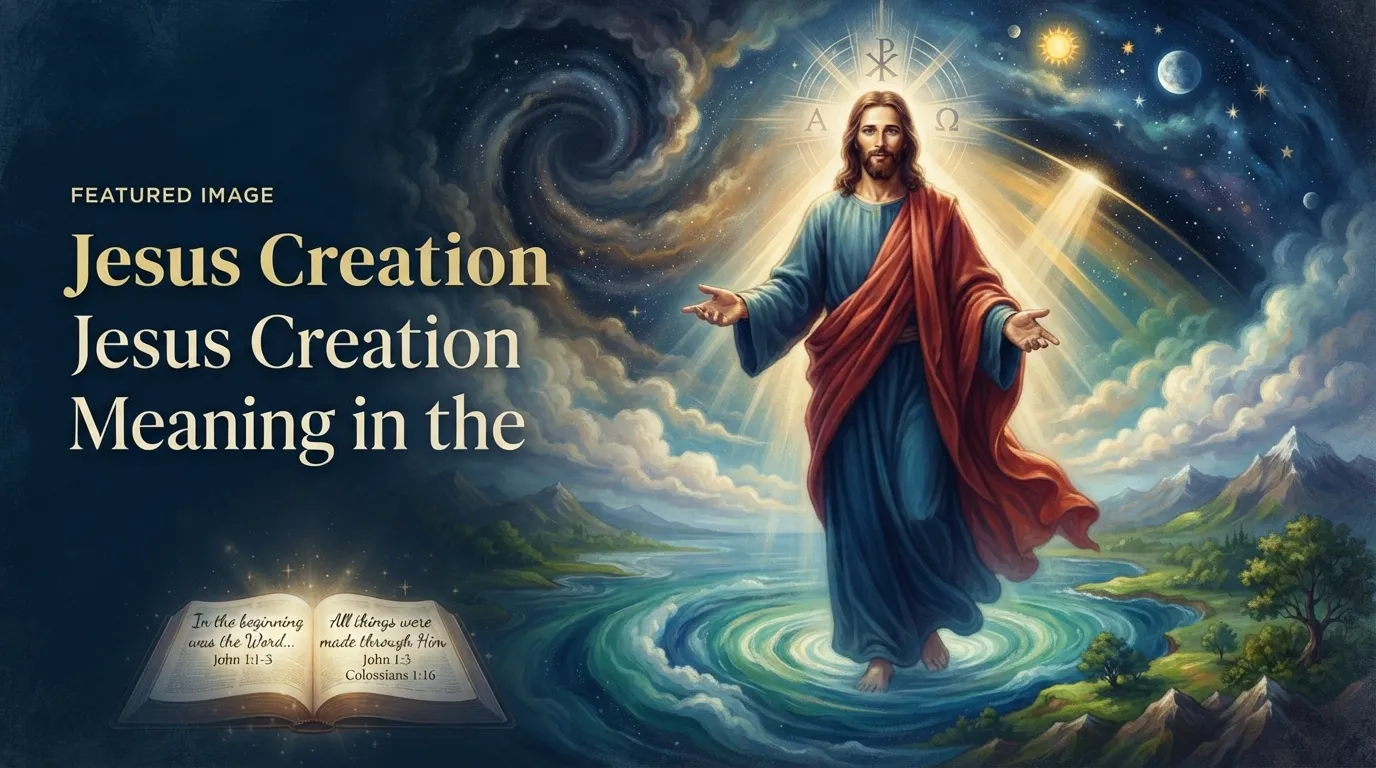
Have you ever looked at a beautiful sunrise, held a newborn baby, or stood beneath a sky full of stars and wondered where it all came from? Creation can awaken deep questions about God, life, purpose, and eternity. For Christians, these questions point toward one of the most important truths in Scripture: Jesus Christ is deeply connected to creation itself. The Jesus creation meaning in the Bible is not simply that Jesus was present when the world was made. Scripture teaches something much greater. Jesus is presented as the Word through whom all things were created, the One who existed before creation, and the One who continues to sustain what God has made. The Bible also connects Jesus with new creation, redemption, restoration, and eternal life. Studying Jesus and creation helps us understand who Christ is, why He came, and what His work means for believers today.
“In the Beginning” — John Echoes Genesis
John 1:1–3 is the clearest passage: “In the beginning was the Word, and the Word was with God, and the Word was God. Through him all things were made.” John later identifies this Word with Jesus Christ in John 1:14, where the Word becomes flesh and lives among humanity. This gives Christians an important understanding of Jesus: He existed before creation. He was with God in the beginning. He is divine. Creation came through Him. And He entered His creation as a human being.
The phrase Word matters. John 1:1 uses the Greek term Logos, commonly translated as “Word.” John does not present the Word as an impersonal force. The Word exists with God and shares God’s divine nature — and then the Word becomes flesh. For Christians, this means Jesus is the eternal Word of God who entered human history.
The connection with Genesis is deliberate. Genesis 1 repeatedly describes God creating through His spoken word: God speaks, and creation responds. John begins his Gospel with “In the beginning,” echoing the opening of Genesis, and then explains that creation came through the Word. The theological message is beautiful: the Jesus revealed in the Gospel is the eternal Christ through whom God made all things.
The Hebrew Word for Creating
The phrase “Jesus creation” does not have one special Hebrew word that translates the entire phrase — the Old Testament was written primarily in Hebrew, while the New Testament passages identifying Jesus as Creator were written in Greek. But several Hebrew words illuminate the biblical idea of creation. The Hebrew verb bara is used in Genesis 1:1: “In the beginning God created the heavens and the earth.” It describes God’s creative action and is especially associated with God’s work. Elohim, the name for God used in Genesis 1, presents God as the sovereign Creator who brings order out of what is formless and empty. The Hebrew concept of creation therefore points toward God’s authority, power, wisdom, and purpose.
When the New Testament reveals Jesus as the One through whom all things were created, Christians understand this in light of the Old Testament teaching that creation belongs to God. This is one reason the identity of Jesus is so important. The New Testament does not merely describe Him as a teacher inside God’s creation. It presents Him as sharing in God’s divine creative work.
Three Witnesses: John, Paul, and Hebrews
John is not alone. Several New Testament passages directly connect Jesus with creation, and together they form a consistent testimony.
Colossians 1:15–17 describes Christ as the image of the invisible God and the firstborn over creation. Paul explains that all things were created through Him and for Him — things in heaven and on earth, visible and invisible. He concludes by saying that Christ is before all things and that everything holds together in Him. He is not only connected with the beginning of creation. He is before creation, creation exists through Him, and creation ultimately belongs to Him.
Hebrews 1:2 teaches that God made the universe through His Son. Later, Hebrews 1:10 applies language about the creation of the heavens and earth to the Son. These passages establish a consistent biblical teaching about Christ’s relationship with creation.
Understanding creation also helps explain Christian teaching about the Trinity. The Bible teaches one God, while also revealing the Father, Son, and Holy Spirit. Genesis 1:1 introduces God as Creator. Genesis 1:2 describes the Spirit of God moving over the waters. John 1 and other New Testament passages reveal the Son’s role in creation. Matthew 28:19 places the Father, Son, and Holy Spirit together in the command to baptize disciples. Christians therefore understand creation as a work of the triune God — not that Scripture gives every detail about how the Trinity works, but that it gives believers enough revelation to understand that the Father, Son, and Holy Spirit are involved in God’s saving and creative work.
Was Jesus Created? No — And the Distinction Matters
A common question is: was Jesus created by God? According to the historic Christian understanding of Scripture, no. John 1:3 says that all things came into being through the Word. If everything created came through Him, Jesus cannot simply be included among created things. Colossians 1:16 similarly says all things were created through Christ and for Christ, and verse 17 says He is before all things. These statements point to Christ’s eternal existence.
Jesus Himself spoke about His existence before Abraham. In John 8:58, He says, “Before Abraham was, I am.” His statement points beyond ordinary human existence and connects with the divine name revealed in Exodus 3:14. Biblical Christianity teaches that Jesus is eternal rather than created. That is why the biblical meaning of Jesus and creation goes beyond the idea of Jesus simply being part of the created world. Scripture presents Christ as the Creator, not merely another creature.
New Creation: The Creator Makes People New
The Bible does not stop with the original creation. A major part of Jesus’ mission is new creation. Sin damaged humanity’s relationship with God and brought death into the human experience. Jesus came to redeem sinners and restore what sin had broken. Second Corinthians 5:17 says that anyone who is in Christ is a new creation. This does not mean a Christian becomes physically perfect overnight. It describes a new spiritual identity and relationship with God through Christ. Galatians 6:15 also speaks about new creation as more important than outward religious status.
This gives the Christian understanding of creation a deeply personal meaning. The Creator is also the One who makes people new. The God who brought light into darkness in Genesis works through Christ to bring spiritual light into human hearts. Peter denied Jesus, yet Jesus restored him. Paul persecuted Christians, yet Christ transformed his life and gave him a new mission. These stories show that failure does not have to be the final chapter. God can bring renewal even after seasons of loss.
Light is one of the strongest biblical themes connected with creation. Genesis 1:3 records God’s command for light to appear. John 1:4–5 says that life was in Him and that this life was the light of humanity. Jesus later says in John 8:12, “I am the light of the world.” This does not mean Jesus is literally the physical light described in Genesis. Scripture uses light as a powerful picture of life, truth, holiness, hope, and God’s revelation. For believers, Jesus brings light into places affected by spiritual darkness: a person struggling with fear may find courage in Christ; someone carrying guilt may discover forgiveness; someone confused about the future can seek God’s wisdom through Scripture and prayer.
What the Creator Teaches Us About Our Lives
The doctrine of Jesus as Creator is not only a theological idea. It has practical meaning for everyday faith.
Your life has purpose. If all things were created through Christ and for Christ, then human life is not meaningless. Your work, relationships, choices, gifts, and opportunities can all become places where you honor God.
You are not forgotten. The Creator knows His creation. Jesus teaches that God cares even for seemingly small things, such as birds and flowers, in Matthew 6:25–30 — and then reminds His followers that they are much more valuable. When you feel overlooked, remember that your life matters to God.
God can bring order from chaos. Genesis begins with a world described as formless and empty, and God brings order, light, life, and purpose. Your life may sometimes feel confusing in a similar way. You may not know what comes next, but you can still bring your questions to God through prayer and Scripture.
Creation should lead to worship. Psalm 95:3–6 calls God’s people to worship because He is the great King and Creator. A beautiful morning, a child’s laughter, or a quiet night can become an opportunity to thank God. Creation is not God, but creation can point your heart toward God. Psalm 19:1 says the heavens declare God’s glory, and Romans 1:20 teaches that God’s invisible qualities can be understood through what He has made. Scripture does not tell Christians to worship creation. Instead, creation points beyond itself to the Creator.
The Creator Who Entered His Creation — and Will Restore It
One of the most beautiful Christian teachings is that the Creator entered His creation. Jesus was born as a human being, lived among ordinary people, experienced hunger and tiredness, suffered rejection, and ultimately died on the cross. Yet His story did not end at the grave. His resurrection became the foundation of Christian hope. The One through whom all things were made came into the world to redeem sinners and bring them back to God. First Peter 1:18–21 explains that believers were redeemed through Christ’s sacrifice and raised to hope through His resurrection. The Creator is therefore also presented as Redeemer, Savior, Lord, and source of eternal life.
The Bible also points toward the future restoration of creation. Revelation 21 describes a new heaven and a new earth. John sees the holy city and hears the declaration that God will dwell with His people — a future in which death, mourning, crying, and pain will no longer have the final word. Christians differ on some details concerning end-times events, but the central biblical hope is clear: God will ultimately defeat death and bring His redemptive purposes to completion. Romans 8 describes creation as waiting for liberation from the effects of corruption, pointing believers toward God’s future redemption. Christian hope is not based on pretending suffering does not exist. It is based on trusting that God’s redemptive purpose is greater than present brokenness. The Christian story begins with creation and moves toward restoration.
Understanding Jesus as Creator should lead beyond information toward worship and trust. Spend time in Scripture and ask God to help you understand His character. Look at creation with gratitude rather than taking its beauty for granted. When life feels broken, remember the biblical message of new creation. When you feel lost, seek God’s wisdom. When you feel guilty, remember the grace offered through Christ. When you are afraid of the future, remember that Scripture presents Jesus as Lord over creation and Redeemer of His people. And when you cannot understand what God is doing, you can still pray. You do not need every answer before you trust Him. The Creator understands His creation. The One who brings light can meet you in darkness. The One who gives life can renew what feels broken. And the One who began His work will ultimately bring His redemptive purposes to completion. For readers who want to explore how the Word — the Logos — has been understood in philosophy and theology from ancient Greece to the early church, the Wikipedia article on Logos traces that rich history.










