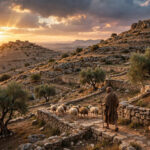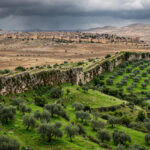
Luke 9:51 is the hinge of the Third Gospel: “When the days drew near for him to be taken up, he set his face to go to Jerusalem.” Everything before is ministry in Galilee. Everything after is a journey — ten long chapters of road, from Galilee through Samaria and Perea to Jericho, up the Mount of Olives, and into the city where He will die. Luke structures nearly a third of his Gospel as travel narrative. The final journeys of Jesus are not filler between the miracles and the cross. They are the deliberate, resolute walk of a man going to give His life — and teaching, healing, and seeking the lost at every stop along the way.
Setting the Face: What Determination Looks Like
“He set his face” is Semitic idiom for iron resolve — the same phrase Ezekiel uses for prophetic determination and Isaiah uses for the suffering servant: “I have set my face like a flint.” Jesus knows what waits in Jerusalem. He has told the disciples three times: betrayal, condemnation, mocking, flogging, death — and resurrection. Peter has rebuked Him for it. The disciples have misunderstood it. James and John have asked for thrones beside His. And still He walks.
The determination is theologically necessary. If Jesus goes to the cross reluctantly, dragged by circumstance, the atonement loses its voluntary character. But He goes as He will later pray: “Not my will, but yours be done” — the will freely submitted, not the fate passively suffered. Every step of the journey is a step of obedience. The road to Jerusalem is the road of the servant who “set his face like flint,” knowing the shame and knowing the vindication.
There is pastoral power here for anyone facing a hard road. Jesus does not evade Jerusalem. He walks toward it — afraid (Gethsemane will show the fear), but walking. Courage, in the Gospels, is not the absence of dread. It is the presence of obedience alongside the dread. The set face does not mean the heart is calm. It means the feet keep moving.
Through Samaria: The Rejected Welcome
The journey begins with rejection. A Samaritan village refuses to receive Him “because his face was set toward Jerusalem” — the old ethnic and religious hostility flaring. James and John, the Sons of Thunder, want to call down fire like Elijah. Jesus rebukes them: “You do not know what manner of spirit you are of.” The journey to the cross will not be paved with vengeance. The man going to die for His enemies will not incinerate the inhospitable.
The rebuke is programmatic. Luke’s journey narrative will return to Samaria repeatedly — the Good Samaritan, the thankful leper, the mission of Acts 8 — as if to insist that the rejected village is not the last word. The road Jesus walks is for Samaritans too. The kingdom He is going to Jerusalem to inaugurate will break every ethnic barrier, starting with the one at the journey’s first stop.
The Teachings of the Road
More of Jesus’ most beloved parables come from the travel narrative than from any other section. The Good Samaritan — told on the road, answering “who is my neighbor?” The prodigal son — the father’s running embrace, the elder brother’s refusal, the feast that pictures heaven’s joy over one sinner who repents. The rich fool, the watchful servants, the great banquet, the lost sheep, the lost coin, the unjust steward, the rich man and Lazarus, the persistent widow, the Pharisee and the tax collector.
Why does the road produce such teaching? Because the journey is itself a parable. Jesus is traveling toward the cross — the ultimate act of seeking and saving the lost — and His stories are the soundtrack: lost things found, outsiders welcomed, grace running to meet repentance. The prodigal’s father runs; Jesus is walking to Jerusalem to make the running possible. Every parable of the journey is a window into the heart of the traveler.
The journey also produces some of His hardest sayings. “No one who puts his hand to the plow and looks back is fit for the kingdom of God.” “Whoever does not bear his own cross and come after me cannot be my disciple.” The road to Jerusalem is no place for casual followers. Jesus keeps raising the cost of discipleship even as He walks toward paying the ultimate cost Himself. He will not recruit under false pretenses.
Jericho: The Seeking Savior
Near the journey’s end, in Jericho, Luke gives us the narrative’s thesis statement in the form of a story. Zacchaeus — rich, despised, a chief tax collector, short in stature and shorter in reputation — climbs a sycamore tree to see Jesus. Jesus stops, looks up, and invites Himself to dinner: “Zacchaeus, hurry and come down, for I must stay at your house today.” The crowd grumbles. Zacchaeus repents extravagantly — half his goods to the poor, fourfold restitution. And Jesus declares the journey’s purpose: “For the Son of Man came to seek and to save the lost.”
That verse is the key to the whole travel narrative. Every mile from Galilee to Jerusalem was a seeking mile. The blind beggar outside Jericho — “Jesus, Son of David, have mercy on me!” — receives sight. The ten lepers are cleansed. Children are welcomed. The road is not empty transit between ministry sites. It is ministry: the seeking Savior, seeking, all the way to the city where seeking will cost Him everything.
The Triumphal Entry: The King Arrives
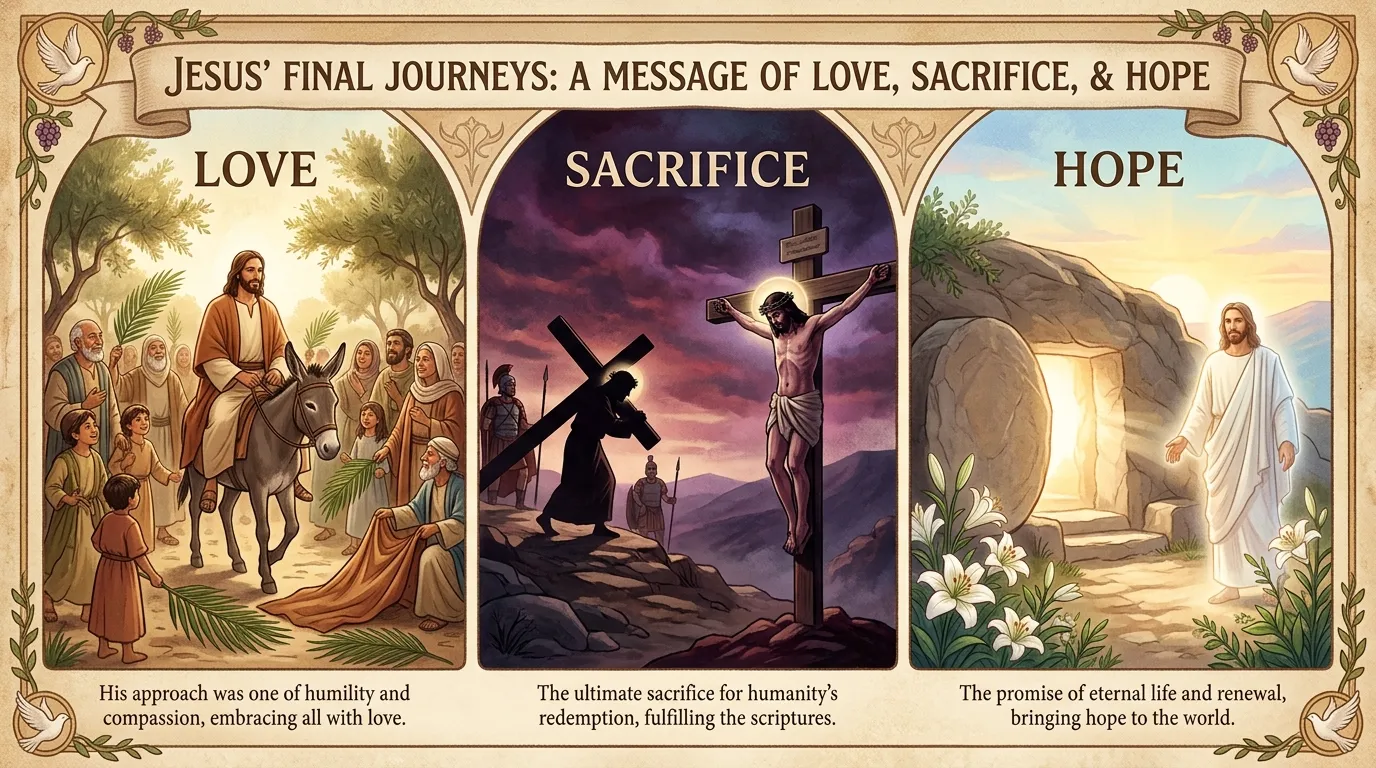
The journey culminates in the entry into Jerusalem — the event all four Gospels record. Jesus sends for a colt, rides down the Mount of Olives, and the crowds spread cloaks and branches, shouting, “Hosanna! Blessed is he who comes in the name of the Lord!” It is the deliberate fulfillment of Zechariah: “Behold, your king is coming to you… humble and mounted on a donkey.”
The entry is triumph and irony at once. The crowd is right about the kingship and wrong about the kind. They expect a conqueror; He comes as the Passover lamb. Within days the “Hosannas” will become “Crucify him.” But Jesus weeps over the city even as He enters it — “Would that you, even you, had known on this day the things that make for peace!” The King comes in peace, offering peace, and the city will choose the sword. The tears of the entry are the first tears of the Passion.
Luke places the cleansing of the temple immediately after, and then the teaching in the temple courts — the journey’s destination reached, the final confrontations begun. The road that started with a set face ends at the house of God, where the Son will be rejected by its tenants. Every step was necessary. Every step was voluntary. “He set his face to go to Jerusalem” — and He arrived.
Bethany: The Anointing on the Way
Just before the entry, the journey pauses in Bethany — and the pause is significant. At Simon the leper’s house, a woman anoints Jesus with costly ointment, and when the disciples object to the waste, Jesus defends her: “She has done a beautiful thing to me… she has anointed my body beforehand for burial.” Then the staggering promise: “Wherever the gospel is proclaimed in the whole world, what she has done will be told in memory of her.”
The anointing belongs to the journey because it interprets it. The disciples still expect a coronation; the woman understands — perhaps only by instinct — that this road ends in burial. Her extravagance is the journey’s true response: not calculation but abandon, not strategy but worship. On the road to Jerusalem, she is the one who gets it right. The set face of Jesus and the broken flask of Mary of Bethany: determination and devotion, walking the same road.
Walking the Road After Him
The journey narrative is not only history. It is a pattern for discipleship. Luke presents the Christian life as a road — the “Way,” as the early church called itself — and Jesus’ final journey as its template. The disciple, like the Master, sets the face toward obedience, walks through rejection without retaliation, teaches and serves along the way, counts the cost honestly, and keeps moving toward the destination God has set.
There will be Samaritan villages — places that refuse us. There will be thunder-sons within us, wanting fire on the inhospitable. There will be Zacchaeus moments, when grace interrupts the itinerary for one lost person in a tree. And there will be Jerusalems — the hard obediences we can see coming and must walk toward anyway. The road is not safe. It was never promised to be. It is the way of the cross, and it leads, as His did, through death to resurrection.
“He set his face to go to Jerusalem.” The most determined walk in history — ten chapters long, ending at a cross and an empty tomb. We follow at a distance, on the same road, toward the same city: the New Jerusalem, where the journey ends and the feast begins.
The climactic arrival that crowned this journey is described in the account of Christ’s entry into Jerusalem, the triumphal moment toward which every step of the road had been leading.