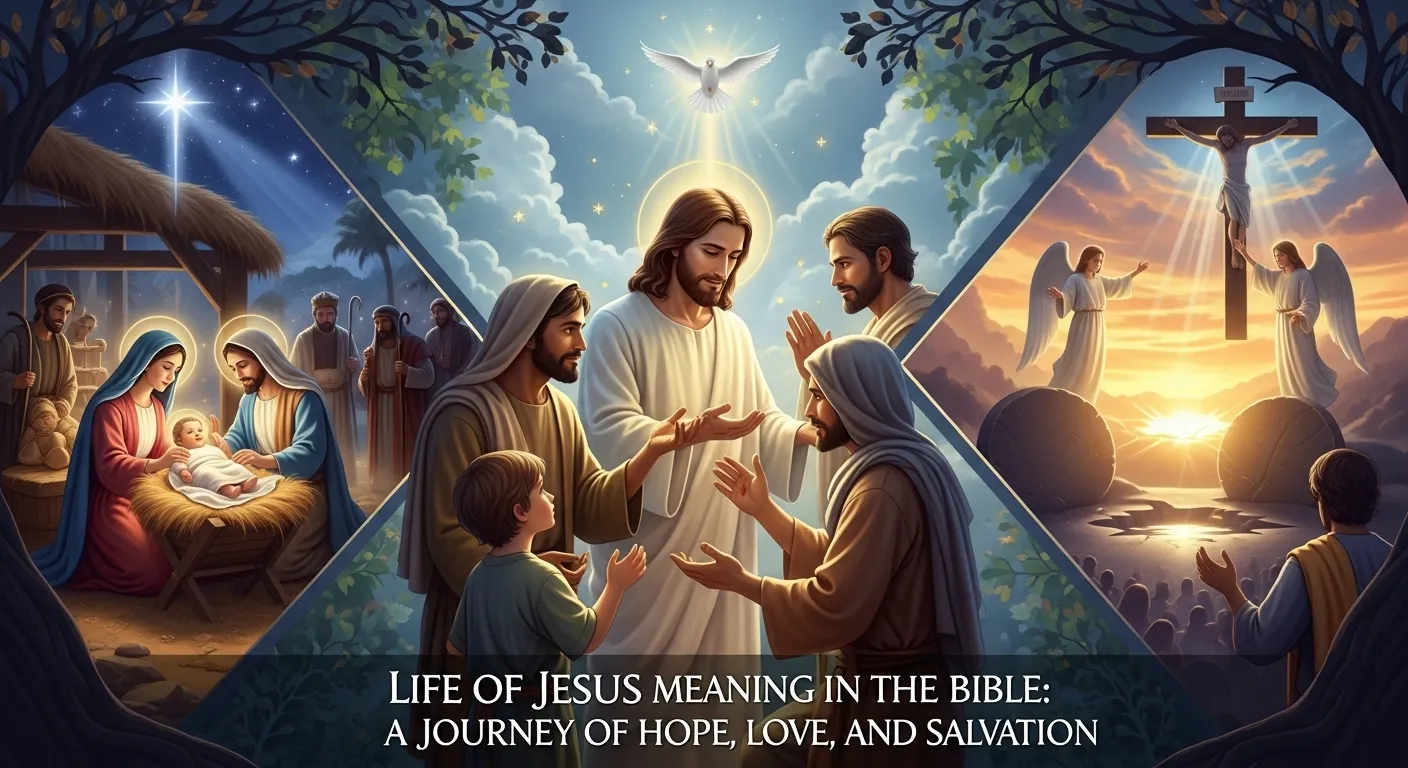
Trace His footsteps on a map, and the life of Jesus becomes a journey through the towns of a small country — each one a chapter, each chapter a revelation. Bethlehem. Nazareth. The Jordan. Capernaum. Jerusalem. The tomb. The road to Emmaus. Thirty-three years, most of them quiet, all of them purposeful. The Gospels do not give us a biography in the modern sense — no childhood anecdotes, no personality profile. They give us something better: the places where God walked, and what He did in each one.
Bethlehem: Born in a Feeding Trough
It began in the wrong place, in the wrong conditions, announced to the wrong people — which is to say, exactly as God planned. Micah had prophesied it centuries before: “O Bethlehem Ephrathah… from you shall come forth for me one who is to be ruler in Israel” (Micah 5:2). Caesar’s census provided the transportation; a crowded inn provided the necessity; and “she gave birth to her firstborn son and wrapped him in swaddling cloths and laid him in a manger” (Luke 2:7).
A manger — a feeding trough. The Bread of Life (John 6:35) laid where animals ate, in the town called “house of bread.” The symbolism is almost too perfect to be accidental — and it isn’t. From His first breath, Jesus identified with the lowly: born to a poor girl, announced to shepherds (the working poor of the fields), visited by no dignitaries. “Though he was rich, yet for your sake he became poor” (2 Corinthians 8:9) — and the poverty started in Bethlehem.
The birth teaches the first lesson of His life: God does His greatest work through the overlooked. No palace. No fanfare. Just a teenage mother, a worried carpenter, some shepherds, and heaven’s choir. If you feel overlooked, you are in the company of the nativity.
Nazareth: The Hidden Years
Then — silence. From the flight to Egypt and back, the Gospels give us almost nothing: “And he went down with them and came to Nazareth and was submissive to them… And Jesus increased in wisdom and in stature and in favor with God and man” (Luke 2:51-52). One childhood story — the twelve-year-old in the temple, astonishing the teachers (2:46-47) — and then eighteen silent years.
Nazareth was a nowhere town. “Can anything good come out of Nazareth?” (John 1:46) was not an unreasonable question in its day. And Jesus spent roughly ninety percent of His earthly life there — working wood, attending synagogue, living unnoticed. The hidden years preach a sermon our celebrity age desperately needs: obscurity is not wasted time. The hands that would be nailed to a cross first learned their trade in a carpenter’s shop. The voice that would still storms first learned Scripture in a village synagogue. God was forming the Messiah in the quiet — and He forms His people the same way still.
“Increased in wisdom and in stature and in favor with God and man” — intellectual, physical, spiritual, social. The perfect human life was balanced, and it grew gradually. Even Jesus did not skip the process. Neither will you.
The Jordan: The Heavens Opened
At about thirty, Jesus walked to the Jordan where John was baptizing. John’s protest was immediate — “I need to be baptized by you, and do you come to me?” — and Jesus’ answer has echoed ever since: “Let it be so now, for thus it is fitting for us to fulfill all righteousness” (Matthew 3:14-15). The sinless One entered the waters of repentance — not because He needed them, but because He would stand with sinners all the way to the cross.
What happened next is the Bible’s clearest portrait of the Trinity at work: “the heavens were opened to him, and he saw the Spirit of God descending like a dove and coming to rest on him; and behold, a voice from heaven said, ‘This is my beloved Son, with whom I am well pleased'” (3:16-17). Identity before ministry. Before one miracle, one sermon, one disciple — the Father spoke His pleasure. Jesus’ entire public life flowed from that settled identity: beloved Son, Spirit-anointed, heaven-approved.
The order matters for every believer. You do not earn the Father’s pleasure by your performance; you receive it by your union with Christ — and then you perform from it. Ministry that flows from belovedness looks like Jesus’: unhurried, compassionate, unshakeable. Ministry that tries to earn belovedness looks like burnout.
Capernaum: The Town That Saw Everything
“Leaving Nazareth he went and lived in Capernaum by the sea” (Matthew 4:13) — and for three years, this fishing town was the headquarters of heaven’s invasion. The blind saw. The lame walked. Lepers were cleansed. A storm was stilled with a word. A dead girl rose. Demons fled. “The people who sat in darkness have seen a great light” (4:16) — and the light lived on their street.
The miracles were signs — John’s word for them (John 2:11) — pointing past themselves to who Jesus was. Healing the sick pictured His power to heal sin-sick souls. Feeding the hungry pictured the Bread of Life. Calming the storm pictured peace for troubled hearts. Raising the dead pictured the resurrection He would bring. Every miracle was a parable in action, and Capernaum got a front-row seat to all of them.
Which makes Jesus’ verdict on the town devastating: “And you, Capernaum, will you be exalted to heaven? You will be brought down to Hades. For if the mighty works done in you had been done in Sodom, it would have remained until this day” (Matthew 11:23). Privilege increases responsibility. Seeing the most light and responding the least is the worst position of all. The town that saw everything became the warning for everyone: nearness to Jesus without surrender to Jesus is the most dangerous place on earth.
Jerusalem: The Week That Split History
It all converged on Jerusalem — one week that the Gospels cover in extraordinary detail (nearly a third of their pages for seven days). The triumphal entry: “Hosanna to the Son of David!” (Matthew 21:9) — the crowd right about His kingship, wrong about His kingdom. The upper room: bread broken, a cup poured, feet washed — “having loved his own… he loved them to the end” (John 13:1). Gethsemane: “My soul is very sorrowful, even to death” (Matthew 26:38) — the sinless One shrinking from becoming sin, yet praying “not as I will, but as you will” (26:39).
Then the cross: “It is finished” (John 19:30). Then the tomb, the stone, the silence of Saturday. Then — “He is not here, for he has risen” (Matthew 28:6). The resurrection is the hinge of history and the heart of the faith: “if Christ has not been raised, your faith is futile and you are still in your sins” (1 Corinthians 15:17). But He has been raised — and everything changes: death is defeated, forgiveness is secured, and “because I live, you also will live” (John 14:19).
Jerusalem teaches the final lesson of His life: the road to glory runs through suffering. “Was it not necessary that the Christ should suffer these things and enter into his glory?” (Luke 24:26). The cross was not a detour from the plan; it was the plan. Every believer’s path follows the same shape — no crown without a cross, no resurrection without a death.
Emmaus: The Road That Explains It All
On resurrection day, two disciples walked the seven miles to Emmaus, crushed and confused — and the risen Jesus joined them, “beginning with Moses and all the Prophets, he interpreted to them in all the Scriptures the things concerning himself” (Luke 24:27). The whole Bible, it turns out, was about Him all along.
Their hearts “burned” on the road (24:32), but they recognized Him only “in the breaking of the bread” (24:35). Then He vanished — and they ran back to Jerusalem in the dark to tell everyone. That is the Christian life in miniature: walking with a Christ you don’t yet recognize, having your heart set burning by His Word, meeting Him at the table, and running to tell the world.
From Bethlehem’s manger to Emmaus’s table: humility, hiddenness, anointing, compassion, suffering, glory. The life of Jesus is the life every believer is being shaped into — “to be conformed to the image of his Son” (Romans 8:29). Walk the towns. Learn the lessons. And recognize Him, finally, in the breaking of the bread. For a fuller account of the events, chronology, and significance of Christ’s earthly ministry, Wikipedia’s article on the life of Jesus provides a comprehensive survey of the Gospel narratives and their historical setting.










