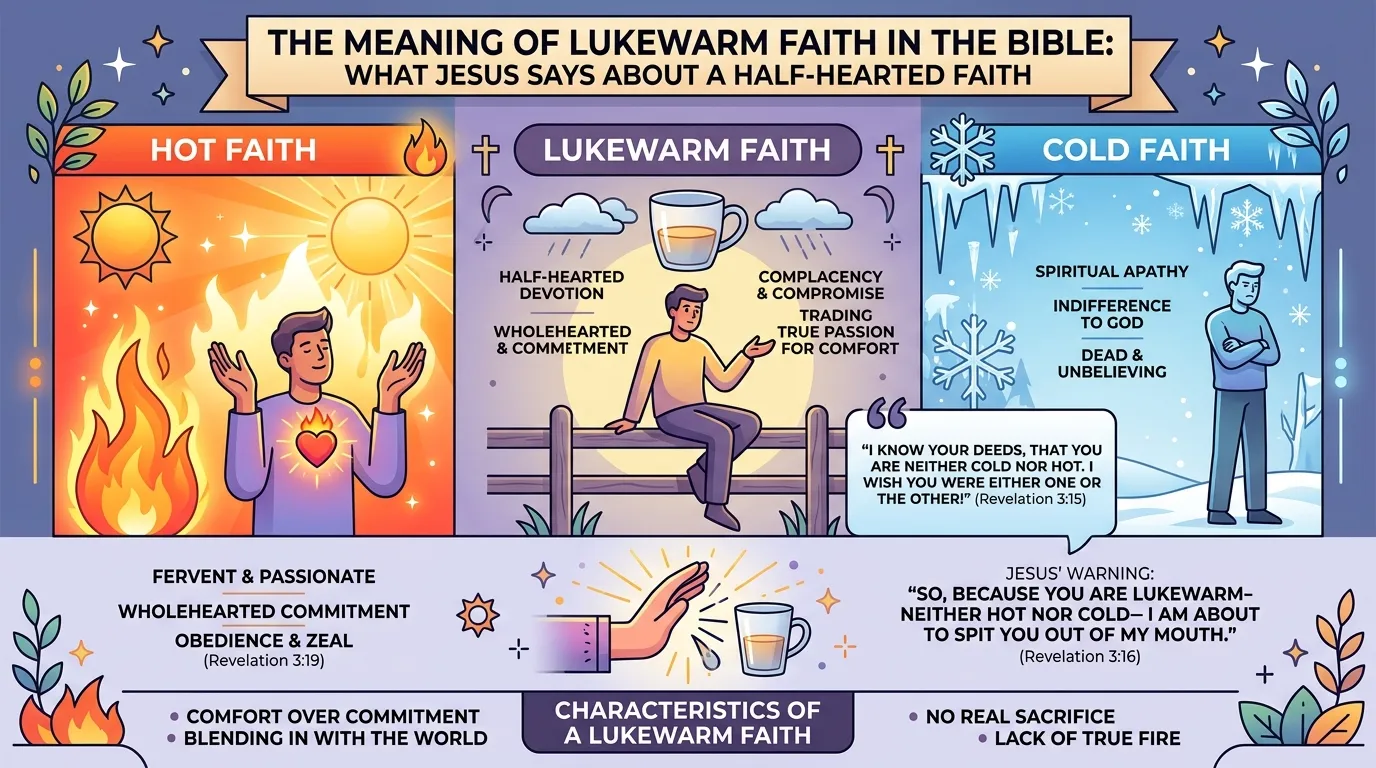
The church at Laodicea received the harshest letter of the seven in Revelation — and the most famous diagnosis in church history: “I know your works: you are neither cold nor hot. Would that you were either cold or hot! So, because you are lukewarm, and neither hot nor cold, I will spit you out of my mouth” (Revelation 3:15-16). For two thousand years, Christians have used “lukewarm” to describe half-hearted faith. But the original readers heard something far more specific — and far more cutting — than a generic call to try harder. To feel the force of Christ’s words, you have to visit Laodicea and taste its water.
A City With Bad Water
Laodicea sat in the Lycus valley between two neighbors with famous water. Six miles south, Hierapolis had renowned hot springs — steaming, mineral-rich waters prized for healing. Thirteen miles east, Colossae had cold, pure mountain water — crisp and refreshing. Laodicea had neither. Its water arrived via aqueduct from distant springs, and by the time it reached the city it was tepid, mineral-laden, and nauseating — the kind of water you spit out.
Now hear Christ’s words again with that taste in your mouth: “you are neither cold nor hot… because you are lukewarm… I will spit you out of my mouth.” He was not ranking temperatures of enthusiasm. He was using the city’s own infamous water as a mirror. Hot water heals; cold water refreshes. Lukewarm water does neither — it only sickens. A church that is “hot” brings healing to the world; a church that is “cold” — some scholars note that “cold” here may mean refreshingly cold, not spiritually dead — brings refreshment. But a church that is lukewarm serves no purpose at all. It is the spiritual equivalent of Laodicea’s tap water: useless for every good use, fit only to be spat out.
Rich, Complacent, and Blind: The Laodicean Condition
What made Laodicea lukewarm? Prosperity. The city was famously wealthy — a banking center, a textile hub known for glossy black wool, home to a renowned medical school that produced eye salve. After a devastating earthquake in AD 60, Laodicea refused imperial aid and rebuilt from its own resources. Self-sufficiency was the civic religion. So when Christ says, “You say, I am rich, I have prospered, and I need nothing,” He is quoting their civic pride back to them (Revelation 3:17).
Then comes the devastating reversal: “not realizing that you are wretched, pitiable, poor, blind, and naked.” Every word strikes a Laodicean boast. Rich? You are poor. Famous for textiles? You are naked. Renowned for eye salve? You are blind. Wealth had anesthetized them to their spiritual bankruptcy. This is the anatomy of lukewarmness: not raging rebellion but comfortable self-satisfaction — faith as a lifestyle accessory, Christ as a brand affiliation, the church as a social club. The Laodiceans had not rejected Jesus; they had simply stopped needing Him. And that, Christ says, sickens Him more than outright coldness.
The warning travels. Any believer, church, or era can drift into Laodicean waters: affluent enough to feel secure, busy enough to feel productive, respectable enough to feel righteous — while the heart grows tepid. Lukewarmness rarely announces itself; it is diagnosed, usually by Someone else.
The Remedy: Gold, Garments, and Eye Salve
Christ does not merely diagnose; He prescribes — and His prescription is a brilliant piece of pastoral irony, using Laodicea’s three industries against its pride: “I counsel you to buy from me gold refined by fire, so that you may be rich, and white garments so that you may clothe yourself and the shame of your nakedness may not be seen, and salve to anoint your eyes, so that you may see” (Revelation 3:18).
Gold refined by fire — true spiritual wealth, purified through trials (1 Peter 1:7), the opposite of Laodicea’s bank vaults. White garments — the righteousness of Christ covering shame, outshining the city’s famous black wool (Revelation 7:14). Eye salve — spiritual sight from the Great Physician, mocking the medical school’s pride. The cure for lukewarmness is not trying harder; it is buying from Christ what only He sells — and the currency, as Isaiah says, is coming without money: “Come, buy… without money and without price” (Isaiah 55:1). Grace is free, but it costs you the illusion of self-sufficiency.
Then the motive, which changes everything: “Those whom I love, I reprove and discipline, so be zealous and repent” (Revelation 3:19). This rebuke is love speaking. Christ does not expose Laodicea to destroy it but to rescue it. The harshest letter in Revelation is addressed to a church He refuses to give up on.
Zealous: The Opposite of Lukewarm
If lukewarm is the disease, zeal is the cure Christ prescribes: “be zealous and repent” (Revelation 3:19). The Greek is zeloo — to boil, to burn with heat. Christ’s remedy for tepid faith is not mild improvement but boiling — the spiritual opposite of Laodicea’s tap water. And Scripture shows what holy zeal looks like.
Paul commands it as a standing order: “Do not be slothful in zeal, be fervent in spirit, serve the Lord” (Romans 12:11). Fervent in spirit — literally “boiling in spirit.” The Christian life is meant to simmer: prayer that is earnest rather than perfunctory, worship that engages the heart, obedience that is prompt rather than postponed, love that is warm rather than formal. Zeal is not emotionalism — it’s earnestness: taking God, His Word, and His mission with full seriousness.
Consider the Bible’s zealous: Phinehas, whose zeal for God’s honor turned away wrath (Numbers 25:11); David, “zeal for your house has consumed me” (Psalm 69:9) — a verse John applies to Jesus cleansing the temple (John 2:17); Paul, whose pre-conversion zeal persecuted the church and whose converted zeal planted it across the empire — God didn’t remove the intensity, He redirected it. And Christ Himself describes His people as those He “purified… who are zealous for good works” (Titus 2:14). Zeal’s proper object is good works — not zeal for opinions, not zeal for controversy, but zeal for doing good.
The path from lukewarm to zealous is the path Christ mapped: repent (turn from self-sufficiency), buy from Me (receive grace’s gold, garments, and sight), and open the door (restore fellowship). Zeal is not manufactured by trying harder; it is rekindled by returning — to first love (Revelation 2:4-5), to daily need, to the Christ who knocks. The Laodicean who opens the door finds not a scolding but a supper — and supper with Christ has a way of setting cold hearts boiling again.
One more note for the honest: zeal fluctuates, and that is normal. Even the boiling pot cools if removed from the flame — which is why zeal is maintained by returning, not by achieving. The Laodiceans didn’t need a new program; they needed an opened door. Your spiritual temperature is not a verdict on your worth but a reading on your nearness: drift from the fire and you cool; draw near and you warm. So the daily question is wonderfully simple — not “am I zealous enough?” but “is the door open?” Keep it open, keep returning, and the Christ who knocks will keep the water from ever going tepid again.
Behold, I Stand at the Door and Knock
The letter closes with one of Scripture’s most tender images — and one of its most misused: “Behold, I stand at the door and knock. If anyone hears my voice and opens the door, I will come in to him and eat with him, and he with me” (Revelation 3:20). Often quoted in evangelistic appeals to unbelievers, the verse is actually addressed to a church — to baptized, Bible-reading, communion-taking Christians who had edged Christ out to the doorstep. The risen Lord is outside His own church, knocking.
But the image is pure grace: He knocks; He does not kick the door down. He waits for the handle to turn from the inside. And His promise to whoever opens is intimate — “I will come in… and eat with him” — table fellowship, the ancient world’s sign of friendship and reconciliation. Christ’s desire for the lukewarm is not their punishment but their company.
“To the one who conquers,” He promises, “I will grant to sit with me on my throne” (Revelation 3:21). From spitting out to sharing the throne — that is the distance grace travels when a lukewarm heart turns zealous again.
What are the signs of lukewarm faith today?
Comfort without conviction: prayer feels optional, Scripture feels stale, sin feels manageable, and spiritual things bore you — yet you still identify as a Christian and attend church. The Laodicean test is need: if you no longer feel you need Christ daily, the water has gone tepid.
Can a lukewarm Christian be restored?
The entire letter says yes — it is a rescue mission, not a eulogy. “Be zealous and repent” is a command with a promise attached. Zeal here means earnest heat: return to first-love devotion (Revelation 2:4-5), and Christ meets repentance with fellowship, not rejection.
Laodicea’s water was useless because it arrived lukewarm. Christ’s church must not. Whether healing-hot or refreshing-cold, be something in the world’s mouth — anything but the tepid draft that gets spat out. For the archaeology and history of the city behind the letter, see Laodicea on the Lycus.










