Have you ever prayed for something deeply and wondered, “Why has God not answered me yet?” You may believe, pray, and wait, yet the situation still looks unchanged. The story of Jesus in Nazareth speaks to that very feeling.
The Miracles in Nazareth meaning in the Bible is closely connected with faith, unbelief, God’s power, and the way people respond to Jesus. Nazareth was Jesus’ hometown, yet many people there struggled to believe that the man they had known for years was truly God’s chosen Messiah.
The Bible gives us an important lesson: God’s power is not limited, but unbelief can affect how people receive what God is doing. The story also reminds us that Jesus is more than someone we know by reputation. He is the Son of God who calls us to trust Him.
What Happened When Jesus Returned to Nazareth?
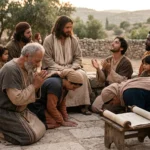
Jesus returned to Nazareth, the town where He had grown up, during His public ministry.
In Luke 4:16–30, Jesus entered the synagogue on the Sabbath. He read from the prophet Isaiah and applied the passage to His own mission. He announced good news for the poverty, freedom for captives, sight for the blind, and the Lord’s favor.
At first, the people were amazed.
But then they began asking, “Is this not Joseph’s son?” (Luke 4:22).
They knew Jesus as the carpenter’s son. They knew His family. They knew where He came from. Because of this familiarity, many could not accept His greater identity.
Their response eventually became hostile, and they tried to throw Him from a hill (Luke 4:28–30).
This is an important part of the biblical meaning of Nazareth: familiarity can sometimes make people overlook what God is doing.
Did Jesus Perform Miracles in Nazareth?
The Bible gives a careful answer.
In Matthew 13:58, we read that Jesus “did not do many mighty works there because of their unbelief.”
Mark 6:5 gives an even stronger description. It says that Jesus “could do no mighty work there”, except that He laid His hands on a few sick people and healed them.
So, according to Scripture, Jesus did perform some healings in Nazareth, but He did not perform many miracles there.
This matters because the Bible does not teach that Jesus lacked power.
Instead, the story highlights the people’s unbelief and rejection.
Jesus had already performed great miracles in other places. He healed the sick, cast out demons, calmed storms, and raised the dead. His power did not change when He entered Nazareth.
The problem was the response of the people.
The Nazareth story is not about a weak Jesus. It is about people who refused to receive Him in faith.
Why Did Jesus Do Few Miracles in Nazareth?
The clearest biblical answer is unbelief.
Matthew 13:58 directly connects the lack of mighty works with the people’s unbelief.
They were offended by Jesus because they thought they knew Him. They could not understand how someone from their own town could speak with divine authority.
This shows us something important about faith.
Faith is not simply knowing facts about Jesus. The people of Nazareth knew His family background. They knew His earthly home. They had heard about His works.
Yet many did not believe who He truly was.
Knowing about Jesus is not the same as trusting Jesus.
A person today can grow up around Christianity, attend church, know Bible stories, and still struggle to surrender fully to Christ.
The Nazareth story calls us to examine our own hearts.
Miracles in Nazareth Meaning in the Bible: Faith and Unbelief
One of the main biblical lessons is the connection between faith and receiving God’s work.
The people of Nazareth looked at Jesus through the lens of familiarity.
They asked, in effect, “How can this man be special? We know where He comes from.”
Their assumptions became a barrier.
This does not mean Christians should believe every claim of a miracle. Scripture never tells us to turn off wisdom or discernment.
Rather, the lesson is that hard-hearted unbelief can prevent people from recognizing God’s truth.
Jesus later told His disciples that whoever receives them receives Him, and whoever receives Him receives the One who sent Him (Matthew 10:40). Throughout the Gospels, receiving Jesus requires humility and faith.
Nazareth Shows the Danger of Familiarity
There is a difference between being familiar with something and truly understanding it.
The people of Nazareth had grown up with Jesus nearby. Perhaps they saw Him walking through their streets. They knew His family.
Yet familiarity became a stumbling block.
This can happen in Christian life, too.
Someone may hear the same Bible passage every Sunday but stop listening to it with an open heart. Someone may know the words of a prayer but pray without trust. Someone may hear about God’s grace so often that its beauty no longer touches the heart.
The answer is not to chase something new.
The answer is to come back to God’s Word with humility, faith, and a willing heart.
Miracles in Nazareth Meaning in the Bible and God’s Sovereignty
The Nazareth account should not be used to create a formula such as, “If you have enough faith, God must perform a miracle.”
The Bible does not teach that.
Faith is important, but God remains sovereign.
Hebrews 11 celebrates people who trusted God deeply. Some experienced remarkable deliverance. Others suffered and died without seeing the earthly outcome they hoped for (Hebrews 11:32–40).
This gives us a balanced Christian understanding.
Faith does not control God. Faith trusts God.
Sometimes God answers with a miracle. Sometimes He answers through time, wisdom, medical care, people, provision, strength, or a change in circumstances.
And sometimes we must wait.
The Spiritual Meaning of Nazareth
The Bible does not give a hidden spiritual code for the name Nazareth. However, the events that happened there give Christians several meaningful spiritual lessons.
God Can Work Through What Looks Ordinary
Nazareth was not known as a great center of power or prestige.
Jesus grew up there, and people found it difficult to believe that God’s Messiah had come from their own town.
This fits a wider biblical pattern.
God often works through things people consider small or ordinary.
David was a shepherd before becoming king. Mary was a young woman from an ordinary setting. Jesus Himself lived many years of His earthly life outside the public spotlight.
Never assume that something is unimportant simply because it looks ordinary.
God can use an ordinary home, a quiet prayer, a faithful parent, a small church, or a simple act of kindness.
God Looks Beyond Human Expectations
The people expected greatness to look different.
Jesus did not fit their expectations.
His hometown became a place where human assumptions collided with God’s revelation.
This is a valuable lesson for believers. We should allow Scripture to shape our expectations of God, rather than demanding that God fit our personal ideas.
Rejection Does Not Cancel God’s Calling
Nazareth rejected Jesus, but their rejection did not stop His mission.
He continued teaching, healing, serving, and proclaiming God’s kingdom.
This is deeply encouraging.
You may experience rejection from people who do not understand your faith, calling, or obedience. That rejection does not automatically mean you are outside God’s will.
Jesus Himself experienced rejection.
Nazareth and the Humility of Jesus
Another important lesson is found in the way Jesus responded to rejection.
He did not abandon His mission.
He continued moving forward.
Luke 4 shows that Jesus understood His mission from Scripture. He knew why He had come.
His identity did not depend on His hometown’s approval.
For Christians, this is a powerful reminder:
Your worth does not come from people’s approval. Your identity is rooted in God.
When people misunderstand you, remember that Jesus understands rejection personally.
What Does Nazareth Teach Christians About Faith?
The Nazareth account gives several practical lessons.
Do Not Let Familiarity Blind You
Sometimes we become so comfortable with Christian truth that we stop being amazed by it.
Take time to read familiar passages slowly.
Ask God to help you see what you may have overlooked.
Test Your Heart for Unbelief
Unbelief can appear in many forms.
It may sound like:
- “God cannot help me.”
- “My situation is too far gone.”
- “God would never use someone like me.”
- “Nothing can change.”
- “I already know what God will do.”
The Bible encourages believers to bring these fears honestly before God.
Mark 9:24 gives us a beautiful prayer: “I believe; help my unbelief!”
That is not a perfect prayer.
It is an honest one.
Do Not Demand a Miracle
It is good to pray boldly.
Jesus taught His followers to ask, seek, and knock (Matthew 7:7–11). Yet Christian prayer also includes surrender.
Jesus prayed in Gethsemane, “Not my will, but yours, be done” (Luke 22:42).
That gives us the right posture.
Ask God for the miracle, but trust God with the outcome.
Keep Following God When Others Reject You
Jesus did not allow rejection in Nazareth to stop His ministry.
If you are faithfully following Christ and face criticism, do not immediately assume you have failed.
Return to Scripture. Pray for wisdom. Seek godly counsel. Keep your heart humble.
What Does Nazareth Mean in Hebrew?
The Hebrew meaning of Nazareth requires some care because the exact origin of the place name is not completely certain.
Nazareth is commonly written in modern Hebrew as נָצְרַת (Natzrat/Nazrat). In the New Testament, the town appears in Greek as Nazareth or related forms.
Some scholars connect the name with the Hebrew root נ־צ־ר, which can relate to ideas such as guarding or keeping. Others have connected Nazareth with נֵצֶר (netzer), meaning “branch,” especially in discussions of Isaiah 11:1.
However, Christians should be careful here.
The Bible does not explicitly say, “Nazareth means branch,” nor does it give a special prophetic definition of the town’s name.
Matthew 2:23 says Jesus would be called a Nazarene, but the exact Old Testament reference behind Matthew’s wording is debated.
Therefore, the safest approach is to say:
The Hebrew meaning and origin of Nazareth are uncertain, and Christians should not build doctrine on a speculative word connection.
What Scripture clearly teaches is far more important: Jesus was raised in Nazareth and was rejected by many people there despite His authority and works.
What Does It Mean to Dream About Nazareth or Miracles?
Some Christians may dream about Nazareth, Jesus, healing, or miracles and wonder whether the dream has a spiritual meaning.
The Bible contains examples of God using dreams, including Joseph’s dreams (Matthew 1–2) and dreams in the Old Testament. However, Scripture does not teach that every modern dream carries a message from God.
Therefore, a dream about Nazareth should not automatically be treated as a prophecy.
Instead, test everything against God’s Word.
A dream about Nazareth might personally remind someone of:
- Faith during uncertainty
- Feeling rejected or misunderstood
- God working through ordinary circumstances
- The need to examine unbelief
- Trusting Jesus rather than human opinions
- Waiting for God’s timing
These are possible reflections, not guaranteed interpretations.
Scripture must remain the final authority, not a dream.
What If You Are Praying for a Miracle?
Perhaps this is why the Nazareth story has caught your attention.
Maybe you are praying for healing.
Maybe your family needs help.
Maybe you are waiting for financial provision, a restored relationship, direction, or a breakthrough.
The story of Nazareth does not promise that every prayer will end with an immediate miracle.
But it does point us back to Jesus.
Keep praying.
Keep reading Scripture.
Keep seeking wise Christian counsel.
And keep your heart open to God’s answer, even when His answer looks different from what you expected.
Paul prayed repeatedly about his “thorn in the flesh,” but God’s answer was not the removal he requested. Instead, God assured him, “My grace is sufficient for you” (2 Corinthians 12:9).
Sometimes the miracle is changed circumstances.
Sometimes the miracle is strength to endure.
Sometimes it is forgiveness, wisdom, provision, healing, reconciliation, or a new direction.
We should leave the form of the answer in God’s hands.
Everyday Lessons From the Miracles in Nazareth
The story becomes easier to understand when we connect it to daily life.
Imagine someone who has been praying for a family member for years. Nothing seems to change. It would be easy to believe that God is absent.
But Scripture teaches that waiting does not mean God has forgotten.
Or imagine a Christian who feels rejected by friends because of their faith. The story of Nazareth reminds them that Jesus also experienced rejection from people who knew Him personally.
Or perhaps you feel that your life is too ordinary for God to use.
Nazareth reminds us that Jesus spent years in an ordinary town before His public ministry.
God is not limited by the size, popularity, or appearance of your circumstances.
What Is the Main Spiritual Lesson of Nazareth?
The central lesson is simple:
Do not let familiarity, pride, fear, or unbelief keep you from receiving what God is showing you through Jesus.
The people of Nazareth had Jesus in their midst, yet many did not recognize who He was.
Today, we have the witness of Scripture.
We can read His teachings.
We can see His compassion.
We can study His death and resurrection.
We can place our faith in Him.
The right response is not merely curiosity about miracles.
It is faith in Christ.
Frequently Asked Questions
Did Jesus perform any miracles in Nazareth?
Yes. Mark 6:5 says Jesus healed a few sick people by laying His hands on them. However, He did not perform many mighty works there because of the people’s unbelief.
Why did Jesus perform fewer miracles in Nazareth?
Matthew 13:58 directly connects the lack of many mighty works with their unbelief. The people struggled to accept Jesus because they were familiar with Him and offended by His claims.
Does Nazareth represent unbelief?
Nazareth itself is not presented in Scripture as a symbol that always means unbelief. However, the response of many people in Nazareth clearly provides an example of unbelief, rejection, and spiritual blindness.
Does Nazareth mean “branch” in Hebrew?
This is a possible word connection discussed by some scholars, but the meaning and origin of Nazareth are not certain. Christians should not present “branch” as a proven Hebrew definition of Nazareth.
What does Nazareth teach about miracles?
It teaches that miracles are signs of God’s power, but they should not become the foundation of faith. The Gospel calls people to believe in Jesus Himself, not merely to seek miraculous experiences.
Can a dream about Nazareth have a spiritual meaning?
It may prompt personal reflection, but Scripture does not say that every dream is a divine message. Any spiritual interpretation should be tested against the Bible and handled with humility.
Does lack of a miracle mean someone does not have enough faith?
No. The Bible does not support that simple conclusion. Hebrews 11 shows faithful people who experienced both miraculous deliverance and suffering without receiving the earthly outcome they wanted.
Final Thoughts
The story of Miracles in Nazareth meaning in the Bible is not simply a story about miracles that did not happen.
It is a story about Jesus, faith, unbelief, rejection, humility, and God’s greater purpose.
Nazareth reminds us that familiarity can hide truth. It reminds us that unbelief can harden the heart. It also reminds us that Jesus does not stop being faithful when people reject Him.
If you are waiting for a miracle today, bring your request to God.
Pray boldly. Believe sincerely. Search the Scriptures. Seek wisdom. And surrender the outcome to God.
Your unanswered prayer does not mean God has abandoned you.
Your ordinary season does not mean God is doing nothing.
Your rejection does not mean your life has no purpose.
And your waiting does not mean God has forgotten you.
The people of Nazareth could not see the full picture, but God’s plan continued beyond their rejection. In the same way, God may be working in ways you cannot yet see.
So keep your eyes on Jesus.
Keep your heart humble.
Keep praying.
And when you do not understand what God is doing, remember that His wisdom is greater than ours, His grace is sufficient, and His faithfulness does not depend on what we can see.