Have you ever said something in anger that you later wished you could take back?
Maybe someone hurt you, and harsh words came out before you had time to think. Or perhaps you have heard someone use insults that cut deeply and left lasting pain. Words may seem small, but they can carry great power.
One unusual word found in the Bible is “Raca.” It appears only once in Scripture, yet it carries a serious warning from Jesus. Many people reading this passage wonder: What is the raca meaning in the Bible? Why did Jesus speak so strongly about it?
The answer goes beyond a simple insult. It points to the condition of the heart. Jesus used this word to teach an important lesson about anger, pride, and how we treat other people.
Understanding the raca meaning in the Bible can help us grow in faith, improve our relationships, and better reflect God’s love in our daily lives.
Let’s explore what this powerful word means and why its message still matters today.
Biblical Meaning of Raca in the Bible
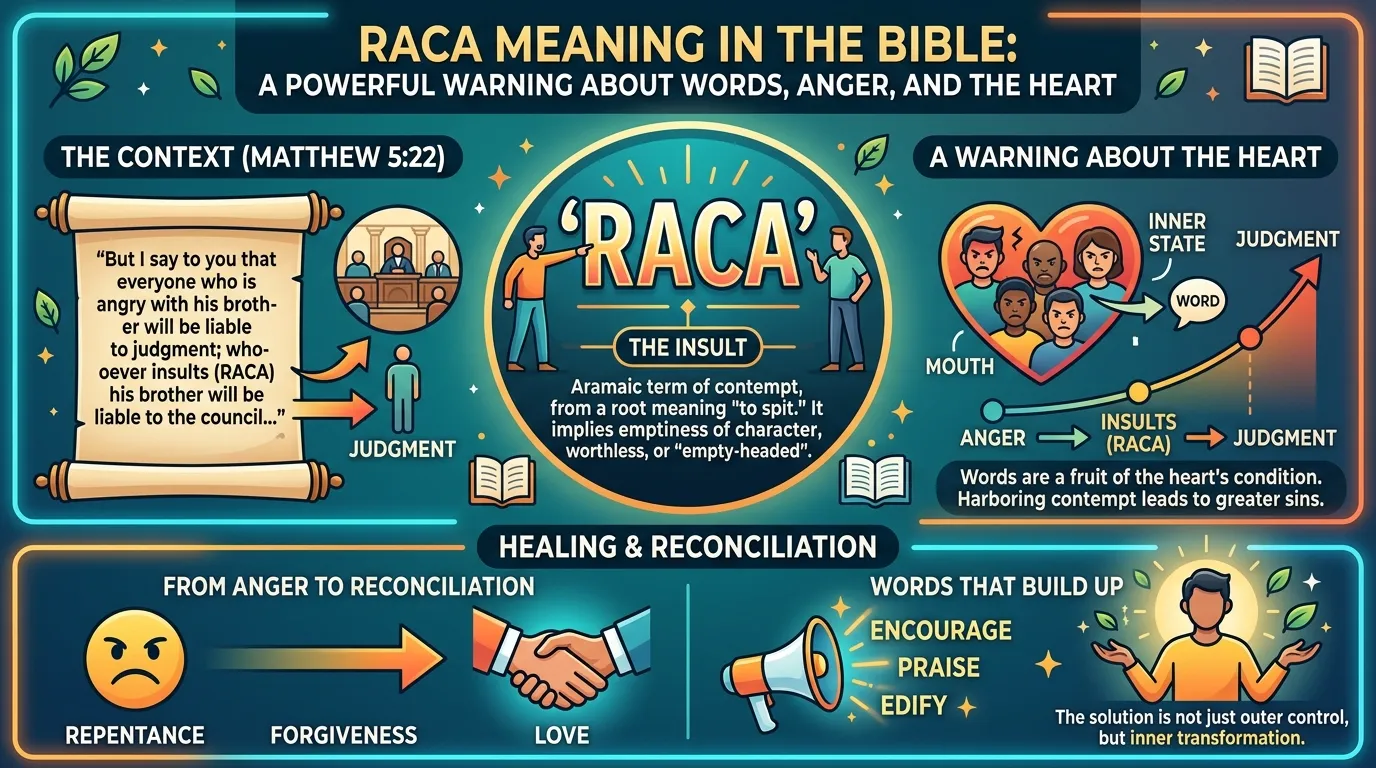
The word Raca appears in Matthew 5:22, where Jesus says:
“But I say unto you, That whosoever is angry with his brother without a cause shall be in danger of the judgment: and whosoever shall say to his brother, Raca, shall be in danger of the council…” (KJV)
The term comes from an ancient Aramaic language. Most Bible scholars believe Raca means something like “empty-headed,” “worthless,” or “foolish person.”
It was not simply a casual insult. It was a word used to express contempt. A person saying “Raca” was treating another human being as if they had no value.
Jesus Was Teaching About the Heart
When Jesus spoke about Raca, He was discussing more than speech. He was addressing the deeper issue of anger and hatred.
In the surrounding verses of Matthew 5, Jesus explains that God’s standards go beyond outward actions. While the Old Testament commandment says not to murder, Jesus teaches that unchecked anger can also be dangerous.
His message is clear:
- Anger can grow into bitterness.
- Bitterness can lead to harmful words.
- Harmful words reveal a troubled heart.
Jesus wanted His followers to understand that God’s concern begins inside us.
Every Person Has Value
One important part of the Christian meaning of Raca is recognizing the value God places on every person.
According to the Bible, humanity was created in God’s image:
“So God created man in his own image…” (Genesis 1:27)
When someone uses words meant to degrade or belittle another person, they ignore the worth that God has given that individual.
The warning about Raca reminds believers to see others through God’s eyes.
A Warning Against Pride
Raca also reflects an attitude of superiority.
When a person calls someone “worthless,” they often place themselves above others. This spirit of pride can damage relationships and weaken spiritual growth.
The Bible repeatedly warns against pride:
“God resisteth the proud, but giveth grace unto the humble.” (James 4:6)
Jesus encouraged humility, mercy, and forgiveness instead of judgment and contempt.
The Positive Message Hidden in the Warning
Although Raca appears in a warning passage, there is also hope.
Jesus was not merely condemning people. He was inviting them toward a better way of living.
The passage teaches believers to:
- Speak with kindness.
- Seek reconciliation.
- Let go of anger.
- Show grace to others.
- Reflect God’s love through words and actions.
This is a beautiful example of biblical symbolism, where a single word points to a larger spiritual message about the heart.
Spiritual Significance and Symbolism
The spiritual symbolism of Raca centers on how we view and treat other people.
Words often reveal what is happening inside us. A loving heart tends to produce encouraging words. A wounded or angry heart may produce harmful ones.
Jesus teaches that spiritual maturity is not only about attending church or knowing Scripture. It is also about developing a heart filled with compassion.
A Call to Guard the Heart
The Bible says:
“Keep thy heart with all diligence; for out of it are the issues of life.” (Proverbs 4:23)
When resentment remains in the heart, it eventually affects speech and behavior.
The lesson of Raca encourages believers to pray for God’s help in dealing with anger before it grows.
A Reminder of God’s Love
Every person you meet is someone God loves.
Even difficult people are valuable in His sight.
The warning against Raca reminds Christians to extend patience, mercy, and understanding. This reflects the character of Christ and strengthens our witness to others.
Transformation Through Faith
Many believers experience a spiritual awakening when they realize how powerful words can be.
Perhaps someone forgave them when they expected rejection. Or maybe God convicted them about the way they spoke to others.
Through faith, God transforms hearts and helps believers replace anger with love, judgment with grace, and harsh words with encouragement.
This transformation is part of the Christian journey of growth and renewal.
Biblical Interpretations in Dreams or Real Life
Some people encounter the word Raca while reading Scripture, studying the Bible, or even during a dream.
In a dream interpretation context, hearing or speaking the word Raca may symbolize unresolved anger, wounded relationships, or a need for forgiveness.
If the Dream Feels Peaceful
A peaceful dream involving Raca may serve as a gentle reminder from God to examine your heart and seek reconciliation where needed.
It could point toward healing and restoration.
If the Dream Feels Disturbing
A troubling dream may highlight bitterness, judgment, or emotional pain that needs attention through prayer and reflection.
Rather than causing fear, such dreams can become opportunities for growth and spiritual renewal.
In Everyday Life
In real-life situations, the lesson of Raca appears whenever people are tempted to insult, dismiss, or devalue others.
The Bible encourages believers to pause before speaking and ask:
- Are my words honoring God?
- Am I speaking from love or anger?
- Am I showing grace to others?
Prayer and God’s wisdom can help guide these moments.
Practical Lessons & Faith Insights
The raca meaning in the Bible teaches that words matter because hearts matter.
When anger rises, bring it to God in prayer. Ask Him for wisdom, patience, and understanding. Practice forgiveness, speak with kindness, and remember that every person carries God-given value. As faith grows, God’s love can transform both thoughts and words.
Conclusion
The raca meaning in the Bible is much more than an ancient insult. It is a powerful reminder that God cares deeply about our hearts, our attitudes, and the way we treat others.
Jesus used this word to warn against anger, pride, and contempt while calling His followers toward love, humility, and reconciliation. Through faith, believers can experience transformation, receive God’s guidance, and learn to speak life instead of harm.
When you remember the lesson of Raca, let it draw you closer to God’s heart. His grace can help you walk in forgiveness, reflect Christ’s love, and share a hopeful divine message with the world around you.