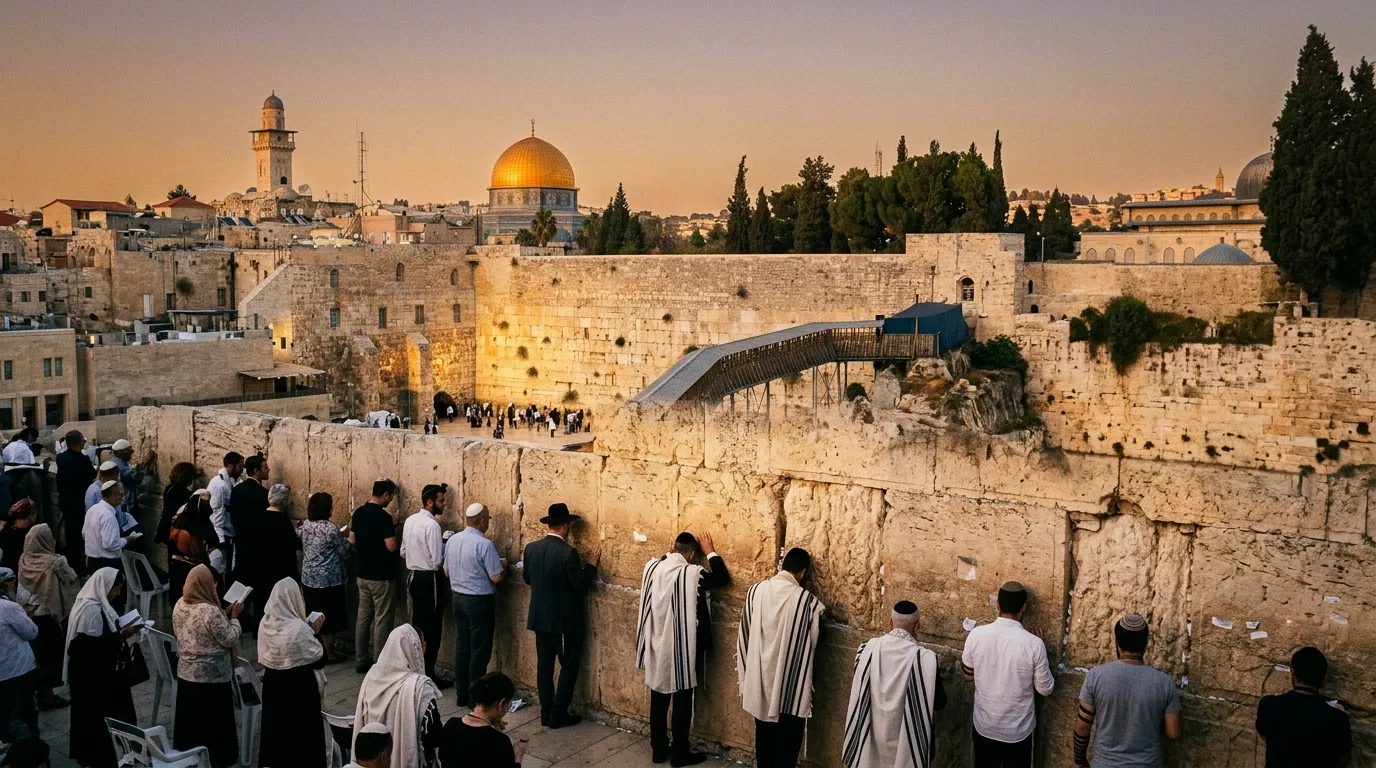
Have you ever seen a temple, church, or holy place in a dream or felt deeply drawn to a certain place of worship? Sometimes a location can leave a strong feeling in your heart. You may wonder, What does this mean in the Bible?
The phrase Temple location meaning in the Bible can point to several ideas. In Scripture, the temple was not simply a building. It was connected with God’s presence, worship, prayer, holiness, sacrifice, and fellowship with God.
The location of the temple also mattered. Jerusalem became the central place of temple worship for Israel. The temple on Mount Zion became a powerful symbol of God dwelling among His people.
But the Bible also gives an even deeper message. Through Jesus Christ, God’s people are described as His temple. This means God’s presence is no longer understood only through one physical building.
So, what is the biblical meaning of temple location? It can remind us of where we seek God, where we worship Him, and where He calls us to draw near.
Let us explore what Scripture says about the temple, its location, its Hebrew meaning, and its spiritual significance.
Biblical Meaning of Temple Location in the Bible
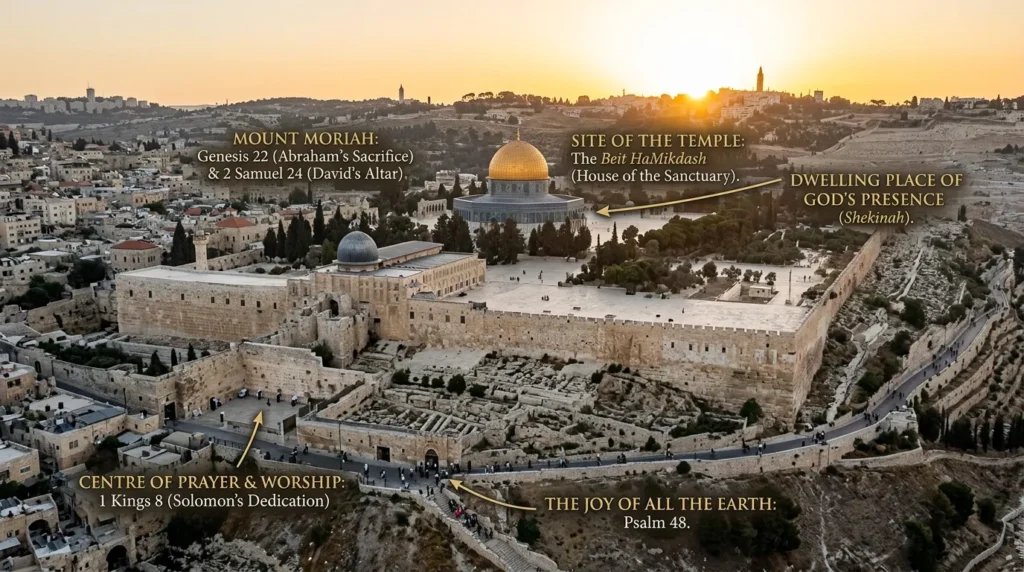
The temple location meaning in the Bible is closely connected to God’s presence and worship.
In the Old Testament, the temple was built in Jerusalem. King Solomon built the first temple after David had prepared for it. Solomon built it on Mount Moriah, a place associated with Abraham’s offering of Isaac.
“Then Solomon began to build the house of the LORD at Jerusalem on Mount Moriah.” — 2 Chronicles 3:1
This location was important because the temple became the center of Israel’s worship.
Jerusalem and the Presence of God
Jerusalem holds a special place in the Bible. It became known as the city where God placed His name.
Deuteronomy 12:5 teaches Israel to seek the place that God would choose for His name and worship.
This shows an important biblical principle: God is worthy of worship wherever we are, but God also taught His people to gather in a specific place for worship and fellowship.
The temple represented a meeting place between God and His people.
Psalm 132:13 says:
“For the LORD has chosen Zion; he has desired it for his dwelling place.”
Zion, especially connected with Jerusalem, became a strong biblical symbol of God’s dwelling and kingdom.
The Temple as a Place of Worship
The temple was a place where people brought offerings, prayed, praised God, and followed the worship practices given in the Law.
Jesus also called the temple a house of prayer:
“My house shall be called a house of prayer.” — Matthew 21:13
This gives the temple a beautiful spiritual meaning. It reminds believers that approaching God should be connected with prayer, humility, worship, and sincere faith.
The Temple as a Symbol of Holiness
The temple was holy because it was dedicated to God.
It taught Israel that God is holy and that His people should treat Him with reverence.
However, Scripture also warns against treating a holy place as a substitute for genuine obedience.
Jeremiah 7:4 records people saying, “The temple of the LORD,” while living in ways that did not honor God. Jeremiah warned them that merely having the temple did not protect them from judgment.
The lesson is important:
A religious place cannot replace a faithful heart.
Jesus and the Meaning of the Temple
The meaning of the temple becomes even deeper in the New Testament.
Jesus spoke about His body as the temple:
“Destroy this temple, and in three days I will raise it up.” — John 2:19
John explains that Jesus was speaking about His body.
This points to a major Christian belief. Jesus is the ultimate meeting place between God and humanity.
Through Christ, believers can come to God with confidence.
Hebrews 10:19–22 teaches that believers can draw near to God because of Jesus.
Believers as God’s Temple
The New Testament takes the temple image one step further.
Paul writes:
“Do you not know that you are God’s temple and that God’s Spirit dwells in you?” — 1 Corinthians 3:16
He also says:
“Your body is a temple of the Holy Spirit.” — 1 Corinthians 6:19
Therefore, the biblical symbolism of temple location is not limited to a physical address.
For Christians, the deeper message is that God desires to dwell with His people.
The temple points toward God’s presence, but Christ brings us into a closer relationship with God through the Holy Spirit.
Temple Location Hebrew Meaning
There is no single Hebrew phrase that directly means “temple location meaning.” The idea comes from several Hebrew words connected with the temple, Jerusalem, Zion, and God’s dwelling.
The main Hebrew word for temple is הֵיכָל (heikal). It can mean palace, temple, or large building. In the Old Testament, it is often used for God’s temple.
Another important word is בַּיִת (bayit), meaning house. The temple is sometimes described as the house of the LORD.
For example, 1 Kings 8:13 says:
“I have indeed built you an exalted house, a place for you to dwell in forever.”
The idea of a house helps explain the temple’s spiritual meaning. It was God’s special dwelling place among His covenant people.
Zion and Jerusalem
The Hebrew name for Jerusalem is יְרוּשָׁלַיִם (Yerushalayim). Its exact historical development and meaning are discussed in different ways, so it is wise not to force one simple definition.
Zion, written צִיּוֹן (Tsiyyon), is another key biblical term. It first refers to a specific location in Jerusalem and later becomes a rich symbol for God’s people, His kingdom, and His holy dwelling.
These Hebrew terms show why temple location in the Bible is more than geography.
The location points toward worship, covenant, God’s presence, and belonging.
Spiritual Meaning and Symbolism of Temple Location
The spiritual meaning of temple location can remind Christians of several important truths.
A Place to Meet With God
The temple reminds us to make room for God.
You may not have a temple in your daily life, but you can create quiet moments for prayer and Scripture.
A quiet room, a church, or a peaceful morning can become a place where you intentionally turn your heart toward God.
The location itself does not make God present. God is not limited by a building.
Psalm 139 teaches that His presence reaches everywhere.
A Call to Draw Near
The temple can symbolize an invitation to come closer to God.
When life feels confusing, you may need to stop and pray rather than depend only on your own understanding.
James 4:8 says:
“Draw near to God, and he will draw near to you.”
This is one of the most comforting spiritual lessons connected with the temple.
A Reminder of Holiness
The temple also represents holiness.
If you encounter temple imagery in a dream or during a personal spiritual experience, it may encourage you to examine your relationship with God.
Are you making time for prayer?
Are you holding onto something God is asking you to release?
Are you seeking His wisdom?
These questions can lead to healthy spiritual growth.
A Symbol of Hope
The temple can also point toward hope and restoration.
The biblical story includes the destruction of Solomon’s temple, exile, and later restoration. These events remind us that God’s people can experience loss and still find hope in Him.
For Christians, the New Testament points beyond an earthly temple toward God’s eternal presence.
Revelation 21:22 says:
“And I saw no temple in the city, for its temple is the Lord God the Almighty and the Lamb.”
This gives the temple theme an amazing conclusion: God Himself is the ultimate dwelling place of His people.
Temple Location in Dreams and Real Life
If you dream about a temple location, the Bible does not provide a fixed dream dictionary saying that every temple dream has one meaning.
Dreams can come from many sources, including memories, emotions, stress, personal experiences, and ordinary brain activity during sleep.
From a Christian perspective, however, temple imagery may invite reflection on worship, God’s presence, prayer, holiness, or spiritual growth.
For example, dreaming of entering a temple might personally remind someone of drawing closer to God.
A ruined temple might bring thoughts of loss, spiritual dryness, or the need for restoration.
A bright or peaceful temple might remind someone of hope, worship, and God’s faithfulness.
These are possible personal interpretations, not guaranteed divine messages.
The safest approach is to compare any spiritual impression with Scripture, pray for wisdom, and avoid making major decisions based only on a dream.
Bible Verses About the Temple and God’s Presence
Several Bible verses help explain the meaning behind temple imagery:
- 2 Chronicles 3:1 — Solomon begins building the temple in Jerusalem.
- Psalm 132:13 — Zion is described as a place chosen by God.
- Matthew 21:13 — Jesus calls the temple a house of prayer.
- John 2:19–21 — Jesus connects the temple image with His body.
- 1 Corinthians 3:16 — Believers are described as God’s temple.
- 1 Corinthians 6:19 — The believer’s body is called a temple of the Holy Spirit.
- Ephesians 2:21–22 — God’s people are being built together as a dwelling place for God.
- Revelation 21:22 — In the New Jerusalem, God and the Lamb are the temple.
Together, these passages show a movement from the physical temple toward the deeper reality of God dwelling with His people.
Practical Faith Lessons From Temple Location
The temple can teach us to seek God, value prayer, honor holiness, and trust His presence.
If temple imagery keeps coming to your mind, take time to pray and read Scripture. Ask God for wisdom rather than assuming every detail carries a hidden message.
Remember that your faith is not tied to one physical location.
Because of Christ, you can seek God wherever you are.
Conclusion
The temple location meaning in the Bible points to God’s presence, worship, holiness, prayer, and fellowship with His people. Jerusalem and Zion held special importance in biblical history, but Scripture ultimately points beyond a physical temple to Christ and the Holy Spirit dwelling with believers.
If you see temple imagery in a dream or real life, let it lead you toward prayer, Scripture, hope, and deeper faith. God is not far away. Through Christ, you are invited to draw near to Him with confidence.