Imagine sitting alone after a hard day. Your heart is tired, your thoughts are confused, and you do not know what to do next. Then you open the Bible and read a few words that remind you that God is near, faithful, and good.
That simple moment shows why the Word of God is important in the Bible. Scripture is not presented as an ordinary book. It reveals who God is, teaches His people how to live, exposes sin, gives wisdom, points to salvation, and brings hope to hurting hearts.
The Word of God importance meaning in the Bible is closely connected to God’s character and His relationship with humanity. From Genesis to Revelation, God’s Word carries His truth and reveals His will.
Christians may also encounter the Word of God through dreams, personal experiences, sermons, prayer, or Bible reading. However, every spiritual impression must be tested against Scripture. The Bible remains the standard for truth.
What Does the Word of God Mean in the Bible?

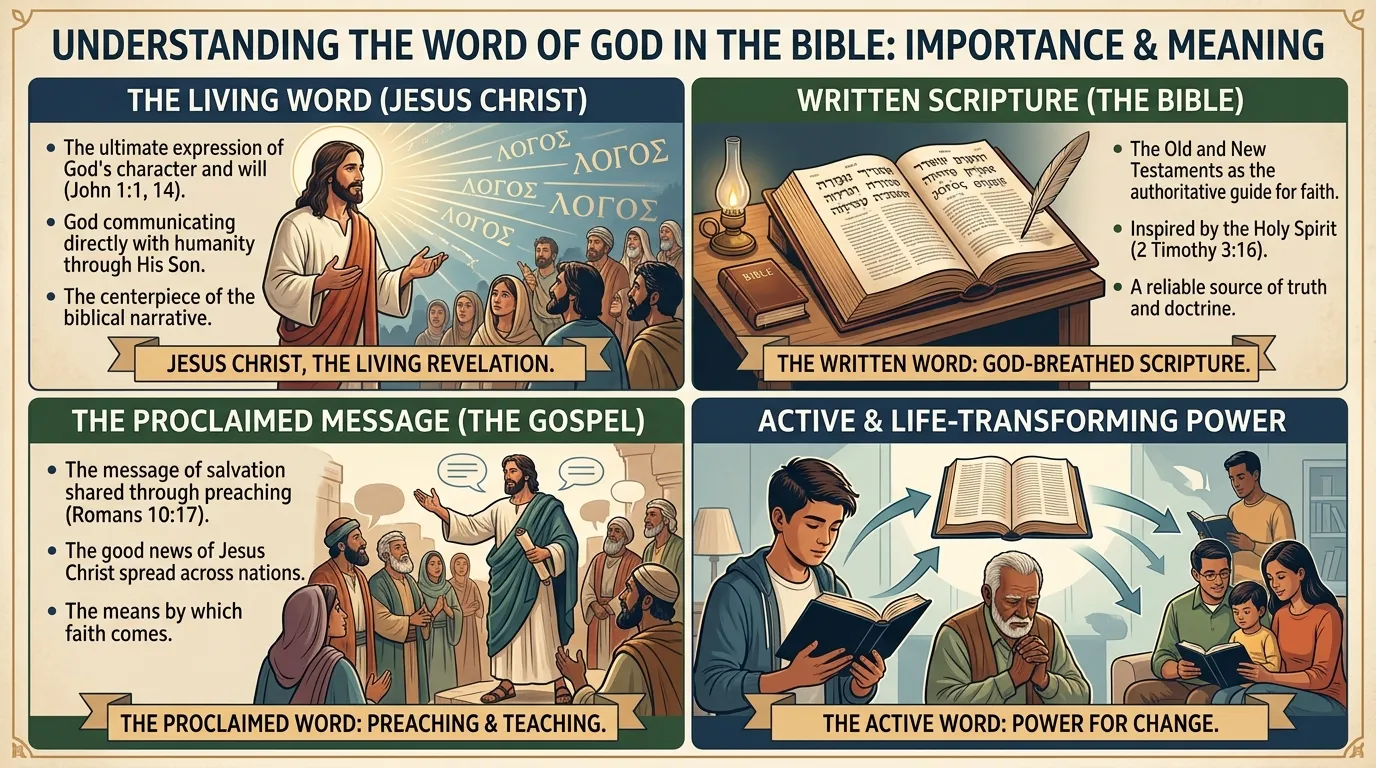
In the Bible, the Word of God can refer to God’s spoken command, His revealed message, His promises, and the written Scriptures given to His people.
Psalm 119 repeatedly describes God’s Word as truth, light, wisdom, and a guide for life. For example, Psalm 119:105 says that God’s word is a lamp for the feet and a light for the path. The picture is simple: God’s truth helps people know where to walk.
The Word of God is also connected with God’s creative power. Genesis 1 repeatedly says that God spoke, and creation came into being. His Word is therefore connected with His authority and power.
In the New Testament, the meaning becomes even deeper. John 1:1 calls Jesus the Word and says that the Word was with God and was God. John 1:14 then says that the Word became flesh and lived among us.
This means Christians should distinguish between:
- God’s written Word, Scripture
- God’s spoken commands and promises recorded in Scripture
- Jesus Christ as the Word, especially in John 1
- God’s truth and message revealed through Scripture
These ideas are related, but they should not be treated as exactly the same thing.
Word of God Importance Meaning in the Bible
The Bible gives many reasons God’s Word is important.
First, it reveals God. Through Scripture, we learn about His holiness, mercy, justice, patience, love, and faithfulness.
Second, it teaches people how to live. Psalm 19:7–11 describes God’s instruction as valuable because it restores, makes wise, brings joy, and warns God’s servants.
Third, God’s Word corrects and trains believers. Second Timothy 3:16–17 teaches that Scripture is useful for teaching, rebuking, correcting, and training in righteousness. Paul explains that Scripture equips God’s people for good work.
So the Bible is not simply meant to give information. God’s Word shapes the heart, mind, choices, and character of a believer.
Why Is the Word of God Important to Christians?
Christians need God’s Word because faith is not meant to be built only on feelings.
Feelings can change. Circumstances can change. Other people’s opinions can change. God’s truth remains trustworthy.
Romans 10:17 connects faith with hearing the message about Christ. Scripture helps believers know what they believe and why they believe it.
For example, a Christian who feels forgotten may read God’s promise in Hebrews 13:5 that God will never leave or abandon His people. A person facing temptation can remember biblical teaching about resisting sin. Someone who is grieving can turn to passages that speak about God’s comfort and future hope.
The Word of God gives believers a firm foundation when life feels uncertain.
The Word of God Reveals God’s Character
One of the greatest reasons to study Scripture is to know God better.
The Bible shows that God is not distant or unknowable. He reveals Himself through His actions, promises, commands, and relationship with His people.
Exodus 34:6–7 gives an important description of God’s character. When God reveals Himself to Moses, He describes Himself as compassionate and gracious, slow to anger, and rich in faithful love.
Other passages show God’s holiness, righteousness, wisdom, and mercy.
As Christians read Scripture carefully, they learn to understand God’s character rather than creating an image of God based only on personal feelings.
Knowing God’s Word helps us know the God who gave it.
The Word of God Gives Wisdom for Daily Life
Life often brings decisions that do not have a simple answer.
Should you forgive someone? How should you respond to anger? How should you treat an enemy? What does love look like when someone hurts you?
The Bible gives wisdom for these questions.
Proverbs teaches the value of wisdom, discipline, humility, and careful speech. Jesus teaches His followers to love God and their neighbors and even to love their enemies (Matthew 5:44; 22:37–39).
Scripture may not tell you every detail about a particular decision, but it gives principles that shape wise decisions.
For example, the Bible may not tell a Christian which job to accept. However, it teaches honesty, diligence, generosity, humility, wise counsel, and love for others. Those truths can guide the decision.
The Word of God Exposes Sin and Brings Correction
The Word of God does not only comfort us. Sometimes it challenges us.
Hebrews 4:12 describes God’s Word as living and active and says that it discerns the thoughts and intentions of the heart. Scripture can reveal attitudes and actions that need to change.
This correction is not meant to crush a person.
God’s correction is connected with His desire to lead people toward righteousness. Second Timothy 3:16 includes both correction and training, showing that Scripture has a transforming purpose.
When the Bible reveals sin, the right response is not hopelessness. It is repentance, faith, and a return to God’s grace.
The Word of God Points Us to Jesus
The Bible’s central story is connected to God’s work of salvation.
Jesus Himself taught that the Scriptures testify about Him. In Luke 24:27, after His resurrection, Jesus explained to His disciples how the Scriptures pointed to Him.
The Old Testament contains promises, patterns, prophecies, and stories that Christians understand in light of Christ. The New Testament then directly records Jesus’ life, death, resurrection, and the message of the gospel.
This is why Bible reading should not become merely a search for rules.
Scripture leads us toward knowing Christ and understanding God’s saving work.
Word of God Importance Meaning in the Bible + Hebrew Meaning
The main Hebrew word often translated word in the Old Testament is dābār (דָּבָר). Depending on context, it can refer to a word, matter, message, thing, or spoken declaration.
When Scripture speaks about the word of the Lord, it often means God’s message or revelation.
For example, Jeremiah frequently introduces God’s message with language such as the word of the LORD came to me. This describes God’s revealed message given to His prophet.
Another important Hebrew idea is connected with God’s speech and command. In Genesis 1, God speaks and creation responds. His speech is not presented as empty sound. God’s Word accomplishes His purposes.
In the New Testament, the Greek word logos (λόγος) is especially important in John 1. John says, In the beginning was the Word, and then identifies the Word with Christ.
Therefore, the Hebrew and Greek biblical concepts help show that God’s Word involves more than written letters. It includes God’s message, revelation, authority, and truth, while the New Testament also identifies Jesus as the eternal Word.
The Word of God as a Light
Psalm 119:105 gives one of the Bible’s best-known pictures of Scripture:
God’s Word is like a lamp and a light.
A lamp does not necessarily show the entire road at once. It gives enough light for the next step.
This is a helpful picture for Christian life.
You may not know what will happen next month or next year. Yet Scripture can show you how to live faithfully today.
You can choose honesty today. You can forgive today. You can pray today. You can love your neighbor today.
God’s Word gives direction even when the future is unclear.
The Word of God and Spiritual Growth
Spiritual growth does not happen only through learning more facts.
First Peter 2:2 compares God’s truth to spiritual milk and encourages believers to grow through it. The picture emphasizes a healthy desire for spiritual nourishment.
A Christian grows by hearing, reading, understanding, obeying, and applying God’s truth.
James 1:22 gives an important warning: believers should be doers of the word and not hearers only.
That means reading the Bible should lead to action.
If Scripture teaches forgiveness, we should seek forgiveness. If it teaches generosity, we should practice generosity. If it teaches humility, we should become more humble.
Biblical knowledge becomes fruitful when it changes how we live.
What Does the Word of God Symbolize Spiritually?
The Bible uses several powerful pictures for God’s Word.
Light
Psalm 119:105 presents God’s Word as light. Spiritually, Christians often understand this as a picture of God’s truth giving direction.
Seed
In the parable of the sower, Jesus compares the word of God to seed (Luke 8:11). The seed falls on different kinds of soil, showing how people respond differently to God’s message.
Sword
Ephesians 6:17 calls the word of God the sword of the Spirit. In the context of the armor of God, Scripture is part of the believer’s spiritual equipment.
Food
Jesus says in Matthew 4:4 that people do not live by bread alone but by every word that comes from God’s mouth. This shows the deep importance of depending on God rather than physical needs alone.
These are biblical images. They should not be turned into magical formulas. The power belongs to God, not to treating Bible verses as charms.
What Does It Mean to Have the Word of God in Your Heart?
Psalm 119:11 says that the psalmist has stored God’s word in his heart so that he might not sin against God.
This means more than memorizing sentences.
To have God’s Word in your heart means to know it, remember it, value it, and allow it to shape your choices.
For example, someone who has learned Jesus’ teaching about loving enemies may remember those words when anger rises. Scripture can then help that person choose a godly response.
The goal is not simply to carry Scripture in your memory but to let Scripture shape your life.
Can the Word of God Speak to You Through a Dream?
Some Christians wonder about seeing a Bible, hearing a Bible verse, or receiving a message about God’s Word in a dream.
The Bible does record dreams and visions through which God sometimes communicated with people. Joseph received significant dreams in Genesis, and Daniel received visions in Daniel 7. God also used dreams in other biblical accounts.
However, Scripture does not teach that every modern dream is a message from God.
A dream involving the Bible might reflect your faith, concerns, memories, emotions, or spiritual thoughts. Some Christians may interpret such a dream as a reminder to seek God and Scripture, but that interpretation should remain humble.
Dreams should always be tested against Scripture.
If a dream seems to tell you something that contradicts God’s revealed Word, do not accept the dream as divine truth.
Deuteronomy 13:1–4 gives a strong biblical warning against accepting a spiritual sign simply because it appears impressive. The message must be evaluated according to faithfulness to God.
Common Dreams About the Word of God
Dreaming of Reading the Bible
This may naturally reflect a desire for guidance, spiritual growth, comfort, or truth.
A wise response is to actually open Scripture while awake and pray for understanding.
Dreaming of a Bible That Is Glowing
A glowing Bible may feel spiritually powerful, but the Bible does not provide a fixed meaning for this particular dream.
Rather than assuming it is a prophecy, consider whether the dream is encouraging you to pay attention to God’s truth.
Dreaming of Hearing a Bible Verse
Think about the verse’s actual biblical context. Do not build a major life decision on the dream alone.
If the verse encourages something clearly taught in Scripture, allow the biblical teaching itself—not the dream—to guide you.
Dreaming That You Cannot Find Your Bible
This could reflect feelings of spiritual confusion or a desire to reconnect with your faith. However, Scripture does not assign one universal meaning to this dream.
Prayer, honest self-reflection, and Bible reading can help you respond wisely.
How Should Christians Use the Word of God Every Day?
Bible reading does not need to be complicated.
A simple routine can help:
- Read a small passage slowly.
- Ask what the passage says about God.
- Notice what it teaches about people.
- Look at the surrounding context.
- Ask how the truth applies to your life.
- Pray about what you have learned.
- Put one biblical truth into practice.
For example, if you read Philippians 4:6–7 about bringing anxiety to God through prayer, you can stop and pray about one concern instead of simply moving to the next verse.
This turns Bible reading into a relationship with God rather than a race to finish a reading plan.
What Happens When We Obey God’s Word?
Obedience does not mean Christians earn God’s love.
The gospel teaches salvation by God’s grace through faith. Ephesians 2:8–10 explains that salvation is God’s gift and that believers are then created for good works.
Obedience is therefore a response to God’s grace.
When Christians follow Scripture, they learn to live according to God’s wisdom. This can bring peace, stronger relationships, healthier choices, and spiritual maturity, although obedience does not guarantee an easy or pain-free life.
Jesus Himself warned His followers that they would face trouble in the world (John 16:33).
Following God’s Word does not promise a life without storms; it teaches us how to trust God through them.
Practical Lessons From the Importance of God’s Word
The biblical teaching about God’s Word gives several important lessons.
Trust God When You Do Not Understand Everything
You will not always know why something is happening. Scripture teaches you who God is even when you cannot understand every circumstance.
Let Scripture Correct You
A healthy Christian life includes humility. When God’s Word exposes something that needs to change, receive correction instead of resisting it.
Do Not Build Faith Only on Feelings
Feelings matter, but they are not the final authority for Christian truth. Scripture provides a stable foundation.
Read Scripture in Context
Avoid taking one verse and making it mean something completely different from its surrounding passage.
Understanding who wrote the passage, who received it, and what the larger section teaches can prevent confusion.
Bring Your Questions to God
You do not need to pretend that you understand everything. Read, study, pray, and seek wise Christian counsel.
Why Is the Word of God Called Truth?
Jesus prayed to the Father in John 17:17, saying, Your word is truth.
This statement comes during Jesus’ prayer for His disciples. He asks God to sanctify them in truth because they are being sent into the world.
The point is powerful: God’s truth is not merely information. It shapes and sets apart God’s people for faithful living.
Christians can therefore approach Scripture with both confidence and humility—confidence because it is God’s revealed truth, and humility because human beings can misunderstand Scripture.
Frequently Asked Questions
What is the main importance of the Word of God?
The Word of God is important because it reveals God, teaches truth, gives wisdom, exposes sin, points people to Christ, and helps believers grow in faith and obedience.
What does the Bible say about the power of God’s Word?
Scripture presents God’s Word as powerful and effective. Genesis shows God’s speech bringing creation into being, while Hebrews 4:12 describes God’s Word as living and active.
Is the Bible the Word of God?
Christians commonly call the Bible the Word of God because Scripture is God’s written revelation. At the same time, John 1 uses the Word in a unique way to refer to Jesus Christ.
What does God’s Word mean spiritually?
Spiritually, God’s Word represents His revealed truth, guidance, correction, promises, and wisdom. The Bible often compares it to light, seed, food, and a sword.
Can God use a Bible verse to encourage someone?
Yes. Christians can be deeply encouraged when Scripture speaks directly to a situation they are facing. However, the meaning of a verse should still be understood in its biblical context.
Does every dream about the Bible have a spiritual meaning?
No. Scripture does not give a universal meaning for every dream. A dream may come from many sources, so it should not automatically be treated as a message from God.
How can I grow through God’s Word?
Read Scripture regularly, understand its context, pray over what you read, remember its teaching, discuss it with mature believers, and practice what it teaches.
Final Thoughts
The Word of God importance meaning in the Bible reaches far beyond simply reading a book each day. Scripture reveals God’s character, teaches His truth, exposes what needs to change, points us to Jesus, and gives believers hope.
When life feels dark, God’s Word can remind you that He is faithful. When you are confused, Scripture can give wisdom. When you fall into sin, God’s truth can lead you toward repentance and grace.
You may not have every answer today. You may not understand everything God is doing. But you can continue to seek Him through His Word.
Open the Bible with a willing heart. Read it carefully. Pray over it. Let it correct, comfort, and guide you.
And when you encounter a dream, feeling, or spiritual impression, test it against Scripture rather than allowing it to become your authority.
God’s Word does not promise that every road will be easy. It gives something better: truth for the journey, wisdom for the next step, grace for our failures, and hope in Christ.
Take time today to pray, read a small passage, and ask God to help you understand and live out His truth. Trust Him with the parts of your life you understand—and the parts you do not.