Imagine feeling like your past is too heavy for God to use. Maybe you have made serious mistakes, hurt people, or simply feel unworthy of the calling God has placed on your life. Then you read about a man named Paul and discover something powerful: God can transform a person’s life completely.
The Apostle Paul Bible study meaning in the Bible points us to God’s grace, redemption, faith, obedience, and power to change lives. Paul was once a fierce persecutor of Christians. Yet Jesus met him, changed his heart, and used him to spread the gospel across much of the ancient world.
Paul’s story is not mainly about a great man. It is about a great God who saves, restores, teaches, strengthens, and gives purpose.
Who Was the Apostle Paul in the Bible?
Paul was one of the most important missionaries and teachers in the New Testament. He was originally known as Saul of Tarsus.
Acts 22:3 tells us that Paul was Jewish, born in Tarsus in Cilicia, and educated under Gamaliel. He was deeply committed to the traditions of his ancestors.
However, Paul strongly opposed followers of Jesus before his conversion. Acts 8:3 says that Saul went into homes and dragged believers away to prison. Acts 9 shows that he traveled to Damascus with the intention of persecuting Christians.
Then everything changed.
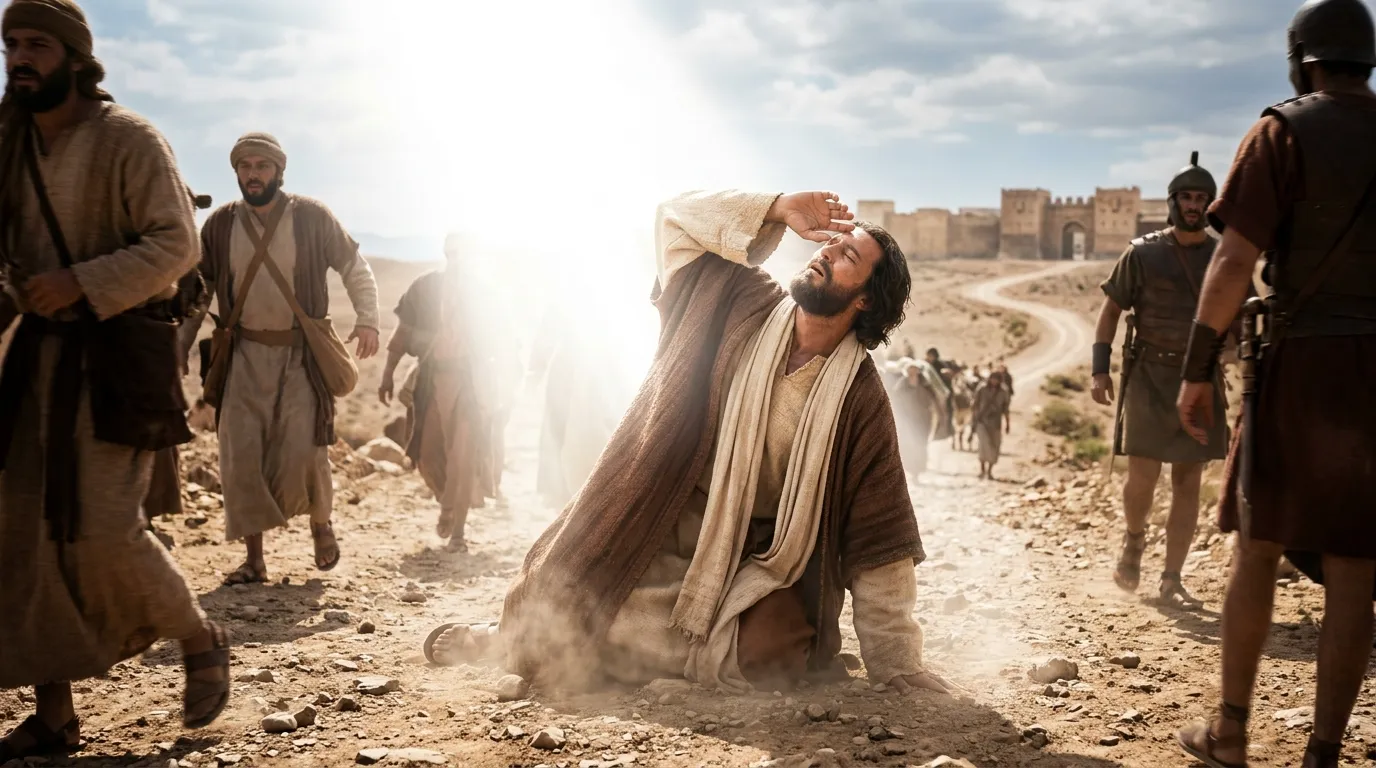
While Paul was traveling to Damascus, Jesus appeared to him. Paul heard Jesus ask, “Saul, Saul, why are you persecuting me?” (Acts 9:4).
Paul asked who was speaking, and Jesus identified Himself.
This encounter changed Paul’s entire direction.
Instead of persecuting Christians, Paul became a preacher of Christ. His life became a powerful example of God’s transforming grace.
Apostle Paul Bible Study Meaning in the Bible + Hebrew Meaning
Paul’s original Jewish name was Saul. In Hebrew, Saul is commonly written שָׁאוּל (Sha’ul). The name is connected with the Hebrew verb meaning “asked for” or “requested.”
His Roman name, Paul, comes from the Latin Paulus, meaning “small” or “humble.” Paul was also a Roman citizen, as Acts 22:27–28 explains.
The Bible does not say that God changed Saul’s name to Paul at the moment of his conversion. Instead, Acts 13:9 simply begins referring to him as Paul. Acts 13 takes place during his missionary ministry, when he was working among Gentiles.
The change from Saul to Paul can be meaningful when studying his life, but Christians should avoid claiming that Scripture teaches that the name change itself represents a secret spiritual code.
What Scripture clearly teaches is much more important:
Paul’s life was transformed by Jesus Christ.
His story teaches that your past does not have to determine your future when God changes your heart and directs your life.
Paul’s Conversion and Its Biblical Meaning
Paul’s conversion is recorded in Acts 9, with Paul later describing his experience in Acts 22 and Acts 26.
This was not simply a change of career. Paul went from persecuting believers to proclaiming Jesus.
Acts 9:15 records God’s words concerning Paul:
“He is a chosen instrument of mine to carry my name before the Gentiles and kings and the children of Israel.”
This verse reveals an important biblical truth.
God’s grace can reach people who seem far from Him.
Paul did not earn God’s calling because he had a perfect past. In fact, his past made God’s mercy even more obvious.
Paul later wrote in 1 Timothy 1:15–16 that Christ came into the world to save sinners and that he himself had received mercy.
This gives hope to anyone who feels disqualified.
Your mistakes may be part of your story, but they do not have to be the final chapter of your story.
Important Bible Verses About the Apostle Paul
Several passages help us understand Paul’s life, calling, suffering, and faith.
Acts 9:1–22: Paul’s Conversion
Acts 9 gives the main account of Paul’s encounter with Jesus on the road to Damascus.
Paul was going to persecute Christians, but Jesus stopped him. After this encounter, Paul was baptized and began proclaiming that Jesus is the Son of God.
Lesson: God can radically change a person’s direction.
Acts 13:9–12: Paul Begins His Mission
Acts 13 identifies Saul as Paul and shows him serving as a missionary. He confronted Elymas the magician and boldly defended the truth of God.
Lesson: Christian courage means standing for truth with wisdom and faith.
Romans 1:16: Paul’s Confidence in the Gospel
Paul wrote:
“For I am not ashamed of the gospel.”
For Paul, the gospel was God’s power for salvation to everyone who believes.
Lesson: The gospel is not something Christians need to hide or be embarrassed about.
1 Corinthians 15:9–10: Grace Changed Paul
Paul described himself as the least of the apostles because he had persecuted the church.
Yet he added that he was what he was “by the grace of God.”
Lesson: God’s grace can produce a new life.
Philippians 4:13: Strength in Christ
Paul wrote that he had learned how to live in different circumstances and concluded:
“I can do all things through him who strengthens me.”
The context is important. Paul was speaking about learning contentment in both abundance and need.
Lesson: This verse is not a promise that Christians will achieve every personal goal. It teaches that Christ can strengthen believers to remain faithful through changing circumstances.
2 Timothy 4:7: Finishing Faithfully
Near the end of his life, Paul wrote:
“I have fought the good fight, I have finished the race, I have kept the faith.”
This is one of the strongest pictures of Paul’s perseverance.
Lesson: Faithfulness matters more than an easy life.
What Does Paul Symbolize Spiritually?
The Bible does not present Paul as a mystical symbol. Still, Christians often see spiritual lessons in his life.
These lessons are supported by Scripture when we keep them connected to the biblical story.
Paul Can Remind Us of Transformation
Paul’s life shows the transforming power of Christ.
He did not simply become a nicer version of himself. His entire purpose changed.
He went from attacking the church to serving Christ and suffering for the gospel.
God’s grace can transform even deeply broken situations.
Paul Can Remind Us of God’s Calling
Paul was called to take the gospel to Gentiles, kings, and Israel.
However, this does not mean every Christian has the same calling.
Some are called to preach publicly. Others serve their families, teach children, care for the hurting, work honestly, encourage others, or serve quietly in their churches.
The important lesson is to follow God’s revealed will faithfully rather than compare your calling with someone else’s.
Paul Can Remind Us of Perseverance
Paul faced imprisonment, beatings, rejection, danger, hunger, and many other hardships.
In 2 Corinthians 11:23–28, he describes some of the suffering he endured for the gospel.
Yet he continued serving Christ.
His example reminds believers that difficulty does not always mean God has abandoned you.
Sometimes faithfulness takes place in the middle of hardship.
What Can Christians Learn From Paul’s Life?
Paul’s life gives many practical lessons for everyday Christian living.
God’s Grace Is Greater Than Your Past
Paul had a painful past. Yet God’s mercy reached him.
This does not mean sin has no consequences. Paul himself never treated sin lightly. Instead, his life shows that repentance and grace can lead to a completely different direction.
If you regret something you have done, bring it honestly before God.
Your failure is not stronger than God’s grace.
Growth Takes Time
Paul’s conversion was dramatic, but his Christian growth continued throughout his life.
He learned, served, suffered, taught, corrected churches, and became more deeply dependent on Christ.
This is encouraging because Christian maturity does not happen overnight.
You may still have weaknesses while God is growing you.
Christian Service Requires Humility
Paul repeatedly pointed people away from himself and toward Christ.
In 1 Corinthians 3:6–7, he explains that one person may plant and another may water, but God gives the growth.
That is an important lesson for Christian leaders.
Our job is to faithfully serve. God is responsible for the ultimate results.
Suffering Does Not Make Faith Meaningless
Paul suffered greatly, but he continued trusting God.
In 2 Corinthians 4:8–9, he describes believers as being troubled but not crushed, perplexed but not driven to despair, persecuted but not forsaken.
These words can comfort Christians going through difficult seasons.
Being troubled is not the same as being abandoned by God.
What Does Paul Teach About Faith and Grace?
Paul’s writings repeatedly emphasize salvation through God’s grace and faith in Jesus Christ.
Ephesians 2:8–9 teaches that salvation is by grace through faith and is not something we earn through our own works.
Paul’s own life demonstrates this truth.
He had religious knowledge and zeal, but he needed Christ.
This is an important reminder for Christians today.
Church attendance, Bible knowledge, good behavior, and religious activity are valuable, but they cannot replace a genuine relationship with Jesus Christ.
Christianity begins with God’s grace and calls us to respond in faith.
Paul and the Power of the Gospel
Paul devoted his life to sharing the message of Jesus.
Romans 10:14–15 discusses the importance of people hearing the good news. Paul understood that the gospel needed to be proclaimed so people could hear and believe.
This remains relevant today.
You may never travel to another country as Paul did. But you can still share God’s love through ordinary actions.
For example:
- You can encourage someone who feels hopeless.
- You can pray with a hurting friend.
- You can speak truth with kindness.
- You can forgive someone who has wronged you.
- You can help someone in need.
- You can tell others what Jesus has done in your life.
- You can live honestly when nobody is watching.
Mission is not limited to a church stage.
What Does It Mean to Dream About the Apostle Paul?
Some people may dream about the Apostle Paul and wonder whether the dream has a biblical meaning.
The Bible does contain examples of God using dreams and visions. However, Scripture does not teach that every dream carries a divine message.
Therefore, Christians should be careful.
If you dream about Paul, you might personally associate the dream with themes such as:
- Christian service
- repentance
- spiritual growth
- courage
- evangelism
- perseverance
- God’s grace
- learning Scripture
But these are possible reflections, not guaranteed interpretations.
A dream should never be treated as equal to Scripture.
If a dream seems spiritual, compare its message with the Bible. A dream that encourages pride, fear, superstition, revenge, or teaching that contradicts Scripture should not be accepted simply because it feels powerful.
James 1:5 encourages believers to ask God for wisdom.
Prayer and Scripture should guide Christian discernment.
Seeing Paul in a Real-Life Christian Experience
You may also encounter Paul’s story during a difficult season.
Perhaps you are starting over after a major mistake. Maybe you are being rejected because of your faith. Or perhaps you feel called to serve but do not know where to begin.
Paul’s story can remind you of several truths.
God can redeem your past.
God can give purpose to your life.
God can strengthen you during hardship.
God does not require you to have Paul’s exact calling.
The goal is not to become another Paul.
The goal is to faithfully follow Jesus in the place where God has put you.
Did Paul Have a Special Calling?
Yes. Scripture clearly teaches that Paul had a specific apostolic calling.
Romans 1:1 describes Paul as a servant of Christ Jesus who was called to be an apostle and set apart for the gospel of God.
Galatians 1:15–16 also describes God’s purpose in Paul’s life and his calling to proclaim Christ among the Gentiles.
However, Christians should not automatically apply Paul’s apostolic office to every believer.
The New Testament describes different gifts and forms of service within the body of Christ.
Paul’s calling teaches us to take God’s purpose seriously, but it also teaches us to remain humble about our own role.
Why Is Paul Important to the Christian Faith?
Paul is important because God used his ministry to spread the gospel and because many New Testament letters are associated with his apostolic teaching.
His letters address real problems faced by early Christians.
He wrote about:
- faith
- grace
- salvation
- love
- the church
- Christian unity
- spiritual gifts
- marriage and family
- suffering
- resurrection
- Christian freedom
- holy living
- the return of Christ
His teaching continues to help Christians understand how the gospel shapes everyday life.
How Can You Apply Paul’s Example Today?
You do not need to live Paul’s life to learn from Paul.
Start with simple obedience.
If you have made a mistake, turn to God.
If you are discouraged, remember God’s grace.
If you are suffering, keep trusting Christ.
If you have an opportunity to help someone, serve faithfully.
If you are afraid to talk about your faith, ask God for courage and wisdom.
If you feel insignificant, remember that God values faithful service.
Paul’s life teaches us that Christian faith is not about having a perfect life. It is about belonging to Christ and continuing to follow Him.
Frequently Asked Questions
What is the main biblical meaning of the Apostle Paul?
The main biblical lesson from Paul’s life is God’s transforming grace and the power of the gospel. Paul went from persecuting Christians to becoming a devoted servant and apostle of Jesus Christ.
What was Paul’s Hebrew name?
Paul’s original Jewish name was Saul, commonly connected with the Hebrew name Sha’ul (שָׁאוּל). The name is associated with the idea of being asked for or requested.
Does the Bible say God changed Saul’s name to Paul?
No. Scripture does not specifically say that God changed his name. Acts 13:9 begins referring to him as Paul, while his earlier name was Saul.
What is the most important lesson from Paul’s conversion?
One major lesson is that God’s grace can transform people who seem completely opposed to Him. Paul’s past did not prevent God from using him after his encounter with Christ.
What Bible verse best describes Paul’s faith?
2 Timothy 4:7 is one of the clearest descriptions of Paul’s perseverance: he had fought the good fight, finished the race, and kept the faith.
What does Paul teach Christians about suffering?
Paul teaches that suffering does not mean God has abandoned His people. His own life shows that Christians can remain faithful to Christ even during severe trials.
Final Reflection
The story of the Apostle Paul is ultimately a story about Jesus Christ and the grace of God.
Paul had a past that could have defined him. Instead, God’s mercy gave him a new direction. His life was not free from pain, but his faith became stronger through obedience, suffering, and dependence on Christ.
If you are studying the Apostle Paul Bible study meaning in the Bible, remember the heart of the message: God can redeem, transform, strengthen, and use people who place their trust in Him.
You may not understand everything God is doing in your life today. You may be waiting for direction, healing, forgiveness, or a new beginning.
Keep seeking Him through prayer and Scripture.
Do not build your faith on dreams, signs, or personal feelings alone. Build it on God’s Word and the truth of the gospel.
Like Paul, learn to keep your eyes on Christ, remain faithful through difficulty, and trust God’s grace one day at a time.
Your past does not surprise God. Your weakness does not limit His power. And your future is safest in His hands.