Imagine carrying the weight of something you deeply regret. You wish you could go back, make things right, and restore what was broken. Then someone reaches out with forgiveness and makes a way for the relationship to be restored.
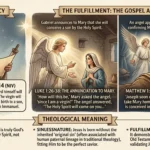
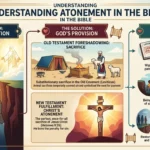
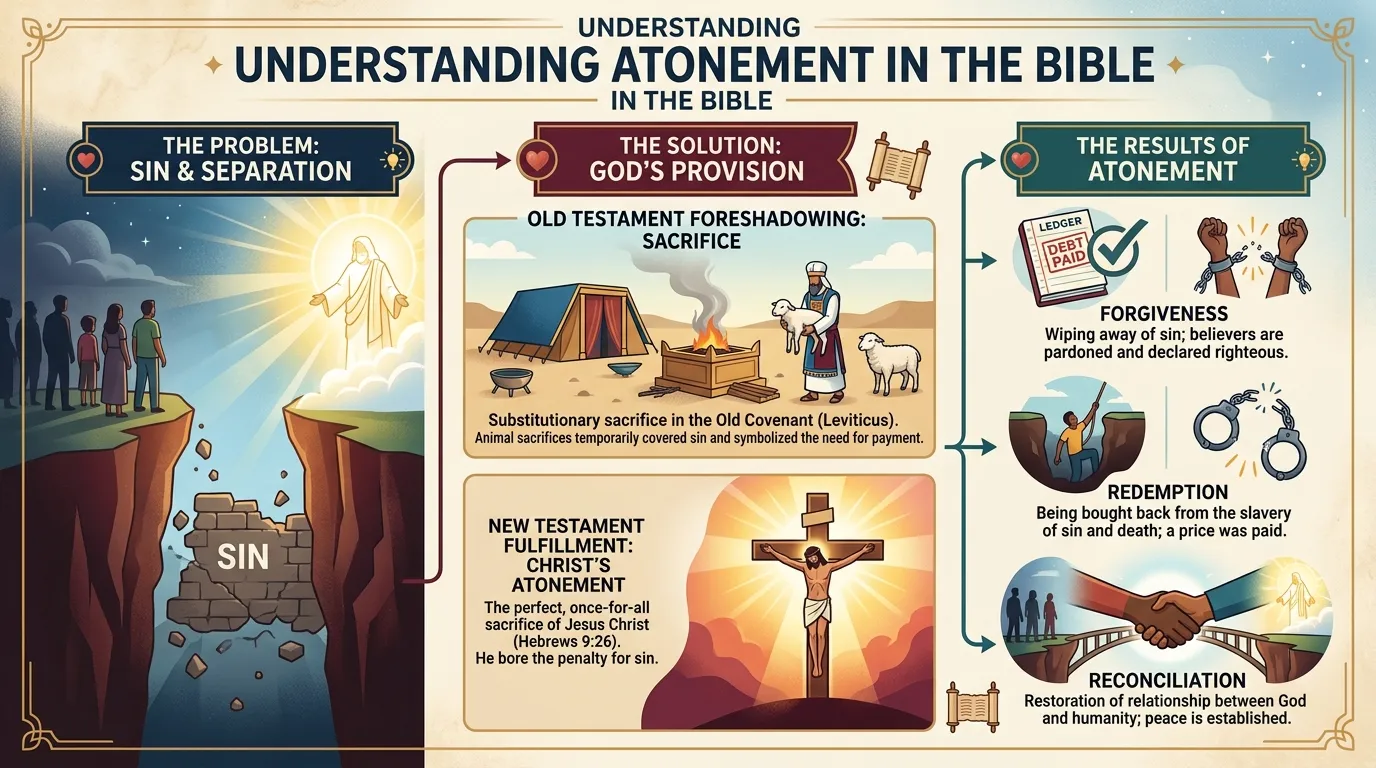
This picture helps us understand the atonement meaning in the Bible. Atonement is closely connected with sin, sacrifice, forgiveness, reconciliation, and God’s plan to bring people back into a right relationship with Him. The Bible shows that sin separates people from God, but God Himself provides the way of redemption.
For Christians, the clearest expression of atonement is found in Jesus Christ, whose death on the cross is presented in the New Testament as a sacrifice for sin. Atonement is not simply about feeling guilty or trying harder. It points to God’s grace, justice, mercy, forgiveness, and saving work.
What Does Atonement Mean in the Bible?
In the Bible, atonement refers to God’s provision for dealing with sin and restoring fellowship between Himself and His people.
The Old Testament presents atonement through sacrifices and rituals given to Israel. These sacrifices taught that sin is serious and that reconciliation with God requires God’s appointed provision.
The New Testament then points to Jesus as the fulfillment of this sacrificial pattern. His death is described as being for sins and as bringing reconciliation between God and humanity.
A simple way to understand biblical atonement is:
- Sin creates separation from God.
- God provides a way to deal with sin.
- Sacrifice is central to the Old Testament picture.
- Jesus gives Himself for sinners in the New Testament.
- Through Christ, believers receive forgiveness and reconciliation with God.
The message is ultimately one of hope. God does not leave humanity without a way back to Him.
Atonement Meaning in the Bible Hebrew Meaning
The Hebrew language gives us an important window into the Old Testament idea of atonement.
A major Hebrew word connected with atonement is kippur, from the Hebrew root kaphar. The word is associated with making atonement, covering, or dealing with sin. The exact meaning can depend on the biblical context.
One of the most important passages is Leviticus 16, which describes the Day of Atonement, also called Yom Kippur. On this special day, the high priest entered the Most Holy Place and performed sacrifices for the sins of the people.
Leviticus 16:30 explains the purpose of the day: Israel would be cleansed from its sins before the Lord.
This does not mean that sin was unimportant or simply hidden from God. Instead, the ritual showed that God provided a specific way for sin and uncleanness to be dealt with within Israel’s covenant worship.
The Day of Atonement also teaches an important truth: reconciliation with God is God’s provision, not something people invent for themselves.
Atonement in the Old Testament
To understand Christian teaching about atonement, it helps to begin with the Old Testament.
God gave Israel a system of sacrifices through the Law of Moses. These sacrifices were connected with worship, forgiveness, cleansing, thanksgiving, and atonement.
The Day of Atonement
Leviticus 16 gives the fullest description of the Day of Atonement.
The high priest represented the people before God. Sacrifices were offered, and the blood of the sacrifices played a central role in the ritual.
Leviticus 17:11 explains why blood was significant in Israel’s sacrificial system. It says that the life of the flesh is in the blood and that God gave it on the altar to make atonement.
This shows that biblical atonement is deeply connected with life, sacrifice, sin, holiness, and forgiveness.
The Sacrificial System Pointed Beyond Itself
The Old Testament sacrifices were important, but the Bible also shows that God was concerned with the heart of the worshiper.
For example, Psalm 51 emphasizes repentance and a broken, humble heart. David understood that outward religious actions could not replace genuine repentance before God.
The prophets also warned Israel against empty worship. God wanted His people to love Him, obey Him, and turn away from sin.
Therefore, biblical atonement should never be reduced to performing a religious ritual. God desires a heart that turns toward Him in repentance and faith.
Jesus and the Meaning of Atonement
The New Testament brings the theme of atonement into sharp focus through Jesus Christ.
John the Baptist called Jesus “the Lamb of God, who takes away the sin of the world” in John 1:29. This language connects Jesus with the sacrificial imagery found throughout Scripture.
Jesus Himself described His mission in sacrificial terms. In Mark 10:45, He said that the Son of Man came to serve and to give His life as a ransom for many.
At the Last Supper, Jesus connected His coming death with the forgiveness of sins. Matthew 26:28 records His words about His blood being poured out for many for the forgiveness of sins.
The cross, therefore, is not presented in the New Testament as a tragic accident. Jesus willingly gave Himself as part of God’s saving purpose.
How Does Jesus’ Death Provide Atonement?
Several New Testament passages explain the meaning of Christ’s death.
Romans 3:23 teaches that all people have sinned and fall short of God’s glory. Paul then points to God’s grace through the redemption that is in Christ Jesus.
Romans 3:25 describes Jesus as a “propitiation” through faith in His blood. The passage presents Christ’s death as God’s gracious answer to the problem of sin while also showing God’s righteousness.
First Peter 2:24 says that Jesus bore our sins in His body on the tree. The purpose was that believers might die to sin and live to righteousness.
Second Corinthians 5:21 expresses the message in another powerful way: Christ, who knew no sin, was made to be sin for us so that believers could become the righteousness of God in Him.
These passages give us several important truths:
- Jesus was sinless.
- Jesus died for sinners.
- His death is connected with forgiveness and redemption.
- God’s grace stands at the heart of salvation.
- Christ’s work calls believers to a changed life.
Atonement and Forgiveness
Atonement and forgiveness are closely connected, but they are not exactly the same idea.
Forgiveness means that God releases the guilt of sin and does not hold the believer’s sins against them in the way they deserve.
Atonement focuses more broadly on God’s provision for dealing with sin and restoring people to Himself.
Ephesians 1:7 says that believers have redemption through Christ’s blood and the forgiveness of trespasses according to God’s grace.
This is good news for someone who feels trapped by past mistakes.
Christian forgiveness is not based on pretending sin never happened. Instead, the gospel says that God deals honestly with sin while offering mercy to sinners who come to Him through Christ.
Atonement and Reconciliation With God
Another important biblical idea is reconciliation.
Second Corinthians 5:18–19 explains that God reconciles people to Himself through Christ. Paul then describes believers as messengers of this message of reconciliation.
Reconciliation means restored relationship.
Think about a friendship damaged by betrayal. Saying “everything is fine” does not automatically repair the relationship. Something must happen to address the brokenness.
The gospel announces that God has acted through Christ to reconcile sinners to Himself.
This gives atonement a deeply personal meaning. It is not merely a theological concept. It speaks to the believer’s relationship with God.
The Spiritual Symbolism of Atonement
The Bible’s teaching about atonement carries several powerful spiritual themes.
Atonement Symbolizes God’s Mercy
God is holy, yet He is also merciful.
The sacrificial system showed Israel that God provided a way for sinners to approach Him. The cross reveals this mercy even more clearly in Christian faith.
Romans 5:8 says that God demonstrates His love because Christ died for us while we were still sinners.
God’s love does not begin after we become perfect.
Atonement Symbolizes Redemption
Redemption is the idea of being rescued or bought back.
Jesus’ death is repeatedly connected with redemption. First Peter 1:18–19 describes believers as redeemed not with perishable things such as silver or gold, but with the precious blood of Christ.
This reminds Christians that their identity is not determined by their past.
Atonement Symbolizes Cleansing
The Old Testament frequently connects atonement with cleansing from sin and impurity.
First John 1:7 teaches that the blood of Jesus cleanses believers from all sin.
This does not mean Christians never struggle with sin. Rather, it points to the ongoing confidence believers can have in God’s forgiveness and cleansing when they walk in the light and confess their sins, as described in 1 John 1:9.
What Does Atonement Mean for Christians Today?
Atonement has practical meaning for everyday Christian life.
You Do Not Have to Hide From God
When people sin, they may feel ashamed and want to hide.
This reaction can be seen as early as Genesis 3, when Adam and Eve hid after disobeying God.
The gospel gives a different invitation. Instead of running away from God in hopelessness, Christians are encouraged to come to Him in repentance and faith.
God’s grace gives sinners a reason to return to Him.
Your Past Does Not Have the Final Word
Perhaps you have made serious mistakes.
Maybe you regret words you spoke, choices you made, or opportunities you wasted.
The message of Christ’s atoning work is not that sin does not matter. It is that sin does not have to be the end of your story.
Paul himself had a painful past before becoming a servant of Christ. His life demonstrates the transforming power of God’s grace.
Atonement Calls Us to Forgive Others
Because Christians have received mercy, they are also called to show mercy.
Jesus taught His followers to forgive others. Ephesians 4:32 tells believers to be kind, tenderhearted, and forgiving as God in Christ forgave them.
Forgiving another person does not always mean ignoring injustice or refusing healthy boundaries. It means refusing to let hatred become the ruler of your heart.
What Does Atonement Mean in a Dream?
Some people search for the atonement meaning in a dream after dreaming about forgiveness, sacrifice, church, blood, confession, or reconciliation.
The Bible does contain examples of God communicating through dreams. Joseph, Daniel, and others received significant dreams in Scripture.
However, the Bible does not give a universal dream dictionary that says every dream symbol has one fixed spiritual meaning.
Therefore, Christians should be careful.
If you dream about atonement, it might lead you to reflect on themes such as:
- repentance
- forgiveness
- reconciliation
- guilt
- grace
- restoration
- your relationship with God
But a dream should never be treated as automatic proof that God is giving a particular message.
Every spiritual impression should be tested against Scripture.
If a dream encourages repentance, prayer, forgiveness, or trust in Christ, those themes are consistent with biblical teaching. But Christians should avoid claiming certainty about God’s specific message when Scripture does not provide that certainty.
Atonement Meaning in Real Life Experiences
Sometimes the idea of atonement becomes especially meaningful during difficult seasons.
For example, imagine a Christian who has hurt a family member. They may pray for forgiveness and then realize they also need to apologize and make things right where possible.
The atonement of Christ does not remove the need for responsible action.
Instead, grace can motivate a person to:
- confess wrong actions
- ask for forgiveness
- repair harm when possible
- stop repeating destructive behavior
- extend mercy to others
- grow in obedience to God
Similarly, someone struggling with shame may need to remember that Christian faith is not based on earning God’s love through perfect behavior.
Christ’s work provides the foundation for salvation, while discipleship teaches us how to live in response to that grace.
What Is the Difference Between Atonement and Salvation?
These words are related but describe different aspects of God’s saving work.
Atonement focuses on God’s provision for dealing with sin and making reconciliation possible.
Salvation is the broader biblical picture of God’s rescue from sin and its consequences, including forgiveness, reconciliation, new life, and ultimately eternal life.
Atonement is therefore an important part of the biblical story of salvation.
The New Testament does not tell Christians to save themselves through good works. Ephesians 2:8–9 teaches that salvation is by grace through faith and is not something people can boast about.
Good works matter, but they are the fruit of salvation, not the price Christians pay to earn it.
What Is the Main Message of Atonement?
The central message can be summarized simply:
Sin is serious, but God’s grace is greater.
The Bible does not minimize sin. Sin damages our relationship with God and with other people.
Yet Scripture also reveals a God who seeks sinners, calls them to repentance, provides forgiveness, and offers reconciliation through Christ.
The cross shows both the seriousness of sin and the depth of God’s love.
John 3:16 reminds believers that God loved the world and gave His Son so that those who believe in Him may have eternal life.
That is why the doctrine of atonement should not leave Christians in despair. It should lead them toward gratitude, humility, repentance, faith, and hope.
Frequently Asked Questions
What is the simplest definition of atonement?
Atonement is God’s provision for dealing with sin and restoring people to fellowship with Him. In Christian theology, Jesus Christ’s sacrificial death is central to this provision.
Where is atonement first discussed in the Bible?
Atonement appears throughout the Old Testament sacrificial system. Leviticus gives especially detailed teaching about atonement, with Leviticus 16 describing the Day of Atonement.
What is the Day of Atonement?
The Day of Atonement, or Yom Kippur, was a sacred day in ancient Israel when the high priest performed specific rituals and sacrifices for the sins and uncleanness of the people. Its instructions are given especially in Leviticus 16.
Does atonement mean that sin does not matter?
No. The opposite is true. The biblical teaching about atonement shows that sin is serious, while also showing God’s mercy and His provision for forgiveness and reconciliation.
Is Jesus the atonement for our sins?
The New Testament presents Jesus’ death as the sacrificial and saving work through which believers receive forgiveness and reconciliation. Passages such as Romans 3:25, 1 John 2:2, and 1 Peter 2:24 are important in understanding this teaching.
Does atonement mean I can keep sinning?
No. Grace is not permission to continue in sin.
Romans 6:1–2 rejects the idea that believers should continue in sin simply because grace is available. Christ’s saving work calls Christians to a new way of life.
How Should Christians Respond to the Atonement?
Understanding atonement should move beyond knowledge and shape the heart.
When you understand what Scripture teaches about Christ’s sacrifice, you can respond with faith instead of fear, repentance instead of hiding, gratitude instead of pride, and mercy instead of bitterness.
When you fail, turn to God.
When you receive forgiveness, remember grace.
When someone hurts you, seek wisdom about forgiveness and reconciliation.
When you feel unworthy, remember that the gospel is not a reward for people who have already made themselves perfect.
And when you wonder whether God can restore what has been broken, look again at the message of the cross.
Final Thoughts
The atonement meaning in the Bible reaches from the sacrifices of the Old Testament to the cross of Jesus Christ. It teaches that sin is real, holiness matters, and humanity cannot solve the problem of sin through human effort alone.
But the story does not end with sin.
God provides grace. God provides forgiveness. God provides reconciliation.
For Christians, Jesus stands at the center of this message. His death is presented in Scripture as a sacrifice for sins and as part of God’s saving work.
If you are carrying guilt today, bring it honestly before God. If you have received His forgiveness, let that grace shape the way you treat others. If you are seeking direction, return to Scripture, pray for wisdom, and trust God’s revealed truth.
The message of atonement is ultimately a message of hope: God has made a way for sinners to come near to Him through Christ.
Take time to pray, reflect on God’s grace, and thank Him for the redemption offered through Jesus. Whatever season you are facing, you can place your trust in God’s mercy, wisdom, and unfailing love.