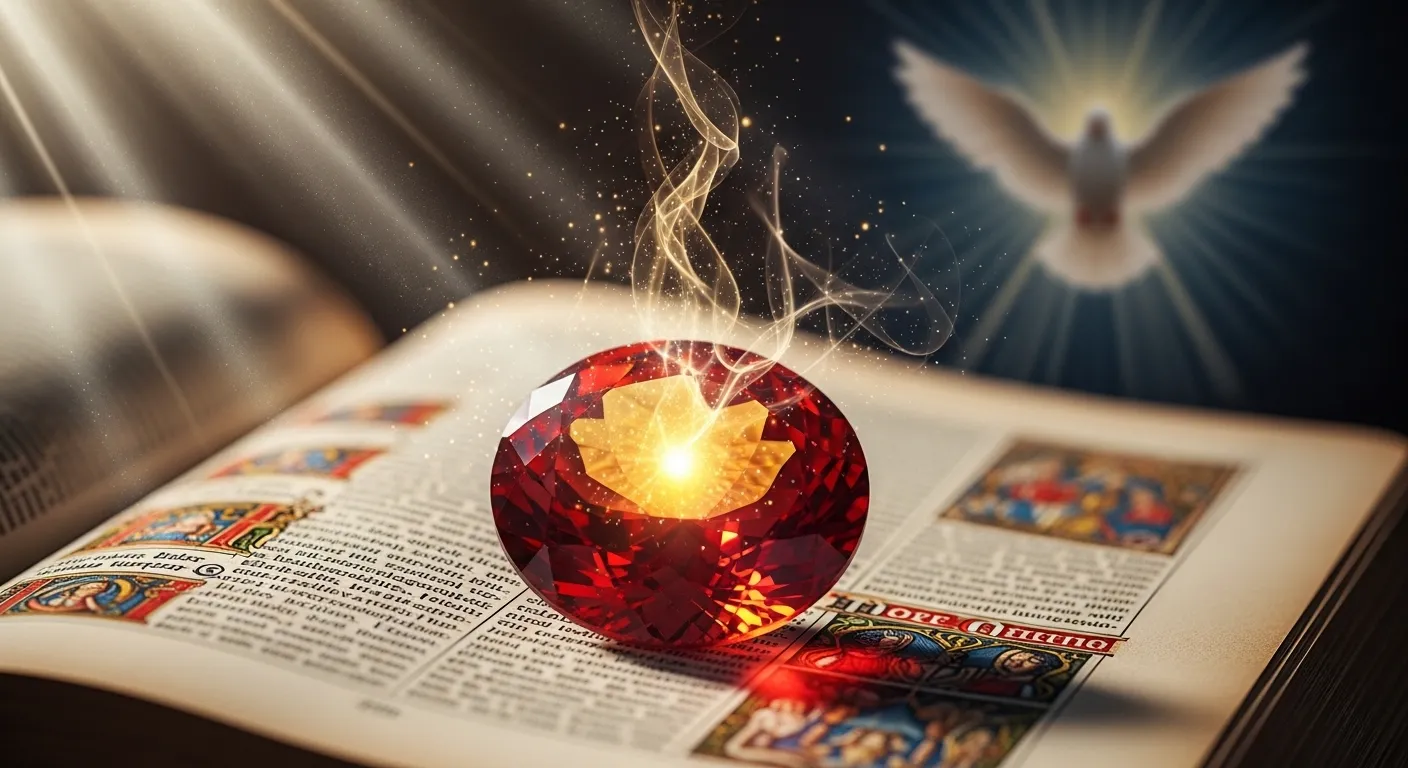
Imagine finding a beautiful orange-red stone shining in the light. Its color is warm. Its beauty catches your eye. You stop and wonder, “Does this mean something deeper?”
Maybe you saw jacinth in a dream. Maybe you read the word while reading Scripture. Or perhaps you simply became curious after hearing about it.
The Bible often uses stones, gems, and precious materials to share spiritual truths. These things are not only beautiful. They often carry messages about faith, hope, God’s glory, and spiritual growth.
So what is the Jacinth meaning in the Bible?
Is it a sign of blessing? Does it carry a spiritual message? Could it point toward God’s presence or deeper faith?
The Bible mentions jacinth in places connected to heavenly visions, beauty, and divine things. Because of this, many believers see it as a symbol of spiritual awakening, transformation, and God’s glory.
Let’s explore what Scripture says and discover the deeper meaning behind this beautiful biblical symbol.
Biblical Meaning of Jacinth in the Bible
What Is Jacinth?
Jacinth is a precious stone often described as having an orange, reddish, or fiery color. In biblical times, precious stones were important because they often represented value, beauty, and spiritual truth.
The Bible mentions jacinth several times, especially in prophetic and heavenly visions.
Jacinth Represents Beauty and Heavenly Glory
One important place where jacinth appears is in heavenly descriptions.
In the Bible, precious stones are often connected with God’s kingdom and heavenly beauty.
One verse mentions jacinth among the foundation stones of the holy city:
“The eleventh, jacinth; the twelfth, amethyst.”
This shows that jacinth was connected to something sacred and eternal.
Because of this, many Christians believe jacinth symbolizes:
- God’s glory
- Heavenly beauty
- Spiritual value
- Eternal hope
The message is simple: God creates beauty with purpose.
Jacinth Can Symbolize Fire and Spiritual Passion
The fiery color of jacinth gives another layer of meaning.
Throughout Scripture, fire often symbolizes:
- God’s presence
- Purification
- Spiritual passion
- Transformation
A fiery-colored stone may remind believers that faith should not stay cold.
God often calls His people to live with:
Faith. Prayer. Passion. Trust.
Jacinth may remind believers to keep their spiritual life alive.
Jacinth Appears in Prophetic Imagery
The Bible also uses jacinth in prophetic visions.
These visions often use powerful images because spiritual truths are sometimes easier to understand through symbols.
When jacinth appears in these settings, it may point toward:
- Divine messages
- Spiritual awareness
- God’s power
- Preparation for change
Sometimes God uses symbols not to create fear but to create awareness.
Positive Meanings of Jacinth
Most biblical symbolism connected to jacinth points toward positive spiritual themes:
Hope
The stone appears in places connected with heavenly promises.
Transformation
Its fiery color reminds believers that God changes hearts.
Spiritual Growth
Jacinth can symbolize becoming stronger in faith.
God’s Presence
Beautiful biblical symbols often remind believers that God remains near.
Possible Warning Meanings
Like many biblical symbols, jacinth may also carry gentle warnings.
The stone’s connection with fire can remind believers:
- Do not ignore spiritual growth
- Stay close to prayer
- Keep faith active
- Avoid becoming spiritually cold
Warnings in Scripture are often invitations toward something better.
Spiritual Significance and Symbolism
The spiritual symbolism of jacinth goes beyond a beautiful stone.
Many believers see it as a reminder that God works through transformation.
Think about a difficult season.
You pray.
You wait.
You grow.
Slowly, something changes.
That journey reflects the deeper spiritual symbolism connected with jacinth.
Jacinth May Symbolize Spiritual Awakening
Sometimes people feel stuck spiritually.
A symbol like jacinth may remind believers:
God still speaks. God still leads. God still transforms.
Jacinth and Personal Faith Journeys
For many Christians, jacinth can represent:
- Growing stronger through hard seasons
- Finding hope again
- Learning patience
- Trusting God’s timing
Even small acts of faith matter.
Prayer.
Reading Scripture.
Trusting when answers are slow.
These small steps create transformation.
A Reminder of God’s Beauty
Sometimes the spiritual message is simple:
God creates beauty even during difficult seasons.
Jacinth reminds believers to look for God’s hand even when life feels uncertain.
Biblical Interpretations in Dreams or Real Life
Many people search for dream interpretation because they see unusual symbols while sleeping.
If jacinth appears in dreams, many believers view it through a faith-centered lens rather than fear.
Dreaming About a Bright or Beautiful Jacinth
This may symbolize:
- Hope
- Spiritual growth
- God’s guidance
- New beginnings
Dreaming About Broken or Dark Jacinth
Some may interpret this as:
- Spiritual exhaustion
- Needing prayer
- Feeling distant from faith
- A reminder to reconnect with God
Holding or Receiving Jacinth in Dreams
This may symbolize:
- Receiving encouragement
- Personal transformation
- A new spiritual season
Dreams should never replace Scripture.
Instead, believers often use prayer and God’s Word to seek understanding.
A dream may simply encourage reflection rather than predict the future.
Practical Lessons & Faith Insights
The message of jacinth is not only about symbolism.
It is also about daily faith.
Pray regularly.
Trust God’s timing.
Stay spiritually awake.
When life feels uncertain, remember that God often shapes people slowly—just as precious stones are formed over time.
Keep walking in faith.
Conclusion
The Jacinth meaning in the Bible points toward hope, transformation, spiritual awakening, and God’s glory.
This beautiful stone reminds believers that faith grows through time, prayer, and trust.
Whether you saw jacinth in Scripture, dreams, or personal reflection, its message can be comforting:
God is still working.
God still guides.
And even difficult seasons can become something beautiful through faith.