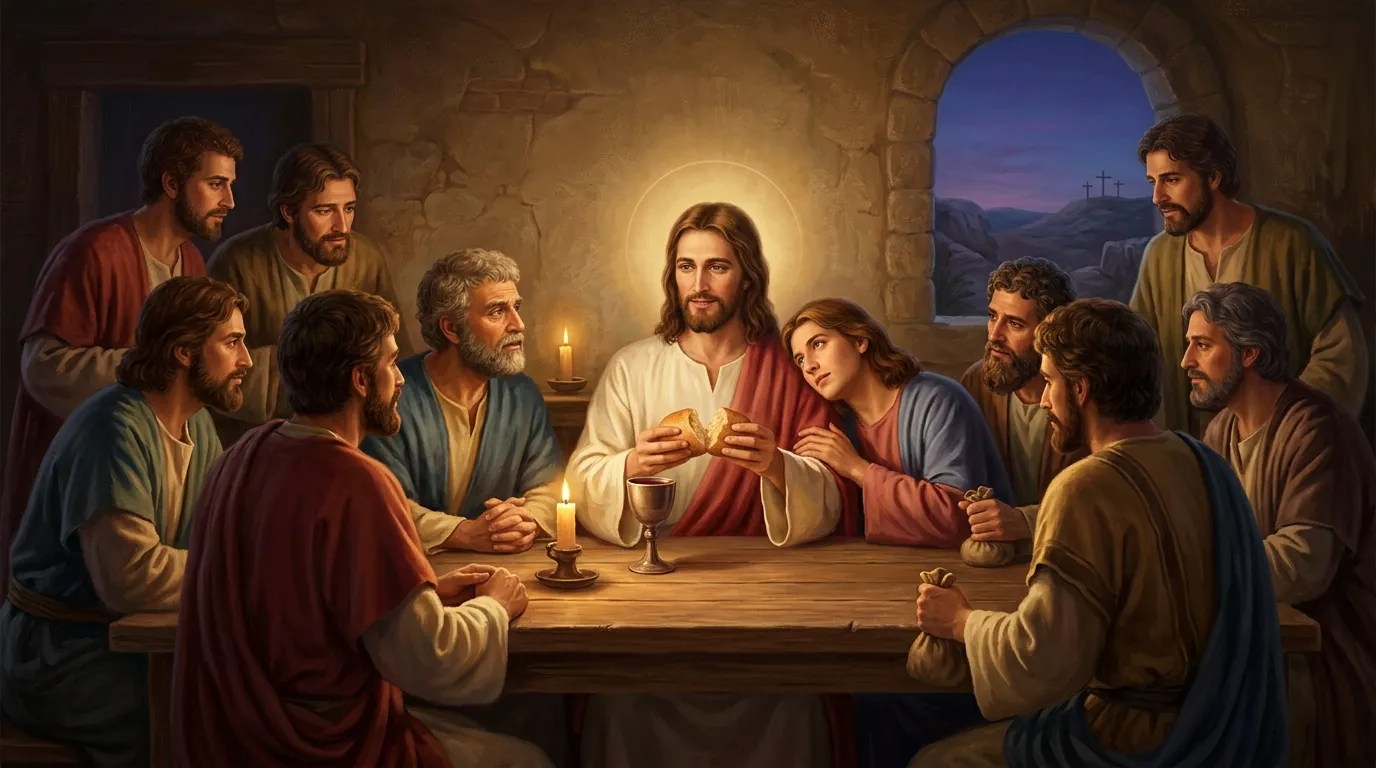
Last Supper Meaning in the Bible: A Powerful Message of Love, Sacrifice, and Hope

Imagine sitting around a table with people you love, knowing that life is about to change forever. This is close to the setting of the Last Supper. Jesus gathered with His disciples on the night before His crucifixion. He shared a meal with them, washed their feet, taught them, and spoke about His coming death. Understanding the Last Supper meaning in the Bible helps Christians see the depth of Jesus’ love, the seriousness of His sacrifice, and the hope found in God’s plan of salvation.

The Last Supper was not simply Jesus’ final meal with His disciples. It became a lasting picture of Christ’s sacrifice, the new covenant, forgiveness, remembrance, fellowship, and faithful service.

What Is the Last Supper in the Bible?

What Is the Last Supper in the Bible?

The Last Supper was the final meal Jesus shared with His apostles before His arrest and crucifixion. The event is recorded in Matthew 26:17–30, Mark 14:12–26, Luke 22:7–38, and 1 Corinthians 11:23–26.

The meal took place around the time of Passover. During the meal, Jesus took bread, gave thanks, broke it, and gave it to His disciples. He then took the cup and explained its meaning.

Luke records Jesus saying, “This is my body given for you; do this in remembrance of me” (Luke 22:19).

He also connected the cup with the new covenant: “This cup is the new covenant in my blood” (Luke 22:20).

So, at the heart of the Last Supper is Jesus preparing His followers to understand what His death would accomplish.

The Last Supper points directly to Jesus’ sacrificial death and God’s plan of redemption.

Last Supper Hebrew Meaning

Last Supper Hebrew Meaning

The phrase “Last Supper” is not a Hebrew phrase found in the Old Testament. The biblical event happened in a Jewish setting and was closely connected with Passover, which is rooted in the Hebrew Scriptures.

The Hebrew word commonly translated as Passover is Pesach. It comes from the account in Exodus 12, where God delivered the Israelites from slavery in Egypt.

During Passover, the Israelites remembered how God protected and rescued them. The meal included specific foods and practices that reminded them of God’s saving work.

This background is important because Jesus celebrated Passover with His disciples and then gave the bread and cup a deeper covenant meaning.

Christians commonly understand this connection as pointing toward Jesus as the One who brings ultimate deliverance from sin. Paul later describes Christ as “our Passover lamb” in 1 Corinthians 5:7.

Therefore, the biblical Hebrew background of the Last Supper is strongly connected with Passover, covenant, deliverance, remembrance, and God’s saving work.

It is important, however, not to claim that every detail of the Last Supper has a hidden Hebrew meaning. Scripture gives us the clearest meaning through the words and actions of Jesus Himself.

Why Did Jesus Have the Last Supper?

Jesus knew that His arrest and death were approaching. Earlier in His ministry, He had repeatedly told His disciples that He would suffer and be killed (Matthew 16:21; Mark 8:31).

At the Last Supper, Jesus prepared His disciples for what was coming.

He knew they would experience fear, confusion, grief, and disappointment. Yet He did not leave them without hope.

Instead, He gave them a lasting reminder of His love.

The meal showed that His death was not an accident outside God’s purposes. Jesus willingly gave Himself for others.

The Last Supper teaches that Christ’s sacrifice was central to God’s plan of redemption.

The Bread: What Does It Mean?

Jesus took bread, gave thanks, broke it, and gave it to His disciples.

According to Matthew 26:26, Jesus said, “Take, eat; this is my body.”

The bread points Christians toward Jesus’ body given in sacrifice.

His physical suffering and death would soon take place on the cross. The bread therefore became a powerful reminder of what Christ was about to endure for His people.

For Christians today, this can encourage deep gratitude.

When believers participate in Communion, they are reminded that salvation was not cheap. Jesus gave Himself willingly because of His love.

The bread can therefore remind us to:

  • Remember Christ’s sacrifice.
  • Give thanks for God’s grace.
  • Trust Jesus for salvation.
  • Live with humility.
  • Follow Christ faithfully.
See also  CSB Bible Meaning: Understanding the Christian Standard Bible and Its Spiritual Significance

The Cup: What Does It Mean?

Jesus also took the cup and connected it with His blood.

Matthew 26:28 records His words: “This is my blood of the covenant, which is poured out for many for the forgiveness of sins.”

This statement is central to understanding the Last Supper.

The cup points toward Jesus’ sacrificial death and the forgiveness God provides through Him.

The phrase “blood of the covenant” also connects with the biblical idea of covenant. In Scripture, covenants describe serious commitments between God and His people.

Jesus announced that His death was connected with the new covenant.

Jeremiah 31:31–34 had promised a coming new covenant in which God would forgive His people’s sins and write His law on their hearts.

Christians understand Jesus’ words at the Last Supper as pointing to the fulfillment of that promise through Him.

The Last Supper and the New Covenant

One of the deepest biblical meanings of the Last Supper is the new covenant.

Jesus said in Luke 22:20, “This cup is the new covenant in my blood.”

The new covenant is explained more fully in the New Testament, especially in Hebrews 8–10.

Under the new covenant, forgiveness and reconciliation with God are found through Christ. Jesus’ sacrifice is presented as sufficient and final.

This gives Christians a powerful message of hope:

Your relationship with God rests on His grace and Christ’s finished work, not on your ability to make yourself perfect.

That truth matters in everyday life.

A Christian may fail, struggle, or feel spiritually weak. The answer is not to run away from God. Instead, believers are invited to return to Him with repentance and faith.

The Last Supper and Remembrance

Jesus told His disciples to eat and drink “in remembrance of me” (Luke 22:19).

This is one reason Communion is so important in Christian worship.

The purpose is not simply to remember a historical event in the same way someone remembers an old photograph. It is a faith-centered remembrance of Christ’s death and its meaning.

Paul repeats Jesus’ instruction in 1 Corinthians 11:23–26, showing that the early church treated this practice as an important part of Christian faith.

Communion reminds believers of:

Jesus’ body given for us.
Jesus’ blood poured out.
The forgiveness offered through Christ.
The hope of His return.

Paul says that believers proclaim the Lord’s death “until he comes” (1 Corinthians 11:26).

So the Last Supper looks backward to the cross while also looking forward with hope.

Why Did Jesus Wash the Disciples’ Feet?

The Last Supper account in John’s Gospel gives another powerful lesson.

John 13 describes Jesus washing His disciples’ feet.

Foot washing was a humble task. Yet Jesus, their Lord and Teacher, chose to serve His followers.

He then told them to follow His example (John 13:14–15).

This shows that the Last Supper is not only about bread and wine. It is also about humble love and servant leadership.

Jesus demonstrated the kind of life He wanted His disciples to live.

A Christian leader should not seek status above others. A mature believer should not consider ordinary acts of love beneath them.

You might see this lesson when someone quietly serves at church, helps a struggling neighbor, visits a lonely person, or cares for a family member without expecting praise.

Following Jesus means learning to serve with humility.

The Last Supper and Jesus’ Love

Jesus knew Judas would betray Him.

John 13:21–30 describes Jesus announcing that one of His disciples would betray Him. Judas later went out to carry out the betrayal.

Jesus also knew Peter would deny Him three times (Luke 22:31–34).

Yet Jesus still spent this final evening teaching His disciples.

That makes the scene deeply moving.

Jesus knew their weaknesses, but He continued to love and prepare them.

This gives believers a beautiful picture of God’s grace.

Jesus does not love us because we have never failed. He calls us to repentance, faith, and transformation because He knows our weaknesses.

See also  Mary Magdalene Meaning in the Bible: A Powerful Story of Faith, Redemption, and Hope

What Does the Last Supper Teach Christians Today?

The Last Supper contains several practical lessons for Christian life.

Remember What Christ Has Done

Modern life can become busy. Work, bills, family responsibilities, and worries can fill our minds.

The Last Supper calls believers back to the cross.

Remembering Christ’s sacrifice helps us keep the gospel at the center of our lives.

Live With Gratitude

The bread and cup point toward an enormous gift: Christ gave Himself for sinners.

That should produce gratitude rather than pride.

Serve Others

Jesus washed His disciples’ feet.

His example teaches Christians that greatness in God’s kingdom is connected with humble service.

Forgive and Seek Reconciliation

The Last Supper points toward the forgiveness offered through Christ.

Because Christians have received grace, they are called to extend grace to others while still recognizing the need for wisdom, boundaries, and justice in difficult situations.

Trust God During Uncertain Times

Jesus knew suffering was coming.

Yet He continued to obey the Father.

This encourages believers when they face uncertain seasons.

You may not know what tomorrow will bring, but you can still trust the God who does.

What Does the Last Supper Symbolize?

The Bible directly connects the Last Supper with Jesus’ body, blood, covenant, forgiveness, remembrance, and His coming kingdom.

Christians also commonly understand several spiritual symbols in the event.

These include:

  • Bread: Christ’s body given for His people.
  • Cup: Christ’s blood and the new covenant.
  • Meal: Fellowship among believers and relationship with Christ.
  • Passover setting: God’s saving and delivering work.
  • Foot washing: Humility and servant leadership.
  • Remembrance: Keeping Christ’s sacrifice central in faith.
  • Future hope: Looking toward Christ’s coming kingdom.

These meanings should remain connected to Scripture rather than being turned into private symbols with guaranteed interpretations.

What Does the Last Supper Mean in a Dream?

Some people search for the Last Supper meaning in a dream after dreaming about Jesus, Communion, bread, wine, or a table.

The Bible does contain examples of God communicating through dreams, such as Joseph’s dreams in Genesis 37 and Joseph’s dreams in Matthew 1–2. However, Scripture does not teach that every dream has a divine message.

Therefore, Christians should be careful.

If you dream about the Last Supper, it may lead you to reflect on themes such as:

  • Your relationship with Christ.
  • Forgiveness.
  • Faithfulness.
  • Fellowship.
  • Sacrifice.
  • Spiritual priorities.
  • The need to remember God’s grace.

But a dream should never be treated as equal to Scripture.

Do not build a major doctrine or life decision on a dream alone. Test everything against God’s Word and seek wise, prayerful counsel when necessary.

A helpful prayer might be:

“Lord, if this dream has something I need to learn, help me understand it according to Your Word. Keep me from believing anything that does not agree with Scripture.”

What If You See the Last Supper in Real Life or Keep Thinking About It?

Sometimes a Christian may repeatedly notice images of the Last Supper, think deeply about Communion, or feel drawn to study the event.

There is no biblical rule saying that such an experience automatically contains a supernatural message.

Instead, use the moment as an opportunity to return to Scripture.

Ask:

What does Jesus teach me here?

Maybe the answer is humility.

Maybe it is gratitude.

Maybe you need to remember God’s forgiveness.

Maybe you have become distracted and need to place Christ at the center again.

The safest response is not superstition. It is prayer, Scripture, wisdom, and faithful obedience.

How Should Christians Respond to the Last Supper?

The Last Supper invites more than intellectual study.

It invites a response.

Remember Christ

Keep the cross central to your faith.

Receive God’s Grace

Do not believe you must earn God’s love through perfect performance. The gospel points you toward Christ and His grace.

Examine Your Heart

Paul gives serious instructions about approaching Communion in 1 Corinthians 11:27–29. Christians should approach the Lord’s Supper thoughtfully and respectfully, considering their relationship with Christ and with other believers.

Serve Humbly

Follow Jesus’ example by looking for ways to serve rather than seeking recognition.

See also  Garden of Gethsemane Meaning in the Bible: Why It Matters to Christians

Stay Faithful

Jesus knew suffering was coming, yet He remained obedient.

His example encourages believers to remain faithful even when obedience is difficult.

Is the Last Supper the Same as Communion?

The Last Supper is the historical meal Jesus shared with His disciples before His crucifixion. Communion, also called the Lord’s Supper or Eucharist, is the Christian practice that remembers and proclaims Christ’s death.

The connection is direct.

Jesus commanded His disciples to remember Him through the bread and cup (Luke 22:19–20; 1 Corinthians 11:24–26).

Different Christian traditions understand the Lord’s Supper differently, especially regarding Christ’s presence in the bread and cup. However, Christians broadly recognize that the practice is rooted in Jesus’ final meal with His disciples and points believers toward His death and saving work.

What Is the Main Message of the Last Supper?

The central message is simple but profound:

Jesus willingly gave Himself for the forgiveness of sins and established the new covenant through His sacrifice.

The Last Supper also teaches believers to remember Christ, live in humble service, value fellowship, and remain hopeful.

It points us toward the cross, but it does not end there.

Jesus died, was buried, and rose again. The resurrection means the Christian message is ultimately a message of victory, forgiveness, new life, and hope.

Frequently Asked Questions

What is the main meaning of the Last Supper?

The main meaning of the Last Supper is that Jesus prepared His disciples for His sacrificial death and established the new covenant. The bread and cup point toward His body and blood and remind believers of God’s forgiveness through Christ.

Why is the Last Supper important to Christians?

It is important because Jesus commanded His followers to remember Him through the bread and cup. The Last Supper connects Christian worship with Jesus’ death, forgiveness, the new covenant, fellowship, and hope.

What does the bread represent at the Last Supper?

Jesus said the bread represented His body given for His disciples (Luke 22:19). It reminds Christians of His sacrificial death.

What does the cup represent at the Last Supper?

Jesus connected the cup with His blood and the new covenant (Luke 22:20). Matthew 26:28 connects His blood with the forgiveness of sins.

Does the Last Supper have a Hebrew meaning?

The phrase “Last Supper” itself is not a Hebrew biblical phrase. Its Jewish setting is closely connected with Passover, or Pesach, which remembers God’s deliverance of Israel from Egypt. Jesus’ words then connect the meal with the new covenant.

What does dreaming about the Last Supper mean?

The Bible does not provide a universal meaning for dreaming about the Last Supper. Such a dream may encourage personal reflection on Christ, forgiveness, faith, fellowship, or sacrifice, but Christians should test any spiritual interpretation against Scripture.

What can Christians learn from the Last Supper?

Christians can learn to remember Jesus’ sacrifice, trust God’s grace, serve others humbly, value fellowship, examine their hearts, and remain faithful during difficult seasons.

Final Thoughts

The Last Supper meaning in the Bible reaches far beyond a final meal. It points us to Jesus’ love, His willing sacrifice, the new covenant, forgiveness, humble service, and the hope of God’s redemption.

When life feels uncertain, remember the table.

When you feel guilty, remember the grace of Christ.

When you are tempted to seek status, remember Jesus washing His disciples’ feet.

When you are afraid of the future, remember that Jesus remained faithful even when He knew suffering was ahead.

Most of all, remember that the Last Supper points us toward the cross and the greater hope of the resurrection. Jesus gave Himself in love, and God’s story does not end with death.

Take time to pray, read Luke 22, Matthew 26, Mark 14, John 13, and 1 Corinthians 11, and reflect on what Christ has done for you. Let the message of the Last Supper lead you toward deeper gratitude, humble service, stronger faith, and greater trust in God.

God is faithful. Christ is our hope. And His grace is enough.

Leave a Comment