Imagine being asked to trust God when you do not understand what He is doing. Imagine facing fear, questions, and uncertainty while still choosing to obey Him.
That is part of the story of Mary and Joseph. Their lives were changed when God placed them in the center of His plan to bring Jesus Christ into the world. The Mary and Joseph meaning in the Bible is closely connected with faith, obedience, humility, courage, family, and trust in God’s promises.
Mary was chosen to be the mother of Jesus, while Joseph was chosen to become His earthly guardian. Their story shows that God’s work does not always begin with people who seem powerful or important. Sometimes, He works through ordinary people who are willing to say yes to Him.
Quick Answer: What Do Mary and Joseph Mean in the Bible?
In the Bible, Mary and Joseph represent faithful obedience to God during a time of great uncertainty.
Mary shows humble faith when she accepts God’s calling to become the mother of Jesus (Luke 1:26–38). Joseph shows righteous courage when he obeys God’s direction and takes Mary as his wife despite the difficult situation (Matthew 1:18–25).
Their story teaches Christians that:
- God can work through ordinary people.
- Faith often requires obedience before we understand everything.
- God cares about protecting and guiding families.
- Righteousness includes mercy and compassion.
- God keeps His promises.
- Jesus is the center of the story, not Mary or Joseph themselves.
The Bible does not present Mary and Joseph as perfect people who knew everything. Instead, it shows two people learning to trust God and obey His direction.
Who Were Mary and Joseph in the Bible?
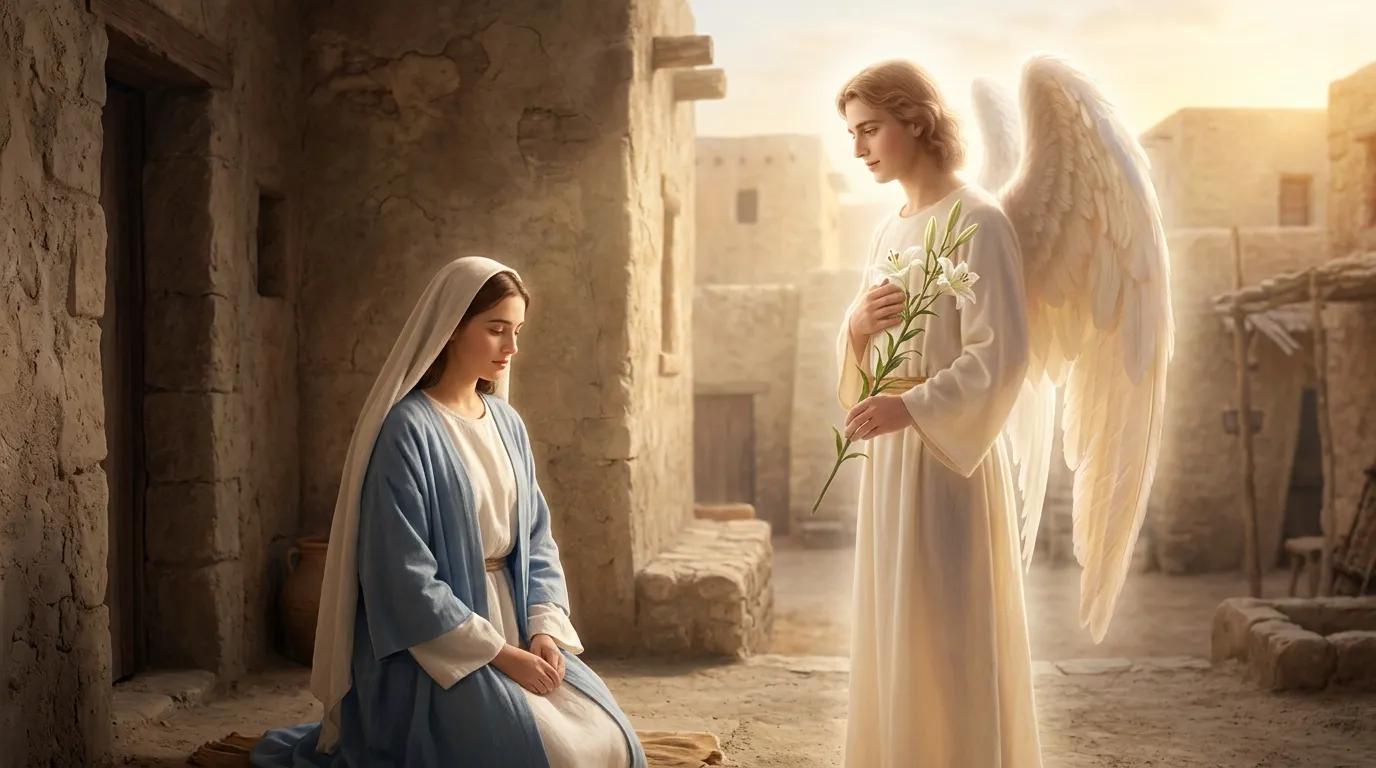
Mary was a young Jewish woman from Nazareth. The angel Gabriel appeared to her and announced that she would give birth to Jesus, the Son of God.
Luke 1:30–33 records Gabriel telling Mary that she had found favor with God and would conceive a son. The child would be called Jesus and would reign forever.
Mary did not respond as though she understood every detail. She asked how this could happen. After receiving Gabriel’s answer, she responded with humble faith, saying that she was the Lord’s servant (Luke 1:38).
Joseph was Mary’s betrothed husband. Matthew 1:19 describes him as a righteous man.
When Joseph learned that Mary was pregnant before they had lived together as husband and wife, he planned to end the relationship quietly. He did not want to shame her publicly.
Then an angel appeared to Joseph in a dream and told him not to be afraid to take Mary as his wife. The angel explained that the child had been conceived by the Holy Spirit and instructed Joseph to name Him Jesus (Matthew 1:20–21).
Joseph obeyed.
Mary and Joseph Meaning in the Bible Hebrew Meaning
The names Mary and Joseph come from ancient Hebrew traditions, although Mary appears in the New Testament through the Greek form of her name.
Mary’s Hebrew name is generally connected with Miryam (Miriam). The exact original meaning of Miriam is debated. Suggested meanings include ideas such as bitterness, rebellion, or other possible ancient word roots. Because the exact etymology is uncertain, Christians should not treat one proposed meaning as a definite biblical teaching.
Joseph comes from the Hebrew name Yosef (יוֹסֵף). It is connected with the idea of adding or increasing. In Genesis 30:24, Rachel named her son Joseph and said, “May the LORD add to me another son.” The name therefore has a clear connection with the Hebrew verb for adding.
Still, the Bible does not teach that the meaning of a person’s name determines his or her spiritual destiny.
The most important meaning of Mary and Joseph comes from their lives and their place in God’s plan, especially their relationship to Jesus.
The Biblical Meaning of Mary: Faith and Humble Obedience
Mary’s story begins with God’s grace.
Gabriel told her that she had “found favor with God” (Luke 1:30). Mary was not presented as someone seeking fame or power. She was a young woman who received a calling that could bring confusion, social pressure, and personal hardship.
Yet she trusted God.
Her words in Luke 1:38 are one of the clearest pictures of surrender in Scripture: she accepted God’s will even though she could not see the entire path ahead.
Mary’s biblical example teaches us that faith means trusting God even when we do not have every answer.
This can apply to everyday Christian life.
You may pray about a job and not know what will happen. You may face a family decision without seeing the future. You may feel called to forgive someone even when your emotions resist it.
Mary’s example reminds us that obedience does not always begin with complete understanding.
Mary as an Example of Humility
Mary’s song in Luke 1:46–55, often called the Magnificat, gives another important part of her biblical meaning.
She praises God rather than praising herself. She speaks about God’s greatness, mercy, faithfulness, and power.
This is important because Mary understood that her role was connected to what God was doing, not to her own glory.
Her response points Christians toward a simple truth:
God’s calling should lead us toward worship, not pride.
When God gives you an opportunity to serve, teach, help, encourage, or care for others, the goal is not personal attention. The goal is to honor Him.
The Biblical Meaning of Joseph: Righteousness and Obedience
Joseph’s story teaches a different but equally powerful lesson.
Matthew calls Joseph a righteous man (Matthew 1:19). Yet his righteousness was not harsh or cruel. When he believed Mary had been unfaithful, he planned to handle the matter quietly.
Then God gave him new information.
An angel told Joseph the truth about Mary’s pregnancy and instructed him to take Mary as his wife.
Joseph obeyed.
Matthew 1:24 says that when Joseph woke up, he did what the angel commanded.
This is one of the strongest lessons from Joseph’s story:
Biblical righteousness is not only about knowing what is right. It also involves doing what God commands.
Joseph did not allow fear, public opinion, or confusion to stop him from obeying God.
Joseph as a Picture of Quiet Faithfulness
The Bible does not record many words spoken by Joseph.
Instead, we see his actions.
He protected Mary. He accepted Jesus as part of his household. He followed God’s warning to escape to Egypt when Herod sought to destroy the child (Matthew 2:13–15). Later, he returned with his family when God directed him to do so (Matthew 2:19–23).
Joseph’s story is a beautiful reminder that faithfulness does not have to be loud to be meaningful.
A Christian father who quietly cares for his family, a mother who patiently teaches her children God’s Word, or a believer who serves others without seeking attention can reflect this kind of faithfulness.
Mary and Joseph and God’s Plan for Jesus
The most important point is that Mary and Joseph’s story is ultimately about Jesus Christ.
Matthew connects Jesus’ birth with Old Testament prophecy, including Isaiah 7:14 (Matthew 1:22–23). Luke emphasizes God’s promise concerning the Son Mary would bear (Luke 1:31–35).
Mary and Joseph were important participants in God’s plan, but they were not the source of salvation.
Jesus is the Savior.
This distinction matters. Christians can honor Mary and Joseph for their faith without giving them a role that Scripture gives only to Christ.
The Bible points people to Jesus as the One who saves from sin (Matthew 1:21), the Son of God, and the promised King.
What Mary and Joseph Symbolize Spiritually
The Bible gives us clear facts about Mary and Joseph. Christians also draw spiritual lessons from their story.
These lessons are useful when they remain grounded in Scripture.
Faith When the Future Is Unclear
Mary and Joseph both faced an uncertain future.
Neither had a complete picture of what their lives would look like.
Yet they obeyed God one step at a time.
Faith does not require knowing tomorrow. It requires trusting the God who already knows tomorrow.
Obedience During Difficult Seasons
Mary faced misunderstanding. Joseph faced a situation that could have brought shame and confusion.
Their story shows that obedience can be costly.
Following God does not mean life will always become easy. It means we do not have to walk through difficult seasons alone.
God’s Protection and Guidance
God warned Joseph about Herod’s plan and told him to take Mary and Jesus to Egypt (Matthew 2:13).
Later, God directed Joseph to return (Matthew 2:19–20).
This does not mean Christians will always receive dreams or direct instructions about every decision. The passage shows God’s specific guidance in this unique part of salvation history.
For believers today, God’s normal foundation for guidance is His Word, wisdom, prayer, and godly counsel.
Mary and Joseph Meaning in Dreams
Some people dream about Mary, Joseph, baby Jesus, a manger, or the Holy Family and wonder what it means.
The Bible does contain dreams that were important to God’s purposes. Joseph himself received dreams in Matthew 1 and 2.
However, Scripture does not give a fixed dream dictionary saying that seeing Mary always means one thing or seeing Joseph always means another.
Therefore, Christians should be careful.
If you dream about Mary or Joseph, it may remind you of themes such as faith, obedience, family, humility, protection, or trust in God. But that is an interpretation, not a guaranteed message from God.
How Should Christians Test a Dream?
Any spiritual impression or dream should be tested against Scripture.
Ask:
- Does this interpretation agree with the Bible?
- Does it point me toward Jesus?
- Does it encourage obedience to God’s Word?
- Does it produce wisdom rather than fear and confusion?
- Am I treating a personal dream as more authoritative than Scripture?
A dream should never be used to replace God’s Word.
James 1:5 encourages believers to ask God for wisdom, while 1 Thessalonians 5:21 teaches Christians to test things carefully.
Mary and Joseph as an Example of Family Faith
The Holy Family also gives Christians a picture of family responsibility.
Joseph accepted the responsibility of protecting Mary and Jesus. Mary treasured and reflected on the events surrounding Jesus’ birth (Luke 2:19).
Later, Luke 2:41–52 shows Mary and Joseph taking Jesus to Jerusalem according to their Jewish custom. This shows a family seeking to live within God’s law and worship practices.
Christian families today can learn from this.
Faith can be built through simple habits:
- praying together
- reading Scripture
- attending church
- teaching children about Jesus
- showing forgiveness
- serving others
- trusting God during hard times
These ordinary actions can shape a home around faith and love.
What Can Christians Learn From Mary and Joseph?
Their story gives several practical lessons.
Trust God Before You See the Whole Picture
Mary did not know every detail about the future. Joseph did not know everything that would happen after Jesus was born.
Yet both obeyed the light God gave them.
You may not know the whole plan, but you can trust the One who does.
Do Not Let Fear Control Your Decisions
The angel told Joseph, “Do not fear” (Matthew 1:20).
Fear can make us imagine the worst.
Prayer helps us bring those fears to God rather than allowing them to control our choices.
Choose Compassion
Joseph’s first response was not revenge or public humiliation.
His example reminds Christians to treat people with dignity, even during painful situations.
Be Faithful in Small Responsibilities
Joseph cared for his family through practical actions.
Mary cared for Jesus as His mother.
Neither needed a public platform to be faithful.
God values faithful obedience, even when other people never see it.
Why Are Mary and Joseph Important to Christians?
Mary and Joseph are important because God used them in the earthly story of Jesus’ birth and childhood.
Mary reminds Christians of humble faith and surrender to God’s will.
Joseph reminds Christians of righteousness, courage, protection, and obedient action.
Together, their story shows how God can use ordinary people in extraordinary ways.
But their greatest importance is not found in themselves.
Their story points beyond them to Jesus Christ.
Frequently Asked Questions
What is the main meaning of Mary and Joseph in the Bible?
The main biblical lesson is faithful obedience to God. Mary accepted God’s calling, and Joseph obeyed God’s direction even during a confusing and difficult situation.
What does Mary symbolize in Christianity?
Mary is commonly seen as an example of humility, faith, obedience, and willingness to serve God. These themes are strongly supported by her responses in Luke 1.
What does Joseph symbolize in the Bible?
Joseph can be understood as an example of righteousness, obedience, courage, and faithful family responsibility, based on his actions in Matthew 1–2.
What does the name Joseph mean in Hebrew?
Joseph comes from the Hebrew Yosef, which is connected with the idea of adding or increasing. Genesis 30:24 connects the name with Rachel’s hope that God would add another son.
What does the name Mary mean in Hebrew?
Mary is related to the Hebrew name Miryam or Miriam. Its exact original meaning is uncertain, so several possible meanings have been proposed. Scripture does not teach one fixed spiritual meaning for the name.
What does it mean to dream about Mary and Joseph?
The Bible does not provide a universal meaning for such a dream. A Christian may reflect on themes such as faith, family, obedience, humility, or trust in God, but the dream should always be tested against Scripture rather than treated as certain prophecy.
Did Mary and Joseph know everything about Jesus?
No. Scripture shows that they received important revelations about Jesus, but they did not understand everything immediately. Luke 2:50 shows that there were things they did not fully understand.
What is the biggest lesson from Mary and Joseph?
One of the greatest lessons is that God can use people who faithfully obey Him even when they do not understand everything ahead. Their story ultimately directs our attention to God’s faithfulness and to Jesus Christ.
Final Thoughts
The story of Mary and Joseph is not simply a story about two people from long ago. It is a reminder that God is faithful when life feels uncertain.
Mary did not have every answer. Joseph did not know every step ahead. Yet both chose obedience.
Their example can encourage you today.
Maybe you are facing a decision you do not understand. Maybe your family is going through a hard season. Maybe you are praying for direction and wondering why God has not shown you the whole path.
You can still take the next faithful step.
God does not ask you to know everything. He calls you to trust Him.
Mary and Joseph ultimately point us toward the greatest truth of all: God kept His promise and sent Jesus Christ into the world.
So pray. Open God’s Word. Seek wise counsel. Obey what Scripture clearly teaches. And when the road ahead is unclear, remember that the God who guided Mary and Joseph is still faithful today.
Let their story encourage you to walk with humility, courage, and faith—and to keep your eyes firmly on Jesus.