Have you ever felt lost and wished someone would show you the way home?
Imagine a traveler walking through a dark forest. The path is unclear. Fear fills the air. Then a bright light appears in the distance. That light leads the traveler to safety. In many ways, this picture helps us understand the salvation meaning in the Bible.
Life can sometimes feel confusing, painful, or uncertain. People often wonder if God sees their struggles or if there is hope beyond their mistakes. The Bible answers these questions with one powerful word: salvation.
But what does salvation really mean? Is it simply being saved from danger? Does it only refer to life after death? Or does it have a deeper spiritual meaning for Christians today?
The Bible presents salvation as God’s loving gift to humanity. It is His way of rescuing people from sin and restoring their relationship with Him. It is a story of grace, forgiveness, and new life.
Understanding the salvation meaning in the Bible can help believers grow in faith, find peace, and trust God’s plan more fully. Let’s explore this beautiful biblical truth and discover the hope it offers.
Biblical Meaning of Salvation
The salvation meaning in the Bible centers on God’s work of saving people from sin and bringing them into a relationship with Him.
The word “save” appears throughout Scripture. It means to rescue, deliver, protect, and restore. Spiritually, salvation refers to being saved from the power and consequences of sin through faith in Jesus Christ.
One of the most loved Bible verses explains this clearly:
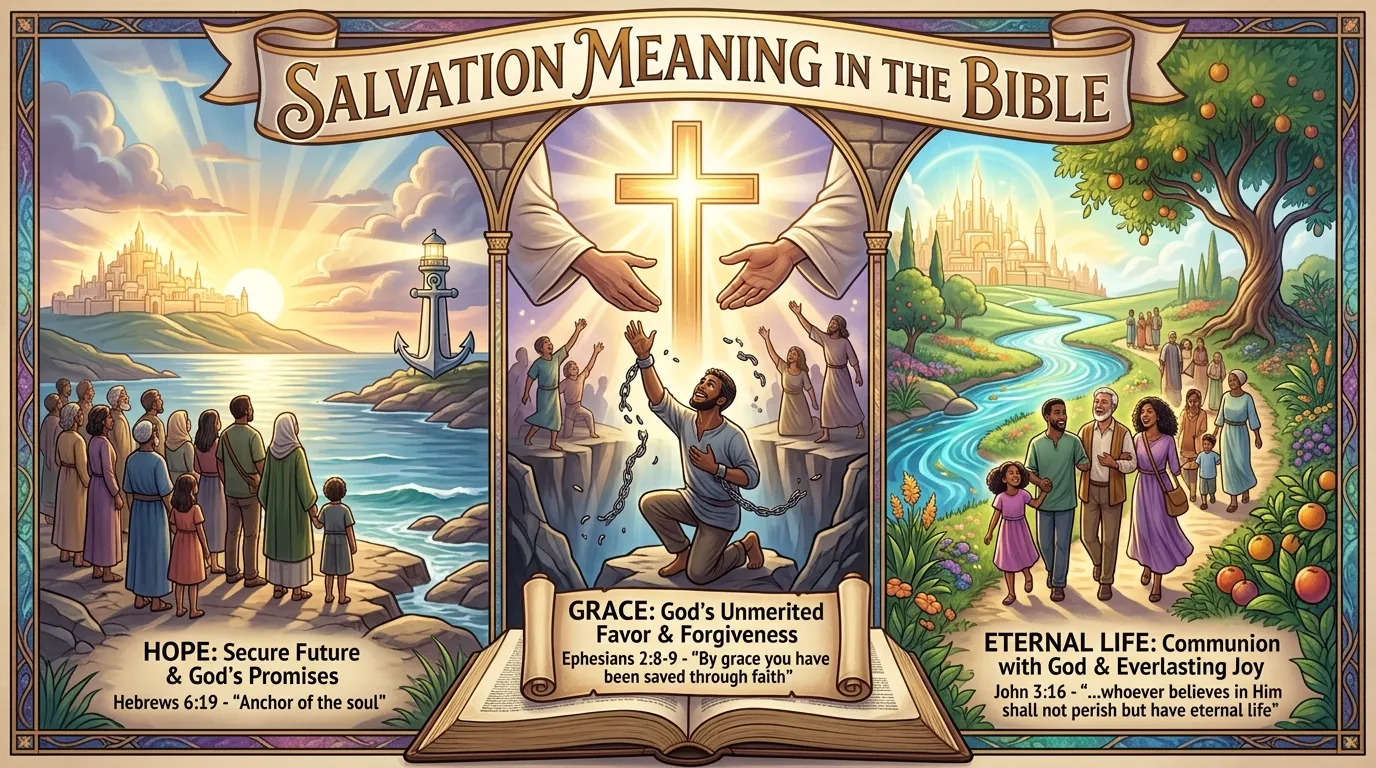
“For God so loved the world that he gave his one and only Son, that whoever believes in him shall not perish but have eternal life.” (John 3:16)
This verse shows that salvation begins with God’s love. It is not something people earn through good works. Instead, it is a gift offered through Jesus.
Salvation Through Grace
The Bible teaches that salvation comes through grace.
Ephesians 2:8-9 says:
“For it is by grace you have been saved, through faith—and this is not from yourselves, it is the gift of God—not by works.”
Grace means receiving God’s kindness even when we do not deserve it. Through Jesus’ death and resurrection, believers receive forgiveness and eternal life.
This truth brings comfort because salvation depends on God’s faithfulness rather than human perfection.
Salvation Brings Forgiveness
Another important part of biblical symbolism surrounding salvation is forgiveness.
Everyone makes mistakes. Everyone falls short of God’s perfect standard. Yet salvation offers a fresh start.
1 John 1:9 says:
“If we confess our sins, he is faithful and just and will forgive us our sins.”
This forgiveness removes guilt and restores peace with God.
Salvation Means New Life
The Bible often describes salvation as a new beginning.
2 Corinthians 5:17 declares:
“If anyone is in Christ, the new creation has come.”
This transformation affects the heart, mind, and spirit. Old habits begin to change. New desires grow. Faith becomes stronger.
This is why salvation is often connected with transformation, spiritual awakening, and renewed purpose.
Salvation and Eternal Life
One of the greatest promises of salvation is eternal life.
Romans 6:23 says:
“For the wages of sin is death, but the gift of God is eternal life in Christ Jesus our Lord.”
The Bible teaches that believers have hope beyond this life. Salvation opens the door to everlasting fellowship with God.
A Loving Invitation
Throughout Scripture, God invites people to receive salvation.
Romans 10:9 says:
“If you declare with your mouth, ‘Jesus is Lord,’ and believe in your heart that God raised him from the dead, you will be saved.”
This invitation remains open to all who seek Him.
Warning and Hope
The Bible also presents salvation as a choice.
God desires people to follow Him, yet He allows them to choose. Scripture warns against rejecting God’s offer of grace. At the same time, it repeatedly emphasizes His mercy and patience.
The overall message is not fear but hope. God’s desire is to save, heal, and restore.
Spiritual Significance and Symbolism
The spiritual symbolism of salvation goes far beyond rescue from danger.
Salvation represents a journey from darkness into light. It symbolizes freedom from guilt, fear, and separation from God.
Many Christians describe salvation as finding peace after carrying a heavy burden for years. Others compare it to waking up after a long sleep and finally seeing life clearly.
This spiritual message teaches that God never stops reaching out to His children.
In daily life, salvation can inspire believers to:
- Trust God during difficult seasons.
- Pray with greater confidence.
- Show grace to others.
- Live with hope instead of fear.
- Seek God’s guidance in every decision.
The presence of God becomes more real as faith grows. Salvation reminds believers that they are loved, valued, and never alone.
It also encourages spiritual growth. Just as a seed grows into a strong tree, salvation begins a lifelong process of becoming more like Christ.
For many people, this journey includes prayer, worship, Bible study, and learning to trust God’s timing.
Biblical Interpretations in Dreams or Real Life
Sometimes people wonder whether dreams about being rescued, finding safety, crossing a bridge, or escaping danger carry spiritual meaning.
In Christian dream interpretation, such images may symbolize salvation, deliverance, or God’s protection.
For example:
- A peaceful rescue dream may reflect God’s comfort and guidance.
- Finding a safe path may symbolize spiritual direction.
- Crossing from darkness into light can represent faith and renewal.
- Being saved from danger may point to God’s care during difficult times.
However, not every dream has a direct spiritual meaning. Christians are encouraged to pray for wisdom and compare any dream message with Scripture.
In real life, salvation often appears through moments of conviction, forgiveness, answered prayer, or a renewed desire to follow God.
Whether experienced in a dream or daily life, the central message remains the same: God offers hope, redemption, and a path forward.
Practical Lessons & Faith Insights
The salvation meaning in the Bible teaches us to trust God’s grace every day.
Spend time in prayer. Read God’s Word. Remember that salvation is a gift rooted in His love. When challenges come, lean on God’s promises and seek His guidance. Faith grows stronger when believers place their hope in Him and walk closely with Him.
Conclusion
The salvation meaning in the Bible is a beautiful story of God’s love, mercy, and redemption. Through Jesus Christ, people can receive forgiveness, experience spiritual transformation, and gain the hope of eternal life.
Whether you are exploring faith for the first time or deepening your Christian walk, salvation reminds you that God is always ready to welcome, restore, and guide you. Trust His promises, seek His presence, and walk forward with confidence knowing that His saving grace is always available.