Imagine standing in Jerusalem and looking toward a great temple filled with worshipers. For the Jewish people, the Temple was not just a building. It was a place of worship, sacrifice, prayer, and remembrance of God’s presence.
The Second Temple in Jerusalem meaning in the Bible is deeply connected with restoration, hope, worship, and God’s faithfulness. It was built after the first Temple, which had been destroyed by the Babylonians. The rebuilding of the Temple became a powerful sign that God had not abandoned His people.
The Second Temple also has a major place in the New Testament. Jesus taught in the Temple. His parents brought Him there as a child. He cleansed it, taught there, and spoke about its coming destruction.
So, what does the Second Temple mean in the Bible?
At its heart, the Second Temple points to restoration after loss. It reminds believers that God can bring new beginnings after painful seasons. At the same time, Scripture shows that a beautiful building cannot replace a faithful heart.
The story of the Second Temple invites us to look beyond stones and walls. It points us toward God’s presence, true worship, spiritual renewal, and the greater hope fulfilled in Jesus Christ.
Biblical Meaning of the Second Temple in Jerusalem
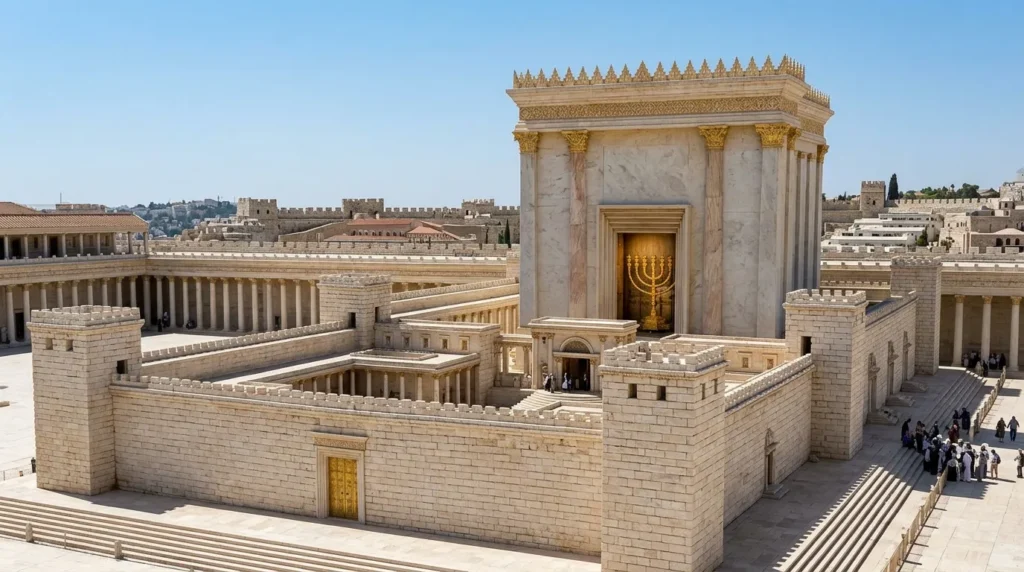
The biblical meaning of the Second Temple in Jerusalem begins with the destruction of Solomon’s Temple.
The first Temple was built by Solomon in Jerusalem. It was the center of Israel’s worship. However, because of Judah’s long history of rebellion and idolatry, Jerusalem was conquered by Babylon. The Temple was destroyed, and many people were taken into exile.
This was a deeply painful event.
Yet God promised restoration.
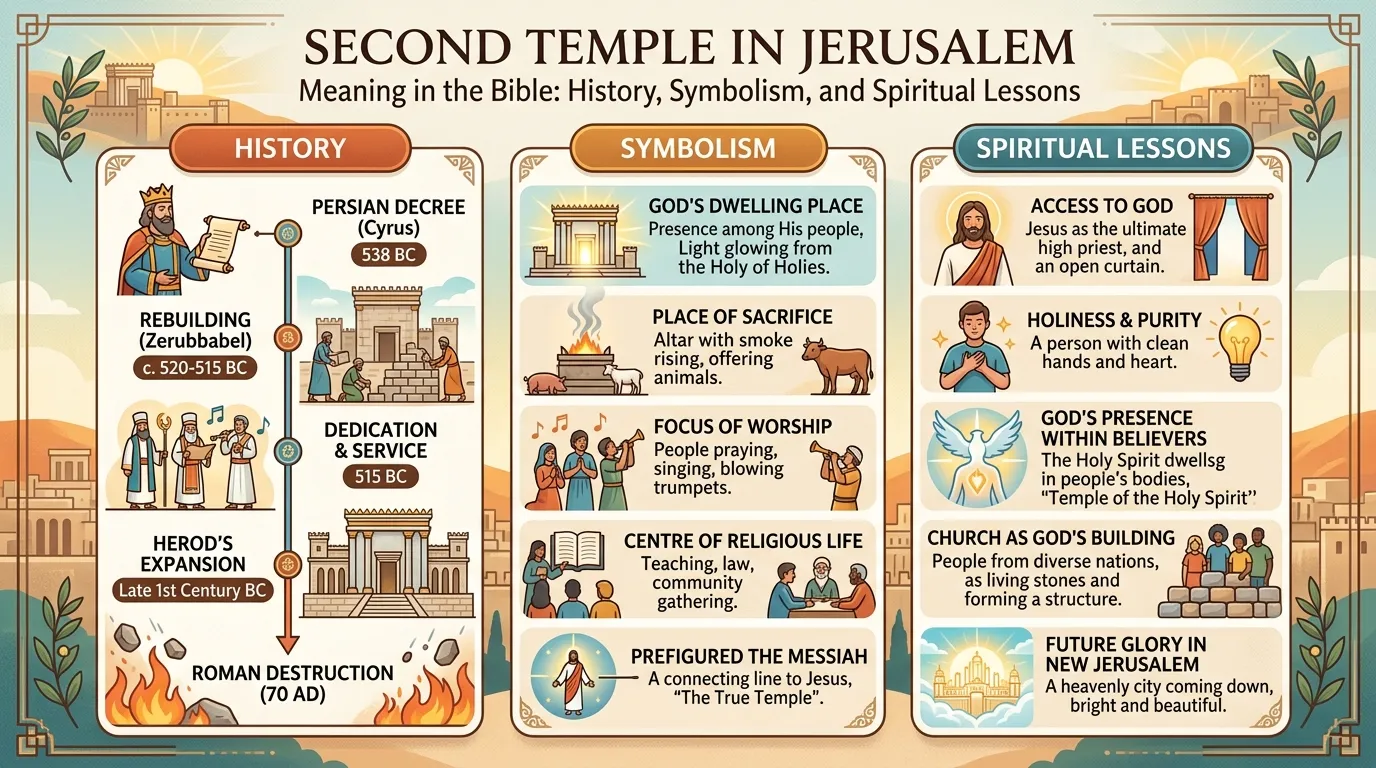
After the Persian king Cyrus allowed the Jewish exiles to return, the people began rebuilding the Temple. The book of Ezra describes this important period.
Ezra 3:10–11 says that when the builders laid the foundation of the Temple, the people praised the Lord. Some shouted with joy, while older people who had seen the first Temple wept.
This scene shows something beautiful: God was giving His people a new beginning.
The Second Temple was completed in the sixth century BC, traditionally dated to about 516 BC. It later became the Temple that stood during the time of Jesus, although Herod the Great greatly expanded and renovated it.
The Second Temple as a Symbol of Restoration
One of the strongest themes connected with the Second Temple is restoration.
The people had lost their city, their Temple, and much of what felt familiar. But God allowed them to return and rebuild.
The prophet Haggai encouraged the people not to give up when the new Temple seemed less impressive than Solomon’s Temple.
Haggai 2:9 says:
“The latter glory of this house shall be greater than the former.”
This verse gave the people hope.
The Second Temple therefore reminds Christians that a season of loss does not mean the end of God’s work. God can rebuild what has been broken and lead His people into a new season.
The Second Temple and God’s Presence
The Temple was associated with the worship of God and His covenant relationship with Israel.
But Scripture also makes clear that God cannot be contained by a human building.
When Solomon dedicated the first Temple, he recognized this truth. In 1 Kings 8:27, he declared that even heaven and the highest heaven could not contain God.
The Temple was therefore not a box that held God. It was a sacred place where His people gathered to worship Him.
This gives the Second Temple an important spiritual lesson: God desires relationship, not merely religious buildings or outward rituals.
The Second Temple and Jesus
The Second Temple is especially important in the New Testament because Jesus entered it many times.
As a child, Jesus was brought to the Temple in Jerusalem (Luke 2:22–38). At age twelve, He was found there discussing Scripture with teachers (Luke 2:46–47).
During His ministry, Jesus taught in the Temple.
He also drove out people who were buying and selling there. In Matthew 21:13, Jesus said:
“My house shall be called a house of prayer.”
Jesus was showing that worship had become mixed with practices that did not honor God.
The Temple was meant to direct people toward God, prayer, holiness, and worship.
A Warning About Outward Religion
The Second Temple also carries a warning.
A magnificent religious place does not automatically mean that people are living close to God.
Jesus strongly challenged religious hypocrisy. He wanted people to understand that obedience, mercy, faith, and a sincere heart matter to God.
This lesson remains important for Christians today. A person can attend church, read the Bible, or use religious words while still having a heart that is far from God.
The Second Temple story calls believers to seek genuine faith rather than empty religion.
Second Temple in Jerusalem Hebrew Meaning
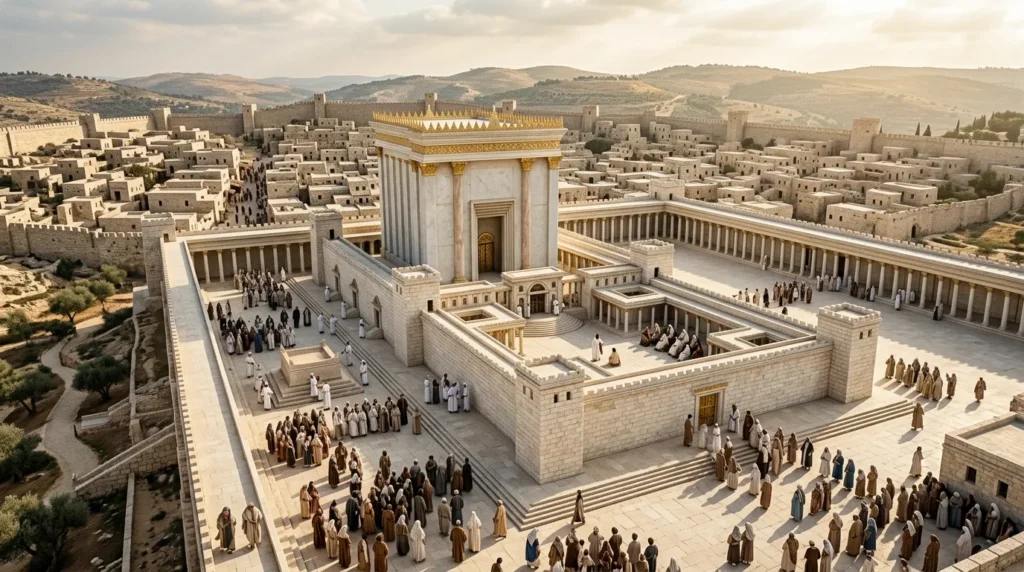
There is an important language point when discussing the Second Temple Hebrew meaning.
The exact English phrase “Second Temple” is a modern historical label. The Bible does not use a special Hebrew word that literally means “Second Temple” as one fixed term.
The Hebrew word commonly associated with the Temple is מִקְדָּשׁ, transliterated miqdāsh or mikdash. It means sanctuary, holy place, or sacred place.
The word comes from the Hebrew root קדשׁ (q-d-sh), which is connected with the idea of holiness or being set apart.
Another Hebrew word often used for a temple or palace is הֵיכָל (heikhal), meaning temple, palace, or large building.
In the Old Testament, the Temple is therefore connected with the idea of a place set apart for God and worship.
The Second Temple was built during the period described in books such as Ezra, Haggai, and Zechariah.
Haggai’s message is especially important because the prophet encouraged the returned exiles to finish the work. The people may have felt that their new Temple could never compare with Solomon’s Temple.
God told them to be strong and continue the work.
This gives the Hebrew and biblical context a powerful message: what God restores does not have to look exactly like what was lost to have value.
Spiritual Significance and Symbolism of the Second Temple
The spiritual meaning of the Second Temple in Jerusalem can be understood through several major biblical themes.
Restoration After Loss
The Temple had been destroyed, but the people were allowed to rebuild.
This can remind believers that God can work after seasons of disappointment, failure, grief, or change.
Your new season may not look like your old one.
Yet God can still use it.
Hope in Difficult Times
The people rebuilding the Temple lived through hardship. Their work was not easy.
Haggai and Zechariah encouraged them to keep going.
The story therefore symbolizes hope and perseverance.
When life feels broken, a believer can remember that God’s work may continue even when progress seems small.
A Call to True Worship
The Temple existed for worship.
Its story reminds Christians that worship is more than singing songs or entering a religious building. It involves giving God our heart, obedience, time, and trust.
Romans 12:1 later describes offering our bodies to God as a living sacrifice.
For Christians, this points toward a life that honors God every day.
A Picture of Spiritual Transformation
The Temple was rebuilt with physical stones. But the Bible repeatedly points beyond physical structures.
In the New Testament, believers are described as God’s temple.
For example, 1 Corinthians 6:19 says that the believer’s body is a temple of the Holy Spirit.
This creates a powerful Christian connection.
The question is no longer only, “Is the building restored?”
It can also become:
“Is my heart being restored?”
The Greater Hope Found in Christ
The Second Temple existed during the earthly ministry of Jesus.
John 2:19 records Jesus saying:
“Destroy this temple, and in three days I will raise it up.”
John explains that Jesus was speaking about the temple of His body (John 2:21).
This is a major Christian understanding of the Temple.
The physical Temple pointed toward something greater. In Christ, believers encounter God’s saving work in a new and deeper way.
The Temple story therefore connects with the Christian message of Jesus’ death and resurrection.
The Second Temple and Bible Prophecy
The Second Temple also appears in Jesus’ teaching about Jerusalem.
Jesus warned that the Temple would be destroyed.
In Matthew 24:2, He said that not one stone would be left upon another.
The Temple was later destroyed by the Romans in AD 70.
This historical event is important because it shows that the Second Temple was not permanent.
Its destruction teaches a serious spiritual lesson: earthly structures do not last forever.
Human institutions can change. Cities can fall. Buildings can disappear.
But God’s promises remain.
For Christians, this shifts the focus from trusting physical structures to trusting God Himself.
Biblical Interpretations of the Second Temple in Dreams or Real Life
Some people may dream about the Second Temple in Jerusalem or see Temple imagery during prayer, Bible study, or a meaningful life season.
The Bible does not give a universal rule saying that dreaming about the Second Temple always has one specific meaning.
Therefore, dream interpretation should be approached carefully.
If someone dreams of a rebuilt Temple, they might personally connect it with restoration, hope, worship, or a desire to return to God. A dream of a damaged Temple might bring thoughts about loss, spiritual struggle, or the need for renewal.
But these are personal spiritual interpretations, not direct biblical promises about what every dream means.
Scripture should remain the main guide.
A Christian who has a meaningful dream can pray, examine its message in light of the Bible, and avoid treating the dream as equal to Scripture.
James 1:5 encourages believers to ask God for wisdom.
The safest approach is to seek wisdom, prayer, and biblical truth rather than fear.
What the Second Temple Teaches Christians Today
The story of the Second Temple gives several simple faith lessons.
God can restore. A broken season does not mean God has stopped working.
Keep building. The returned exiles had to continue their work even when the task was difficult.
Choose true worship. God cares about the condition of our hearts, not only our outward religious actions.
Trust God’s timing. The people did not see the entire story at once.
Look to Christ. For Christians, the Temple story ultimately points beyond a building toward Jesus and the presence of God with His people.
When life feels uncertain, spend time in Scripture and prayer. Ask God for wisdom instead of rushing to conclusions. Let biblical truth shape your understanding of spiritual experiences.
Key Takeaways
The Second Temple in Jerusalem meaning in the Bible is closely connected with restoration, worship, hope, holiness, and God’s faithfulness.
It was built after the destruction of the first Temple and became central to Jewish worship. It was also the Temple known by Jesus during His earthly ministry.
For Christians, its story carries an even deeper message. The Temple points toward God’s presence and ultimately toward Jesus Christ, whose death and resurrection changed how believers understand God’s dwelling with His people.
The Second Temple reminds us that what is lost is not always the end of the story. God can bring restoration, purpose, and hope from difficult seasons.
When you face uncertainty, do not let fear become your guide. Return to Scripture. Pray. Trust God’s wisdom.
The stones of the Second Temple are part of history, but its spiritual lessons still speak today: God is faithful, true worship comes from the heart, and hope can rise after loss.