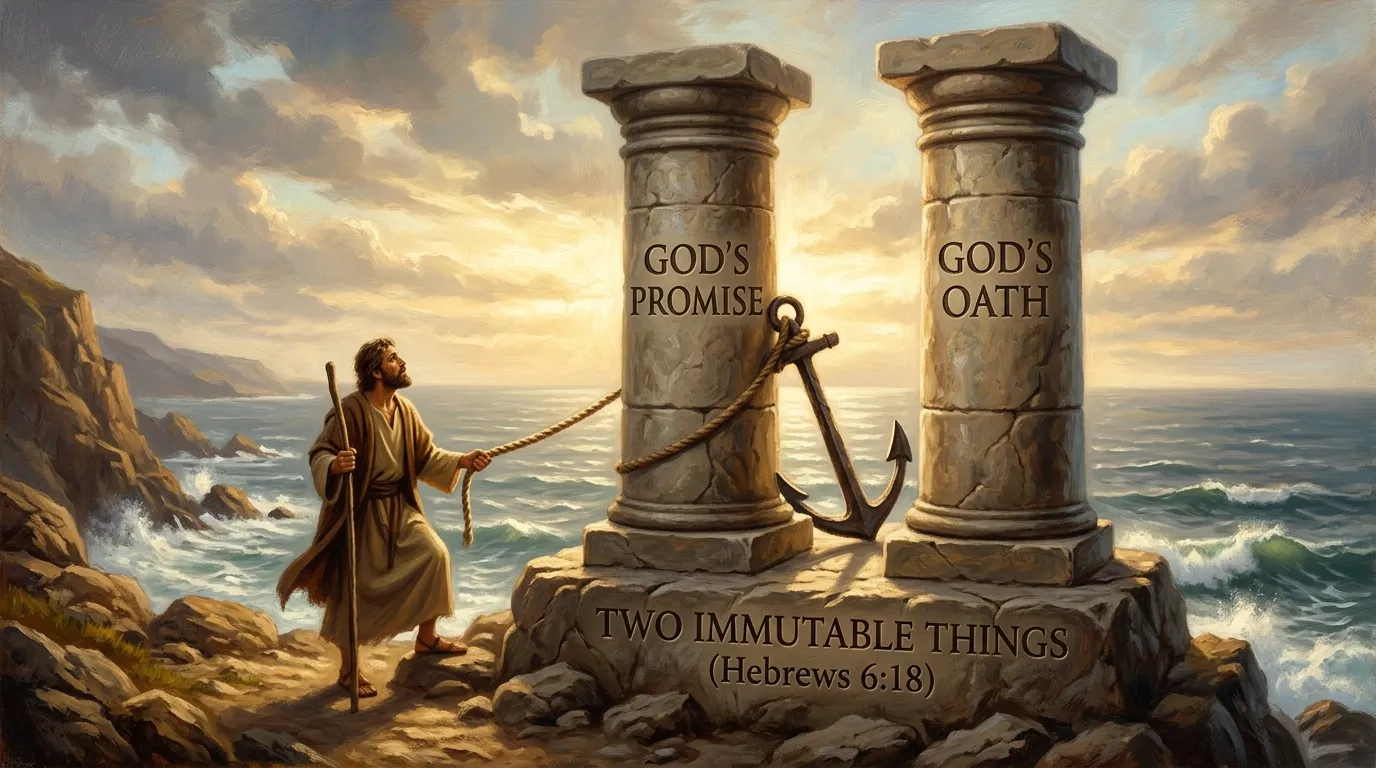
Have you ever held on to a promise during a season when everything around you seemed uncertain? Maybe you were praying for your family, waiting for an answer, or simply trying to keep trusting God when life felt confusing. In those moments, the two immutable things meaning in the Bible becomes deeply encouraging. Hebrews 6:18 speaks about “two immutable things” through which God gives believers strong encouragement and a firm hope.
The phrase may sound difficult at first, but its message is simple: God is completely trustworthy, and His promises can be trusted because He cannot lie. Hebrews 6 points believers toward hope that is not based on changing feelings or circumstances. It points us toward the unchanging character and faithfulness of God.
Let us look carefully at what Scripture says and how this truth can strengthen Christian faith today.
What Are the Two Immutable Things in the Bible?
The phrase two immutable things comes from Hebrews 6:18. The word immutable means unchanging, unchangeable, or unable to be altered.
Hebrews 6:17–18 explains that God wanted to make the certainty of His purpose especially clear to those who would receive His promise. The writer then says that there are two unchangeable things in which it is impossible for God to lie.
In the immediate context, these two things are understood as:
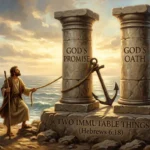
- God’s promise
- God’s oath
The passage is referring to God’s promise and the oath He made to confirm that promise.
The point is not that there are only two unchanging qualities of God. Rather, Hebrews is emphasizing the certainty of God’s word and His sworn confirmation of it.
God’s promise is trustworthy, and God’s oath confirms its certainty.
This gives believers a strong reason to hold firmly to hope.
Two Immutable Things Meaning in Hebrews 6:18
Hebrews 6:18 is part of a larger passage about God’s promise to Abraham.
Earlier in Hebrews 6, the writer reminds believers that God made a promise to Abraham and confirmed it with an oath. Abraham waited patiently and eventually received what God had promised.
The writer uses this example to encourage Christians not to give up hope.
Hebrews 6:18 says that these two things are unchangeable because it is impossible for God to lie. This is the heart of the message.
Human beings can make promises and fail to keep them. People can change their minds. Circumstances can change overnight. But God’s character does not change.
Therefore, Christian hope has a firm foundation.
Why Did God Use Both a Promise and an Oath?
God’s word alone is completely trustworthy. He does not need to take an oath because His character is already perfect.
However, in Hebrews 6, the oath serves as additional confirmation for God’s people.
The writer says that God did this so that believers would have strong encouragement to take hold of the hope placed before them.
This shows God’s kindness. He knows that people can become discouraged and afraid. He gives His people reassurance so they can continue trusting Him.
The oath does not make God’s promise more truthful. It confirms the certainty of what God has already promised.
Two Immutable Things Meaning in the Bible Hebrew Meaning
The New Testament was written in Greek, not Hebrew, so the phrase “two immutable things” in Hebrews 6:18 does not have an original Hebrew phrase. However, looking at important Hebrew concepts behind God’s promise, oath, faithfulness, and unchanging character can help us understand the biblical idea.
The Old Testament often describes God as faithful and true. God’s covenant relationship with His people is built on His dependable character.
One important Hebrew concept is emunah, which can relate to faithfulness, firmness, or reliability. It helps express the idea of something dependable and trustworthy.
Another important concept is shevuah, meaning an oath or sworn promise. An oath could be used to confirm the seriousness of a commitment.
These ideas fit well with the message of Hebrews 6.
The Bible consistently presents God as One who can be trusted.
Hebrews 6:18 is written in Greek, but its message agrees with the Old Testament picture of God’s faithfulness and covenant promises.
What Does Immutable Mean Spiritually?
To be immutable means to be unchanging.
When Christians speak about God’s immutability, they mean that God’s character and faithfulness do not change like human circumstances do.
For example, Scripture teaches that God is faithful. His faithfulness is not dependent on whether today is easy or difficult.
James 1:17 describes God as the Father of lights with whom there is no variation or shifting shadow. Malachi 3:6 records God’s words, “I the LORD do not change.”
These passages do not mean that God never acts differently in different situations. Instead, they point to the consistency of His character.
God remains holy.
God remains faithful.
God remains truthful.
God remains worthy of trust.
That is why His promises give believers hope.
The Two Immutable Things and Christian Hope
Hebrews 6 does not present hope as wishful thinking.
Biblical hope is confident expectation based on God.
Hebrews 6:19 describes this hope as “an anchor for the soul.” This is a beautiful picture.
An anchor keeps a boat from drifting away when the water is rough. In the same way, Christian hope can keep the believer spiritually grounded during difficult seasons.
You may not know what tomorrow will bring.
But you can know the character of the God who holds tomorrow.
Christian hope is anchored in God’s faithfulness rather than human certainty.
How God’s Promise and Oath Encourage Believers
The two immutable things have a practical purpose. They are meant to encourage God’s people.
Imagine a Christian who has been praying for months. Nothing seems to change. The person may begin to wonder whether God is listening.
Hebrews 6 redirects the heart.
Instead of saying, “Look at your circumstances,” Scripture says, in effect, “Look at the God who made the promise.”
This changes the foundation of faith.
When You Feel Discouraged
God’s promises remind you that your present situation is not the whole story.
When You Feel Afraid
God’s faithfulness reminds you that you are not trusting an unreliable person.
When You Are Waiting
Abraham’s example reminds you that God’s timing can require patience.
When You Doubt
The character of God gives you a reason to return to Scripture and strengthen your faith.
What Are the Two Immutable Things According to Different Christian Interpretations?
The most direct reading of Hebrews 6:17–18 identifies the two things as God’s promise and God’s oath.
Some Christian teachers may describe the passage more broadly by connecting the two immutable things with God’s unchanging promise and unchanging character.
That idea can express a biblical truth, but it is important to distinguish interpretation from the exact wording of the passage.
The text specifically connects the two things with God’s promise and oath.
Therefore, it is safest to say:
The two immutable things in Hebrews 6:18 are God’s promise and His oath confirming that promise.
Both provide certainty because God cannot lie.
What Does Hebrews 6:18 Teach About God’s Character?
This verse reveals something powerful about who God is.
God Cannot Lie
Numbers 23:19 says that God is not a man that He should lie. His word is dependable.
This does not mean believers will always understand God’s promises correctly. It means that when God truly promises something, He will not deceive His people.
God Is Faithful
God’s faithfulness appears throughout Scripture.
He keeps His covenant promises. He remains faithful even when His people struggle.
God Gives Hope
Hebrews 6:18 says that believers have strong encouragement because of God’s unchangeable purpose.
God does not want His people to live without hope.
God Is Worth Trusting
Faith does not mean pretending that problems do not exist. It means trusting God even while facing real problems.
The Connection Between the Two Immutable Things and Abraham
Abraham is central to the context of Hebrews 6.
God promised Abraham that He would bless him and multiply his descendants. Abraham had to wait patiently for the fulfillment of God’s promise.
The writer of Hebrews uses Abraham as an example of patient faith.
This is important because Christians can sometimes think that waiting means God has forgotten them.
The story of Abraham teaches otherwise.
Waiting is not necessarily evidence that God has abandoned you.
Sometimes faith means continuing to trust God’s character when you cannot yet see the outcome.
Can the Two Immutable Things Apply to Your Life Today?
Yes, but we should apply the passage carefully.
Hebrews 6:18 does not mean that every desire we have automatically becomes a promise from God.
For example, you might strongly want a particular job, relationship, house, or outcome. You should not automatically say, “God promised me this,” unless Scripture actually gives that promise.
Instead, apply the principle to promises God has truly made in Scripture.
God promises to be with His people.
God promises forgiveness to those who turn to Him in faith.
God promises wisdom to those who ask Him.
God promises eternal life through Christ.
God promises that nothing can separate believers from His love in Christ.
Our confidence should rest on what God has actually said, not on what we simply hope He will say.
Two Immutable Things Meaning in Dreams
Some Christians may wonder whether seeing the number two, an oath, a promise, or another related symbol in a dream has a special connection to Hebrews 6:18.
The Bible does contain examples of God communicating through dreams. Joseph and Daniel, for example, received significant dreams in biblical history.
However, Scripture does not teach that every modern dream has a divine message.
Therefore, Christians should be careful.
If you dream about two objects, two people, promises, anchors, or other symbols, you should not automatically conclude that God is giving you a specific prophecy.
A dream should never be used to override Scripture.
How Should Christians Test a Dream?
Consider these questions:
- Does the interpretation agree with Scripture?
- Does it point toward God’s truth rather than superstition?
- Does it encourage faithfulness to Christ?
- Am I treating a personal impression as though it were biblical revelation?
- Could the dream simply reflect my thoughts, fears, memories, or daily experiences?
Scripture is the standard. A dream is not a replacement for God’s written Word.
What Does Seeing Two Things Symbolize Spiritually?
The number two can have different meanings in different biblical contexts, but Christians should avoid turning biblical numbers into fixed spiritual codes.
For example, Scripture sometimes uses pairs for confirmation, testimony, partnership, or witness. Yet this does not mean that every occurrence of the number two carries the same symbolic meaning.
In Hebrews 6:18, the emphasis is not on the number two as a mystical symbol.
The emphasis is on certainty.
God gave His promise and confirmed it with an oath.
So if someone connects the phrase “two immutable things” with a personal experience, the safest biblical lesson is not numerology.
It is this:
God’s truth is dependable, and His promises give believers a firm reason for hope.
Two Immutable Things and God’s Promises Today
The Bible contains many promises that reveal God’s character and His work.
Here are several truths Christians can confidently hold onto.
- God is with His people. Jesus promised His disciples that He would be with them always, to the end of the age.
- God gives wisdom. James 1:5 encourages believers to ask God for wisdom.
- God offers forgiveness. First John 1:9 teaches that God is faithful and just to forgive those who confess their sins.
- God’s love is secure in Christ. Romans 8:38–39 teaches that nothing in creation can separate believers from the love of God in Christ Jesus.
- God gives eternal life through Christ. The New Testament repeatedly points believers toward this hope.
These promises do not mean Christians will never experience pain.
They mean pain does not have the final word.
What Can Christians Learn From the Two Immutable Things?
Trust God’s Character
Your feelings can change from one day to another.
God’s character does not depend on your emotional state.
When you feel uncertain, return to what Scripture says about Him.
Do Not Build Faith on Circumstances
A difficult day does not prove that God has stopped being faithful.
A good day does not prove that God loves you more.
His character remains constant.
Learn to Wait
Abraham’s story reminds us that God’s promises and God’s timing are not always immediate.
Waiting can become a place where faith grows.
Hold on to Biblical Hope
Hebrews tells believers to take hold of the hope set before them.
Do not let fear become the only voice you hear.
Return to God’s Word.
Test Spiritual Experiences
If you have a powerful dream, feeling, vision, or unusual experience, compare it with Scripture.
Never allow an experience to become more authoritative than God’s Word.
Two Immutable Things Meaning for Everyday Christian Life
The doctrine of God’s faithfulness is not just something to study. It can shape everyday decisions.
Suppose you lose your job. You may feel that your future is falling apart. Hebrews 6 does not promise that you will immediately get another job.
But it reminds you that God’s character has not changed.
Suppose you are waiting for a loved one to make a difficult decision. You cannot control their choices. Yet you can continue praying, seeking wisdom, and trusting God.
Suppose you have failed morally and feel ashamed. The gospel reminds you that God’s grace is available through Christ. Instead of hiding from God, you can confess your sin and turn back to Him.
In every situation, the central question becomes:
What has God actually said?
That question can protect you from fear, superstition, and false expectations.
Frequently Asked Questions
What are the two immutable things in Hebrews 6:18?
The two immutable things are God’s promise and His oath. God used the oath to confirm His promise, showing believers that His word is completely trustworthy.
Why are they called immutable?
They are called immutable because they are unchangeable. Hebrews emphasizes that it is impossible for God to lie.
What is the main message of Hebrews 6:18?
The main message is that Christians can have strong encouragement and firm hope because God is truthful and His promises are trustworthy.
Does immutable mean God never changes His actions?
Not necessarily. The biblical idea focuses on God’s unchanging character, truthfulness, purpose, and faithfulness. Scripture shows God acting in different ways while remaining consistent in who He is.
Does the number two have a special meaning in this verse?
The passage uses two things to emphasize certainty, but Hebrews 6:18 should not be treated as a lesson in mystical numerology. The focus is God’s promise and oath.
Can this verse help someone going through a difficult season?
Yes. Hebrews 6:18–19 was written to strengthen believers in hope. It reminds Christians that their hope is anchored in God’s trustworthy character.
Does Hebrews 6:18 guarantee that every personal desire will happen?
No. The verse does not turn personal wishes into divine promises. Christians should distinguish between God’s promises in Scripture and their own hopes or desires.
A Simple Prayer Based on Hebrews 6:18
You can use the truth of this passage as a starting point for prayer:
Father, thank You that You are faithful and true. When my circumstances change and my heart becomes afraid, help me remember that You do not lie and that Your promises are trustworthy. Give me patience when I must wait, wisdom when I must choose, and faith when I cannot see the way forward. Help me test every thought and experience against Your Word. Keep my hope anchored in Jesus Christ. Amen.
Final Thoughts
The two immutable things meaning in the Bible points us to a deeply comforting truth from Hebrews 6:18: God’s promise and His oath are certain because God cannot lie.
This passage is not mainly about finding hidden meanings in the number two. It is about knowing the character of the God who makes promises.
When life changes, God remains faithful.
When emotions rise and fall, His truth remains firm.
When answers seem delayed, His character remains trustworthy.
And when you do not know what tomorrow holds, you can still hold on to the hope God has given through Christ.
Let Hebrews 6:18–19 become an encouragement in uncertain seasons. Your hope does not have to rest on circumstances. It can rest on the faithful God who keeps His word. Pray, search Scripture, test spiritual impressions carefully, and continue walking with Christ one step at a time.
God’s promises are not fragile. Your hope can be anchored in Him.