Imagine hearing a strong warning from someone who deeply loves you. A parent may say, “Be careful, or you will get hurt.” Those words are not meant to scare. They are meant to protect.
In the Bible, the word “woe” often carries that same feeling. It sounds serious, and it is. Yet behind the warning is God’s love and desire to bring people back to Him.
Many people wonder about the woe meaning in the Bible. They may read verses where Jesus says, “Woe to you,” or they may hear the word during Bible study and ask, “What does this really mean?” Others may even see or hear the word in dreams and wonder if it carries a spiritual message.
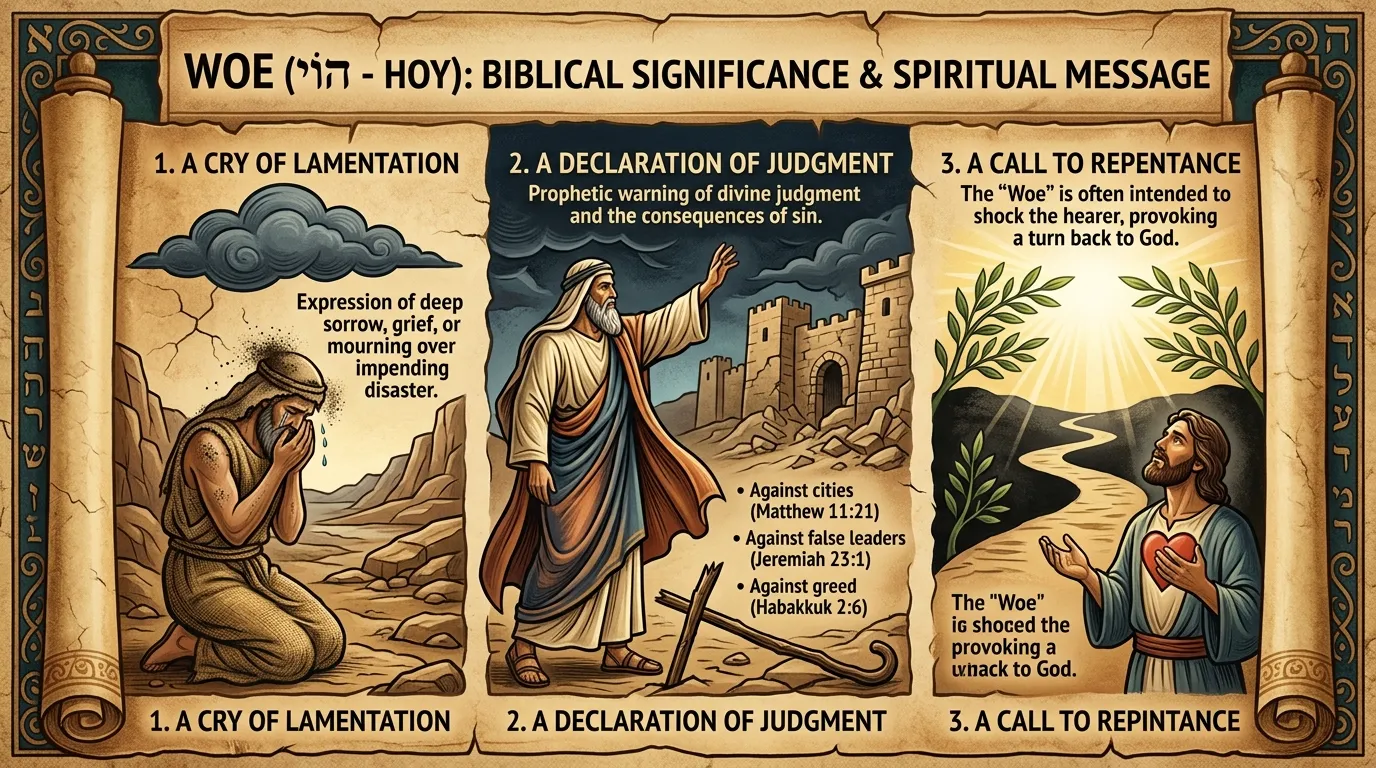
The Bible uses “woe” to express sorrow, grief, judgment, and warnings against sin. But it also points to something beautiful—God’s mercy and His invitation to repent and walk in faith.
Understanding the meaning of “woe” helps believers see God’s heart. His warnings are not meant to destroy hope. Instead, they are meant to lead people toward truth, healing, and a closer relationship with Him.
So, what does woe mean in the Bible, and what spiritual lessons can we learn from it? Let’s explore its deeper meaning through Scripture.
Biblical Meaning of Woe in the Bible
The word woe in the Bible is an expression of deep sadness, grief, or a warning about the consequences of sin. It often appears when God calls people to turn away from wrongdoing and return to Him.
Woe as a Warning From God
One famous example comes from Jesus Himself:
“Woe to you, teachers of the law and Pharisees, you hypocrites!”
— Matthew 23:27
Jesus spoke these words because the religious leaders looked righteous on the outside but were far from God in their hearts. His words were firm, but they were also an invitation to repentance.
This shows that woe is often a divine message that calls people to truth and humility.
Woe Expresses Sorrow
The prophets also used the word to express grief over sin and suffering.
Isaiah said:
“Woe to those who call evil good and good evil.”
— Isaiah 5:20
This verse warns against turning away from God’s truth. It reminds believers to stay faithful and seek wisdom from the Lord.
Isaiah’s Personal Experience
In another passage, Isaiah cried out:
“Woe to me! I am ruined! For I am a man of unclean lips.”
— Isaiah 6:5
Isaiah recognized his own sin when he stood in the presence of God. Yet God did not reject him. Instead, He cleansed and called him for His service.
This teaches that even when we become aware of our failures, God offers forgiveness and transformation.
Woe and Judgment
Sometimes, woe refers to coming judgment.
Jesus said:
“Woe to the world because of the things that cause people to stumble.”
— Matthew 18:7
These warnings remind believers that sin has consequences. God is holy, and He desires justice. Yet His warnings come with opportunities to repent and receive grace.
Hope Within the Warning
Although woe sounds negative, God’s purpose is not to remove hope.
The Lord said through Ezekiel:
“I take no pleasure in the death of the wicked, but rather that they turn from their ways and live.”
— Ezekiel 33:11
This verse reveals God’s loving heart. His warnings are meant to bring people back into His presence.
Therefore, the Christian meaning of woe is not simply punishment. It is a loving call toward faith, repentance, and restoration.
Spiritual Significance and Symbolism
The spiritual symbolism of woe teaches believers important lessons about humility, repentance, and dependence on God.
Sometimes people become busy with life and slowly drift away from God. The message of woe serves as a gentle alarm. It reminds us to stop, pray, and examine our hearts.
Woe symbolizes spiritual awakening.
It invites believers to ask:
- Am I walking closely with God?
- Have I allowed pride or fear to take over?
- Am I trusting God’s truth?
Woe also reminds Christians that God desires honesty, not perfection. Like Isaiah, believers can admit their weaknesses and receive God’s mercy.
In daily life, a person may feel convicted after speaking harshly to someone or ignoring God’s guidance. That feeling is not meant to produce shame. Instead, it can lead to prayer, forgiveness, and renewed faith.
Through these moments, God brings transformation and deeper trust.
Ultimately, woe points to the loving presence of God. His warnings are signs that He cares and wants His children to live in truth and peace.
Biblical Interpretations in Dreams or Real Life
Sometimes people hear the word “woe” in a dream or encounter it during difficult seasons. Such experiences may cause concern, but they should always be viewed through prayer and Scripture.
If the experience feels peaceful, it may be a spiritual message encouraging self-examination and greater trust in God.
If it feels fearful or troubling, it may reflect anxiety, guilt, or a need to seek God’s guidance and comfort.
Dream interpretation should always be grounded in the Bible. God does not speak to bring hopelessness. His purpose is to guide His children closer to Him.
Real-life struggles can also act as reminders to return to prayer and seek God’s wisdom.
As Psalm 46:10 says:
“Be still, and know that I am God.”
Whether through dreams or daily experiences, God desires His people to find peace in His presence.
Practical Lessons & Faith Insights
Here are some simple lessons believers can learn from the woe meaning in the Bible:
- Listen to God’s guidance with humility.
- Pray when conviction comes instead of running from God.
- Trust God’s mercy and forgiveness.
- Stay rooted in Scripture and faith.
- Remember that God’s warnings are acts of love.
- Seek spiritual growth and walk closely with Christ.
God’s timing is always filled with wisdom and grace.
Conclusion
The woe meaning in the Bible goes beyond sorrow or judgment. It is a loving call from God that invites people to turn toward Him with faith and humility.
Through biblical symbolism and spiritual lessons, woe reminds believers that God desires repentance, healing, and restoration. His warnings are never without hope.
No matter where you are in your journey, remember that God’s mercy is greater than your fears. As you seek Him in prayer and trust His Word, He will guide you with love, wisdom, and peace. His grace always leads to hope and new beginnings.